The main idea: layers of safety, not one fix
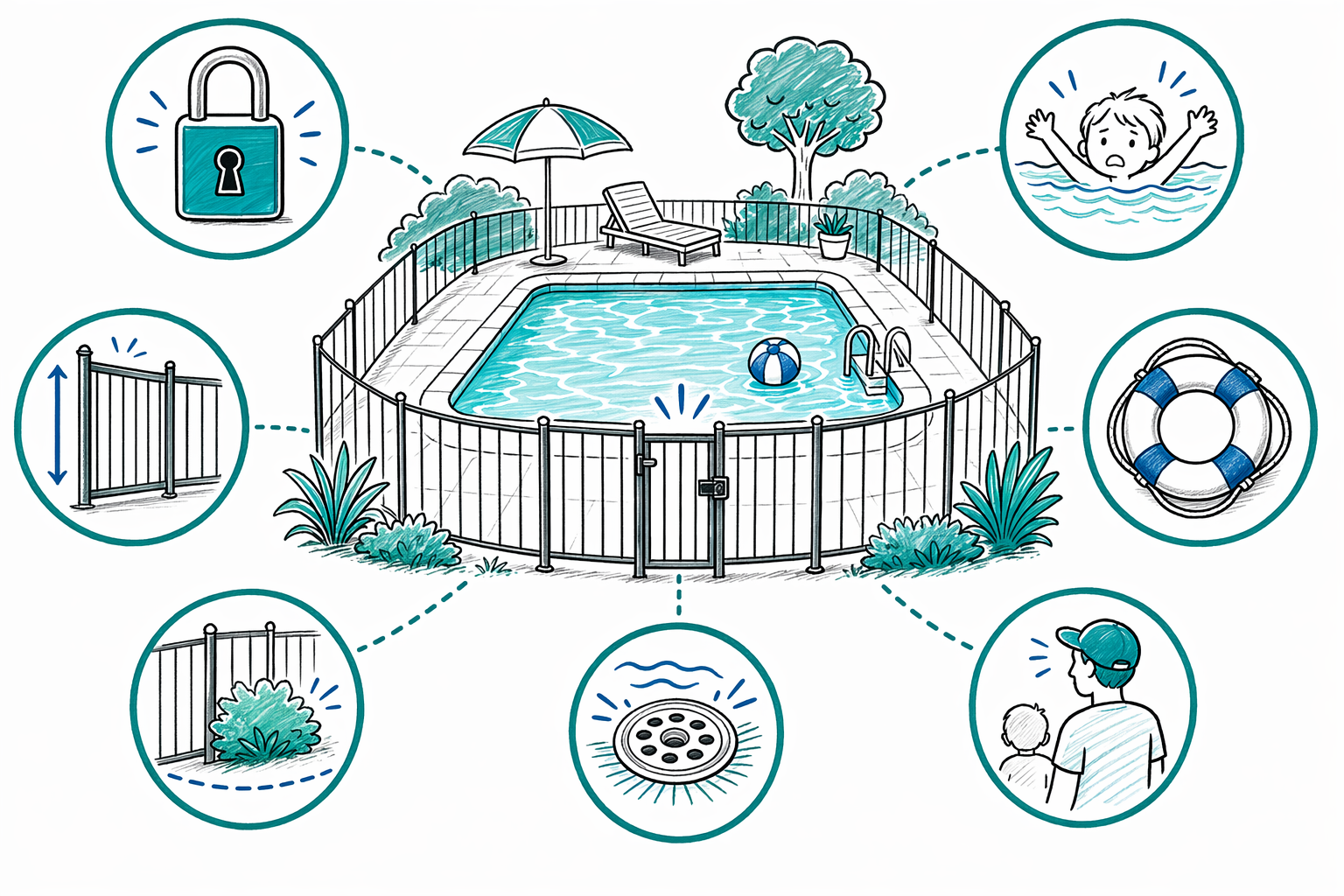
There is no single product that makes a pool "safe." Real pool safety comes from layers that work together.
A locked door helps. A fence helps. A self-closing gate helps. A pool alarm helps. Adult supervision helps most of all. Swimming lessons help too. If one layer fails, another layer may still stop a tragedy.
For most homeowners, the first job is simple: slow down access to the water. That means a barrier a child cannot easily climb, open, or go around. After that, add more layers such as alarms, covers, clear rules, and rescue gear.
Laws are different by city, county, and state. Some places have strict rules for fence height, gate swing, latch height, door alarms, and approved covers. Always follow local permits and pool-safety/fencing laws. If you are still planning your project, read pool permits explained early so you know what your area may require.
What a safer pool setup usually includes
If you are building a new in-ground pool, ask each builder to explain the barrier plan in writing before you sign anything. You are not asking for a guarantee. You are making sure the scope is clear.
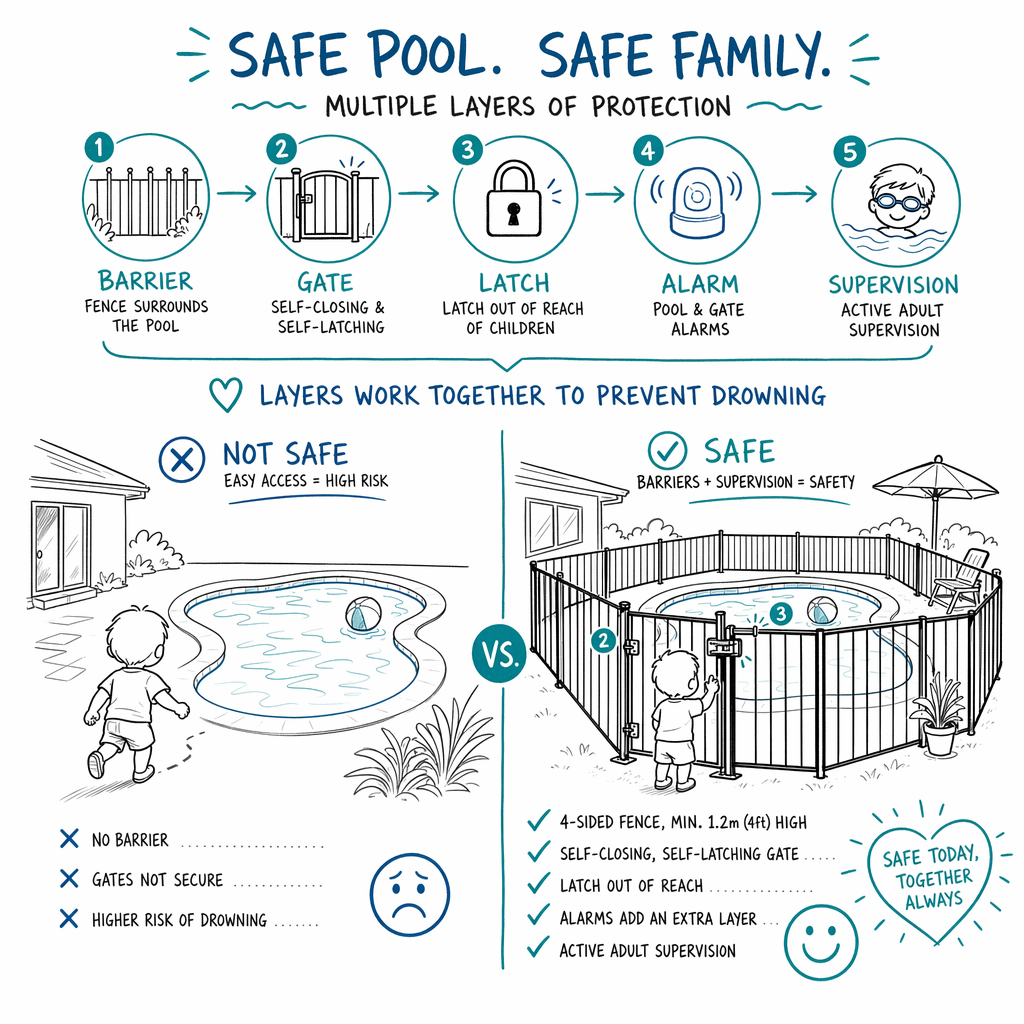
A safer setup often includes:
- A four-sided fence that separates the pool from the house and yard when possible. This is usually safer than using the house as one side of the barrier.
- Self-closing, self-latching gates that open outward from the pool area. The latch should be placed where small children cannot easily reach it.
- A fence that is hard to climb. Avoid designs with wide gaps, low horizontal rails, or nearby objects that work like steps.
- Door alarms if the house opens directly to the pool area.
- Pool alarms or gate alarms as another warning layer.
- A safety cover rated for pool safety, if allowed and properly used. Not every cover is a safety cover.
- Good lighting for evening use so people can see the water edge, steps, and deck.
- Rescue equipment nearby, such as a life ring or reaching pole.
- CPR knowledge for adults in the home. Fast action matters.
If you are still choosing a pool type, compare practical tradeoffs in pool type comparison. The pool shell is only part of the project. Safety features, decking, access points, and the yard layout matter too.
Most important, hire licensed, insured, and bonded builders and verify the license, insurance, and bond yourself. Get the barrier scope, products, and price in writing before any deposit.
What to do before, during, and after installation
Here is a practical way to handle pool safety as a homeowner.
- Check your local rules first. Look up your city or county requirements for fencing, gates, alarms, covers, and final inspection. Do this before work starts, not after.
- Ask each builder the same safety questions. Will the bid include fencing? Gate hardware? Door alarms? Cover anchors? Final inspection items? If not, who handles them?
- Get the full scope in writing. Make sure the proposal says what is included, what is excluded, and who is responsible for permits and code-related items.
- Walk the yard with safety in mind. Look for climb points near the future fence, blind spots from the house, slippery paths, and easy access from side yards.
- Plan for supervision. Decide where adults will sit, how they will watch the water, and where rescue gear will be kept.
- Add rules before the first swim. No swimming alone. No diving unless the pool is designed for it. No running. No glass near the pool. No toys left in the water after use.
- Inspect often. Test gate latches. Check that alarms work. Keep furniture, planters, and boxes away from fences so children cannot climb over.
If you want help comparing local companies, get matched with builders for free. DeepEnd Match is a free matching service. We do not build pools or give construction, legal, or safety-code approval. You compare options and choose who to hire.
Common mistakes that lead to problems
Homeowners usually do not ignore safety on purpose. Problems come from small assumptions.
Here are common mistakes:
- Using the house as the only barrier. A back door is not the same as a proper pool fence.
- Buying a basic cover and assuming it prevents drowning. Many covers are meant to keep out leaves, not hold weight.
- Leaving toys in the pool. Toys attract children back to the water.
- Propping the gate open during parties. This removes one of the most important safety layers.
- Trusting floaties instead of supervision. Float toys and inflatable aids are not a substitute for close adult watching.
- Thinking a child who can dog-paddle is safe. Basic movement in water is not the same as strong swimming skill.
- Skipping maintenance on alarms and latches. A dead battery or sticky latch can make a safety feature useless.
- Not discussing rules with grandparents, babysitters, or guests. Every adult who watches children should know the rules and the risks.
One more mistake is hiring the cheapest company without checking credentials. Always hire licensed, insured, and bonded builders and verify those credentials yourself. Get price and scope in writing before any deposit. Keep final payment until agreed work is complete and any required inspections are done.
Smart next steps for a new pool project
If you are early in the process, do not treat safety as an add-on at the end. Treat it like part of the core project budget and layout from day one.
Typical in-ground pool costs vary a lot by pool type, size, site conditions, finishes, and area. As a rough guide, gunite/concrete pools often run about $60,000-$135,000, fiberglass about $45,000-$95,000, and vinyl-liner about $35,000-$70,000. Smaller or plunge pools can cost less. These are typical ranges, not quotes or guarantees. The real price depends on the exact project. Safety fencing, gates, alarms, covers, decking, drainage, and permit-related items can add meaningful cost, so ask about them early. You can review broader pool costs before you start comparing bids.
A good next step is to make a short must-have list:
- Four-sided fence if your lot allows it
- Self-closing, self-latching gate
- Door or gate alarms where needed
- Rescue equipment and clear pool rules
- A written scope that says who supplies each safety item
Then talk to builders and compare carefully. You stay in control. You compare quotes, you choose who to hire, and you hold the final payment.
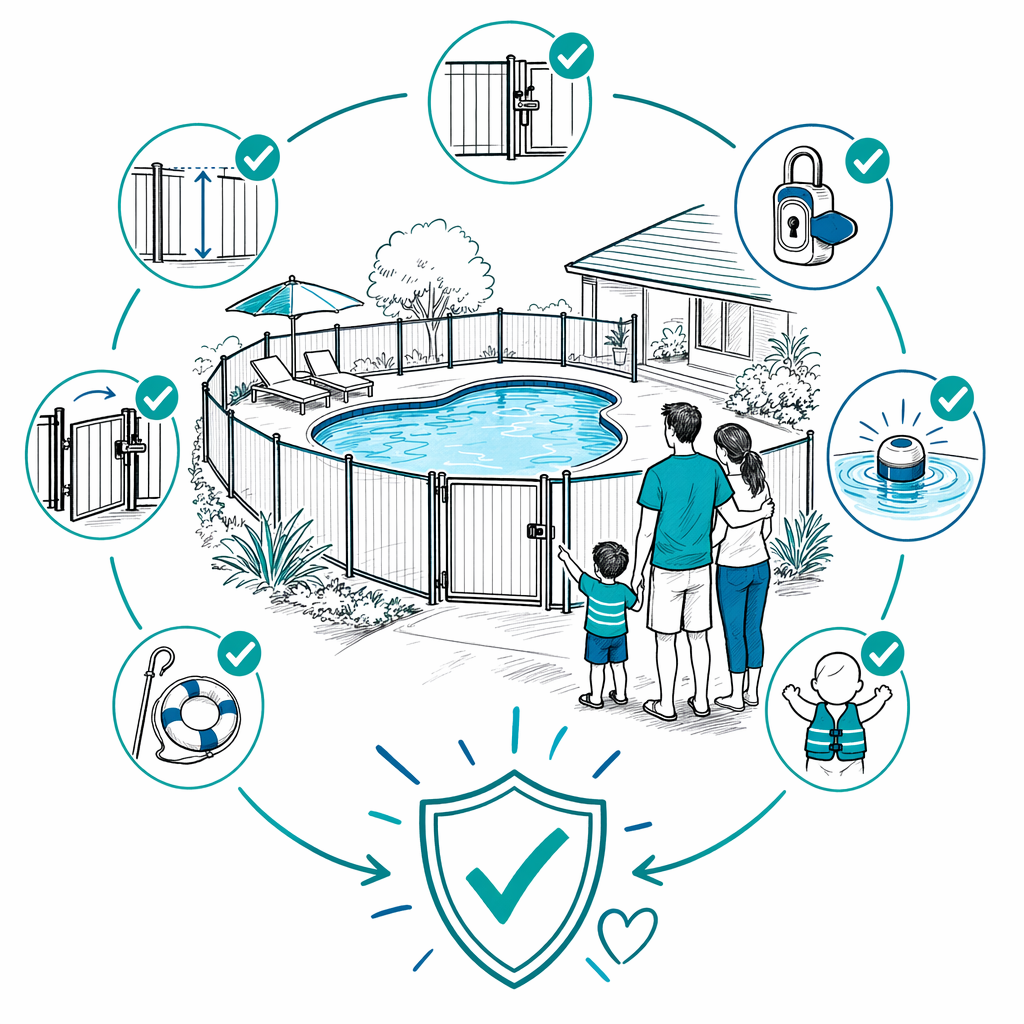
Do not rely on one thing to keep people safe around a pool. Use layers: a proper fence and gate, alarms, supervision, clear rules, and regular checks. Follow local laws, hire licensed, insured, and bonded builders, verify their credentials yourself, and get the safety scope in writing before you pay a deposit.
Common questions
Do I really need a fence if I already have a pool cover?
In many places, yes. A cover may be one safety layer, but it usually does not replace fencing requirements. Some covers are not safety-rated at all. Always check local law and inspection rules, and do not assume a cover alone is enough.
What kind of fence is best for an in-ground pool?
The best fence is one that meets local code, is hard to climb, fully controls access, and has a self-closing, self-latching gate. Many homeowners prefer a four-sided barrier that separates the pool from the house and rest of the yard because it adds protection if a child gets out of the home unnoticed.
Should I ask the pool builder to handle safety barriers too?
You can ask, but get the answer in writing. Some builders include fencing, alarms, or covers. Others do not. DeepEnd Match is a free matching service, not a builder, so we recommend asking every company the same questions, verifying licenses, insurance, and bond yourself, and getting price and scope in writing before any deposit.
Are pool alarms and swimming lessons enough to prevent drowning?
They help, but they are not enough by themselves. The safest approach uses layers: barriers, self-latching gates, alarms, active adult supervision, swimming lessons, rescue equipment, and adults who know CPR. No single layer should carry all the risk.