Why vetting matters before you sign
Most pool problems do not start with concrete, plumbing, or tile. They start with bad hiring. A low price can hide missing work, weak materials, rushed subcontractors, or a contract that protects the builder more than you.
DeepEnd Match is a free matching service. We help you connect with licensed, insured, bonded pool builders in your area. You compare options, ask questions, and choose who to hire. If you are still deciding what type of pool fits your yard and budget, start with pool type comparison.
Typical installed price ranges for in-ground pools are often around:
- Gunite/concrete: $60,000-$135,000
- Fiberglass: $45,000-$95,000
- Vinyl-liner: $35,000-$70,000
- Smaller plunge pools: sometimes less
Those are typical ranges only, not quotes. Real price depends on pool type, size, access to the yard, soil, slope, water table, finishes, equipment, decking, and your area. A trustworthy builder should explain what is included, what is not, and what could change the final price.
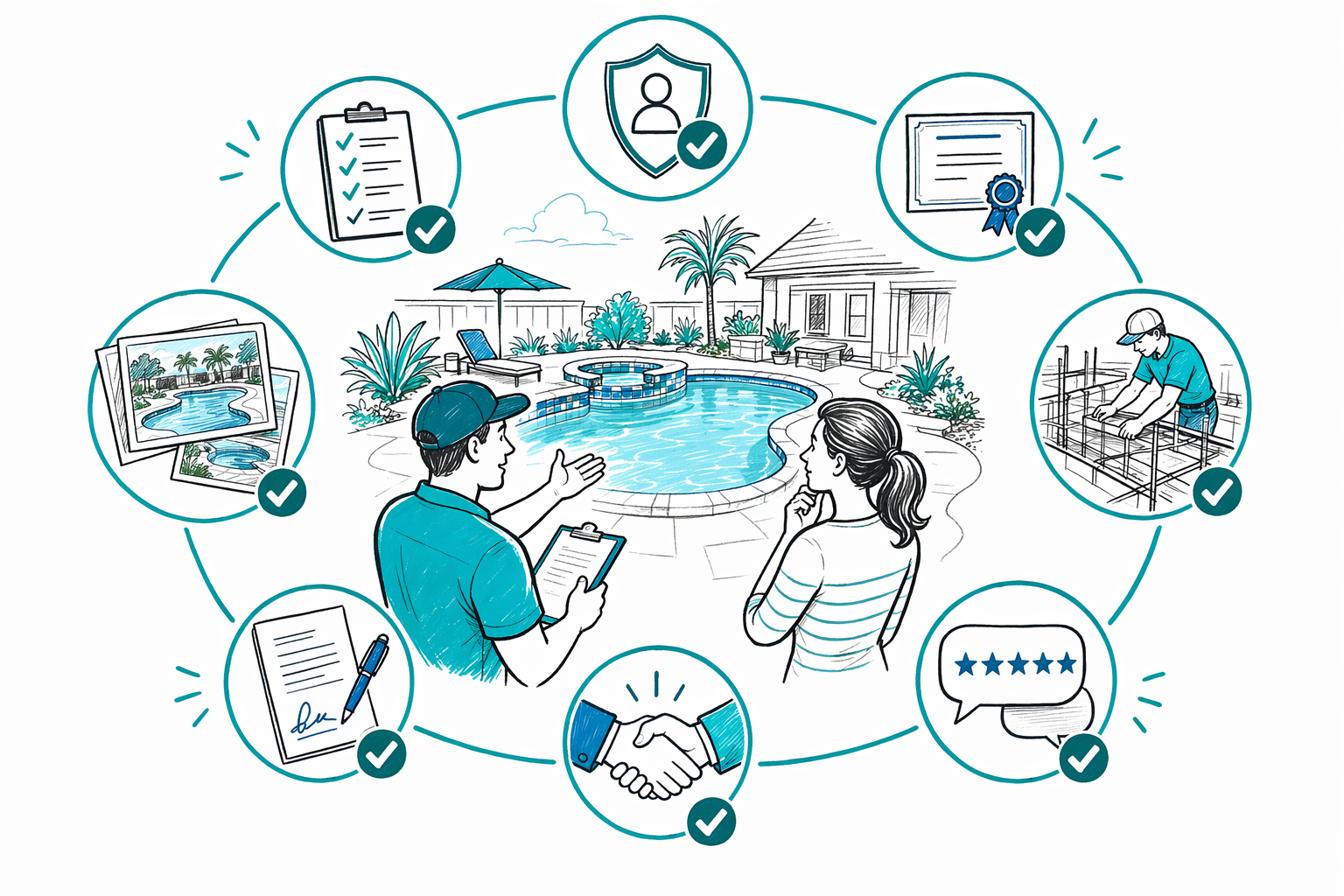
The first checks: license, insurance, bond, and local track record
Before you discuss tile colors or spa jets, confirm the basics.
- Verify the builder's license yourself. Do not just accept a license number on a business card. Check your state or local licensing database. Make sure the license is active, in the right name, and for the right type of work.
- Ask for proof of insurance. You want current general liability coverage and, where required, workers' compensation. Ask for certificates and read the dates.
- Confirm the bond. A bond is not the same as insurance, but it matters. Verify it is active and issued to the same business entity on the contract.
- Check business details carefully. The company name on the proposal, license, insurance, and contract should match.
- Look at recent local work. A builder with several completed pools in your area is often easier to vet than one with only old photos or projects far away.
Ask these direct questions:
- How many in-ground pools like mine did you finish in the last 12 months?
- Do you use in-house crews or subcontractors for excavation, steel, plumbing, electrical, gunite, liner, or decking?
- Who supervises the job day to day?
- What local permits and inspections are usually needed here?
A good builder will answer clearly. A risky one may get vague, defensive, or try to rush you to a deposit. You should also read up on pool permits explained so you know what the process normally looks like in your area.
What to compare in each proposal
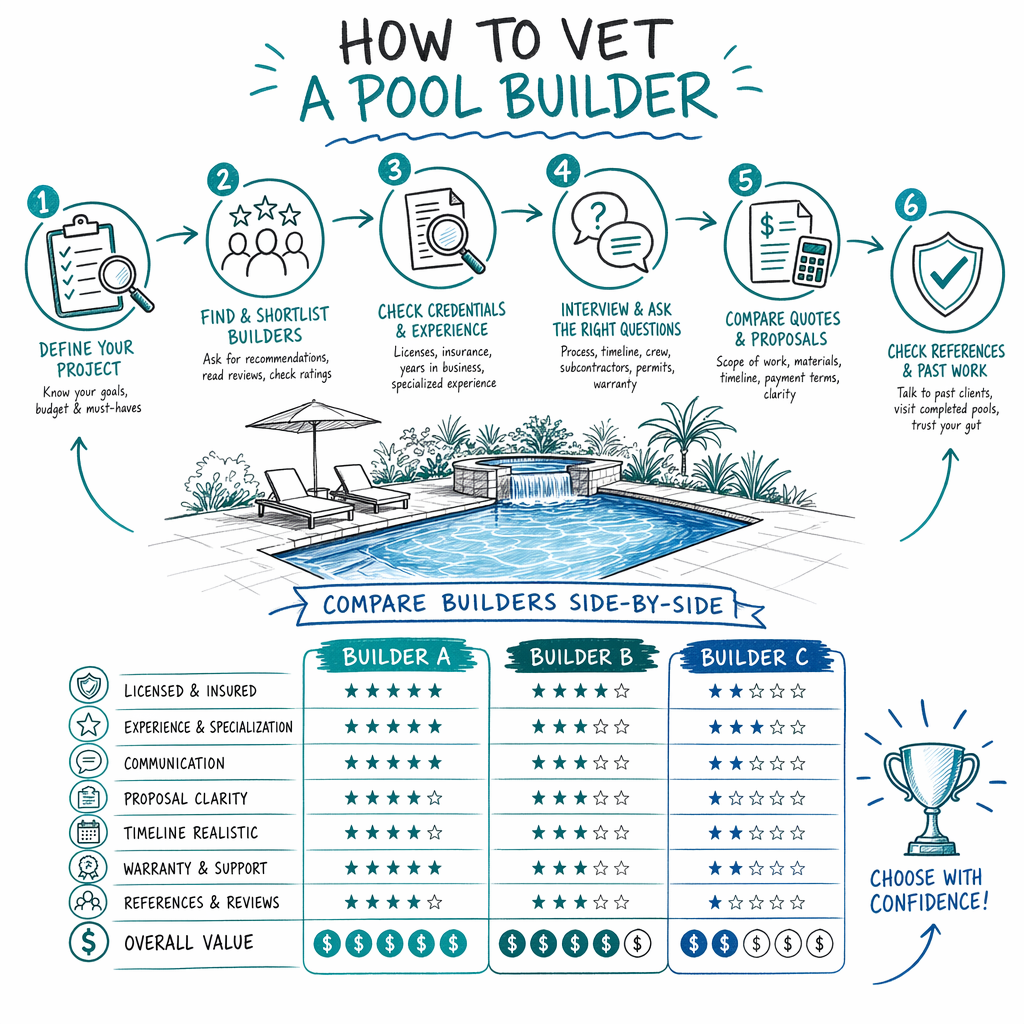
Do not compare builders by total price alone. Compare scope. Two proposals can differ by tens of thousands of dollars because one includes important work and the other does not.
Look for these items in writing:
- Pool type and shell details
- Length, width, depth, and shape
- Excavation and haul-away terms
- Steel, shell, plumbing, and electrical specs
- Equipment brand and model numbers
- Interior finish, tile, coping, and decking allowance or selection
- Start-up, basic orientation, and cleanup
- Permits and inspections: who handles them and who pays
- Fence, gate, alarms, or other safety items if included
- Change-order process and pricing method
- Estimated timeline with major phases
- Warranty terms for workmanship and equipment
Watch for missing or soft language like:
- "builder standard" with no detail
- "allowance" amounts that seem unrealistically low
- "permits if needed" instead of clear responsibility
- "site work extra as required" with no explanation of what triggers extra cost
A fair proposal does not have to predict every issue underground. But it should explain known exclusions and likely variables such as rock, groundwater, poor access, retaining walls, utility relocation, or upgraded drainage.
If you want a head start on realistic budgets by pool type, see costs. For material-specific questions, review gunite/concrete pools or fiberglass pools if those are on your list.
How to interview builders without wasting time
You do not need to become a construction expert. You just need a simple process.
- Talk to at least three builders. More than one quote helps you spot outliers, missing scope, and weak communication.
- Give each builder the same project basics. Share the same yard photos, rough dimensions, must-haves, and budget range so the proposals are easier to compare.
- Ask for recent references you can actually call. Ask homeowners if the builder stayed close to the written scope, handled problems fairly, and finished punch-list items.
- Visit a completed pool if possible. Look at finish quality, straight lines, deck cracks, drainage, and equipment pad organization.
- Ask who pulls permits. In many areas, the licensed builder should handle permits tied to the work. Follow all local permit and pool-safety/fencing laws.
- Ask about payment schedule. Payments should match completed phases. Be careful if a builder asks for a large deposit or too much money too early.
- Read the contract slowly. If something matters, it must be in writing.
Good interview signs:
- They explain tradeoffs, not just upgrades
- They talk clearly about access, drainage, and inspection steps
- They put scope and exclusions in writing
- They do not pressure you to sign on the spot
Bad signs:
- They avoid license or insurance questions
- They push cash discounts without paperwork
- They promise a start date before permits are discussed
- They say permits are unnecessary when your area usually requires them
- They dismiss safety barriers or fencing rules
Before any deposit, verify the license, insurance, and bond yourself, and get price and scope in writing.
Common mistakes that cost homeowners money
People usually get burned in a few predictable ways.
- Choosing the lowest number without checking scope. A cheap bid can become an expensive project once add-ons start.
- Assuming permits are included. Sometimes they are not. Sometimes the builder expects you to handle part of the process. Know who is responsible.
- Paying too much up front. Keep control by tying payments to completed work, not promises.
- Skipping safety planning. Pool barriers, gates, alarms, and local code rules are not optional details. Learn the basics at pool safety barriers.
- Not checking references from recent jobs. Older references may not reflect the current crew, supervision, or business condition.
- Accepting vague change orders. Changes happen. The price and schedule impact should be written before extra work starts.
- Believing timelines that ignore weather, inspections, material lead times, or utility issues. A realistic builder will explain delays that can happen.
One more truth: even a good builder cannot guarantee the exact final cost on day one if the site has hidden conditions. What they can do is explain the process, document the scope, and handle changes transparently.
Your next step: compare builders the smart way
If you are ready to talk to companies, use a simple scorecard. Rate each builder from 1 to 5 on:
- License, insurance, and bond verified
- Clear written scope
- Fair payment schedule
- Communication and responsiveness
- Local references and recent work
- Comfort level and trust
Then compare the totals next to the actual proposal price. The cheapest option is not always the best value. The most expensive one is not automatically the safest either.
DeepEnd Match can help you save time. Tell us about your project at get matched. We match homeowners, including new immigrants and non-native-English speakers, with licensed, insured, bonded pool builders. Matching is free to you. Participating builders pay a flat fee to be included. You compare quotes, choose who to hire, and hold the final payment.
No matter who you hire, verify credentials yourself, follow local permit and safety rules, and get every important detail in writing before money changes hands.
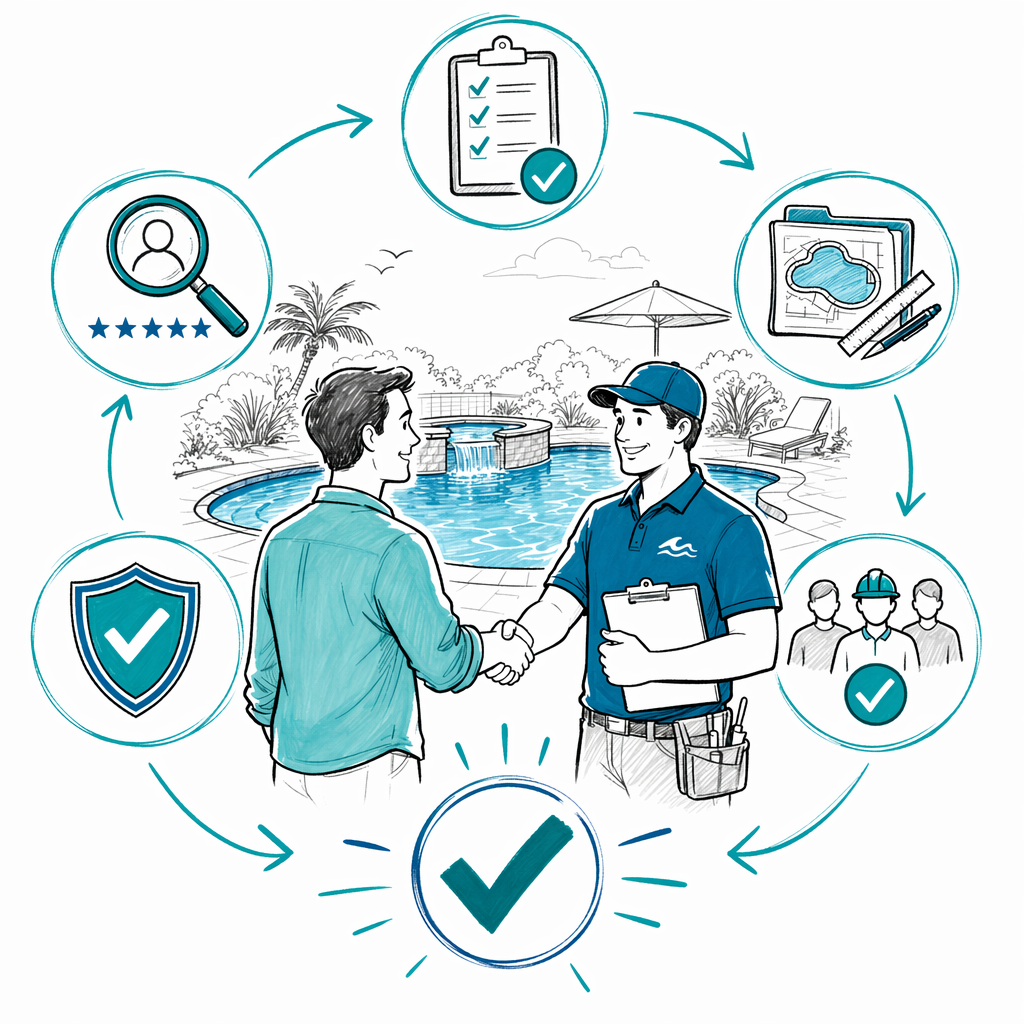
Check every builder's license, insurance, and bond yourself, get at least three written proposals, compare scope not just price, and never pay a deposit until price, permits, timeline, and change-order terms are clear in writing.
Common questions
How many pool builders should I talk to before choosing one?
Usually three is a good target. That gives you enough proposals to compare scope, communication, timeline, and price without getting overwhelmed. Make sure each builder is pricing the same general project so the comparison is fair.
What is a red flag in a pool contract?
Vague scope, unclear allowances, missing equipment details, no change-order process, unclear permit responsibility, or a payment schedule that asks for too much money too early. If it matters to you, it should be written clearly in the contract.
Should I hire the builder who says they can start the fastest?
Not automatically. A fast start can be fine, but it can also be a sales tactic. Ask whether permits, inspections, crew availability, and material lead times have actually been considered. A realistic timeline is better than a rushed promise.
Can DeepEnd Match tell me which builder is cheapest or best?
No. DeepEnd Match is a free matching service, not a builder or contractor. We help you connect with licensed, insured, bonded builders so you can compare quotes and choose. You should verify each builder's license, insurance, and bond yourself and review price and scope in writing before any deposit.