What a gunite or concrete pool really is
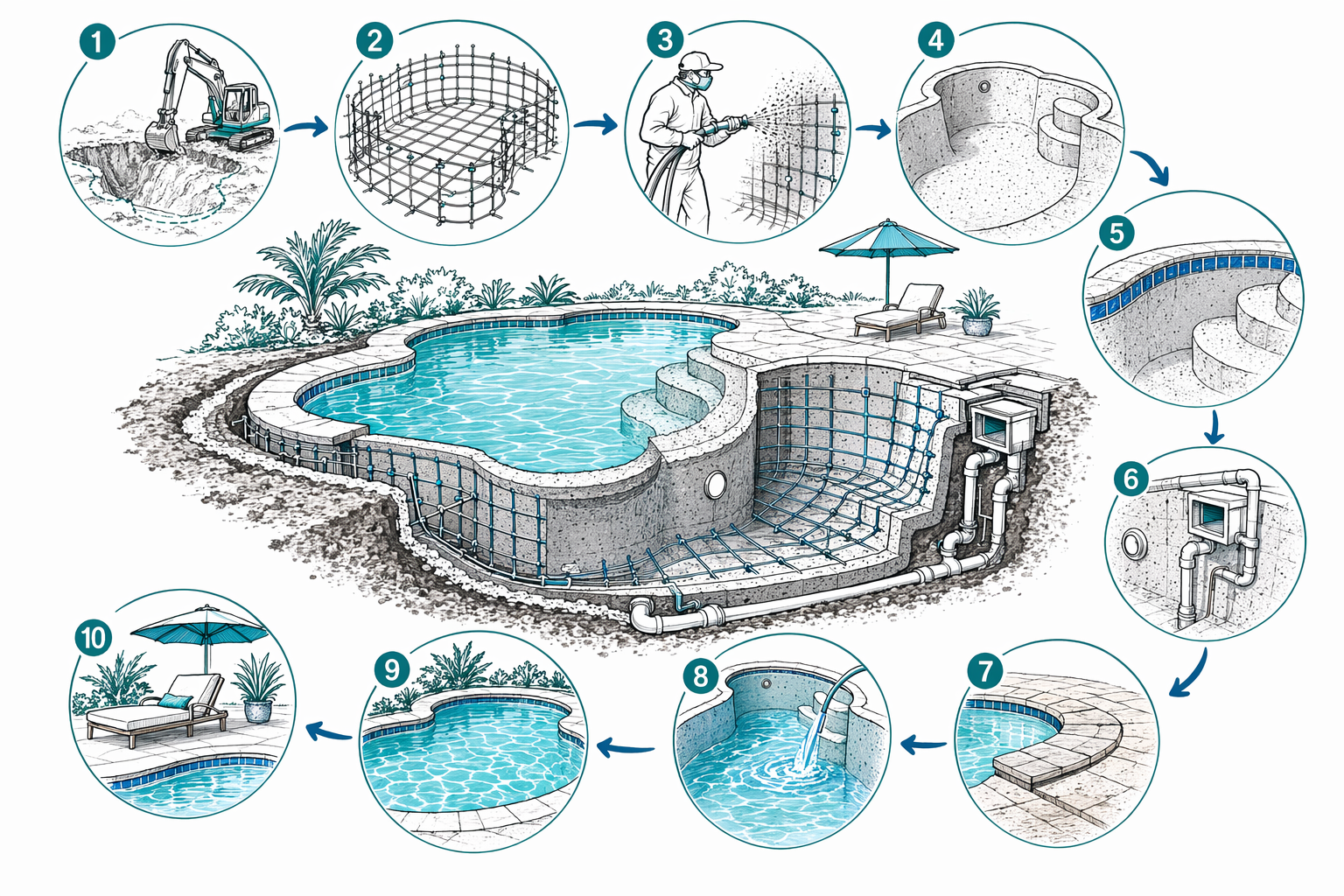
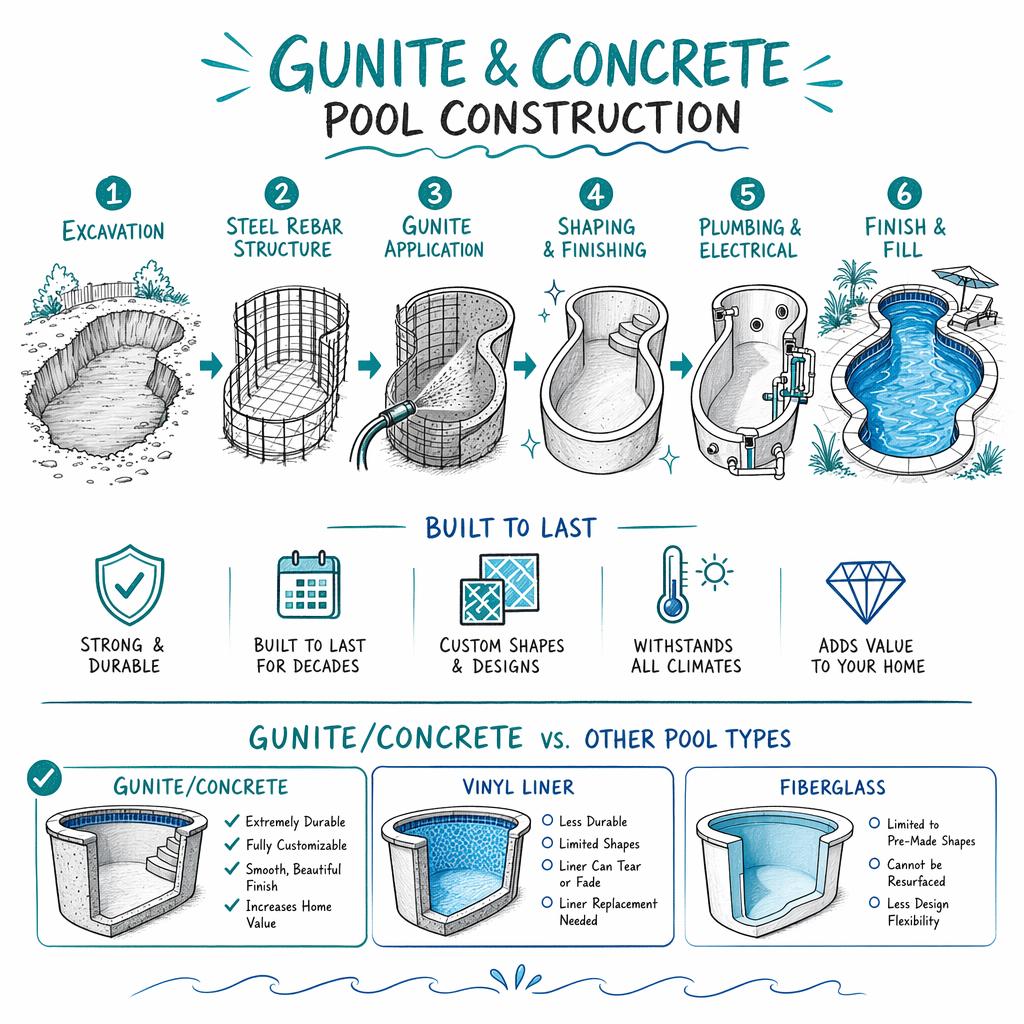
A gunite or concrete pool is a custom in-ground pool made on site. The shell is formed with steel rebar, then a cement-based mix is sprayed over it to create the pool structure. After that, the builder adds waterproofing, tile, coping, decking, plaster or other interior finish, and the equipment.
People often say gunite and shotcrete interchangeably. Both are concrete application methods. For most homeowners, the practical point is the same: you are looking at a custom concrete pool shell built in your yard.
This pool type is popular because it can fit hard spaces and custom designs. Freeform shapes, tanning ledges, beach entries, raised spas, vanishing edges, and deep custom details are usually easiest with concrete. If you want to compare it against other pool types, see pool type comparison.
DeepEnd Match does not build pools or give construction advice. We are a free matching service. We help you connect with licensed, insured, bonded pool builders so you can compare options and choose who to hire.
How the process usually works
Gunite and concrete pool projects have more moving parts than many homeowners expect. A normal project often looks like this:
1. Planning and builder selection
You decide your rough budget, size, features, and must-haves. Then you compare builders, design ideas, scope, and payment terms.
2. Site review and design
The builder studies access, grading, setbacks, utilities, drainage, and local code requirements. Shape, depth, equipment, decking, and finish details get finalized.
3. Permits and approvals
Local rules matter. Fencing, alarms, barriers, setbacks, and inspections can affect both price and timeline. Read pool permits explained so you know what questions to ask.
4. Excavation and steel
The yard is dug out. Rebar is installed to create the pool structure.
5. Gunite or shotcrete application
The shell is sprayed and shaped on site. Then it needs proper curing.
6. Plumbing, electrical, tile, coping, deck, and finish
This is where many costs grow. Equipment choices, water features, decking materials, and interior finish can move the final number a lot.
7. Startup and handoff
The builder fills the pool, starts equipment, and explains basic care.
Get every major item in writing before any deposit: pool dimensions, finish level, equipment model numbers, deck square footage, cleanup, allowances, exclusions, and payment schedule. Do not rely on verbal promises.
Typical cost range for gunite and concrete pools
For most US homeowners, a typical gunite or concrete pool lands around $60,000 to $135,000+. Larger pools, complex sites, premium finishes, spas, heavy retaining work, high-end decking, and luxury features can push the total higher.
A smaller concrete plunge pool may cost less than a full-size custom pool, but it is still usually not a low-cost project because excavation, permits, plumbing, electrical, and equipment still have real fixed costs.
What changes the price most:
- Pool size and depth
- Shape complexity
- Slope, drainage, and soil conditions
- Access to the backyard for excavation equipment
- Interior finish such as basic plaster vs premium aggregate
- Decking and coping materials
- Spa, heater, automation, lights, water features, and fire features
- Local labor and permit costs
- Fencing and safety requirements
Important: these are typical ranges and estimates, not quotes or guarantees. The real price depends on the type, size, site, finishes, and area.
If you want a broader cost breakdown across pool types, visit costs. If you are ready to compare local builders, use get matched. Matching is free to homeowners.
Timeline: how long it takes and why delays happen
Concrete pools usually take longer than fiberglass or vinyl-liner pools. A common range is about 8 to 16 weeks for construction after permits are approved, but some jobs take longer.
The biggest reasons for delays are simple:
- Permit review and inspection timing
- Weather, especially heavy rain or freezing conditions
- Material or subcontractor scheduling
- Change orders after work starts
- Backyard access issues
- Unexpected soil, groundwater, or drainage problems
Ask builders to explain the timeline in plain language:
- When do permits usually get submitted?
- What is the expected dig date?
- Who handles inspections?
- What parts are often delayed in your area?
- What happens if weather slows the job?
A trustworthy builder will not promise an unrealistically fast finish just to win your deposit. Faster is not always better if the crew cuts corners on steel, curing, drainage, or finish work.
Pros and cons homeowners should know before choosing concrete
Concrete is a strong option, but it is not automatically the best option for every yard or budget.
Pros
- Most design freedom for shape, depth, and features
- Works well for custom luxury layouts
- Can be a good fit for challenging spaces
- Solid look and feel that many buyers like
- Easy to pair with custom spas, ledges, benches, and waterline details
Cons
- Higher typical cost than many fiberglass or vinyl-liner pools
- Longer build time
- Surface finish may need more care over time
- Rougher surfaces can be less comfortable on feet and skin than smoother pool types
- More room for mistakes if the builder is weak on engineering, drainage, scheduling, or finish quality
- Resurfacing and long-term upkeep can cost more over the life of the pool
If your top goal is speed or lower upfront cost, compare concrete with fiberglass pools and other options before you decide. The best pool is the one that fits your yard, your budget, and how you will actually use it.
What to ask a gunite pool builder before you sign
This is where many homeowners save money and stress. Ask direct questions. Then get the answers in writing.
- Are you licensed, insured, and bonded for this work in my area?
- Will you give me your license number so I can verify it myself?
- Who is pulling permits, and what is included in the permit scope?
- What exactly is included in the base price? Ask about excavation, haul-off, plumbing, electrical, tile, coping, deck area, fencing needs, startup, and cleanup.
- What is excluded? This is where surprise costs often hide.
- What allowances are in the contract? For example, decking, tile, and finish allowances can be too low.
- Who does the work? Employees, subcontractors, or both?
- How do you handle drainage and slope issues?
- What equipment brands and model numbers are included?
- What is the payment schedule? Avoid large front-loaded deposits.
- How do change orders work?
- What warranty is offered, and who stands behind each part?
Before any deposit, make sure you have price and scope in writing. You should also verify the builder's license, insurance, and bond yourself. Follow local permit rules and pool-safety laws, including fencing and barriers. Our guide on how to vet a pool builder can help you compare bids the smart way.
How DeepEnd Match helps
If you are considering a concrete pool, our job is simple: we help you connect with builders so you can compare them clearly.
What you get
- A free homeowner matching service
- Help in multiple languages for homeowners who are more comfortable speaking in their first language
- Matches with builders who say they are licensed, insured, and bonded
- A simpler way to compare pool type, rough price range, and project fit
What we do not do
- We do not build or design pools
- We do not give bids, structural advice, legal advice, or permit approvals
- We do not choose your builder for you
You stay in control. You compare quotes. You choose who to hire. You hold the final payment until the agreed work is done.
Participating builders pay DeepEnd Match a flat fee to be part of the network. Matching is free to the homeowner. If you want to start comparing local options, go to get matched.
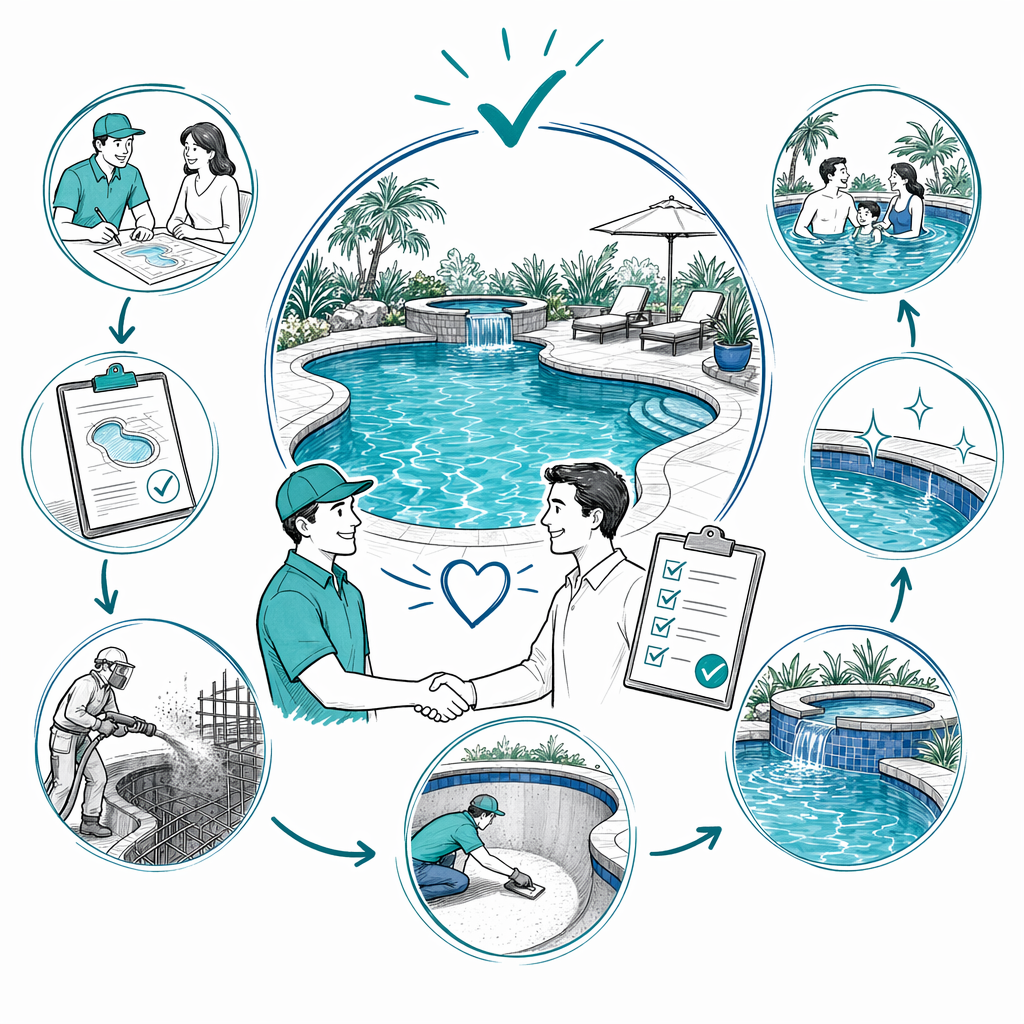
Concrete pools give you the most custom options, but they usually cost more and take longer. Compare at least a few licensed, insured, bonded builders, verify their credentials yourself, get everything in writing, and do not pay based on promises alone.
Common questions
Is a gunite pool the same as a concrete pool?
For most homeowners, yes. People often use the terms interchangeably. Gunite and shotcrete are methods for applying a concrete-based shell on site. The key point is that this is a custom concrete in-ground pool, and the final price depends on size, site, finishes, features, and area.
How much does a gunite or concrete pool usually cost?
A typical range for a gunite or concrete pool is about $60,000 to $135,000 or more. That is an estimate, not a quote or guarantee. The real cost depends on the pool type, size, site conditions, finishes, equipment, and your local market.
How long does gunite pool construction take?
Many concrete pool projects take around 8 to 16 weeks for construction after permits are approved, but delays are common. Weather, inspections, yard access, subcontractor schedules, drainage issues, and change orders can all add time.
What should I verify before hiring a pool builder?
Verify that the builder is licensed, insured, and bonded in your area, and check it yourself instead of only trusting a sales rep. Get the full scope, price, equipment list, allowances, exclusions, payment schedule, and warranty terms in writing before any deposit. Also make sure the project follows local permits and pool-safety or fencing laws.