What a fiberglass pool is, and who it fits best
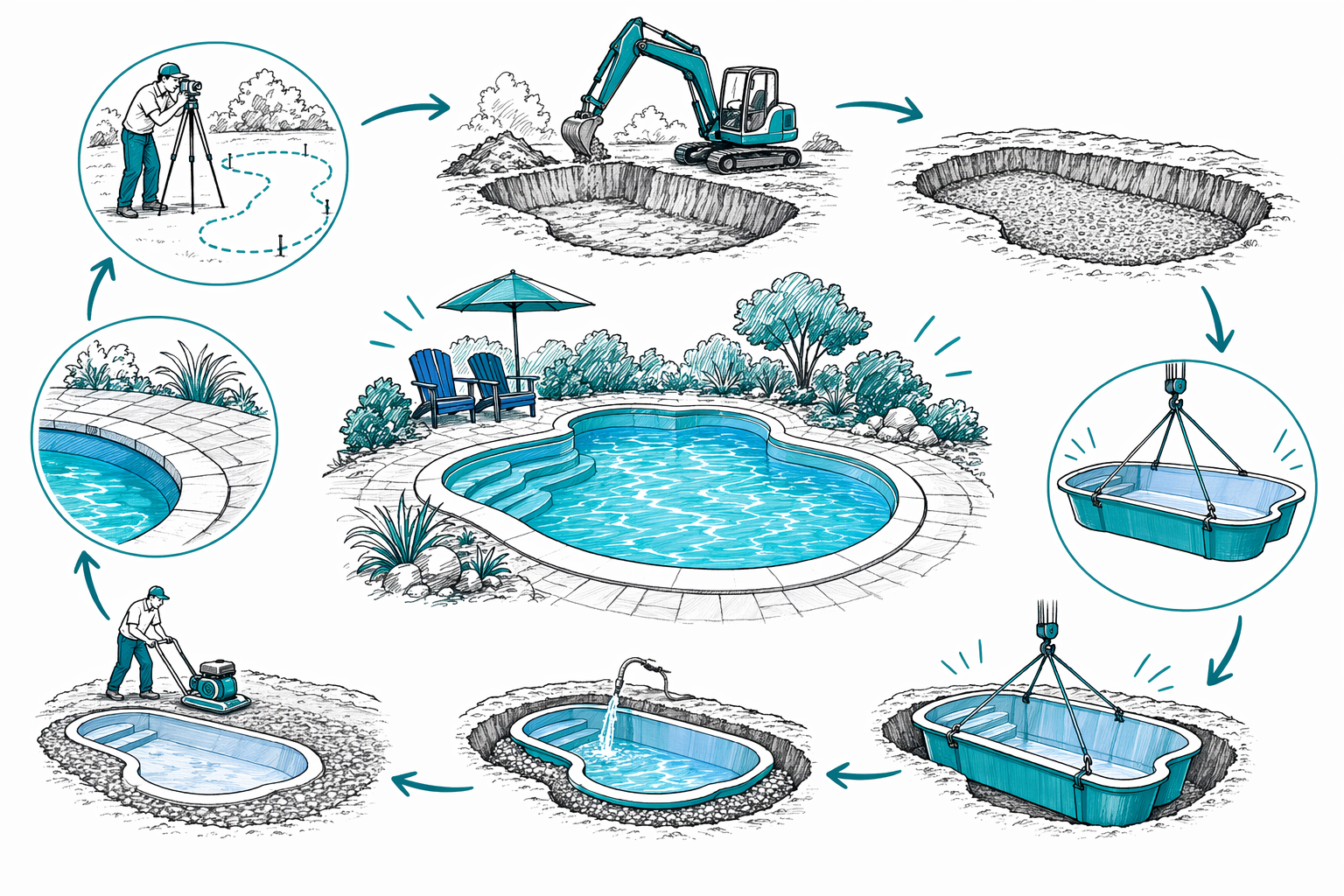
A fiberglass pool is a factory-made shell that is delivered to your home and set into an excavated hole. The shell arrives with a smooth finished surface already built in. That is different from concrete, which is formed and finished on site.
For many homeowners, fiberglass is a good middle ground. It often costs less than a large custom concrete pool, and it usually installs faster. Typical total project ranges are about $45,000 to $95,000 for many in-ground fiberglass pools, but the real price depends on pool size, shape, access to the yard, soil, slope, decking, drainage, equipment, finishes, and your area. Smaller plunge-style pools may cost less. Larger projects with more hardscape and upgrades can go higher.
Fiberglass may be a strong fit if you want:
- A faster installation path
- A smooth surface underfoot
- Lower routine brushing and chemical demand than rougher finishes
- A simple shape from a manufacturer catalog
- Predictable maintenance compared with some other pool types
It may be a weaker fit if you want a very custom shape, extra-deep design, or a tight site where shell delivery is hard. If you want to compare pool types side by side, start with pool type comparison and then see typical costs.
How fiberglass pool installation usually works
DeepEnd Match does not build pools. We are a free matching service. We help you connect with licensed, insured, bonded builders so you can compare options and choose who to hire.
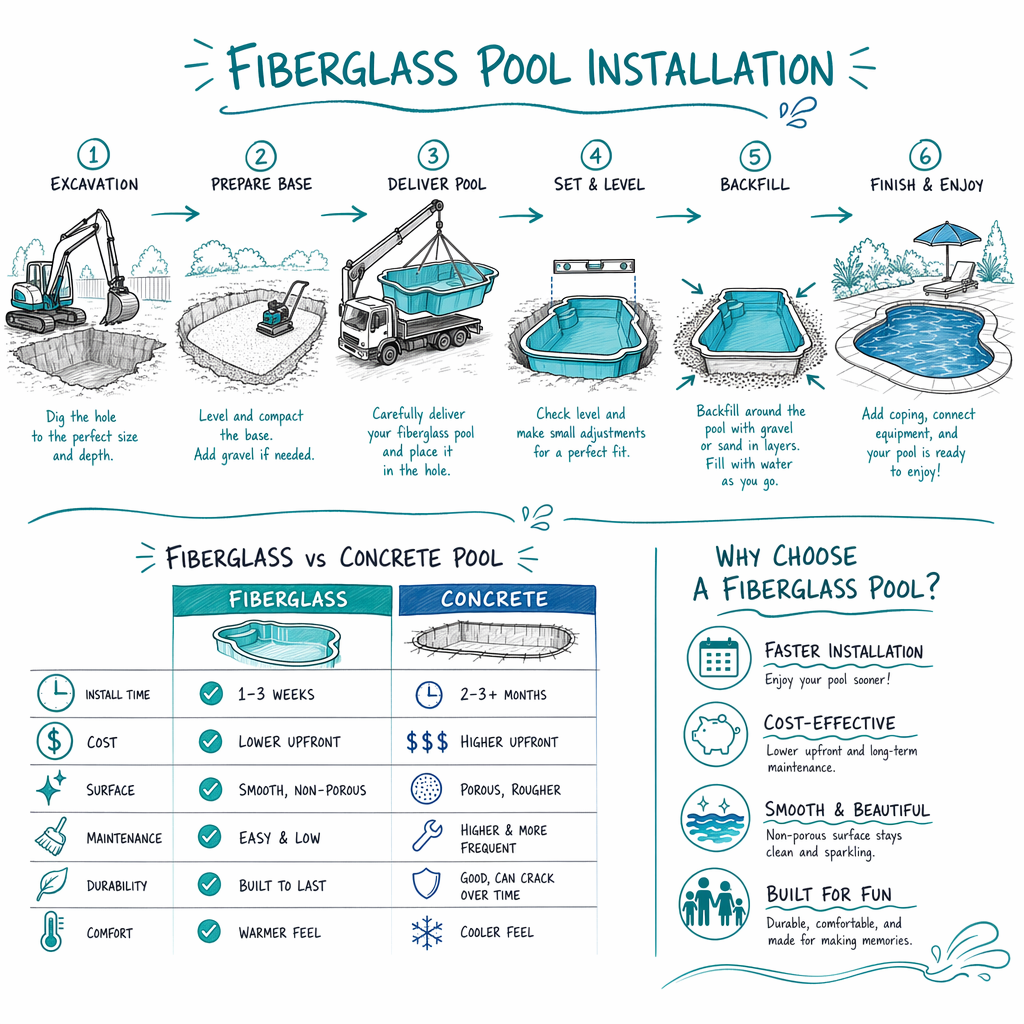
A typical fiberglass installation goes like this:
1. Site visit and planning
The builder measures access, slope, drainage, setbacks, and utility locations. They help you understand what shell sizes can physically get into the yard.
2. Permits and approvals
Local rules may cover the pool, electrical work, barriers, alarms, and drainage. Rules vary by city and county. Review pool permits explained so you know what to expect.
3. Excavation and base prep
The hole is dug. The base is graded and prepared carefully so the shell sits level and supported.
4. Shell delivery and setting
The fiberglass shell is trucked in and usually lifted by crane into place. This is the dramatic part people see online, but it is only one piece of the job.
5. Plumbing, equipment, and backfill
Pipes, pump, filter, and other equipment are connected. The area around the shell is backfilled in stages while water is added to balance pressure.
6. Decking, coping, and finishing work
Concrete, pavers, drains, fences, and final grading often take more time than the shell set itself.
7. Inspection, startup, and handoff
The builder should explain operation, basic care, and warranties in writing before final payment.
Ask each builder to spell out exactly what is included and not included. For example: excavation allowance, crane, electrical panel work, decking square footage, drainage, cleanup, startup, and haul-away.
Typical fiberglass pool cost range
A lot of homeowners hear one number for the shell and assume that is the whole project. It is not. The shell is only part of the cost.
Typical installed fiberglass pool range: $45,000 to $95,000 for many projects in the US. The real price depends on type, size, site, finishes, and area.
Common cost drivers:
- Shell size and model: Longer, wider, deeper, or premium shells cost more.
- Access to the yard: Tight lots may need a bigger crane, fence removal, or extra labor.
- Excavation conditions: Rock, groundwater, poor soil, steep yards, or retaining needs can add cost.
- Decking and coping: Basic concrete costs less than large paver packages.
- Equipment: Heaters, automation, salt systems, heat pumps, LED lights, water features, and upgraded filters add up.
- Electrical and gas runs: Distance from the house matters.
- Fencing and safety items: Many areas require barriers, self-closing gates, and other protections.
- Drainage and grading: Often overlooked, but important.
Ballpark examples only, not quotes:
- Smaller plunge-style fiberglass pool: often less than a full-size family pool if access is simple
- Standard family-size fiberglass pool with basic deck: often lands in the middle of the range
- Larger shell with heater, more decking, and access challenges: can reach the top of the range or exceed it
Before you sign, get the price and scope in writing. Make sure change-order rules are clear. If you want to compare fiberglass with other pool types, see fiberglass pools and vinyl-liner pools.
How long it takes
Fiberglass usually has a faster installation timeline than a fully site-built concrete pool, but that does not mean every job is quick.
The shell set can happen in a day. The full project usually takes longer because of permits, scheduling, inspections, weather, utility work, decking, fencing, and punch-list items.
A realistic timeline often looks like this:
- Planning and permits: a few weeks to a few months, depending on your area
- Excavation and shell set: often a few days when weather and access cooperate
- Plumbing, equipment, backfill, deck, and finish work: often several more days to a few weeks
- Inspections and final items: can extend the schedule
What delays jobs most often:
- Permit backlog
- Rain or groundwater issues
- Rock or unstable soil found during excavation
- Utility conflicts
- Material lead times
- Fence or gate compliance issues
The best question is not "How fast can you do it?" It is: "What can delay this job, and how do you handle delays?" A good builder will answer clearly and in writing.
Pros and cons of fiberglass pools
Every pool type has tradeoffs. Fiberglass is not perfect, but it works well for many homes.
Pros
- Faster install than many concrete projects
- Smooth interior surface that many families like
- Lower routine surface maintenance than rougher finishes
- Factory-built shell can mean more consistency in the finish
- Good option for homeowners who want a straightforward shape and process
Cons
- Less design freedom than custom concrete
- Delivery and crane access can be a real problem on some lots
- You are choosing from available shell models, not building every curve from scratch
- Some sites need extra engineering, drainage, or retaining work that changes the budget
- Repairs or warranty questions should be reviewed carefully before signing
If you think you may want a very custom shape, tanning shelf layout, or deep-end design, compare with gunite/concrete pools.
What to ask before you hire a builder
This is where people save money and avoid trouble. Interview at least 2 to 3 builders. Then compare the details line by line.
Ask questions like these:
- Are you licensed, insured, and bonded for this work in my area?
- Will you give me your license number, certificate of insurance, and bond information so I can verify them myself?
- What exactly is included in this price?
- What is the allowance for excavation, and what happens if you hit rock, groundwater, or bad soil?
- Is the crane included?
- How much decking is included, and what material?
- Are electrical, gas, drainage, permits, inspections, cleanup, startup, and hauling included?
- Who handles warranty issues for the shell and for the installation work?
- What payment schedule do you use, and what milestones trigger payment?
- What pool-safety barrier or fence requirements apply here?
Also ask for a simple written scope that lists:
- Pool model and dimensions
- Equipment brand and model numbers
- Decking size and material
- Fence or barrier responsibility
- Cleanup and restoration items
- Timeline assumptions
- Change-order pricing rules
- Warranty terms
Never pay a deposit based on a verbal promise. Get the scope and price in writing before any deposit. Follow your local permit and pool safety barriers rules.
How DeepEnd Match helps
DeepEnd Match helps homeowners, including new immigrants and non-native English speakers, understand the process and connect with pool builders. Our service is free to the homeowner. Participating builders pay a flat fee to be included.
What you can expect from us:
- A simple intake focused on your project and contact details
- Help matching with builders who handle fiberglass pool projects in your area
- A clearer starting point so you can compare bids and scope
- Plain-language support if English is not your first language
What we do not do:
- We do not build pools
- We do not design your project
- We do not pull permits
- We do not give structural, electrical, plumbing, legal, or financial advice
- We do not choose the builder for you
You compare quotes. You choose who to hire. You hold the final payment until the contract terms are met.
If you are ready to start, use get matched and then read vet a pool builder before you sign anything.
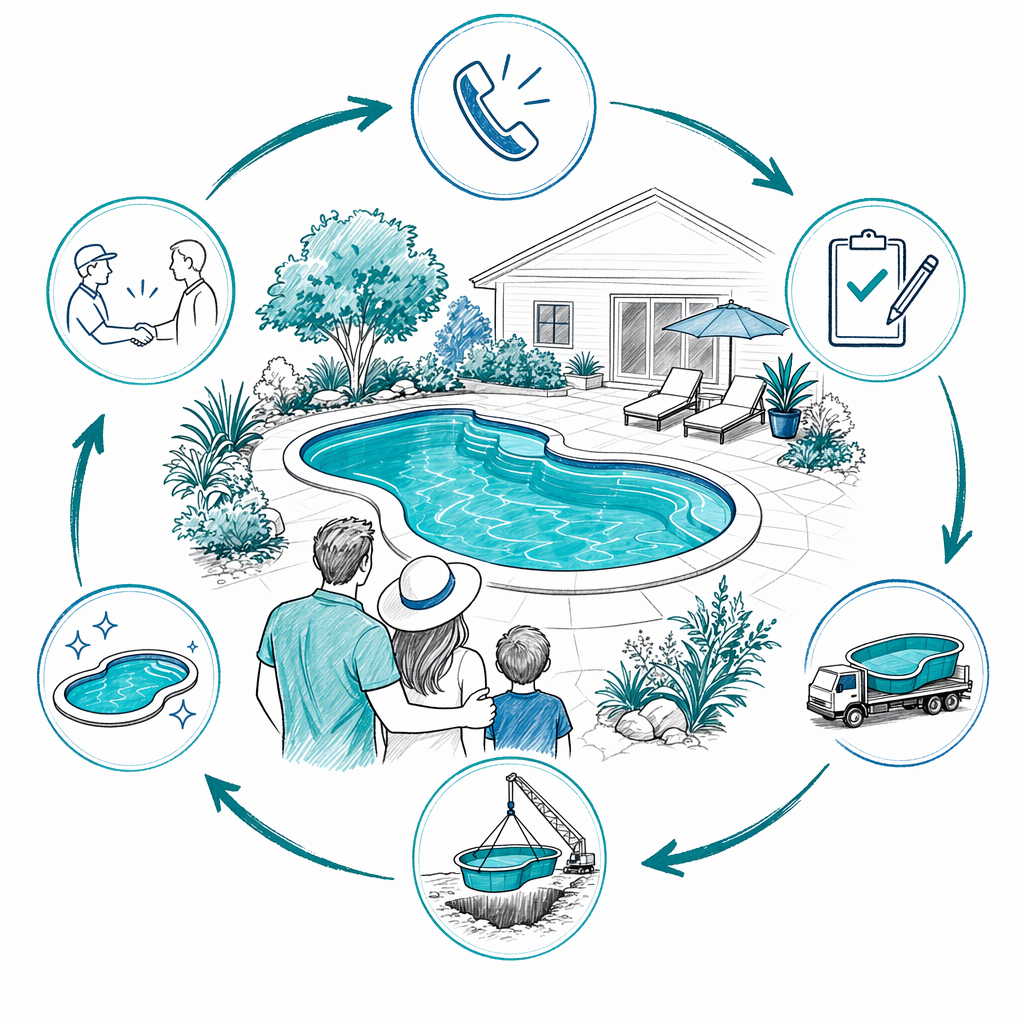
Fiberglass pools can be a good choice if you want a faster install and easier upkeep, but the real cost depends on your yard, access, deck, equipment, and local rules. Talk to licensed, insured, bonded builders, verify their credentials yourself, get the full scope and price in writing, and use DeepEnd Match to compare options for free.
Common questions
Are fiberglass pools cheaper than concrete pools?
Often, yes, but not always. A typical fiberglass in-ground pool project is often around $45,000 to $95,000, while many gunite/concrete pools are commonly higher. But the real price depends on size, access, excavation conditions, decking, equipment, finishes, and your area. A difficult site can erase the savings fast.
How long does fiberglass pool installation take?
The shell itself can be set quickly, sometimes in a day, but the full project usually takes longer. Permits, excavation, plumbing, electrical work, decking, fencing, inspections, weather, and material timing all affect the schedule. Ask each builder for a written timeline and a list of likely delays.
Do I still need permits and a fence for a fiberglass pool?
Usually yes. Local rules often require permits, inspections, and pool-safety barriers such as fencing and self-closing gates. Requirements vary by city and county. Follow local permit and safety laws, and do not assume the builder handles everything unless it is clearly written in the contract.
What should I verify before paying a deposit?
Verify that the builder is licensed, insured, and bonded, and verify those details yourself. Get the price, full scope, payment schedule, change-order terms, warranty details, and permit responsibility in writing before any deposit. Make sure the contract explains what happens if excavation finds rock, groundwater, or other site problems.