Why permits matter before a pool is built
A permit is the local government's approval to start certain parts of a pool project. For an in-ground pool, that often means the city or county wants plans, site details, and inspections at key stages.
Permits are not just paperwork. They can affect safety, timing, insurance, and resale later. If a pool is built without the right permits, you may face stop-work orders, fines, delayed utility hookups, trouble selling the home, or problems with an insurance claim.
The exact rules depend on your city, county, and sometimes your HOA. In many areas, permits may involve:
- The pool shell or structure
- Electrical work, bonding, and equipment connections
- Plumbing lines and pressure tests
- Gas lines for a heater, if used
- Decking or hardscape in some cases
- Fencing, gates, door alarms, or other safety barriers
- Drainage, grading, or setback review
If you are still comparing pool types, start with pool type comparison. Different pool types can change the permit path, timeline, and typical cost.
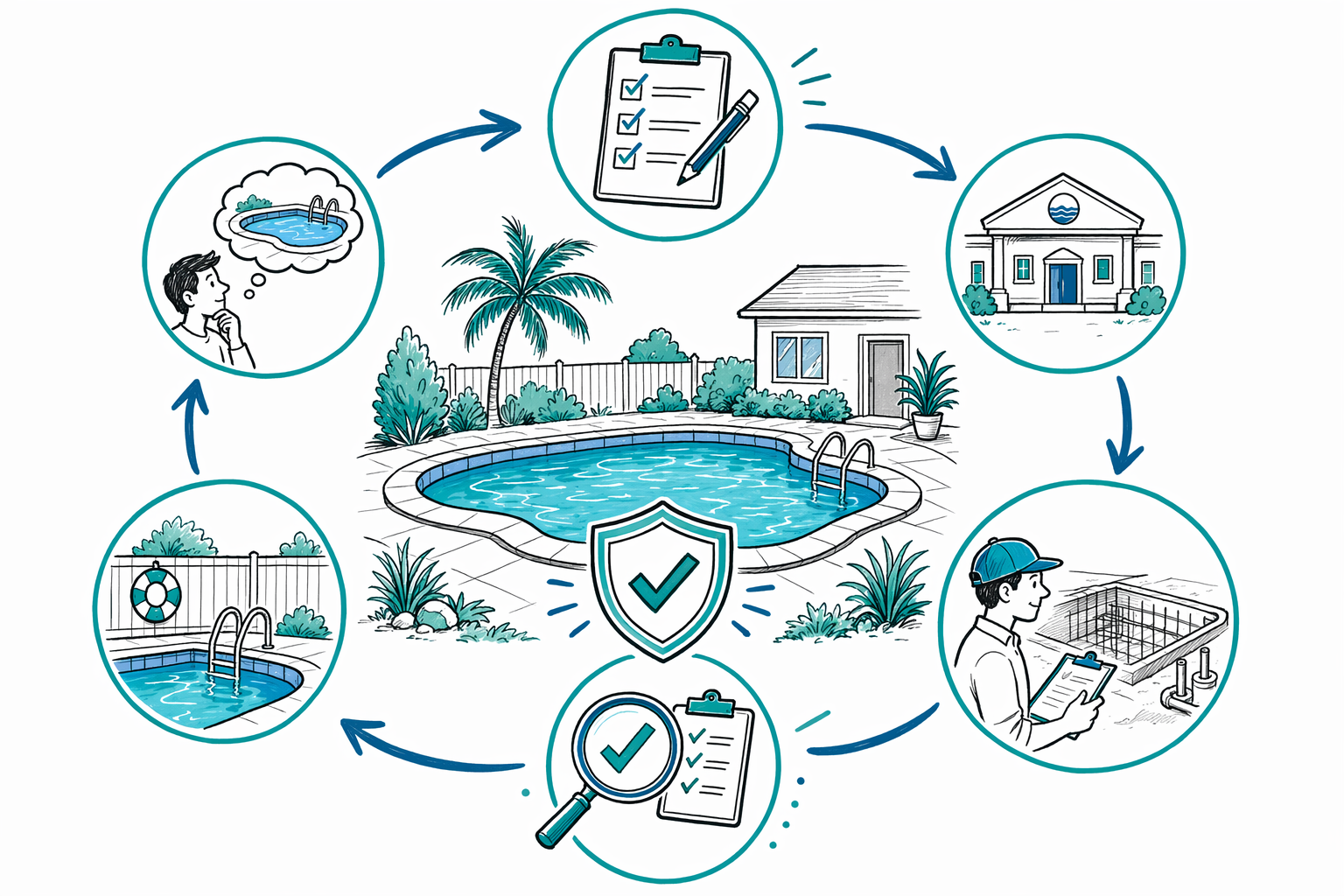
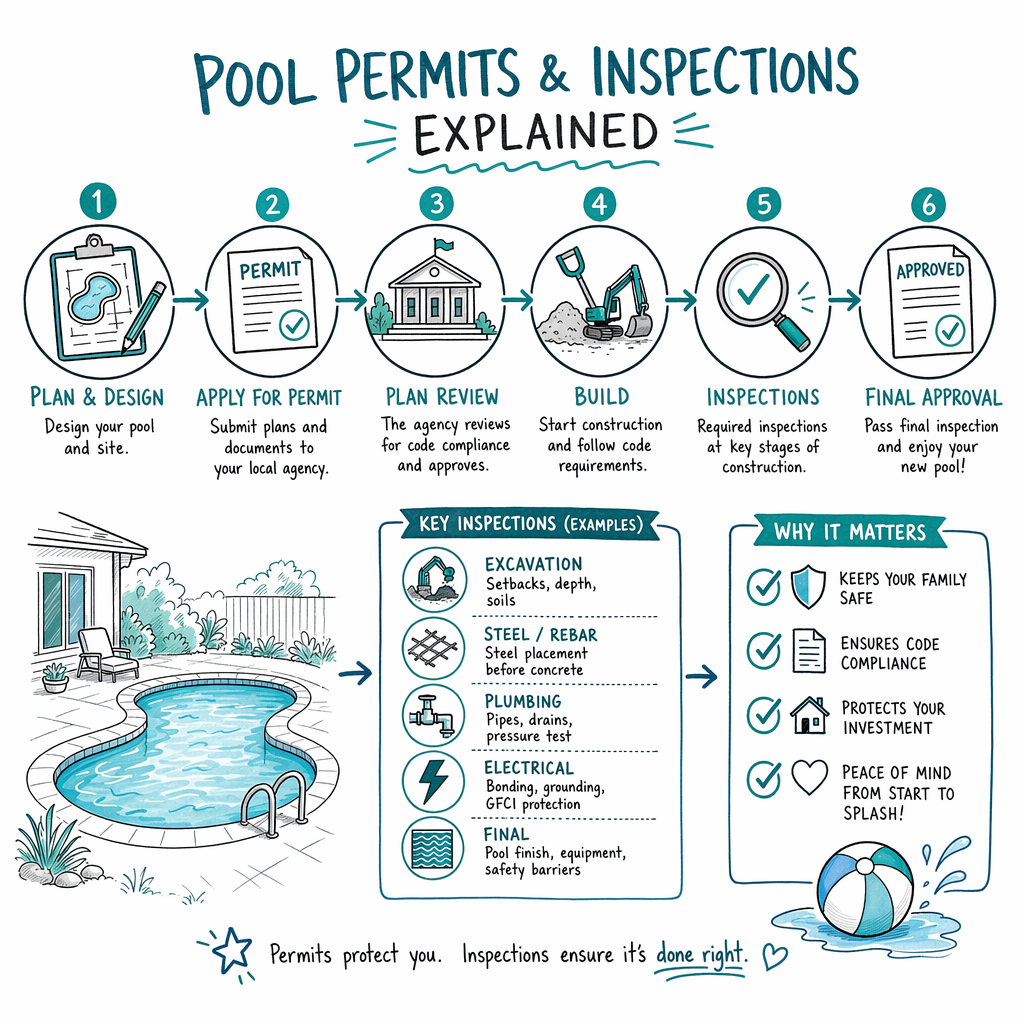
What a pool permit process usually includes
Every area is different, but many homeowners see a process like this:
- Site review and plans. The builder prepares plans showing the pool location, size, equipment, setbacks from property lines, and safety barriers.
- Permit application. Plans are submitted to the city or county building department. Some jobs need separate permits for electrical, plumbing, gas, or fencing.
- Plan check. The local office reviews the application for code compliance. If something is missing, they ask for corrections.
- Permit issuance. Work can start only after the permit is approved.
- Inspections during construction. Inspectors check specific stages before the next stage can continue.
- Final inspection or final approvals. The project must pass required inspections before the permit is closed.
Common inspection stages may include:
- Layout or pre-dig in some areas
- Steel or rebar before gunite or concrete placement
- Underground plumbing pressure test
- Electrical bonding and equipment wiring
- Gas pressure test if a heater is installed
- Barrier or fence inspection
- Final inspection when the pool area is complete
Important: who pulls the permit can vary. In many cases, the builder does it. Sometimes a trade subcontractor pulls a separate permit. Either way, you should ask to see the permit record, permit number, and inspection results yourself. Do not assume it was handled just because work started.
What you should do before any work starts
This is where many homeowners get burned. A salesperson says, "We handle permits," but nothing is in writing, or the price does not include all permit-related work.
Use this checklist before you sign:
- Hire licensed, insured, and bonded builders. Then verify the license, insurance, and bond yourself with your state or local authority.
- Ask who is responsible for submitting permits and paying permit fees.
- Ask whether the contract includes all known permit-related scope, such as engineering, electrical, gas, fence or gate work, and required inspections.
- Get the price and scope in writing before any deposit.
- Ask what could trigger a change order, such as poor soil, access issues, retaining walls, drainage fixes, or utility conflicts.
- Ask whether your HOA has design rules, setback rules, or approval forms.
- Ask how long plan review is taking in your area right now. Timelines can vary from days to many weeks.
- Confirm who will be present for inspections and who corrects failed items.
If you are talking to builders now, read how to vet a pool builder. It will help you ask better questions and compare answers.
DeepEnd Match is a free matching service. We do not build pools or issue permits. We help you connect with builders so you can compare quotes, check credentials, and choose who to hire.
Common permit problems that delay a pool project
Most permit delays are not dramatic. They are small misses that stack up.
Here are common issues:
- Wrong setbacks. The pool, equipment pad, or decking is too close to a property line, easement, septic area, or utility line.
- Missing barrier details. The plan does not clearly show the fence height, self-closing gates, door alarms, or other safety features required by local law.
- Incomplete engineering. Some sites need extra structural detail because of slope, soil conditions, retaining walls, or nearby structures.
- Electrical errors. Bonding, grounding, GFCI protection, or equipment placement does not match code.
- Unapproved design changes. Homeowners add a spa, move equipment, enlarge decking, or change drainage after permit approval without updating plans.
- HOA conflicts. City approval does not mean HOA approval.
- Scheduling misses. A crew keeps working before the required inspection happens, then parts have to be uncovered or redone.
A simple way to protect yourself is to ask for updates at each milestone:
- Permit submitted
- Permit approved
- Inspection scheduled
- Inspection passed or correction notice issued
Ask for copies by email or text. Keep your own file.
You can learn more in pool permits explained and check local safety requirements in pool safety barriers.
How permits affect cost and timeline
Permits are part of the real project cost, but they are not the whole story. Permit fees themselves may be a small or moderate line item. The bigger cost impact often comes from what the permit process requires.
Examples:
- A required fence upgrade
- A door alarm or self-latching gate
- Extra electrical work
- Gas trenching for a heater
- Drainage corrections
- Engineering for a slope lot
- Revisions after plan review comments
That is one reason pool prices vary so much. As a typical range, many in-ground pools land around:
- Gunite/concrete: $60,000 to $135,000
- Fiberglass: $45,000 to $95,000
- Vinyl-liner: $35,000 to $70,000
- Smaller plunge pools: often less, depending on site and features
These are estimates, not quotes or guarantees. The real price depends on pool type, size, site conditions, finishes, equipment, and your area. Permit rules can push the total up or slow the build down.
For a closer look at pricing by pool type, visit pool costs.
Your next step: compare builders the smart way
A good builder should be calm and clear about permits. They should explain what is included, what is not, and what local approval steps apply to your site.
When you compare bids, ask each builder the same questions:
- Who pulls the permit?
- Which permits are included?
- What inspections are expected?
- What barrier or fence work is required?
- What happens if the city asks for plan changes?
- What permit-related costs are allowances and what costs are fixed?
Then compare the answers side by side. The lowest number is not always the safest choice if the scope is vague.
You choose who to hire. You compare quotes. You hold the final payment until the agreed work is complete.
If you want help finding companies to talk to, use get matched. It is free for homeowners. Participating builders pay a flat fee to be included.
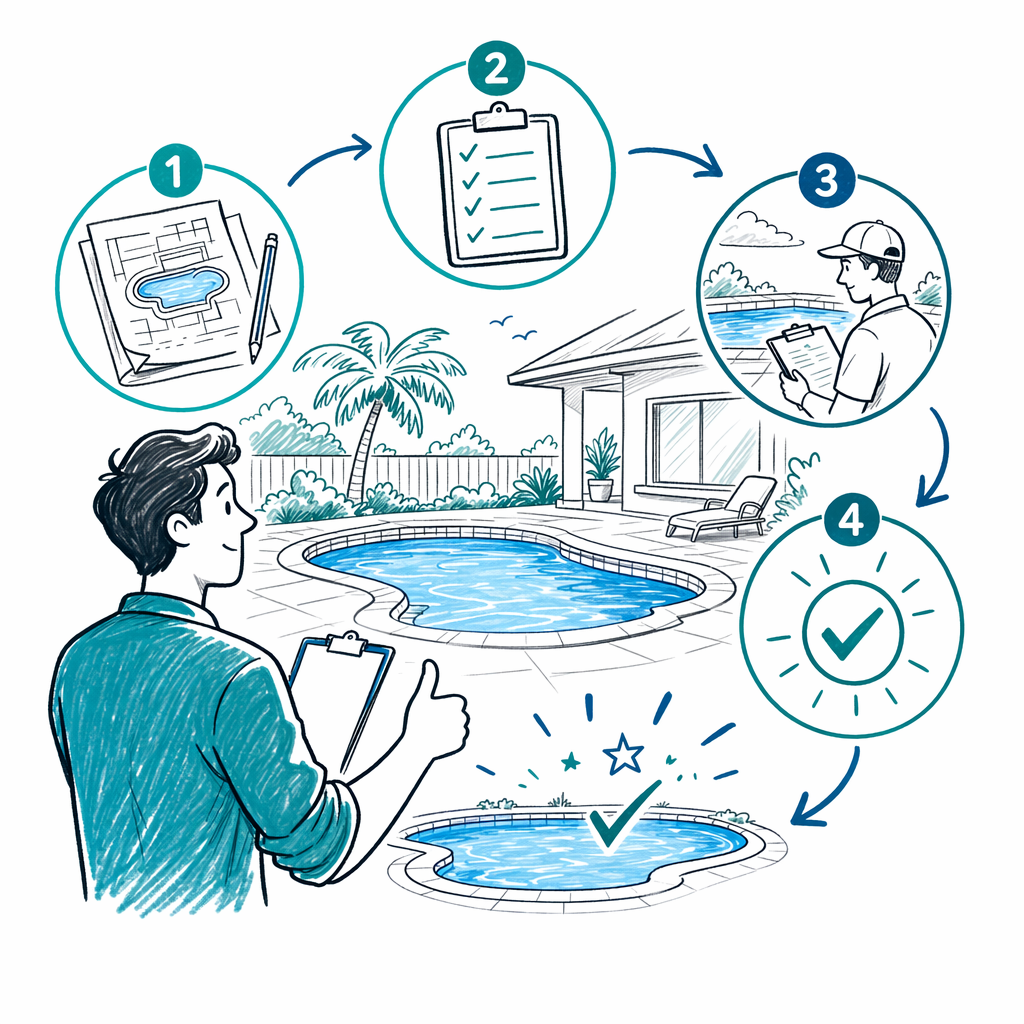
Before you build, make sure the pool permit process is clear in writing. Hire licensed, insured, bonded builders, verify their credentials yourself, ask to see permit and inspection records, and compare quotes carefully before you choose.
Common questions
Does every in-ground pool need a permit?
Not every town handles things the same way, but many in-ground pool projects do require permits. Some areas also require separate permits for electrical, plumbing, gas, decking, or fencing. Ask your local building department what applies to your address, and ask the builder to show you the permit record.
Can I let a builder start before the permit is approved?
It is risky. Starting too early can lead to stop-work orders, fines, failed inspections, and expensive redo work. Wait until the permit is approved and ask for the permit number. Get the project scope and payment terms in writing before any deposit.
Who should pull the pool permit?
Often the builder or a licensed trade subcontractor does it, depending on local rules. The key point is not just who pulls it, but whether you verify it yourself. Ask to see the permit application, permit number, and inspection results. Always hire licensed, insured, and bonded builders and verify those credentials yourself.
Will permits tell me the final price of my pool?
No. Permit fees are only one part of the total. The final cost depends on the pool type, size, site conditions, finishes, equipment, area, and any code-required work such as fencing, drainage, electrical, or engineering. Any price range you see should be treated as an estimate, not a bid or guarantee.