What a vinyl-liner pool is
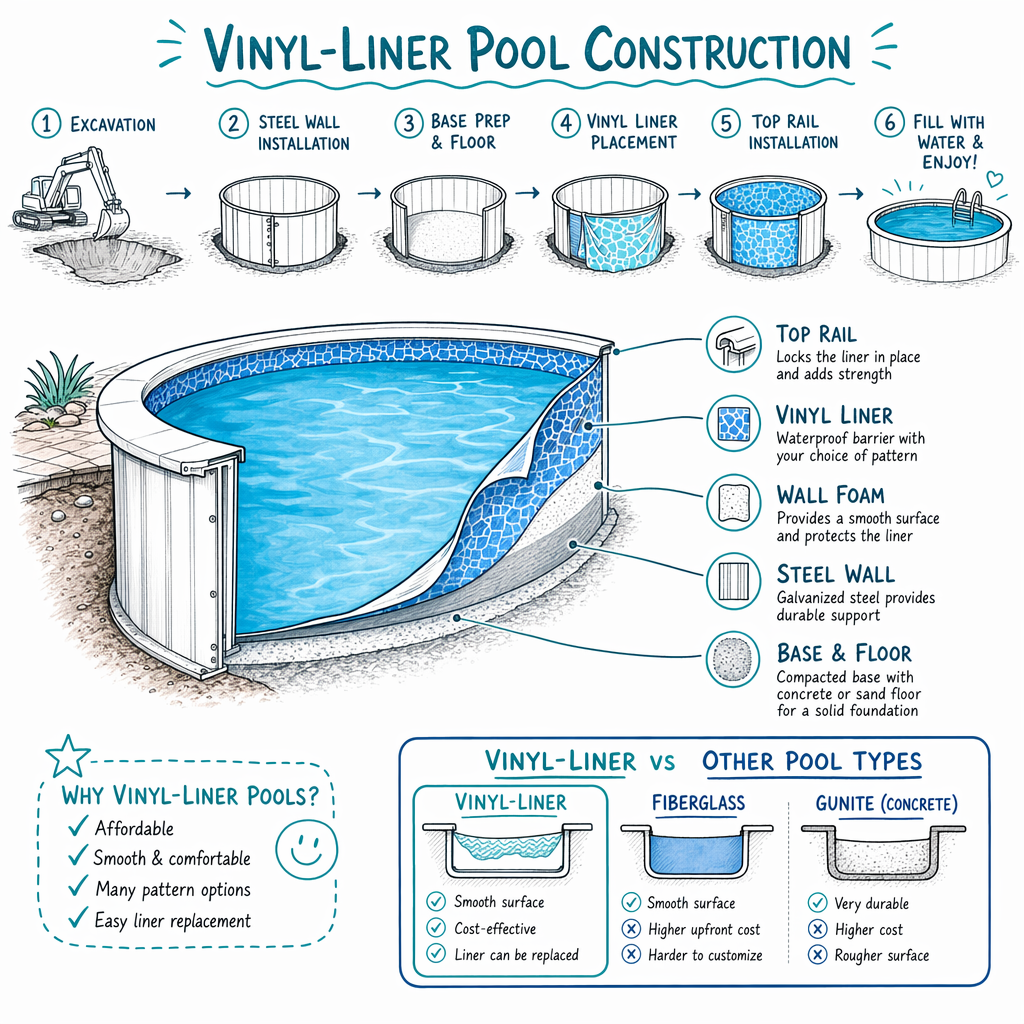
A vinyl-liner pool is an in-ground pool with a shaped frame or wall system, a prepared floor, and a flexible vinyl liner that holds the water. The wall panels are often steel, polymer, or another engineered system. The liner is custom-fit to the pool shape.
For many homeowners, the main reason to look at this option is lower upfront cost compared with many concrete pools. A vinyl-liner pool can also feel smooth underfoot and may be faster to install than some other pool types.
But it helps to go in with open eyes. The liner is a wear item. It does not last forever. You also need a builder who knows how to prepare the base, fit the liner correctly, and explain what is included in the price.
If you are still comparing options, see pool type comparison for a side-by-side look at common in-ground pool types.
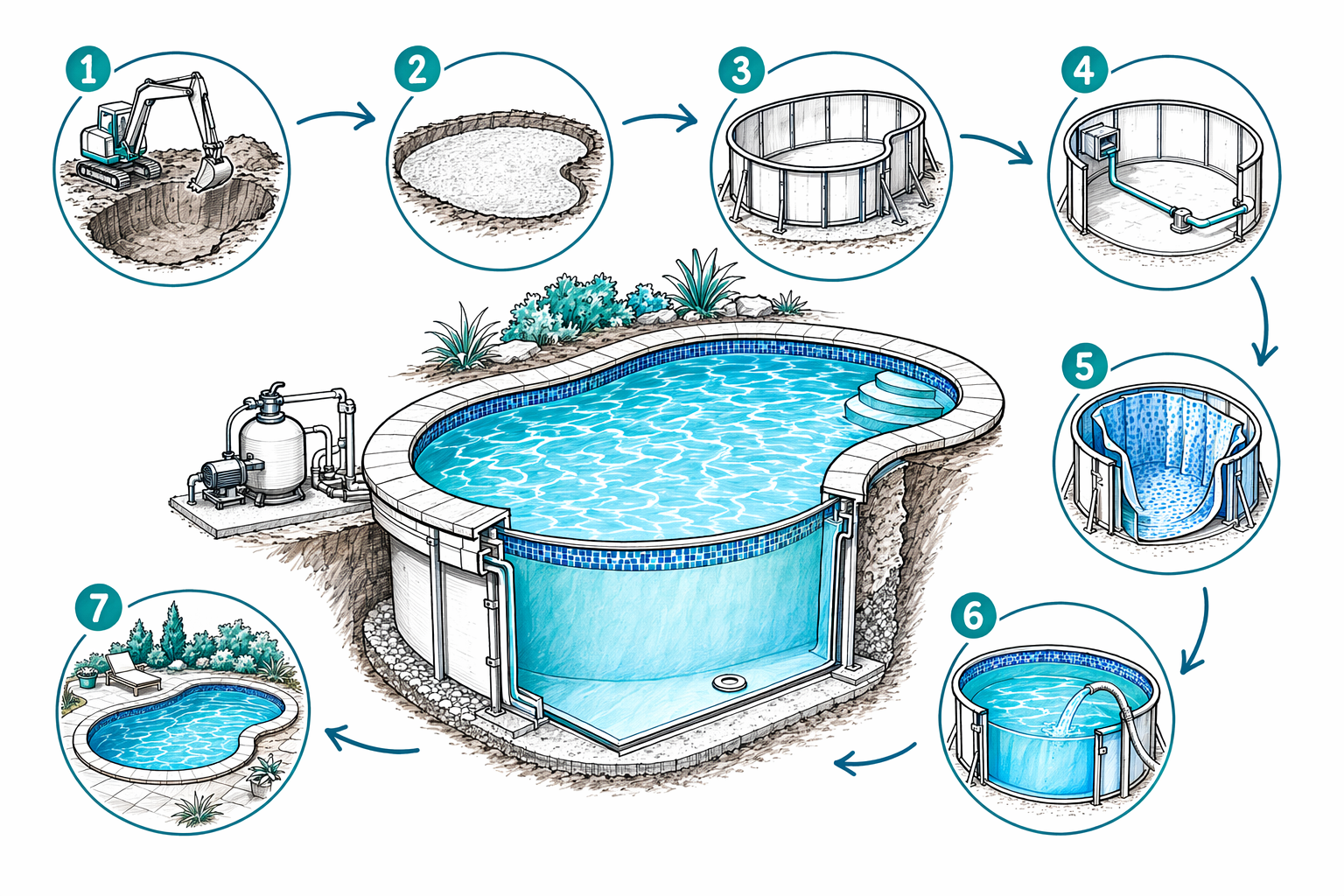
How vinyl-liner pool construction usually works
The exact process varies by builder, soil, weather, access, and local rules, but most projects follow steps like these:
1. Planning and layout
- You choose the pool size, shape, depth, entry steps, and basic features.
- The builder marks the pool location and checks access for equipment.
- Permit requirements, easements, setbacks, and barrier rules should be reviewed before work starts.
2. Excavation
- The crew digs the pool area.
- If your yard has poor access, steep grade, rock, or high water table issues, the job can get more expensive.
3. Wall panels and structure
- The wall system is set, leveled, and braced.
- Plumbing lines, skimmers, returns, and equipment layout are installed according to the project plan.
4. Base and floor prep
- The pool floor is shaped and smoothed.
- This step matters more than many homeowners realize. A rushed floor can show imperfections through the liner.
5. Liner installation
- The custom liner is placed and vacuumed into position.
- Faceplates, fittings, and seals are installed around openings.
6. Fill, startup, and finish work
- The pool is filled with water.
- Equipment is tested.
- Coping, decking, drainage details, fencing or barriers, and final site cleanup are completed if included in your contract.
Ask each builder to spell out what is included and what is not. Some proposals look cheap because they leave out decking, electrical, fence work, permits, hauling, or startup items. For permit basics, read pool permits explained.
Typical vinyl-liner pool cost range
A typical in-ground vinyl-liner pool often runs about $35,000 to $70,000 in the US. Smaller or simpler pools may come in lower. Larger pools, steep yards, premium liners, added decking, water features, heaters, automation, or difficult site conditions can push the total higher.
That is an estimate range, not a quote. The real price depends on:
- Pool size and depth
- Shape complexity
- Your yard and soil conditions
- Access for excavation equipment
- Amount of decking and coping
- Equipment package like pumps, filters, heaters, lights, and automation
- Local labor and permit costs
- Fence, gate, alarms, and other safety-barrier requirements
A low number on a sales sheet is not the same as a complete project price. Many homeowners get surprised by items outside the shell itself, such as:
- Electrical runs and panel upgrades
- Drainage work
- Retaining walls or slope correction
- Extra fill or haul-off
- Patio upgrades
- Landscaping repair after construction
- Permit fees and inspections
Before you pay a deposit, get the price and scope in writing. Ask for a line-by-line breakdown if possible. You can also review broader pool costs to see how vinyl compares with other pool types.
Timeline: how long it usually takes
A vinyl-liner pool is often marketed as a faster build, and sometimes that is true. In a smooth project, actual construction may take several weeks to a couple of months. But the full timeline from first meeting to swimming can be longer.
Common reasons schedules stretch:
- Permit review times
- Weather delays
- Liner manufacturing lead times
- Material availability
- Inspection scheduling
- Change orders after work starts
- Site surprises like rock, groundwater, or drainage problems
A realistic way to think about it is this: the builder may only be on site for part of the total calendar time. There can be gaps between excavation, inspections, liner delivery, decking, and final startup.
Ask each builder:
- When could the job realistically start?
- How many projects do you run at once?
- What delays are common in this area?
- What parts are handled by your own crew and what parts are subcontracted?
- What happens if the liner arrives damaged or late?
Short answer: a vinyl-liner pool can be quicker than some alternatives, but do not plan your family event around the most optimistic promise.
Pros and cons to weigh honestly
Every pool type has tradeoffs. Vinyl-liner pools are no different.
Pros
- Usually lower upfront cost than many concrete options
- Smooth surface that many swimmers like
- Many sizes and shapes are possible
- Good option for homeowners who want an in-ground pool without the highest entry price
Cons
- The liner will need replacement eventually
- Sharp objects, pet claws, rough play, or certain accidents can damage the liner
- Some buyers want a longer-life interior surface and may prefer other pool types
- Design details and features can be more limited than some custom concrete projects
- Poor installation can lead to wrinkles, fitting issues, or cosmetic problems
This is where plain talk matters: a vinyl-liner pool can make sense if you want to manage upfront cost and you understand the long-term maintenance reality. It is not automatically the best deal just because the first number is lower.
If you are also considering other materials, compare fiberglass pools and gunite/concrete pools before you choose.
What to ask before you hire a builder
Do not just ask, "How much?" Ask questions that show how the job will really be handled.
- Are you licensed, insured, and bonded for this work in my area?
- Will you give me your license number and proof of insurance and bond so I can verify them myself?
- What exactly is included in this price?
- What is excluded?
- Who handles permits and inspections, if offered, and what fees are separate?
- What wall system and liner brand or grade are you proposing?
- What thickness and pattern options are included?
- How is the pool floor prepared?
- What decking allowance is included?
- What equipment model numbers are in the package?
- What warranties come from the manufacturer and what workmanship warranty do you provide in writing?
- What payment schedule do you require, and what milestones trigger each payment?
- How are change orders approved and priced?
- What safety barriers are required locally?
Also make sure your contract covers cleanup, damaged irrigation or landscaping, access repairs, drainage responsibilities, and what happens if hidden site conditions increase cost.
You should hire only licensed, insured, and bonded builders, verify that status yourself, follow local permit and pool-safety/fencing laws, and keep final payment until the agreed work is completed.
How DeepEnd Match helps
DeepEnd Match is a free matching service for homeowners. We do not build pools, design pools, or give construction, structural, electrical, plumbing, legal, or financial advice. We help you take the next step by matching you with pool builders who say they are licensed, insured, and bonded in your area.
Here is the simple process:
- Tell us your project basics and contact details.
- We match you with participating builders who may fit your job.
- You compare quotes. You choose who to hire. You hold the final payment.
Matching is free to the homeowner. Participating builders pay a flat fee to be included.
Before hiring anyone, still do your own checks. Verify license, insurance, and bond yourself. Read the scope carefully. Get all pricing and change terms in writing before any deposit. Review how to vet a pool builder if you want a simple checklist, or start here: get matched.
A vinyl-liner pool can be a good lower-cost in-ground option, but the cheapest bid is not always the best deal. Compare complete written scopes, hire only licensed, insured, and bonded builders, verify that status yourself, and use [get matched](/get-matched/) if you want free help finding builders to compare.
Common questions
How long does a vinyl liner last?
It varies by liner quality, water care, sun exposure, use, and luck. Many homeowners should expect the liner to be replaced at some point during pool ownership. Ask each builder what liner they are proposing, what the manufacturer warranty covers, and what labor is or is not included if a liner issue comes up.
Are vinyl-liner pools cheaper than fiberglass or gunite?
They often have a lower upfront price, with a typical in-ground range around $35,000 to $70,000, but that is only an estimate. The real price depends on size, site, finishes, equipment, and area. Also compare long-term costs, including eventual liner replacement, not just the starting number.
Can I get a heater, lights, steps, or a tanning ledge with a vinyl-liner pool?
Often yes, but options depend on the pool design and builder's system. Some features are easy to add. Others may change the budget or design limits. Ask for the exact feature list, model numbers where relevant, and any upgrade costs in writing before you sign.
What should I verify before paying a deposit?
Verify the builder's license, insurance, and bond yourself. Make sure the written contract shows scope, materials, equipment, allowances, payment schedule, warranty details, change-order terms, and what is excluded. Confirm permit responsibilities and follow local pool-safety and fencing laws before work starts.