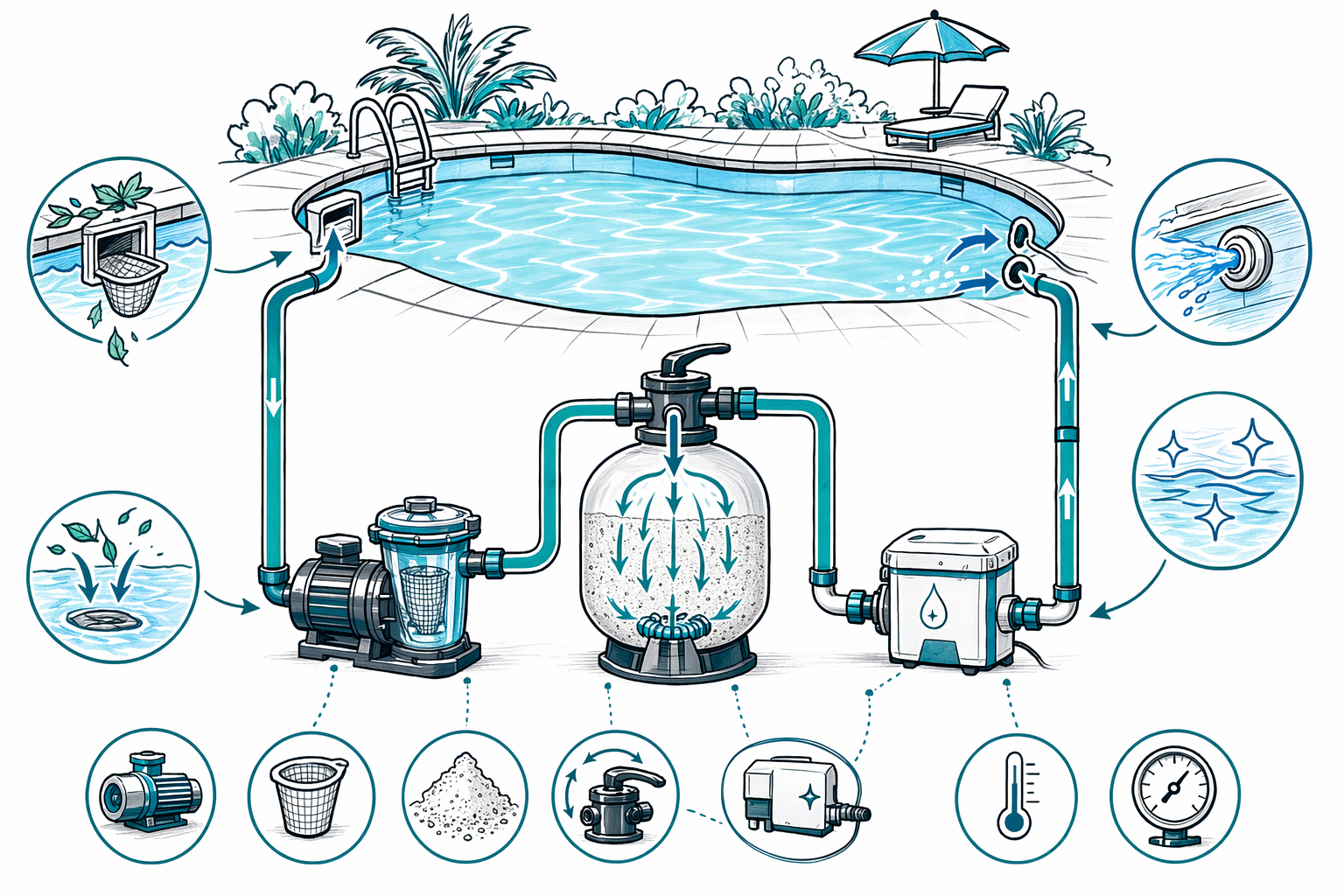
The short answer: what pool equipment does
A pool needs a few basic systems to move, clean, and sanitize water. The exact setup depends on the pool type, size, features, soil, and climate, but most in-ground pools use the same core equipment.
The basics are:
- Pump: moves water through the system
- Filter: removes dirt and fine debris
- Sanitizing system: helps control algae, bacteria, and cloudy water
- Skimmers, drains, and return lines: carry water in and back out
- Valves and plumbing: direct water where it needs to go
Common add-ons are:
- Heater or heat pump for warmer water
- Automation to control pump speed, lights, heating, and schedules
- Cleaner booster or dedicated cleaner line on some pools
- Water features equipment for spas, waterfalls, bubblers, or deck jets
The right equipment package is not always the cheapest one. Good equipment sizing matters. So does layout. A quiet, efficient system that a local service company can maintain is usually a better long-term choice than a flashy upgrade list.
If you are still deciding what kind of pool you want, see pool type comparison. Different pool types can affect plumbing, equipment pad size, and long-term maintenance.
Pump and filter basics homeowners should understand
If you learn only two things, learn this: variable-speed pumps are now the standard choice on most new in-ground pools, and the filter should be sized for easy maintenance, not just minimum code.
Pool pumps
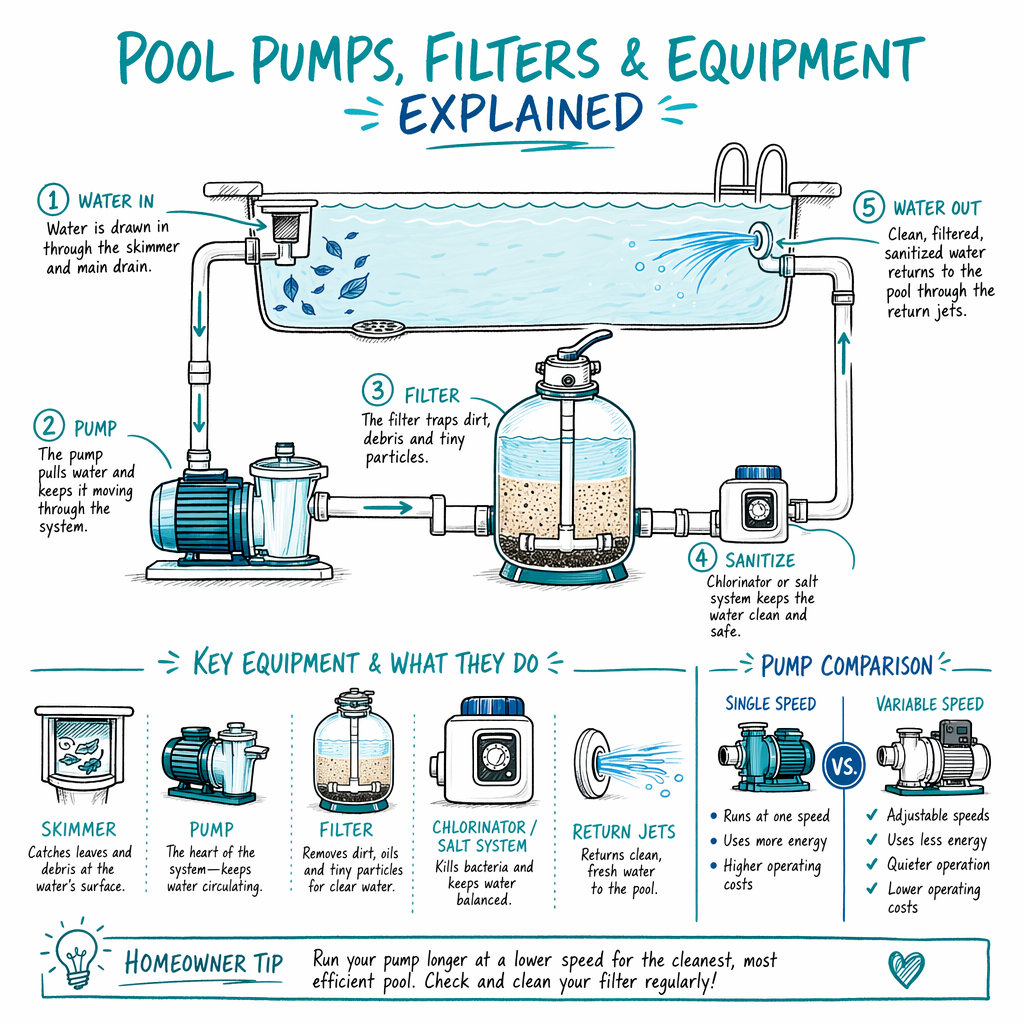
A pump pulls water from the pool, sends it through the filter and other equipment, and returns it clean. Older single-speed pumps use more electricity and are usually louder. Newer variable-speed pumps can run slower for longer, which often saves energy and reduces noise.
Why that matters:
- Lower speed usually means lower electric bills
- Slower flow can mean quieter operation
- Better circulation helps water quality
- More control helps if you have a spa, heater, or water features
Ask the builder what pump size and horsepower they recommend, and why. Bigger is not always better. An oversized pump can waste energy, create noise, and sometimes cause flow issues.
Pool filters
The filter catches dirt, dust, pollen, and fine debris. Most residential pools use one of these:
1. Cartridge filter
- No backwashing on most models
- Good filtration
- You remove and clean cartridges periodically
- Popular because they can save water
2. Sand filter
- Simple and familiar
- Usually easy to operate
- Needs backwashing
- May not catch the finest particles as well as some other options
3. DE filter
- Very fine filtration
- More maintenance steps
- Backwashing and media handling may be more involved
There is no single best filter for every homeowner. The better choice depends on how much maintenance you want to do, how much yard debris you get, local water conditions, and whether you have service help available.
A smart question to ask is: How often will this filter need cleaning in my area, with my trees, wind, and pool size? That answer is often more useful than brand talk.
Heaters, sanitizers, and controls: what adds comfort and what adds cost
This is where pool budgets can move fast. Equipment beyond the basics can make the pool much easier to enjoy, but every upgrade adds upfront cost, future maintenance, or both. Real price depends on the pool type, size, site, finishes, equipment package, and your area. For overall pool budget ranges, start with pool costs.
Heaters and heat pumps
If you want a longer swim season, ask about heating early. Waiting until later can make planning harder.
- Gas heater: heats water faster. Often useful for spas or people who want quick temperature changes.
- Heat pump: usually slower to heat but can be more efficient in the right climate.
Neither one is automatically cheaper in every market. Fuel rates, electric rates, weather, and how often you swim all matter.
Sanitizing systems
Most pools still rely on chlorine in some form. A saltwater system does not mean chlorine-free. It usually uses salt to generate chlorine.
Common options:
- Traditional chlorine dosing
- Salt chlorine generator
- Supplemental UV or ozone on some builds
A salt system can be convenient, but it still needs testing, balancing, and periodic cell replacement. Do not buy it thinking it makes the pool maintenance-free.
Automation and smart controls
Automation can control pump schedules, heating, spa mode, lights, and some water features from a wall panel or phone app. For homeowners with a spa, water features, or busy schedule, this can be worth it.
But ask practical questions:
- Is the app reliable?
- Can I still run the pool if the app fails?
- Can local service companies work on this brand?
- What warranty applies to parts and labor?
Water features and extra loads
A spa, waterfall, slide, or deck jets may require more plumbing, stronger circulation planning, or separate controls. These features change equipment needs. Make sure the builder explains how each add-on affects operating cost, maintenance, and noise.
Where homeowners get burned on equipment
Many pool problems do not start with bad intentions. They start with vague proposals, rushed choices, and equipment lists that look complete but leave out important details.
Watch for these issues:
- No model numbers in writing. If the contract only says "pump" or "filter," you do not know what you are getting.
- Undersized or bare-minimum equipment. It may pass on paper but be frustrating to live with.
- Equipment pad placed in a bad spot. Too close to a bedroom, too visible from the patio, or hard for service access.
- No discussion of noise. Pumps, heaters, and some features can be louder than buyers expect.
- Difficult maintenance access. Tight equipment pads can make simple service harder and more expensive.
- Brand choices nobody local services. A bargain is not a bargain if parts or repair help are hard to get.
- Missing electrical or gas coordination. Heaters, automation, and lighting need proper planning under local code.
Before any deposit, get price and scope in writing. Ask for the exact equipment list, including model numbers when possible. Make sure responsibilities are clear. Who supplies what? What is optional? What is excluded?
And always hire licensed, insured, and bonded pool builders. Verify the license, insurance, and bond yourself. Follow local permits and pool-safety/fencing laws. A builder should know the process, but you should still confirm requirements and not assume anything. These guides can help: how to vet a pool builder and pool permits explained.
What to do next before you choose a builder
Use this simple checklist when you compare proposals. You do not need to become an equipment expert. You just need clear answers.
- Ask what equipment is included by default. Pump, filter, sanitizer, heater, automation, cleaner hookups, lights, and valves.
- Ask why it was sized that way. The answer should mention pool size, spa, features, and expected use.
- Ask about energy and noise. Especially if the pad is near bedrooms, neighbors, or outdoor seating.
- Ask what routine maintenance looks like. Filter cleaning, salt cell replacement, winterizing if relevant, and expected service intervals.
- Ask who can service it locally. Parts availability matters.
- Ask for model numbers in writing before you sign. Do not rely on verbal promises.
- Ask what permits and inspections apply in your town. Also check pool safety barriers so fencing and gate rules do not surprise you.
If you want help comparing builder proposals, DeepEnd Match can help you start the process. We are a free matching service for homeowners. We match you with builders, and you compare quotes, you choose who to hire, and you hold the final payment. You can start here: Get matched.
Learn the job of each pool system, ask for exact equipment details in writing, verify the builder is licensed, insured, and bonded, and compare how each setup affects energy use, noise, maintenance, and long-term cost before you sign.
Common questions
Do I really need a variable-speed pump?
For most new in-ground pools, it is the common choice because it can run more efficiently and more quietly than older single-speed pumps. The right pump still needs to be sized correctly for your pool, spa, and water features. Ask the builder to explain the recommendation in writing.
Which pool filter is best: cartridge, sand, or DE?
There is no universal best choice. Cartridge filters are popular for good filtration and no routine backwashing on most models. Sand filters are simple and familiar. DE filters can provide very fine filtration but may involve more maintenance steps. The right choice depends on your maintenance preferences, debris load, local conditions, and service support in your area.
Does a saltwater pool mean no chlorine?
No. A saltwater pool usually still uses chlorine. The difference is that a salt chlorine generator makes chlorine from salt in the water. It can be convenient, but it still needs water testing, balancing, cleaning, and replacement parts over time.
How much should pool equipment add to the project price?
It varies widely. Basic equipment is part of the overall pool build, while heaters, automation, spas, and water features can raise the total. These are not one-size-fits-all numbers. The real price depends on the pool type, size, site, finishes, equipment choices, and your area. Get exact equipment and scope in writing from licensed, insured, and bonded builders before any deposit.