The short answer
Yes, lighting and water features can be worth it. But only if you pick them for how you actually live, not just for the showroom look.
For most homeowners, pool lights are a practical upgrade first and a style upgrade second. Good lighting helps with evening use, visibility, and atmosphere. Water features are more optional. They can look great and add sound, but they usually increase build cost, operating cost, and upkeep.
A few honest rules:
- Add lighting during the build if you can. It is usually simpler and more cost-effective than opening finished surfaces later.
- Be careful with water features you will not use often. A big sheer descent or deck jet can look amazing for a week, then stay off because of splash, noise, wind, or higher energy use.
- Ask about maintenance before you fall in love with the look. More pumps, valves, basins, and spillways usually mean more cleaning and more parts that can need service.
- Get all feature pricing and scope in writing before any deposit. Real cost depends on pool type, size, site conditions, finishes, equipment, and area.
If you are still deciding on pool type, this matters too. Some features fit certain shells and layouts better than others. Compare options here: pool type comparison.
What pool lighting usually includes
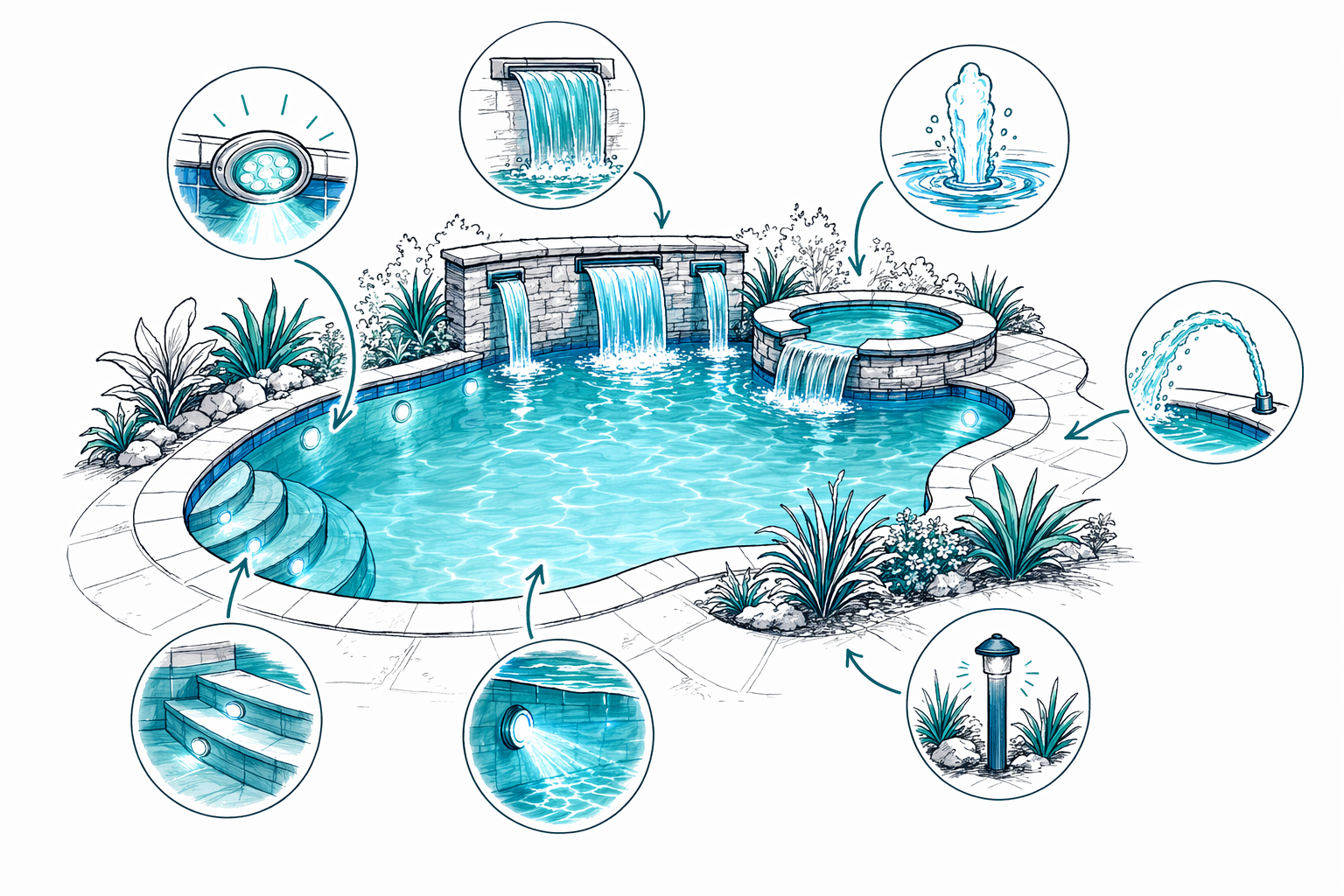
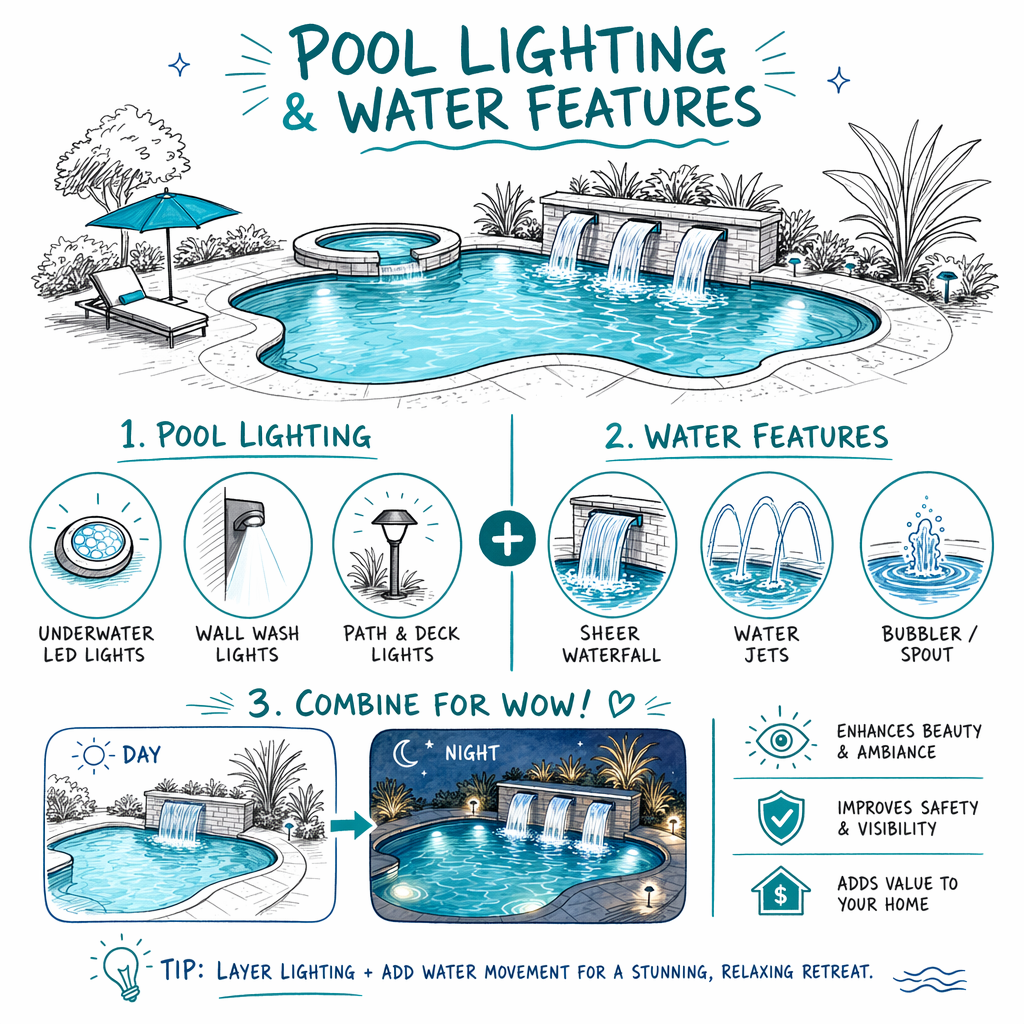
Pool lighting is not just one thing. Builders may be talking about underwater lights, step and tanning ledge lights, accent lights around the pool, or landscape/path lights installed as part of the pool project.
The most common setup today is LED pool lighting. Homeowners like it because it uses less energy and can offer color-changing modes. But the important part is not the color show. It is placement, brightness, and serviceability.
What to think about:
1. How you use the pool at night
If you swim after work, host family dinners outside, or want the yard to feel safe and usable after dark, lighting usually makes sense.
2. Where the lights point
Poor placement can shine directly toward your patio seating, bedroom windows, or a neighbor's yard. Ask the builder to explain where each light will face.
3. Steps, ledges, and depth changes
These areas matter for visibility. If you have a tanning shelf, benches, or a deep end transition, ask how those spots will be lit.
4. Controls
Ask whether lights can be controlled from a wall panel, remote, or phone app, and what equipment is needed for that.
5. Future service
Ask what brand and model are being proposed and how replacement or repair works if a light fails.
Typical cost ranges vary a lot by number of fixtures, controls, trenching, deck work, and local labor. As a rough estimate, homeowners may see:
- Basic pool lighting packages: about $1,000-$3,500
- More customized lighting with multiple zones or smart controls: about $3,500-$8,000+
- Landscape or accent lighting tied into the pool project: often $1,500-$6,000+ extra
These are typical estimates, not quotes. The real price depends on the pool type, size, layout, site, equipment, and your area. If you are budgeting the full project, start with overall ranges here: pool costs.
Water features: what looks good on paper vs what works at home
Water features can make a backyard feel high-end, but they are the upgrade category where people most often overspend on things they barely use.
Common options include:
- Sheer descents that send a smooth sheet of water into the pool
- Deck jets or laminars that arc water from the deck into the pool
- Bubblers on tanning ledges or shallow shelves
- Spillover spas where water flows from the spa into the pool
- Scuppers, bowls, or raised walls with water coming through them
- Rock waterfalls or grottos for a more natural look
Here is the honest tradeoff:
- They add sound. This can be peaceful or annoying, depending on volume and placement.
- They add evaporation and splash. In dry, hot, or windy areas, that can mean more refill water and more chemical adjustment.
- They may need separate plumbing, valves, and pump capacity. That usually means more cost and more complexity.
- They can create cleaning issues. Some features collect scale, debris, algae, or mineral buildup.
Typical installed ranges can vary widely, but many homeowners see rough estimates like these:
- Bubblers: around $700-$1,800 each
- Deck jets: around $500-$1,500 each
- Sheer descents or scuppers: around $1,000-$4,000+ depending on size and finish work
- Raised walls with water features: around $3,000-$10,000+
- Rock waterfalls or larger custom features: around $5,000-$20,000+
Again, these are typical estimates only. Real pricing depends on design, structure, finish materials, equipment needs, access, and local labor.
A simple test helps: if you think you will run the feature only for guests, ask yourself if that occasional use is worth the upfront cost and future maintenance. Many families are happier spending that money on a better patio, safety fence, or automation they use every day.
What to ask before you approve lighting or water features
This is where homeowners protect themselves. Before you sign, ask clear questions and get the answers in writing.
For lighting:
- How many lights are included, and where will they be placed?
- What brand, model, and warranty are included?
- Are shelves, steps, benches, and entries lit well enough for night use?
- What controls are included? App, timer, wall switch, automation panel?
- If a light fails later, how is it serviced and what could that cost?
For water features:
- Does this feature need a dedicated pump, extra plumbing, or added automation?
- How loud is it in real use?
- How much splash or wind drift should I expect?
- Will this increase evaporation or chemical use?
- What cleaning and upkeep does it need?
- Can it run independently, or do all features turn on at once?
For any add-on:
- Ask for a line-item price, not just a verbal total.
- Ask what is included and what is not included. Electrical, gas, finish material, startup, training, and cleanup matter.
- Ask whether the add-on affects permits, inspections, or safety requirements. Follow local rules and review pool permits explained.
- Verify the builder is licensed, insured, and bonded for the work in your area. Check the license, insurance, and bond yourself.
- Do not rely on promises. Get price and scope in writing before any deposit.
Because lighting involves electrical components near water, and some features affect plumbing and circulation, this is not the place for guesswork. Hire qualified professionals, verify credentials yourself, and make sure the final plan follows local permit and pool-safety rules.
What to do next
If you are early in planning, keep it simple. Build a short must-have list and a separate nice-to-have list.
A practical order looks like this:
- Choose the pool type and layout first. Feature choices are easier after that.
- Decide how you will really use the yard. Quiet evenings? Kids playing? Entertaining? Night swimming?
- Price lighting and water features separately. This helps you see what is driving the budget.
- Compare at least a few licensed, insured, bonded builders. Ask each one the same questions so you can compare clearly.
- Keep control of the deal. You compare quotes, you choose who to hire, and you hold final payment until agreed work is done.
DeepEnd Match is a free matching service for homeowners. We do not build pools or give construction, electrical, plumbing, legal, or financial advice. We help you connect with licensed, insured, bonded pool builders so you can compare options yourself. If you want help finding builders who can price these upgrades clearly, start here: get matched or use this checklist to vet a pool builder.
Pick lighting for safety, visibility, and real night use. Pick water features only if you like the sound, splash, and upkeep enough to use them often. Get line-item pricing in writing, verify the builder is licensed, insured, and bonded yourself, and follow local permit and pool-safety rules.
Common questions
Are pool lights required?
Requirements depend on your local code and the type of project. Many homeowners add lights for usability and visibility, but not every pool must have the same lighting setup. Ask your builder what local permit and inspection rules require, and verify that yourself with your local building department. Follow all local permits and pool-safety laws.
Do water features make a pool harder to maintain?
They can. Extra water movement can increase evaporation and splash. Some features collect scale, debris, or algae. More pumps, valves, and plumbing can also mean more parts to service over time. Ask exactly what maintenance each feature needs before you approve it.
Can I add lighting or water features later?
Often yes, but it is usually easier and sometimes more cost-effective to include them during the original build. Adding features later may require cutting deck surfaces, adding trenching, upgrading equipment, or reworking plumbing and electrical systems. Get written estimates from licensed, insured, bonded builders and compare the scope carefully.
What upgrades give the best everyday value?
For many families, simple LED lighting, good step and shelf visibility, and easy controls give better daily value than large decorative water features. A modest bubbler on a tanning ledge may get more use than a large waterfall. The best value depends on how you use the yard, your climate, and your maintenance tolerance.