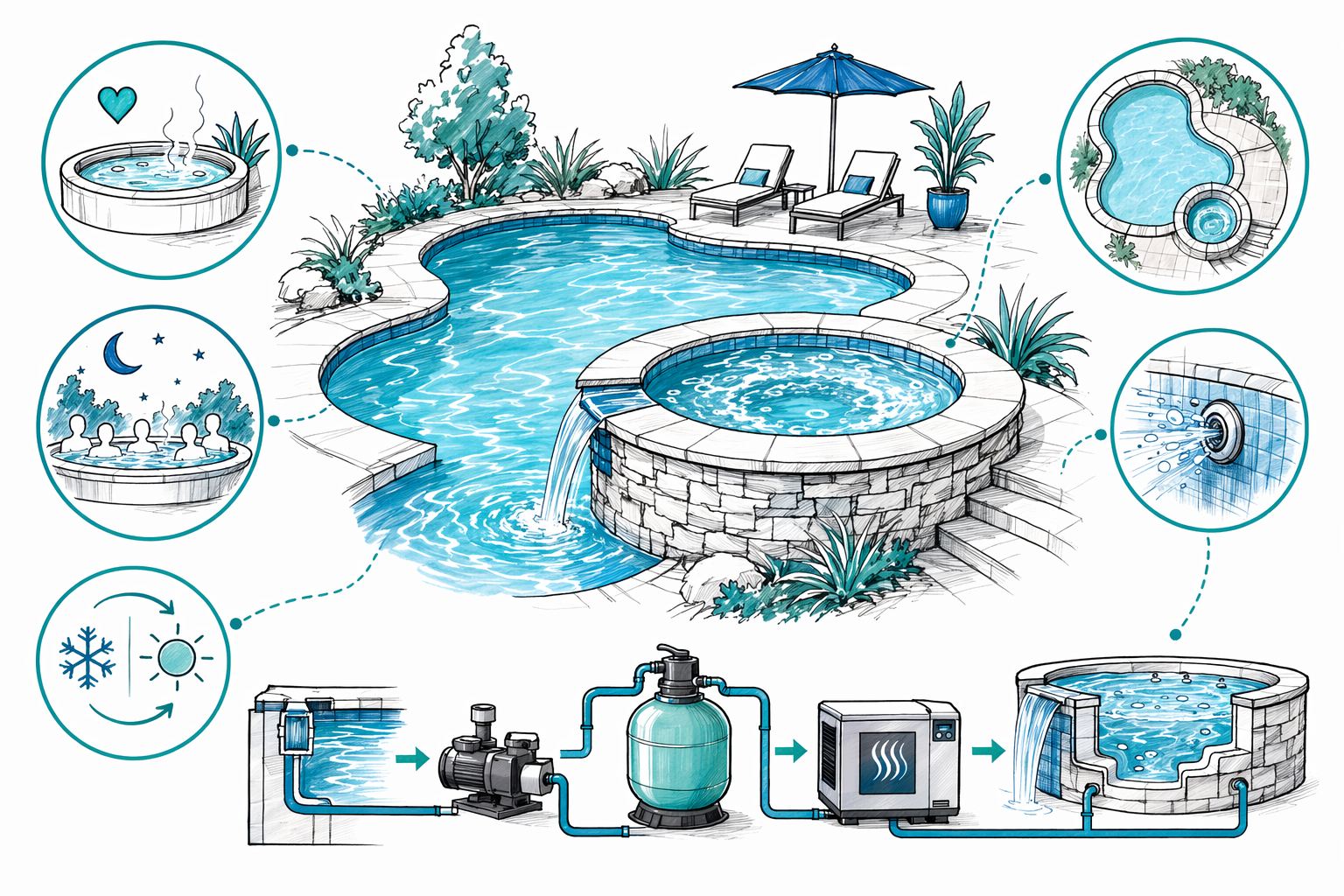
The short answer: a spa can be worth it, but it changes the whole project
A spa is one of the most requested pool upgrades because people use it in cooler weather, at night, and on days when nobody wants a full swim. It can make the backyard feel more complete.
But a spa is not a small add-on. It affects layout, plumbing, equipment, electrical work, heating, finishes, and total budget. It can also raise ongoing monthly costs.
For many homeowners, the right question is not just "Can I add a spa?" It is "What type of spa makes sense for my yard and budget?"
Common paths are:
- Attached spa built as part of a new in-ground pool project
- Detached in-ground spa near the pool, but separate
- Portable hot tub placed on a pad or deck near the pool
- Spa-only project if you want heat and hydrotherapy without a full pool
If you are still choosing pool types, start with a simple pool type comparison. Some spa options fit more naturally with some pool styles than others.
A built-in spa usually looks best and can add strong day-to-day enjoyment. A portable hot tub is often cheaper and faster. The honest answer is that the best option is the one you will use often enough to justify the upfront cost and the monthly heating cost.
What it usually costs
Costs vary a lot by pool type, spa size, site access, equipment, finishes, and local labor prices. These are typical ranges and estimates, not quotes.
If you are building a new in-ground pool and adding a built-in spa at the same time, many homeowners see rough add-on costs like these:
- Attached or integrated spa: often about $15,000 to $35,000+ added to the pool project
- Detached in-ground spa: often about $20,000 to $40,000+ depending on plumbing runs, decking, and design
- Portable hot tub near the pool: often about $5,000 to $18,000+ for the unit, pad, electrical hookup, and setup
Your full pool budget still depends on the pool itself:
- Gunite/concrete pools: typically $60,000 to $135,000
- Fiberglass pools: typically $45,000 to $95,000
- Vinyl-liner pools: typically $35,000 to $70,000
- Smaller plunge pools: often less, depending on features and area
You can see broader pool budgeting details on our costs page.
A few upgrades push spa pricing up fast:
- Spillover edges or raised walls
- Premium tile and stone
- Extra jets and larger pumps
- Stronger heaters or faster heat-up times
- Automation and app controls
- Longer plumbing runs from equipment pad to spa
- Tight access that requires more labor or special equipment
Do not forget the operating cost. A spa needs heat, circulation, water care, and occasional service. If you plan to keep it hot all the time, ask each builder for a written estimate of:
- Heater size
- Expected heat-up time
- Monthly energy use
- Maintenance needs
- Warranty details
Get all of that in writing before any deposit. Then compare apples to apples.
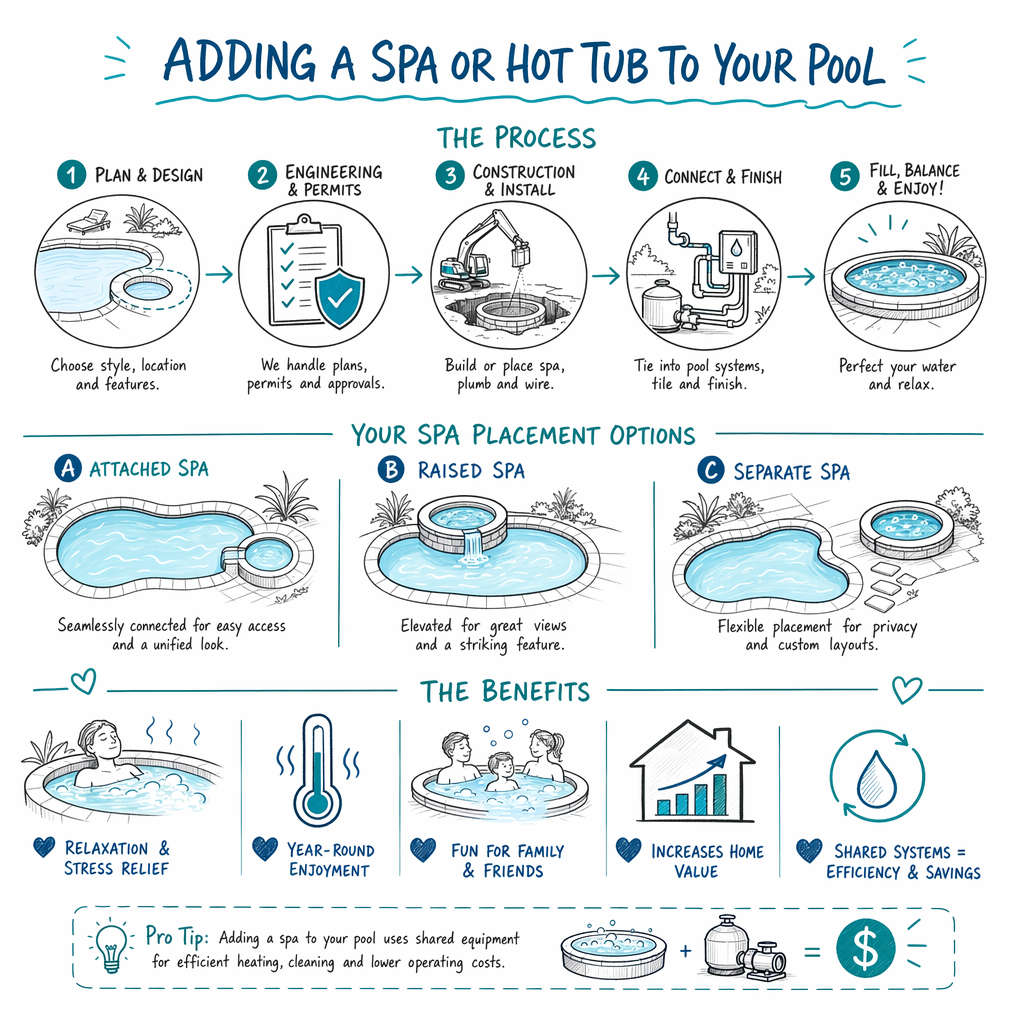
Built-in spa vs portable hot tub: how to choose
This is where many homeowners save or waste a lot of money.
A built-in spa usually makes sense if:
- You are already building a new in-ground pool
- You want one clean, custom look
- You care about resale appeal and backyard design
- You want matching tile, coping, and finish
- You are comfortable with the higher upfront cost
A portable hot tub often makes more sense if:
- Your budget is tighter
- You already have an existing pool and do not want major excavation
- You want faster installation
- You want easier replacement years later
- You mainly care about warm soaking and jets, not a custom look
There is also the question of attached vs detached spa.
Attached spa
- Sits connected to the pool shell
- Often shares equipment more easily
- Can include a spillover feature into the pool
- Usually gives a high-end look
- Can be efficient during a new build
Detached spa
- Gives more layout freedom
- Can sit closer to the house for easier winter use
- May work better on a narrow or awkward lot
- Can create more plumbing and decking cost
If you are planning a concrete pool, a custom attached spa is often easiest to integrate visually. Learn more about gunite/concrete pools. Fiberglass and vinyl-liner projects can also include spa solutions, but the design path may differ depending on manufacturer options, site, and builder approach.
The biggest mistake is choosing based only on the showroom look. Choose based on how you will use it in real life. Ask yourself:
- Will we use it 2 to 4 nights a week, or only on holidays?
- Do we want hydrotherapy jets or just warm water?
- Do we mind waiting for it to heat up?
- Do we want the spa close to the back door?
- Are we okay paying more each month for heat?
Honest answers here prevent regret later.
Things homeowners forget until it is too late
A spa sounds simple. In practice, small planning mistakes can become expensive.
Watch these issues closely:
- Equipment sizing. A weak heater or undersized pump can mean slow heating and poor jet performance.
- Noise. Pumps, blowers, and equipment pads can be louder than expected, especially near bedrooms or property lines.
- Distance from the house. A spa that is too far away gets used less in cold or rainy weather.
- Water chemistry. Shared pool-and-spa systems need smart plumbing and controls to stay balanced.
- Safety barriers. A spa still needs proper safety planning, especially around children. Review pool safety barriers.
- Permits and code. Heaters, gas lines, electrical work, fencing, alarms, and setbacks may all trigger local rules.
- Cover needs. Ask what type of spa cover works best and what it costs to replace.
If this is an existing pool retrofit, be extra careful. Not every yard, equipment pad, or pool structure is a good candidate for adding a built-in spa later. In some cases, a portable hot tub is the smarter choice.
Before you sign, ask each builder:
- Is this spa design realistic for my lot and existing equipment?
- What permits are usually required in my area?
- What safety upgrades may be needed?
- What is included in the written scope, and what is not?
- Who handles inspections?
- When is final payment due?
Always hire licensed, insured, and bonded builders, and verify the license, insurance, and bond yourself. Follow local permits and pool-safety and fencing laws. Get price, scope, materials, equipment model numbers, and payment schedule in writing before any deposit.
For builder screening questions, use our guide to vet a pool builder.
What to do next
If you are serious about adding a spa or hot tub, keep the process simple.
- Set your real budget. Include construction and monthly heating costs.
- Decide how you will use it. Therapy, entertaining, winter soaking, or visual upgrade.
- Pick your likely path. Built-in attached spa, detached in-ground spa, or portable hot tub.
- Measure your yard. Think about privacy, door access, and equipment location.
- Talk to qualified local builders. Compare ideas, scope, timeline, and equipment.
DeepEnd Match is a free matching service for homeowners. We help you connect with licensed, insured, bonded pool builders so you can compare quotes, ask questions, and choose who to hire. Participating builders pay a flat fee to be listed and matched. The matching is free to you.
If you want to start comparing local options, you can get matched.
A spa can be a great pool upgrade, but it is not cheap and it raises monthly costs. Compare built-in and portable options, get written scope and pricing from licensed, insured, bonded builders, verify credentials yourself, and choose the setup you will actually use.
Common questions
Is it cheaper to add a spa during a new pool build or later?
Usually during a new pool build. Combining excavation, plumbing, electrical, decking, and finish work is often more efficient than reopening a finished yard later. A retrofit can still work, but it may cost more and offer fewer design options.
Can I add a spa to an existing in-ground pool?
Sometimes, yes. It depends on yard space, equipment capacity, access, local code, and how the existing pool was built. A licensed, insured, bonded builder should inspect the site and explain what is realistic. In many retrofit cases, a portable hot tub may be the simpler and lower-cost option.
Does a spa add a lot to monthly costs?
It can. The real cost depends on heater type, climate, insulation, how often you use it, target temperature, and local utility rates. Ask each builder for a written estimate of expected operating costs based on your planned use, and compare that before you decide.
Do spas need permits and safety barriers?
Often, yes. Local rules may apply to electrical work, gas lines, setbacks, alarms, covers, fencing, gates, and inspections. Requirements vary by area, so follow local permits and pool-safety laws. Do not assume a small spa is exempt.