The short answer
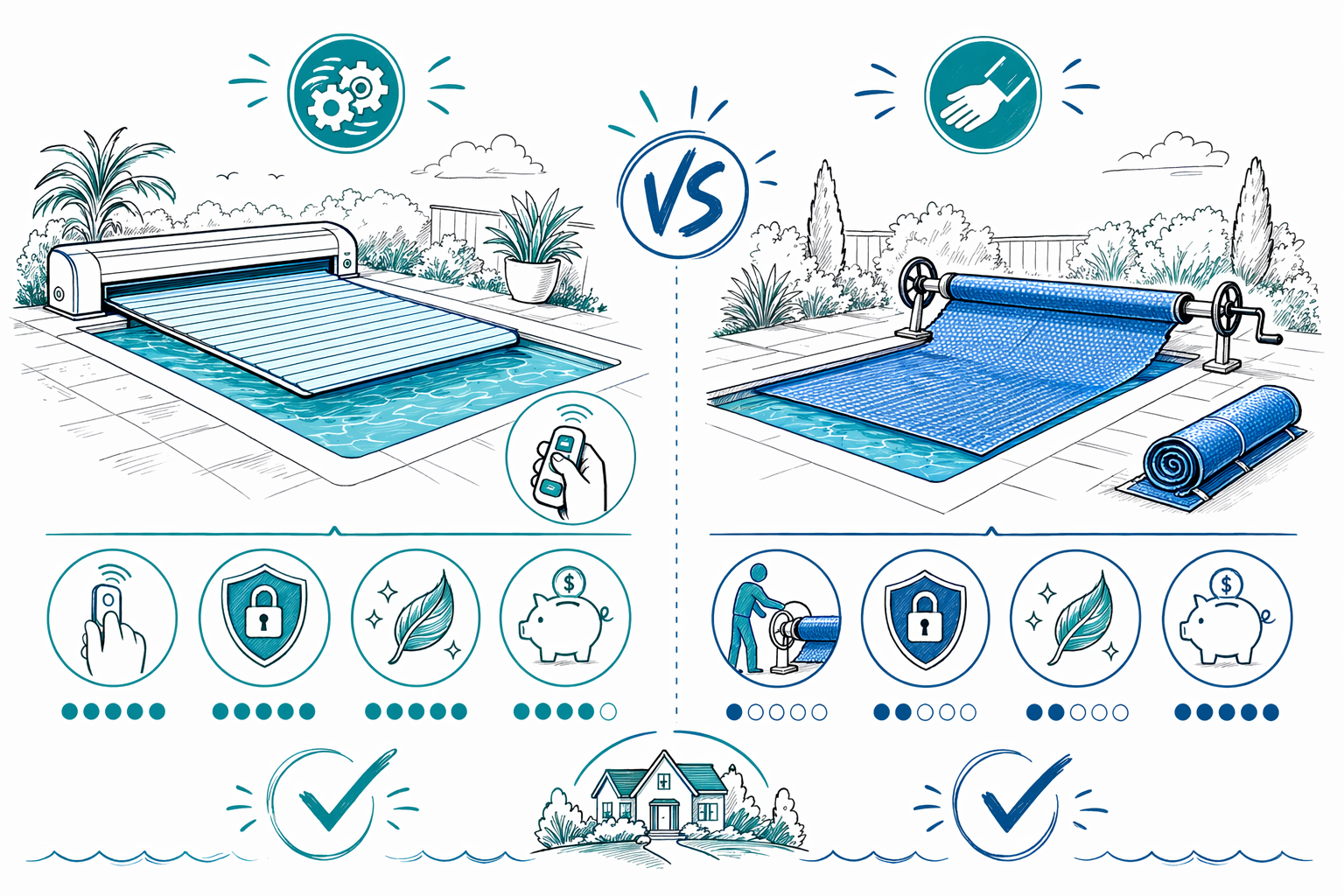
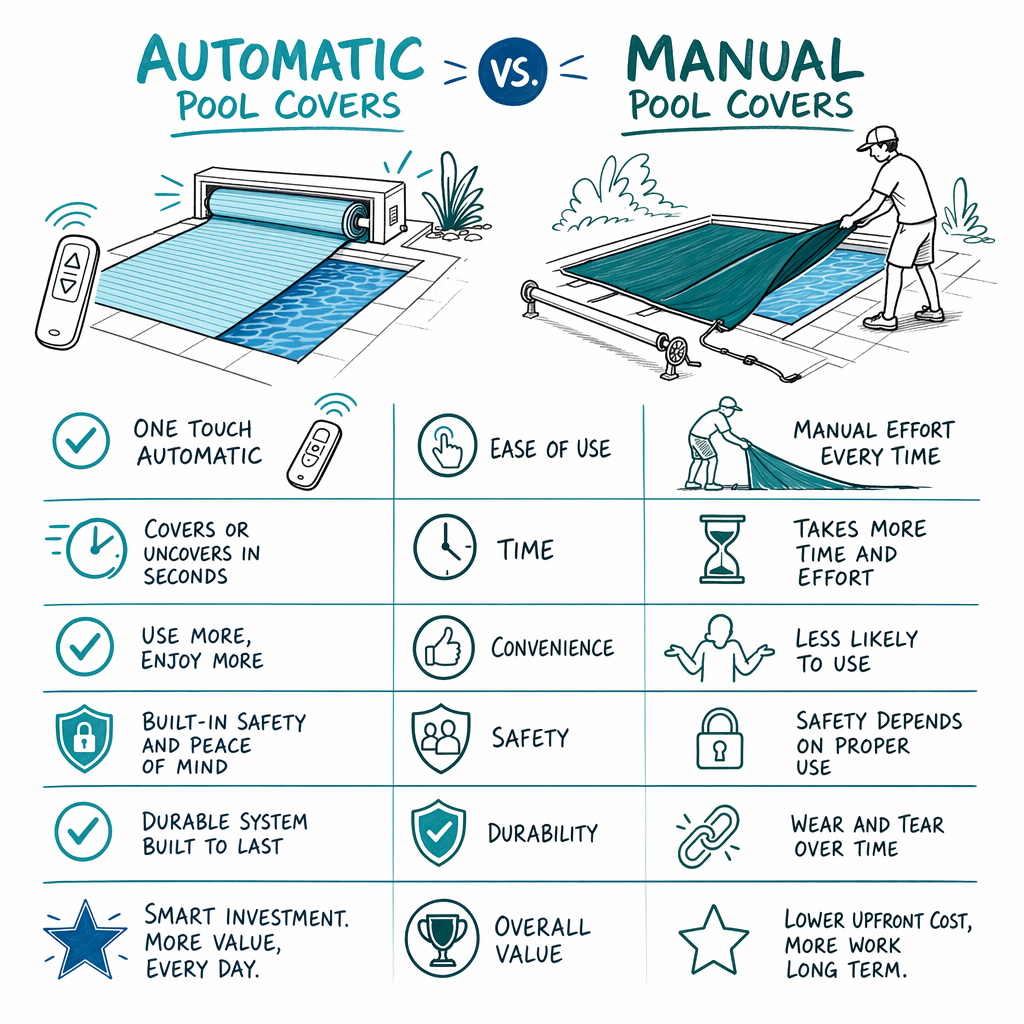
If you want a cover you will use almost every day, automatic usually wins on convenience. You press a switch or key, and the cover opens or closes in a minute or two. That matters because a pool cover only helps when people actually use it.
If you want the lower upfront cost, manual usually wins. A manual cover can still do a good job reducing debris and evaporation, but it takes more effort to put on, take off, clean, and store.
For many homeowners, the real question is simple: Will you consistently cover the pool by hand? If the honest answer is no, paying more for automatic may make sense. If your pool is small, used less often, or you do not mind the work, manual can be a practical option.
One more important point: not every pool cover is a safety cover. Do not assume any cover will protect children, pets, or guests. Ask the builder and manufacturer whether the specific cover is rated for safety, what the weight limits are, and what rules apply where you live. Follow local fencing, gate, alarm, and pool-safety laws. See pool safety barriers for the bigger picture.
How the two types differ in real life
Here is what homeowners usually notice after the pool is built:
- Automatic covers
- Open and close fast with a motorized system
- More likely to be used every day
- Can help keep out leaves and reduce evaporation and heat loss
- Usually cost much more upfront
- Need tracks, a mechanism, and space for the cover to roll into a housing
- Add moving parts that need service over time
- Manual covers
- Lower purchase cost
- Simpler system with fewer mechanical parts
- Often fine for seasonal use or lighter-duty needs
- Take time and physical effort to handle
- May be awkward on larger pools
- Are easier to skip using when you are tired or in a hurry
Automatic covers are not a perfect fit for every pool shape. They are easiest on simple rectangular pools. Curves, raised features, attached spas, rock edges, vanishing edges, and some custom shapes can make design and installation more complicated or more expensive. If you are still deciding on pool type, shape, and features, compare those choices first in pool type comparison.
Manual covers also come in different forms. Some are basic covers you pull across the water. Some use reels. Some are stronger seasonal safety covers anchored around the deck. So when people say "manual cover," they may be talking about very different products. Always ask exactly what type is included and what it is meant to do.
Cost, maintenance, and where people get burned
This is where homeowners make expensive mistakes.
First, a cover price is usually not just the cover. The real price can depend on:
- Pool size and shape
- New build vs retrofit on an existing pool
- Whether the pool is gunite, fiberglass, or vinyl liner
- Deck material and edge details
- Whether a vault, bench, or housing is needed to hide the roll
- Electrical work for motorized systems
- Local labor rates and permit requirements
For automatic covers, homeowners often hear a number early and assume that is the full cost. It may not be. There can be added costs for deck prep, drainage, electrical, lid materials, and adjustments to the pool design so the cover system will fit. That is why you want the full scope in writing before you put down a deposit.
For manual covers, the trap is different. The lower purchase price can look great, but if the cover is heavy, awkward, or hard to store, some families stop using it. Then they still deal with leaves, evaporation, cooler water, and more cleaning.
Maintenance matters too:
- Keep water chemistry in range so cover materials last longer
- Do not let standing water or debris sit on top longer than recommended
- Clean tracks and moving parts on automatic systems
- Inspect ropes, reels, anchors, fabric, and wear points
- Ask who services the cover locally before you buy
If you are pricing a whole pool project, remember the cover is only one line item. Typical in-ground pool costs often fall in these ranges before many upgrades: gunite $60,000-$135,000, fiberglass $45,000-$95,000, vinyl-liner $35,000-$70,000. Smaller or plunge pools may cost less. Those are typical estimates, not quotes, and the real price depends on type, size, site, finishes, and area. You can review broader pool budget ranges on costs.
Safety and code questions to ask before you choose
A pool cover can be helpful, but it is not a substitute for the full safety setup your area may require.
Ask these questions before signing anything:
- Is this specific cover rated as a safety cover, or is it mainly for debris and heat retention?
- What standards does it meet, and can the builder show that in writing?
- Does my city or county still require fencing, self-closing gates, alarms, or other barriers even if I install a cover?
- What maintenance must I do so the cover keeps working as intended?
- Can children open it, tamper with it, or get under it?
- What happens in a power outage if the cover is automatic?
Also ask about the pool itself. Some pool designs work better with certain cover systems than others. For example, the coping, tracks, and edge detail can differ depending on whether you choose gunite/concrete pools or another pool type.
Most important, hire licensed, insured, and bonded pool builders and verify the license, insurance, and bond yourself. Ask for the builder's full legal business name and license number. Check it with your state or local licensing agency. Get the product model, scope, price, schedule, warranty terms, and who handles service in writing before any deposit. Follow local permits and pool-safety laws. If you need help interviewing companies, use vet a pool builder.
What to do next
If you are deciding between automatic and manual, keep it simple:
- Be honest about your habits. If you know you will not pull a manual cover on and off regularly, automatic may be worth the extra money.
- Think about pool shape early. Automatic systems are often easiest on straightforward designs.
- Ask for two written options. One automatic. One manual. Same pool. Same assumptions. That makes the comparison fair.
- Confirm safety claims. Do not assume every cover is a safety cover.
- Verify the builder. Check license, insurance, and bond yourself.
- Read the scope line by line. Look for electrical, deck work, housing, drainage, and service terms.
DeepEnd Match is a free matching service for homeowners. We do not build pools or give construction, legal, or financial advice. We help you connect with licensed, insured, bonded pool builders so you can compare options, ask questions, and choose who to hire. If you are ready to talk with local builders, start here: get matched.
If you want a cover you will actually use often, automatic is usually easier but costs more. Manual costs less but takes more work. Ask licensed, insured, bonded builders for both options in writing, verify their license and coverage yourself, and do not assume any cover counts as a safety barrier.
Common questions
Is an automatic pool cover always safer than a manual cover?
Not always. Safety depends on the specific product, how it is installed, how it is maintained, and whether it is actually rated as a safety cover. Some covers mainly help with debris, evaporation, and heat retention. Always ask for the safety rating and instructions in writing, and still follow local fencing and pool-safety laws.
Can I add an automatic cover to an existing pool later?
Sometimes, yes, but retrofit work can be harder and more expensive than planning for it during a new build. Pool shape, deck layout, edge detail, drainage, and electrical access all matter. Some existing pools are poor candidates or need design changes. A licensed, insured, bonded builder can inspect the site and explain the practical options.
Do pool covers save enough money to pay for themselves?
It depends. Covers can reduce evaporation, help hold heat, and cut down on debris, which may lower some operating and cleaning costs. But savings vary by climate, pool use, heating method, and how consistently the cover is used. An automatic cover that gets used daily may deliver more real-world benefit than a cheaper manual cover that often stays off.
Which cover works better for families with kids and busy schedules?
Many busy families prefer automatic because it is faster and easier to use, so it is more likely to be closed when the pool is not in use. But convenience does not replace supervision, fencing, gates, alarms, or compliance with local safety rules. Choose the system your household will actually use correctly every time.