The short answer: where most pool energy gets wasted
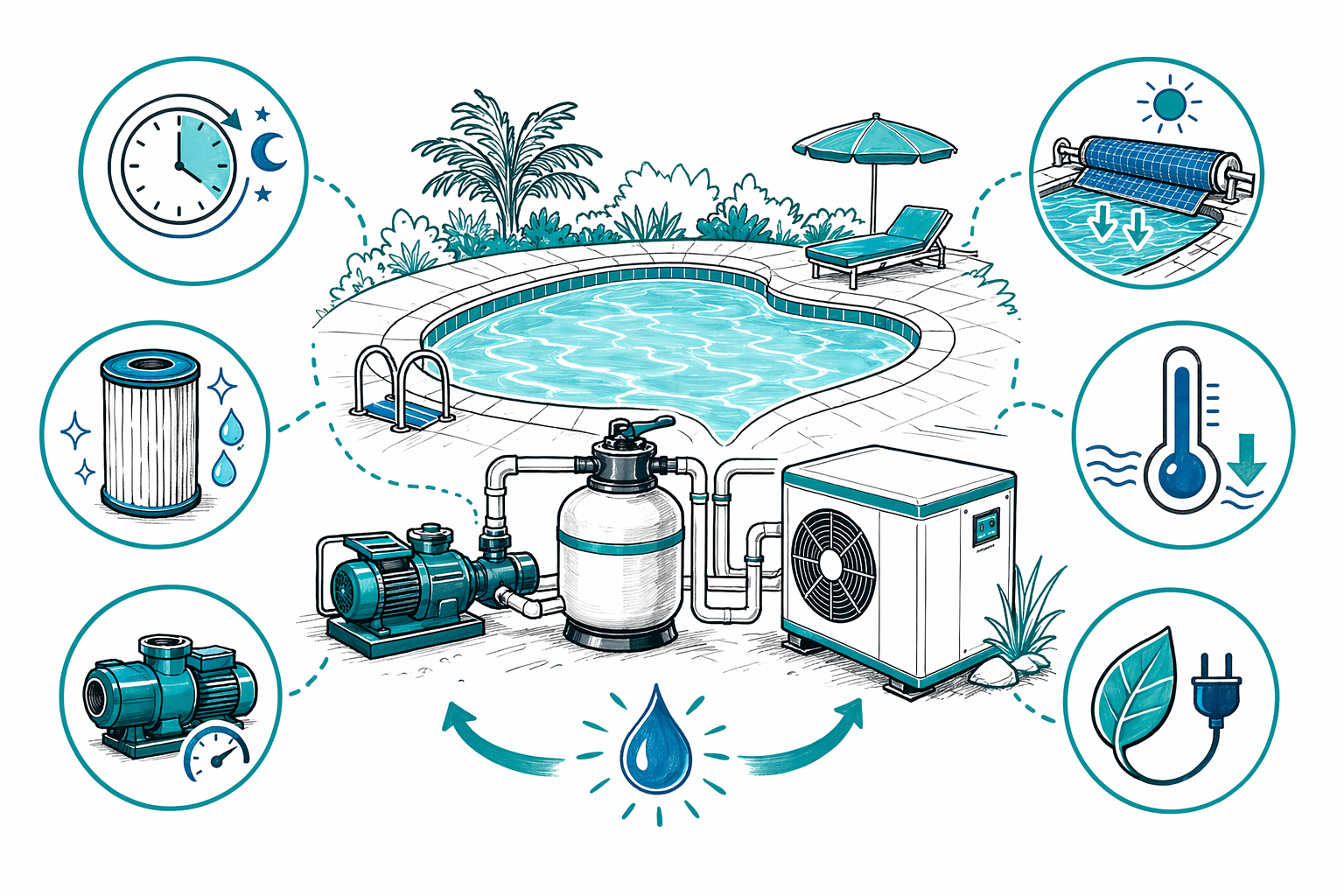
Most homeowners lose money in the same places: an oversized single-speed pump, a heater that runs longer than it should, old pool lights, and too much heat and water evaporating off the surface.
If you want the biggest wins, focus on these first:
- Use a variable-speed pump instead of a single-speed pump when possible.
- Use a pool cover to reduce heat loss and evaporation.
- Choose the right heater type for your climate and swimming season.
- Switch to LED lighting.
- Size equipment correctly. Bigger is not always better.
Those choices matter more than small gadget upgrades. They also work best when your pool is planned as a full system, not piece by piece. If you are still deciding on the pool itself, compare the tradeoffs in this pool type comparison guide.
Pool pumps: the biggest day-to-day energy decision
For many pools, the pump is the equipment that runs the most. That means it often has the biggest impact on your electric bill.
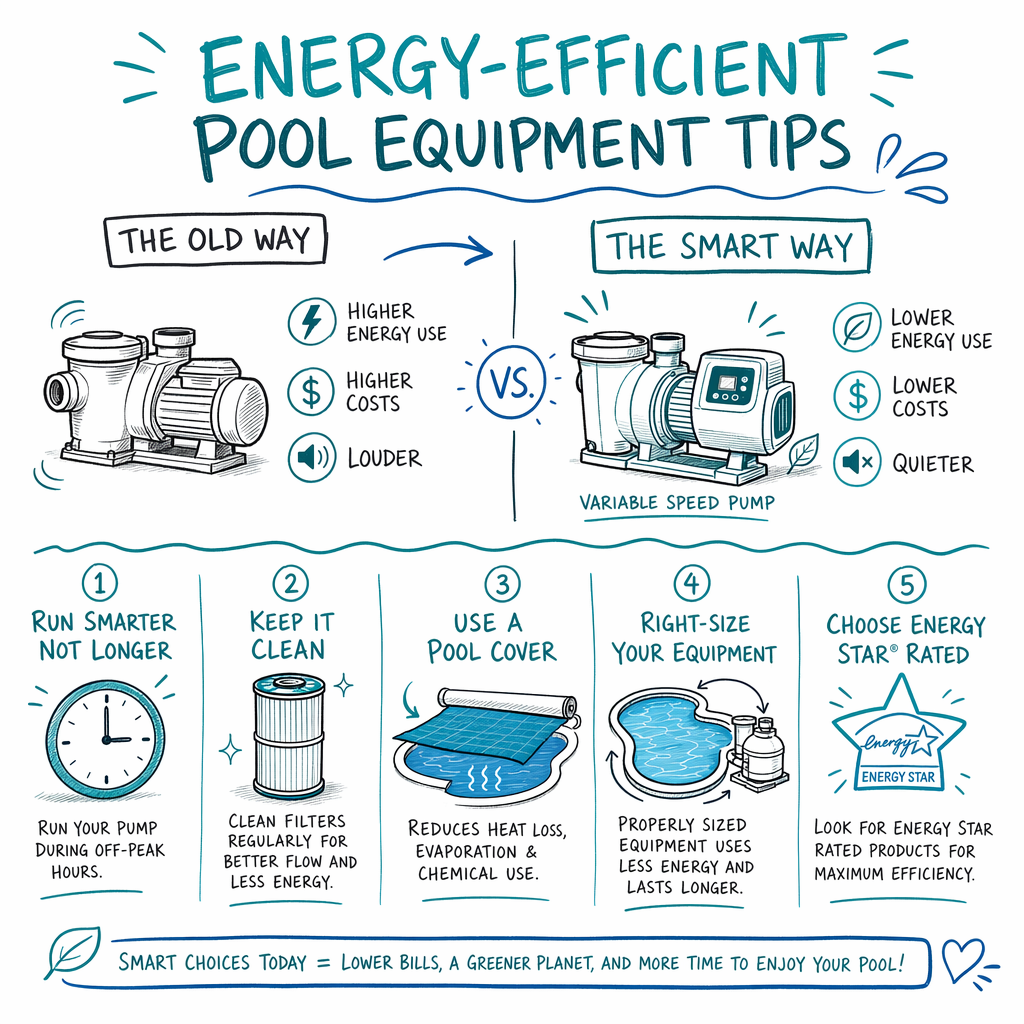
A variable-speed pump usually gives homeowners the best chance to save energy because it can run slower for normal filtration and only speed up when needed for cleaning, heating, or water features. Slower speed uses much less electricity than full speed.
Why this matters:
- Single-speed pumps run at one high setting. Simple, but often wasteful.
- Dual-speed pumps are better than single-speed, but usually less flexible than variable-speed.
- Variable-speed pumps cost more up front, but they can reduce operating costs over time.
A few practical tips:
- Ask the builder to explain pump size and run time in writing.
- Do not assume the biggest pump is the best pump.
- If you want waterfalls, spa jets, or strong cleaners, ask whether those features need a separate pump or higher-speed settings.
- Put the pump on a programmable schedule so it is not running harder or longer than needed.
- Keep baskets, filters, and skimmers clean. Dirty equipment makes the pump work harder.
If you are pricing a new pool, ask each builder to show the exact equipment model numbers they plan to install. Then compare both up-front cost and expected monthly operating cost. DeepEnd Match can help you get matched with licensed, insured, bonded builders so you can compare those details yourself at no cost.
Heaters, heat pumps, and covers: save energy by keeping heat in
Heating can be one of the most expensive parts of owning a pool. The right choice depends on where you live, how warm you want the water, and how many months per year you plan to swim.
Typical heater options include:
- Gas heaters: Heat water quickly. Often useful if you want fast warm-up or only heat the pool sometimes. Operating costs can be higher depending on fuel prices and usage.
- Electric heat pumps: Usually more efficient in many climates, especially when you keep a steady water temperature over a longer season. They tend to heat more slowly than gas.
- Solar heating: Can help in sunny areas, but performance depends on climate, roof or yard layout, and system design.
The biggest mistake is buying a heater without a plan for heat retention. If your pool loses heat every night, the heater has to keep replacing that lost heat.
That is why a pool cover is often one of the smartest energy-saving upgrades. A cover can help:
- reduce evaporation
- reduce heat loss
- lower water-refill needs
- lower chemical use in some cases
If you want a heated pool, ask builders these questions:
- What heater type fits my area and swimming season?
- What size heater is appropriate for my pool and spa, if I have one?
- How much will a cover help in my setup?
- Will water features increase heat loss?
- What is the typical operating range, not just the install cost?
Pool prices vary a lot by pool type, size, site access, finishes, and area. As a rough starting point, many in-ground pools fall in these typical ranges: gunite/concrete $60,000-$135,000, fiberglass $45,000-$95,000, and vinyl-liner $35,000-$70,000. Smaller or plunge pools may cost less. Equipment choices, decking, soil conditions, and heaters can change the real total. You can review more typical ranges on our costs page.
Small equipment choices that add up
Not every energy-saving decision is dramatic, but several smaller choices can lower running costs and make the pool easier to live with.
Lighting
LED pool lights usually use less power than older lighting types and often last longer. If you are adding landscape or accent lighting too, ask for separate controls so lights are not left on by accident.
Automation
Basic automation can help schedule pumps, lights, and heating. The value is not that it feels fancy. The value is that equipment runs only when needed.
Filters
A filter that matches the pool and pump setup can help the system run more efficiently. Ask how often it needs cleaning and how pressure rise affects pump load.
Plumbing layout
The homeowner usually does not think about pipe runs, bends, and equipment-pad layout, but these details affect flow resistance. A cleaner hydraulic design can reduce strain on the system.
Water features
Deck jets, waterfalls, laminars, and spillovers look great, but they can increase pump demand and heat loss. That does not mean avoid them. It means ask what they cost to run.
Pool shape and exposure
A pool in full wind and sun can lose more water and heat than one with some shelter. Planning matters.
If you are choosing between shell types, each pool type can affect equipment planning, maintenance style, and long-term operating habits. Learn more about gunite/concrete pools if you are still comparing options.
What to do next before you sign with any builder
Energy efficiency is not just about buying premium equipment. It is about making sure the whole pool system fits your yard, climate, and budget.
Use this checklist before you hire anyone:
- Get at least 2-3 written proposals with equipment brand and model numbers.
- Ask each builder to explain why they chose that pump, heater, filter, and controller.
- Compare both installation cost and typical operating cost.
- Ask what features will increase electricity or heating use.
- Verify that the builder is licensed, insured, and bonded. Then verify the license, insurance, and bond yourself.
- Get price, scope, equipment list, and change-order terms in writing before any deposit.
- Follow local permit rules and pool barrier laws. Start here: pool permits explained.
DeepEnd Match does not build pools or give engineering, electrical, plumbing, legal, or financial advice. We are a free matching service that helps homeowners compare licensed, insured, bonded pool builders. Participating builders pay a flat fee to take part. You compare quotes, you choose who to hire, and you hold the final payment.
If you want help finding builders who can explain efficient equipment clearly, you can get matched for free.
Pick the right pump, heater, and cover before the pool is built. Ask licensed, insured, bonded builders to show the exact equipment in writing, compare operating costs and install costs, verify credentials yourself, and follow local permit and pool-safety rules.
Common questions
What pool equipment usually uses the most energy?
For many homeowners, the pump is a major day-to-day electricity user because it runs often. Heating can also be a large cost, especially if you keep the pool warm for long periods. The real cost depends on your pool size, equipment type, run time, climate, and how you use the pool.
Is a variable-speed pump worth it?
Often, yes. A variable-speed pump usually costs more up front than a single-speed pump, but it can lower operating costs because it can run at lower speeds for normal filtration. Whether it is worth it depends on your local power rates, pool features, and how long the pump runs each day.
What is the most energy-efficient way to heat a pool?
There is no one answer for every home. Electric heat pumps are often efficient for many climates and longer swim seasons, while gas heaters may make sense when you want faster heating or more occasional use. A cover is one of the best ways to reduce wasted heat regardless of heater type.
Can a pool cover really save money?
Yes, in many cases. A cover can reduce heat loss and evaporation, which may lower heating, water, and some chemical costs. Savings vary by climate, season, wind exposure, how often you use the cover, and whether the pool is heated.