The short answer
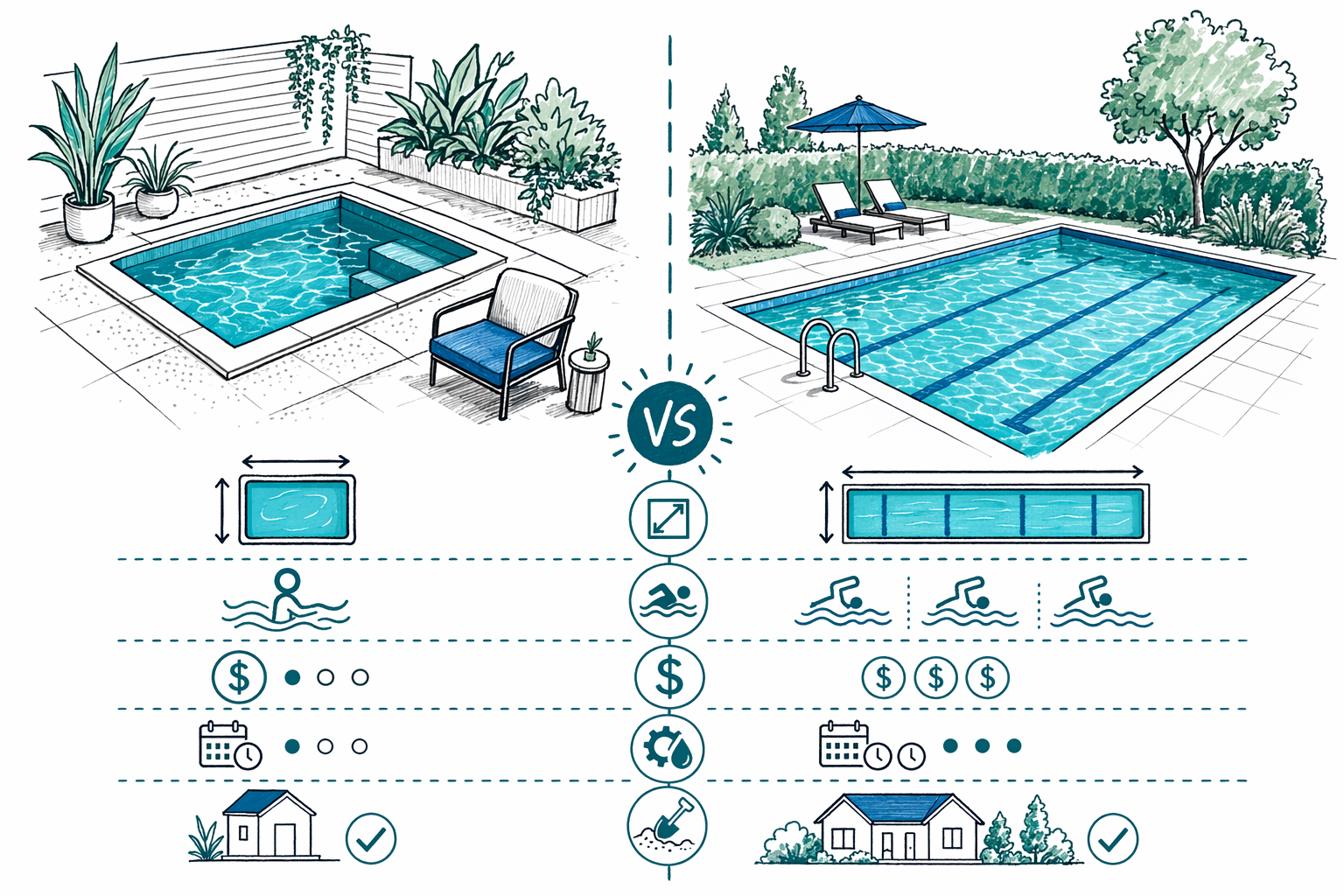
A plunge pool is usually the better fit if you have a smaller yard, want a lower typical project cost, and mainly want a place to cool off, soak, or relax. A full-size pool makes more sense if you want room to swim, play with kids, host people, or add features like a tanning ledge, deep end, or long bench.
Typical installed price ranges in many US markets:
- Plunge pool: often less than a standard pool, but price still depends on material, access, excavation, finishes, and your area
- Fiberglass pools: about $45,000-$95,000
- Vinyl-liner pools: about $35,000-$70,000
- Gunite/concrete pools: about $60,000-$135,000
Some smaller plunge-style pools can cost less than these standard-pool ranges. But do not assume "small" means cheap. Tight access, retaining walls, poor soil, high-end tile, heating, and decking can push the real price up fast. These are typical ranges and estimates, not quotes or guarantees. The real price depends on type, size, site, finishes, and area.
If you are still deciding, this simple rule helps:
- Choose plunge if your top goals are relaxing, cooling off, hydrotherapy, and fitting a pool into a tighter yard.
- Choose full-size if your top goals are swimming, family play, exercise, and entertaining more than a few people.
If you want a side-by-side look at materials too, see pool type comparison.
How daily use should decide the pool size
A lot of homeowners shop by photos first. That is normal. But photos can hide what day-to-day life feels like.
Ask yourself these honest questions:
- Will you actually swim laps? A plunge pool is usually too short for real lap swimming unless you add a swim current system.
- How many people will use it at one time? Two adults can enjoy a plunge pool. A family of five plus guests may feel crowded fast.
- Do you want water exercise or just cool-down time? Light stretching and soaking work well in a plunge pool. Games and active swimming usually need more room.
- Do you want a shallow social space or more varied depth? Full-size pools give you more layout choices.
- Is the pool the main backyard feature or one part of a bigger plan? A plunge pool can leave space for a patio, outdoor kitchen, kids' play area, or garden.
A plunge pool often works well for:
- small urban or narrow lots
- homeowners who want a clean, simple backyard upgrade
- adults who want relaxation more than recreation
- people planning to heat the pool and use it like a compact soaking pool
A full-size pool often works better for:
- families with kids and teens
- homeowners who host often
- buyers who care about swim space first
- people who want more design freedom later
One more truth: many homeowners regret going too small more often than they regret going too large, especially if the pool becomes the center of family life. On the other hand, some people pay for a big pool and then mostly sit on the steps. Be honest about your habits, not your dream photo board.
Cost, yard space, and long-term upkeep
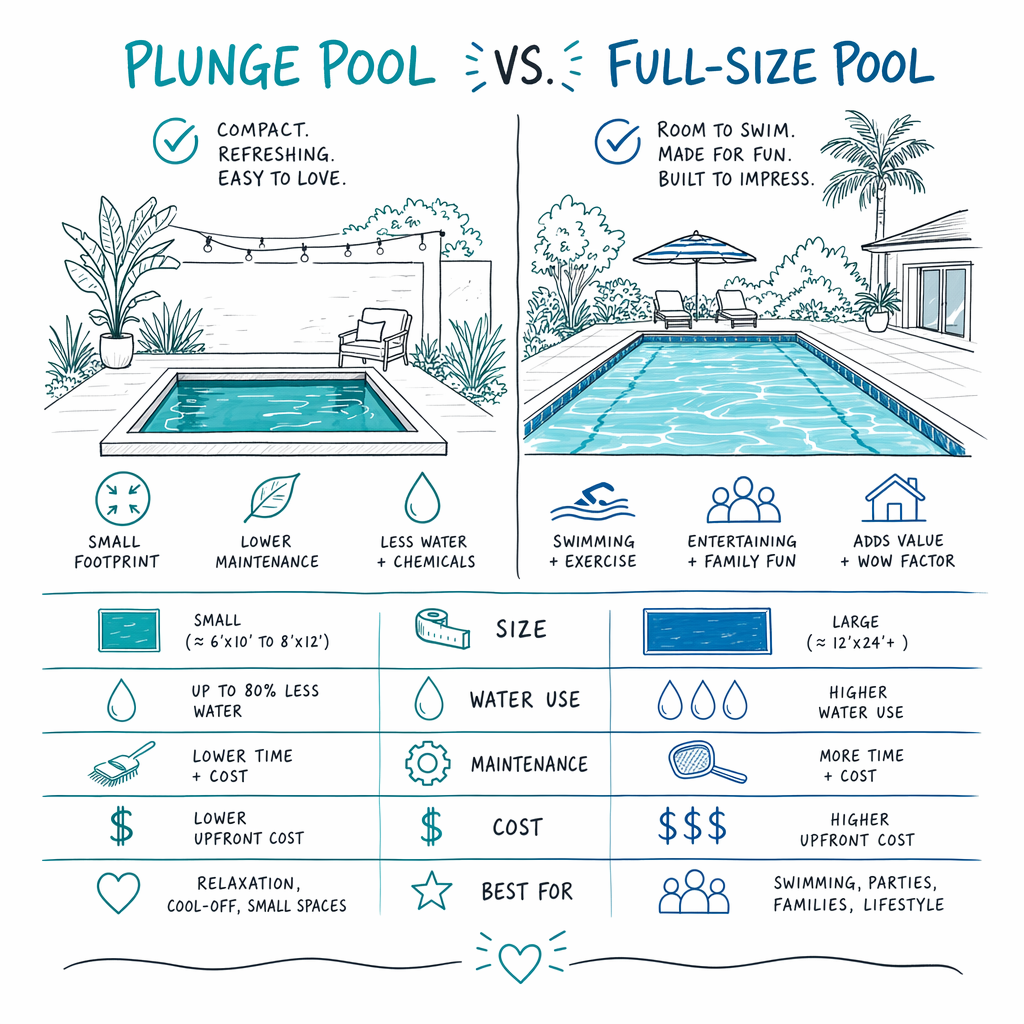
Smaller pools usually cost less to build and maintain, but only up to a point. The shell is only one part of the project.
Here is where the money usually goes on either type:
- excavation and haul-away
- access challenges for equipment
- pool shell and interior finish
- plumbing, electrical, and equipment pad
- decking, drainage, and coping
- heaters, lights, covers, automation, and water features
- fencing or other required safety barriers
- permits and inspections required by your local jurisdiction
Why a plunge pool can still cost more than expected:
- Difficult access: if machines cannot reach the yard easily, labor goes up
- High-end finish choices: tile, stone, premium coping, and custom benches add up fast
- Heating: many plunge pools are heated, which adds equipment cost and ongoing utility cost
- Small does not mean simple: utilities, permits, and safety requirements still apply
Where a full-size pool costs more:
- larger excavation and more material
- more decking and longer plumbing runs
- more water volume to circulate, clean, and heat
- more surface area for brushing, vacuuming, and repairs over time
For many homeowners, the real monthly difference comes from:
- Heating habits
- Water volume
- How much equipment you run
- Local utility rates
A plunge pool usually uses less water and fewer chemicals. That helps. But if you keep it heated much of the year, savings may be smaller than you expect.
If budget is your biggest concern, compare builders carefully and look at the full scope, not just the headline number. Get the price and scope in writing before any deposit. Make sure you know what is included, what is an allowance, and what can become a change order later. You can review more typical pricing on our costs page.
Build limits people miss until it is too late
This is where people get burned. The yard may look like it can fit either option, but local rules and site conditions can shrink your choices.
Common issues that affect plunge and full-size pools differently:
- Setbacks: property-line setbacks can limit pool size and placement
- Easements: utility or drainage easements may block part of the yard
- Slope: a steep yard can make any pool much more expensive
- Access: if a crane or excavation equipment cannot reach the yard easily, cost rises
- Drainage: poor drainage can affect both construction cost and long-term performance
- Safety laws: fencing, gates, door alarms, and covers may be required depending on your area
A plunge pool can be easier to fit into a difficult lot. But it is not automatically approved just because it is smaller. You still need to follow local permits and safety-barrier laws.
A full-size pool gives you more freedom for shape and use, but it needs more clear space. That means more chances to run into setbacks, utility conflicts, or deck-crowding.
DeepEnd Match does not issue permits or provide construction, structural, electrical, plumbing, legal, or financial advice. Your builder and local authorities should explain what your property allows. It helps to read pool permits explained before you talk with contractors.
Most important, hire licensed, insured, and bonded builders and verify the license, insurance, and bond yourself. Do not rely on a sales pitch or a business card.
What to do next so you do not overbuy or underbuild
If you are between a plunge pool and a full-size pool, do this before you sign anything:
- List your top 3 uses. Example: cool off, kids play, weekend guests.
- Measure the yard honestly. Include setbacks, equipment space, deck space, and gate access.
- Set a real all-in budget range. Leave room for fencing, drainage, and finish upgrades.
- Ask each builder the same questions. What is included? What is excluded? What could change the price later?
- Compare apples to apples. One low number may leave out decking, permits, electrical work, or cleanup.
- Get everything in writing before any deposit. Scope, materials, payment schedule, allowances, and timeline.
- Hold final payment until the contracted work is complete and any required local inspections are done.
If you know you want a concrete-style custom build, read about gunite/concrete pools. If you are still open and want help comparing local options, you can get matched for free with participating builders. Matching is free for homeowners. Builders pay a flat fee to participate. You compare quotes, you choose who to hire, and you stay in control.
Choose a plunge pool if you want a smaller, simpler place to relax and cool off. Choose a full-size pool if you want room to swim, play, and host. Get written scope and price details, verify the builder is licensed, insured, and bonded, and follow your local permit and pool-safety rules.
Common questions
Is a plunge pool always cheaper than a full-size pool?
Not always. A plunge pool is often less expensive, but not by as much as people expect. Access problems, premium finishes, heating, custom masonry, drainage work, and local permit requirements can raise the price. Any number you see online should be treated as a typical estimate range, not a quote or guarantee.
Can you actually swim in a plunge pool?
Usually not in the same way you can in a full-size pool. Most plunge pools are made for cooling off, soaking, light exercise, and relaxation. If you want lap-style swimming, a full-size pool is usually better unless you add a swim current system to a plunge pool.
Does a full-size pool add more home value than a plunge pool?
It depends on your market, climate, lot size, and buyer preferences. In some areas, a well-built pool helps resale appeal. In others, buyers may see it as extra upkeep. A too-large pool can crowd the yard, while a well-planned plunge pool can feel more usable on a small lot. Do not treat resale as a guarantee.
What should I check before hiring a pool builder?
Hire licensed, insured, and bonded builders and verify the license, insurance, and bond yourself. Ask for detailed written scope and pricing before any deposit. Confirm who handles permits, what safety-barrier rules apply locally, what materials are included, and what can trigger extra charges. Keep copies of everything in writing.