The short answer
If you want softer-feeling water and less day-to-day chemical handling, many homeowners like saltwater. If you want lower upfront equipment cost and simpler replacement parts, a traditional chlorine pool may be the better fit.
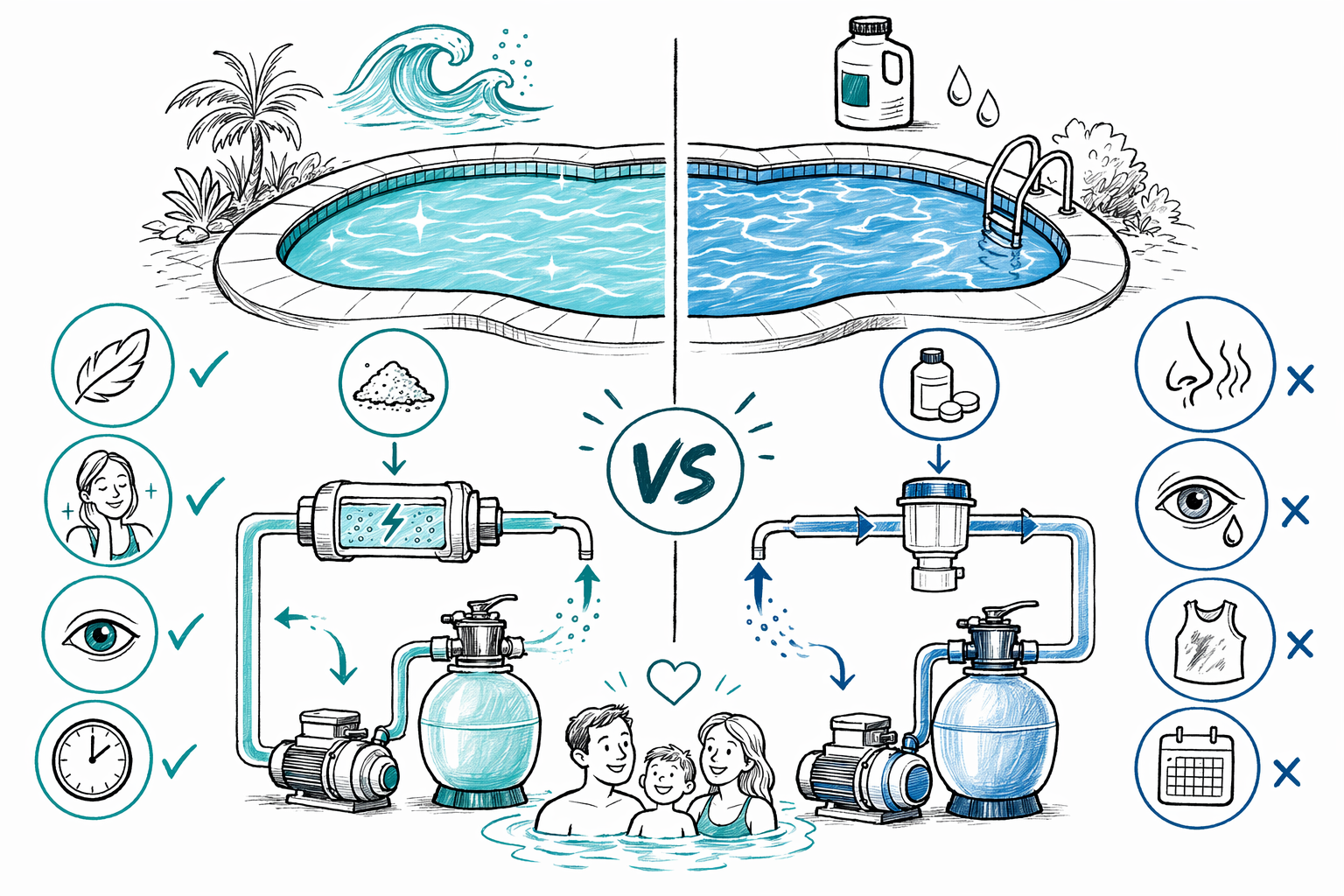
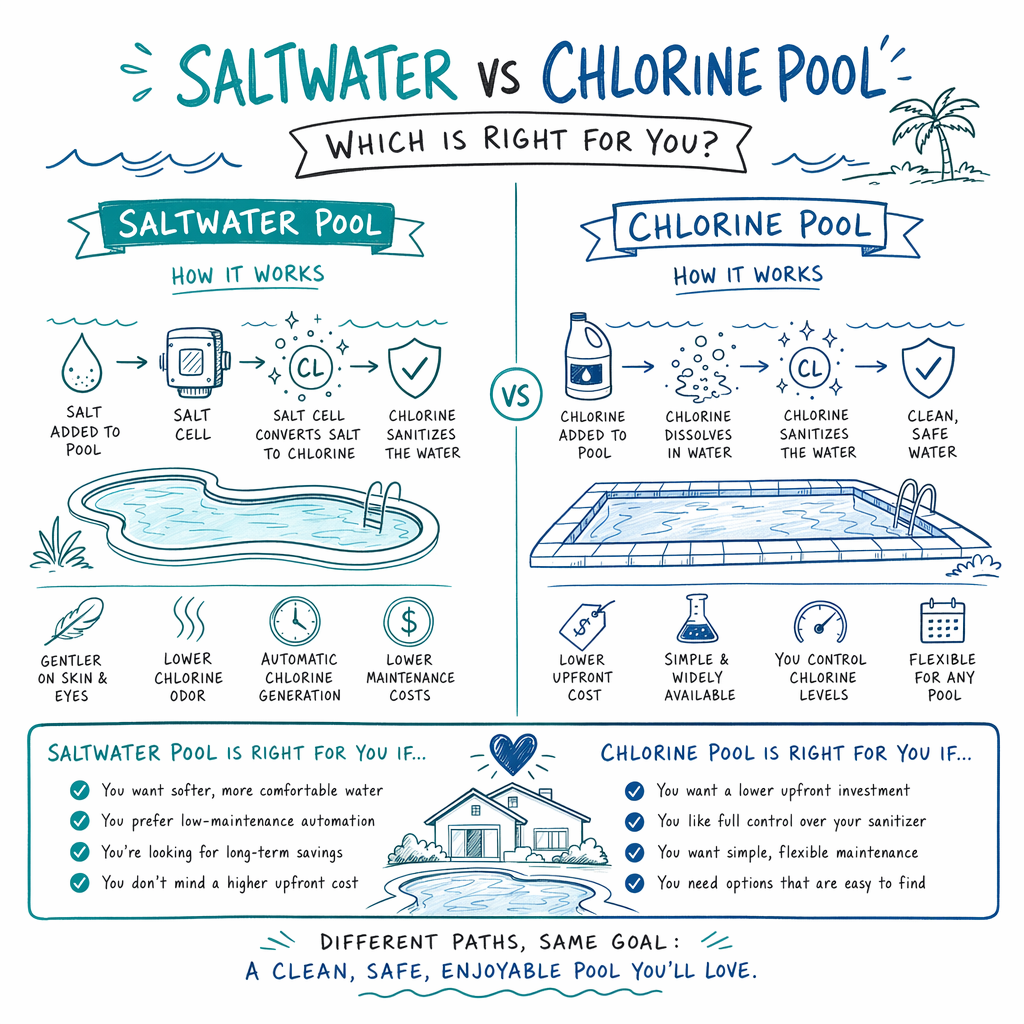
Here is the part many people miss: a saltwater pool is still a chlorine pool. It uses a salt cell and control system to make chlorine from salt in the water. A traditional chlorine pool gets chlorine added directly with liquid, tablets, or granular products.
Neither option is automatically cheaper forever. The real cost depends on:
- pool type and size
- your climate and swim season
- how much sunlight the pool gets
- how often you use it
- your water chemistry habits
- local service rates and equipment prices
If you are still choosing the pool itself, start with a simple pool type comparison. The shell you choose and the sanitizer system both affect long-term cost.
How each system works in real life
A traditional chlorine pool needs chlorine added on a regular schedule. Some owners do it themselves. Others hire a service company. You test the water, adjust sanitizer, and keep pH, alkalinity, and stabilizer in range.
A saltwater pool has a salt chlorine generator. You add pool salt to the water, and the system produces chlorine as the pump runs. You still need to test the water and balance chemicals. Saltwater is not maintenance-free.
What many homeowners notice:
- Saltwater often feels gentler on skin and eyes when balanced well.
- Traditional chlorine can be easier to understand at first because the system is straightforward.
- Saltwater equipment adds convenience, but the salt cell and control parts wear out and need replacement.
- Both systems can get cloudy, green, irritating, or corrosive if chemistry is ignored.
If a builder says one system means you never need to test the water, be careful. That is not realistic. Ask for the exact equipment model, warranty terms, and expected replacement schedule in writing before you sign anything.
DeepEnd Match can help you compare licensed, insured, bonded builders for your project at no cost. You can get matched and compare how each builder explains the sanitizer options for your pool.
Cost: upfront, monthly, and replacement
This is where people get tripped up. There is no single best answer for every yard.
Upfront cost
A traditional chlorine setup usually costs less to install because the equipment is simpler. A saltwater system usually costs more upfront because of the generator, salt cell, and controls.
If you are building a new in-ground pool, the pool shell is still the big expense. Typical pool-only ranges often look like this:
- Gunite/concrete: $60,000-$135,000+
- Fiberglass: $45,000-$95,000+
- Vinyl-liner: $35,000-$70,000+
- Small plunge pools: often less, depending on size and site
Those are typical ranges, not quotes. Real price depends on type, size, site, finishes, features, and area. You can review broader pool costs before you compare sanitizer options.
Ongoing cost
With traditional chlorine, you buy sanitizer regularly. Your chemical spending may be higher month to month, especially in hot sunny climates or during heavy use.
With saltwater, sanitizer production is built into the system, but you will still buy test supplies, balancing chemicals, and occasional salt. Electricity use can also change depending on pump run time.
Repair and replacement cost
Saltwater owners need to plan for eventual salt cell replacement. That can be a real maintenance item, not a small detail. Cells do not last forever, especially if chemistry is poorly managed.
Traditional chlorine systems avoid that cell replacement cost, but you may spend more over time on added chlorine and manual care.
The honest takeaway:
1. Saltwater often costs more upfront.
2. Traditional chlorine can cost more in routine chemical purchases.
3. Saltwater can bring higher equipment replacement costs later.
4. The winner depends on how long you stay in the home, how much DIY care you do, and local service prices.
Comfort, maintenance, and material concerns
For many families, the choice is less about chemistry and more about daily life.
Why people choose saltwater
- Water often feels smoother.
- There is less direct handling of chlorine products.
- Chlorine levels may stay more consistent when the system is set correctly.
- Some swimmers say they notice less strong chlorine smell.
Why people choose traditional chlorine
- Lower upfront equipment cost.
- Fewer specialized parts.
- Easier for some service companies to diagnose quickly.
- Good fit for owners who do not mind regular testing and adding chemicals.
Important caution about saltwater and materials
Saltwater systems can be hard on some metals, stone, coping, and nearby surfaces if the pool is designed or maintained poorly. This does not mean saltwater is a bad choice. It means details matter. Ask each builder:
- What materials do you recommend around a saltwater pool?
- What metal components need extra attention?
- What warranty exclusions apply?
- What water chemistry range do you require to protect the finish and equipment?
This matters with any shell type, including gunite/concrete pools, fiberglass, and vinyl-liner pools. The system should fit the pool, the equipment pad, and the materials around the water.
Also remember: poor water balance hurts pools. Not the label alone. A badly maintained chlorine pool can be harsh. A badly maintained saltwater pool can also be harsh and corrosive.
What to do next before you choose
Do not let this become a sales pitch decision. Make it a comparison decision.
Use this simple checklist:
1. Decide how hands-on you want to be.
If you want less manual chlorine handling, ask about saltwater. If you are cost-focused and do not mind routine care, ask about traditional chlorine.
2. Ask for two versions of the same pool.
Have each builder price the same project with both sanitizer systems. Ask what is included in each scope.
3. Get replacement items in writing.
Ask about salt cell life, controller warranty, expected maintenance, and the cost to replace common parts.
4. Ask about materials and finish compatibility.
This is especially important for coping, stone, handrails, heaters, and nearby metal features.
5. Verify the builder yourself.
Hire licensed, insured, and bonded builders. Verify the license, insurance, and bond yourself. Get price and scope in writing before any deposit.
6. Follow local rules.
Make sure the project follows local permits and pool-safety laws. Review pool permits explained and ask what inspections are required in your area.
7. Hold the final payment until the job is complete.
You compare quotes. You choose who to hire. You control the final sign-off.
DeepEnd Match is a free matching service for homeowners. We do not build pools or give construction, structural, electrical, plumbing, legal, or financial advice. We help you compare licensed, insured, bonded builders so you can make the call with better information.
Choose saltwater if you want softer-feeling water and less direct chlorine handling, but plan for higher equipment cost and future salt-cell replacement. Choose traditional chlorine if you want lower upfront cost and simpler equipment. In both cases, compare written scopes from licensed, insured, bonded builders, verify their credentials yourself, and follow local permit and pool-safety laws.
Common questions
Is a saltwater pool actually chlorine-free?
No. A saltwater pool still uses chlorine. The difference is that a salt chlorine generator makes chlorine from salt in the water instead of you adding all chlorine directly by hand.
Which is cheaper: saltwater or chlorine?
It depends. Traditional chlorine usually has lower upfront equipment cost. Saltwater usually costs more upfront but may reduce some routine chlorine purchases. Salt cells and related parts also need replacement over time. Real cost depends on pool type, size, site, use, climate, and local service prices.
Is saltwater easier to maintain?
For some owners, yes, because chlorine production can be more automatic. But it is not maintenance-free. You still need to test water, balance pH and alkalinity, clean the pool, and maintain equipment. Poor chemistry can damage surfaces and equipment in either system.
Does saltwater damage a pool?
Not by itself when the pool is properly designed, built, and maintained. Problems usually come from poor water balance, wrong materials, or neglected equipment. Ask licensed, insured, bonded builders what materials they recommend, what the warranties say, and what chemistry range they require. Verify the builder's license, insurance, and bond yourself.