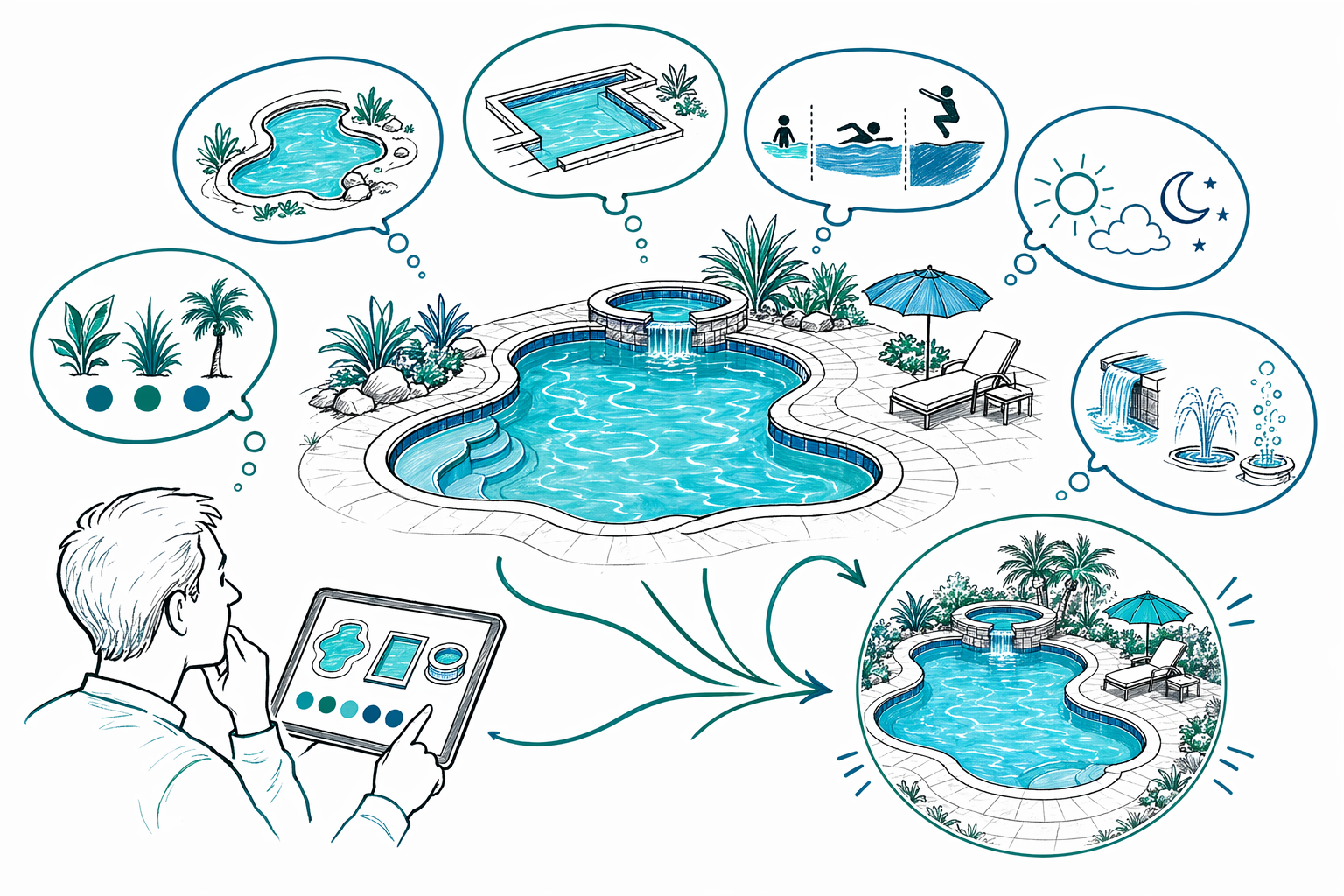
The situation: too many choices, not enough clear communication
A family had recently bought a home in the US and wanted an in-ground pool for their children. They spoke some English, but not enough to feel confident signing a large contract. Every call with builders felt stressful. Some salespeople spoke fast. Some used technical words they did not understand. A few gave loose price talk without clear scope.
Their biggest worries were simple:
- What type of pool makes sense for their yard and budget?
- How much is a normal price range in their area?
- Who is actually licensed, insured, and bonded?
- What should be included in writing before any deposit?
Like many homeowners, they started online and saw very different numbers. That made it hard to tell what was real. Typical ranges for in-ground pools can vary a lot by size, access, soil, finishes, and region. As a general starting point, many homeowners see gunite/concrete pools around $60,000-$135,000, fiberglass around $45,000-$95,000, and vinyl-liner pools around $35,000-$70,000. Smaller plunge pools can cost less. But those are still only estimates, not quotes. The real price depends on the project.
To get organized, they first read a basic pool type breakdown at pool type comparison so they could ask better questions.
What they did: slow the process down and compare apples to apples
Instead of picking the first company that sounded confident, the family treated the project like a series of small decisions.
- They wrote down what they wanted most: a safe family pool, easy maintenance, and a budget ceiling.
- They used a free matching service to connect with pool builders who served their area.
- They asked each builder to explain the same items in simple terms.
- They requested that price, scope, materials, equipment, timeline, and exclusions all be put in writing before any deposit.
The most helpful step was asking every builder the same core questions:
- Is your company licensed, insured, and bonded for this work?
- Will you put the pool type, dimensions, equipment, finish, deck allowance, and cleanup in writing?
- Who handles permits, and what is the homeowner responsible for?
- What is not included in this price range?
- What could change the cost after the contract is signed?
This changed the conversation. Builders who were vague became easier to spot. Builders who were clear stood out.
They also learned that one low number was not really low. It left out electrical upgrades, part of the decking, fencing, and some site work. Another estimate looked higher at first, but included more complete scope. That is why comparing line by line matters more than comparing only the top number.
For homeowners who are early in the process, get matched can be a practical first step if you want to compare local options without paying a fee as the homeowner.
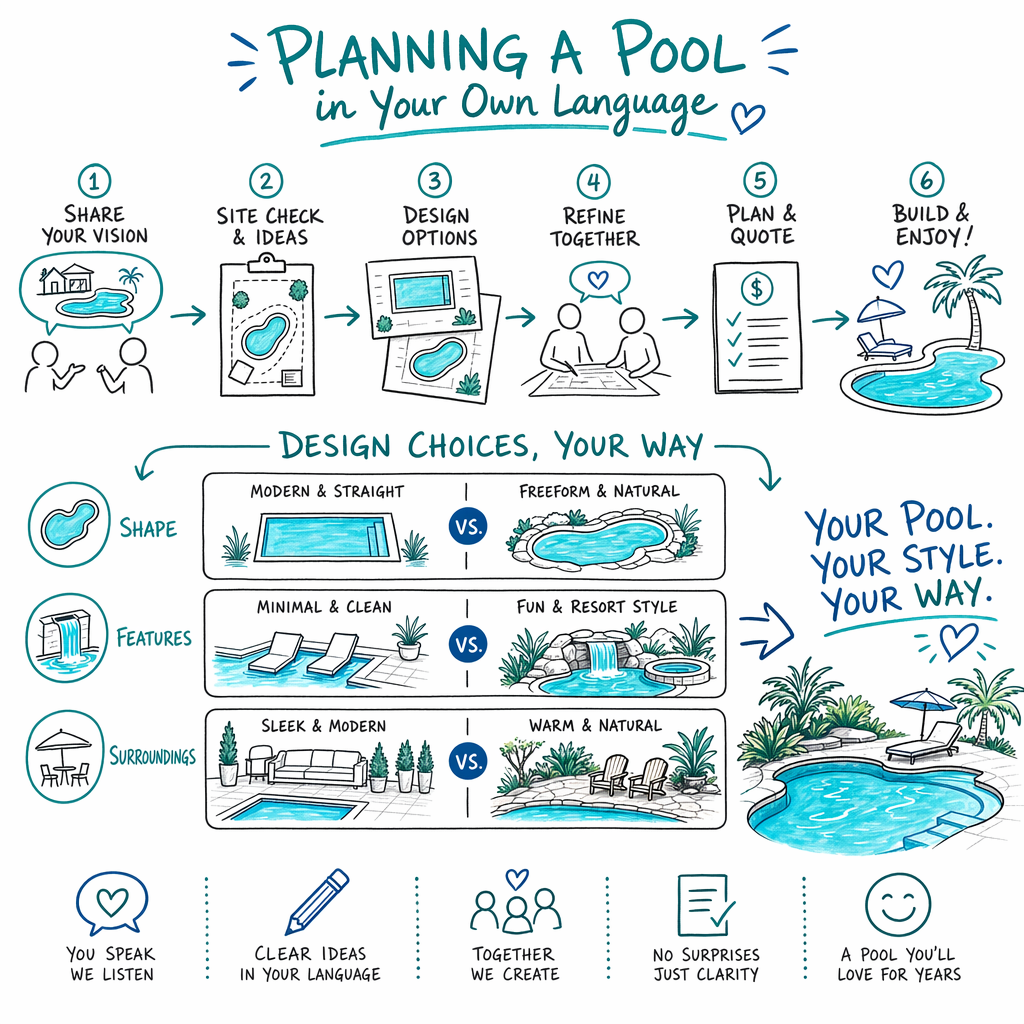
What made the difference: language support and written scope
The family did not need someone to make the decision for them. They needed the process explained clearly enough that they could decide.
A few things helped:
- They asked for follow-up by text and email so they could translate terms and review them later.
- They repeated key points back in their own words to confirm understanding.
- They had each builder clarify the same items: shell type, finish, pump and filter brand, sanitation system, decking, drainage, startup, and cleanup.
- They verified license, insurance, and bond information themselves before moving forward.
This is where many homeowners get burned. Not by one giant mistake, but by a stack of small misunderstandings.
For example, a homeowner may hear that permits are "handled," but not understand whether permit fees are included. Or they may hear a timeline that assumes good weather, easy access, and no inspection delays. Or they may think fencing is part of the pool contract when it is not.
The family used a vetting checklist similar to the one in how to vet a pool builder and kept all revisions in writing. They did not rely on memory. They did not send a deposit until the scope was clear enough that they could point to what was included and what was excluded.
That gave them something more valuable than a fast answer. It gave them confidence.
The outcome: not the cheapest bid, but the clearest plan
In the end, the family chose a builder that was not the cheapest and not the most expensive. They chose the one that communicated clearly, documented the scope well, and answered questions without pressure.
Their final plan fit their yard and budget better because they understood the tradeoffs:
- A custom gunite design offered flexibility, but usually at a higher typical cost range.
- A fiberglass pool looked attractive for faster installation in some cases, but access to the yard mattered.
- A vinyl-liner pool had a lower entry price in many markets, but liner replacement over time needed to be part of the discussion.
They also learned to keep control of the project:
- Verify the builder's license, insurance, and bond yourself.
- Get scope and price in writing before any deposit.
- Follow local permit and pool-safety rules, including fencing and barrier laws.
- Compare exclusions, not just inclusions.
- Hold final payment until the agreed work is completed under the contract terms.
The takeaway is simple. You do not need perfect English to make a good pool decision. You need time, written details, and licensed professionals you can verify. A free matching service can help you find builders to compare, but you choose who to hire.
If you are still sorting out rules in your area, read pool permits explained before signing anything.
If you are planning a pool in a language that is easier for you than English, slow down, compare builders line by line, verify license, insurance, and bond yourself, and get every important detail in writing before any deposit. Matching is free to you, and you make the final choice.
Common questions
Can DeepEnd Match help if English is not my first language?
Yes. DeepEnd Match is a free multilingual matching service for homeowners. We help you connect with local pool builders so you can compare options more clearly. We do not build pools or give construction, legal, or financial advice. You should still verify each builder's license, insurance, and bond yourself.
What is a normal price range for an in-ground pool?
Typical ranges many homeowners see are about $60,000-$135,000 for gunite/concrete, $45,000-$95,000 for fiberglass, and $35,000-$70,000 for vinyl-liner pools. Smaller plunge pools can cost less. These are only estimates, not quotes or guarantees. The real price depends on pool type, size, site conditions, finishes, access, and your area.
What should I get in writing before I pay a deposit?
Get the pool type, dimensions, materials, equipment, finish, decking allowance, permit responsibility, estimated timeline, payment schedule, warranty details, and all exclusions in writing. Also confirm who handles cleanup and what can trigger extra charges. Hire only licensed, insured, and bonded builders, verify that yourself, and follow local permit and pool-safety fencing laws.