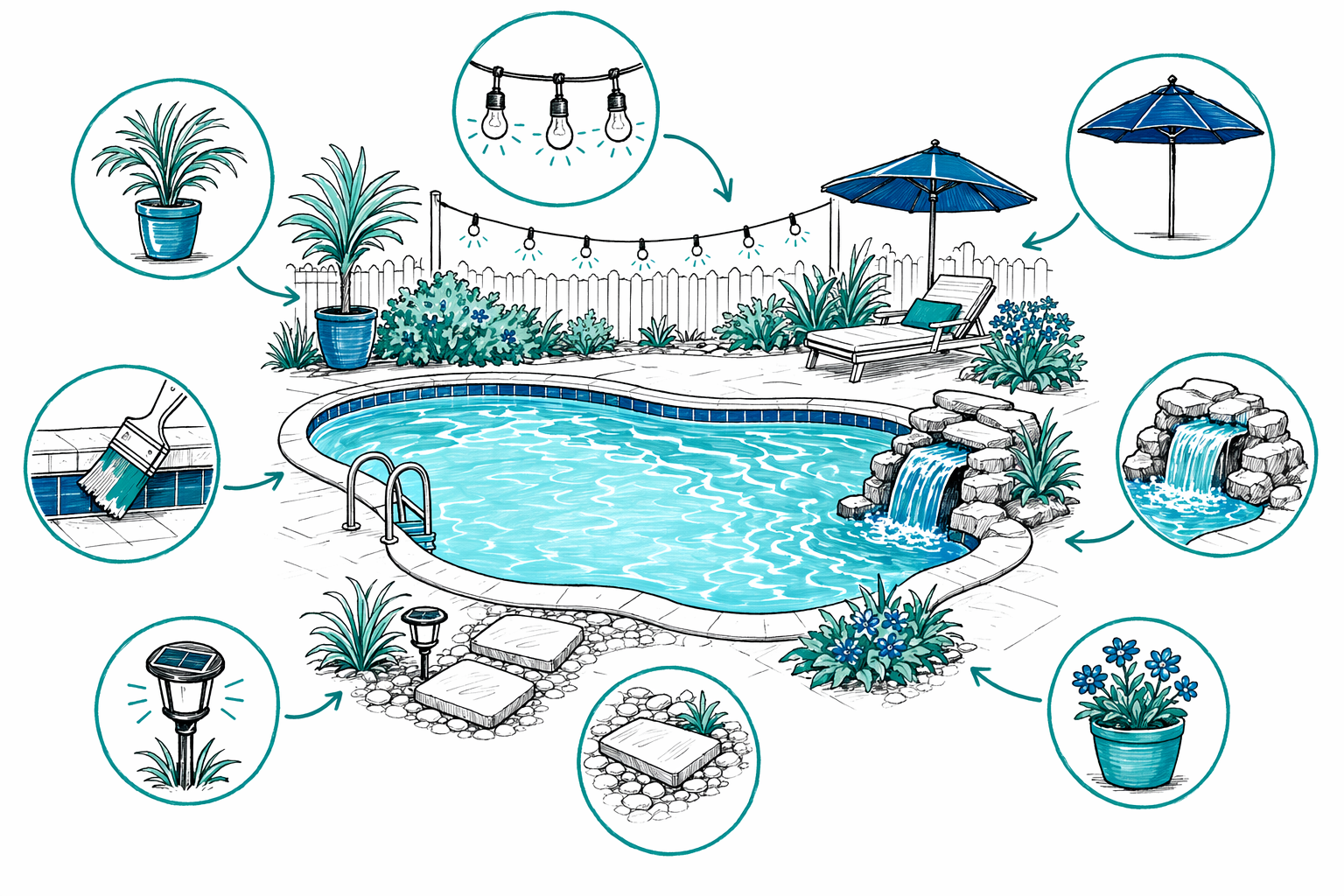
What “budget-friendly” really means
Budget-friendly does not mean cheap work. It means spending on the parts that matter most, and cutting the upgrades that do not add much use.
For most US homeowners, the biggest cost drivers are:
- Pool type
- Pool size and depth
- Your yard and soil conditions
- Access for equipment
- Decking, water features, lighting, and finishes
- Local labor, permit, and inspection requirements
If your goal is to stay in a lower price range, start with a simple question: What do you need this pool to do?
A family play pool, a compact lap pool, and a small plunge pool can all be good projects. But they have different costs. In many cases, a smaller rectangle with standard finishes gives you more value than a large custom shape with extras you may barely use.
A realistic budget project often means:
- Simple shape
- Modest size
- Standard interior finish
- Basic steps and entry
- Limited decking at first
- Fewer add-ons during phase one
If you are still deciding between materials, compare pool types before you talk with builders. That one choice can move your budget by tens of thousands of dollars.
The most affordable in-ground pool paths
There is no single “cheapest pool” for every yard. But there are common lower-cost paths that many homeowners choose.
- Vinyl-liner pools often start lower on upfront cost. Typical ranges are about $35,000 to $70,000 for many in-ground projects, depending on size, site, finishes, and area. You can learn more about vinyl-liner pools.
- Fiberglass pools are often a strong middle option. Typical ranges are about $45,000 to $95,000. They can work well if your yard has good access for delivery and the available shell sizes fit your goals.
- Gunite or concrete pools usually cost more, but they allow the most customization. Typical ranges are about $60,000 to $135,000. For some homeowners, a very simple concrete design can still make sense, but it is usually not the lowest-cost route.
- Small pools or plunge pools can cost less than full-size pools because they use less material and need less excavation and decking. But do not assume they are “half the price.” Fixed costs like permits, equipment, safety barriers, and site prep still matter.
The real price depends on type, size, site, finishes, and area. A hard-to-access yard, retaining walls, unstable soil, drainage work, or upgraded coping and decking can move a project out of the “budget” category fast.
A good first step is to look at broad pool cost ranges and then compare them to what your yard can realistically handle.
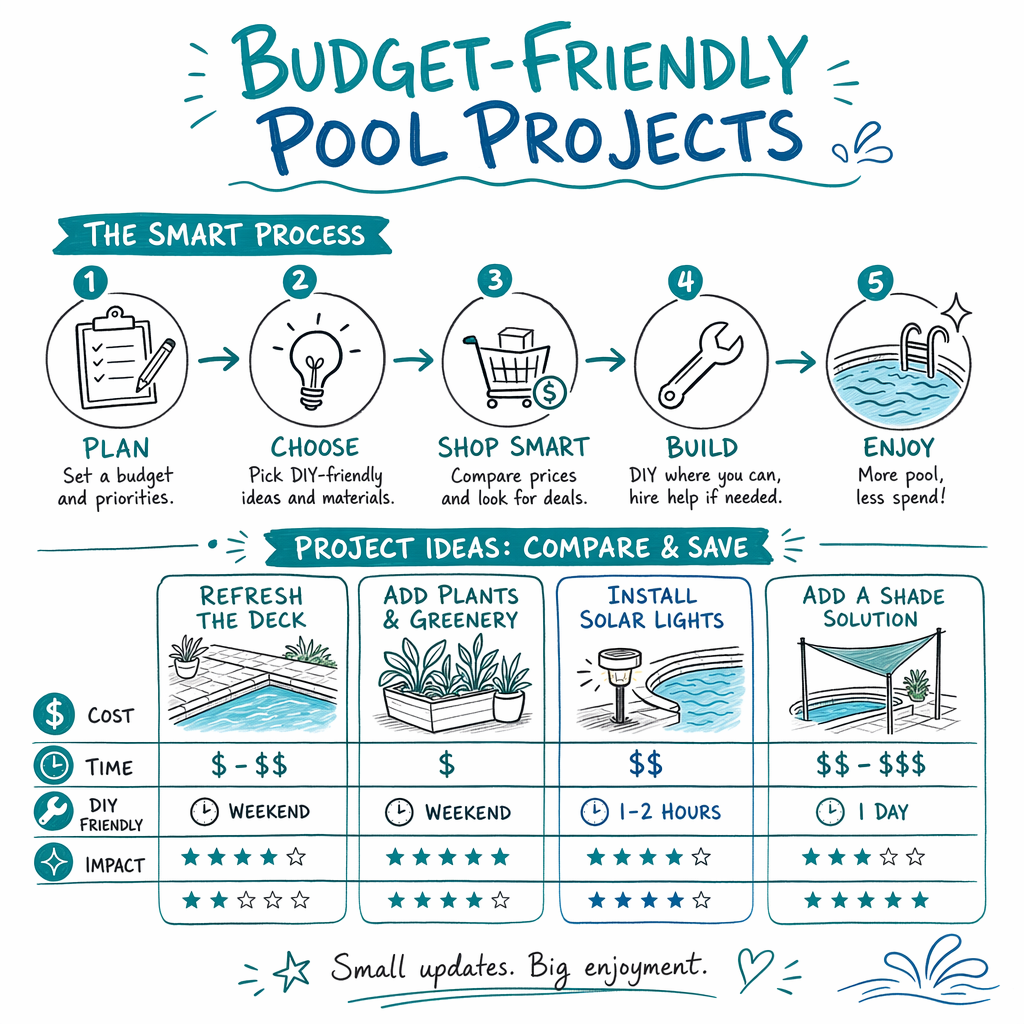
Where homeowners overspend
Most budget problems happen before the first dig. People set a target number, then build a wish list that does not match that number.
Here are the upgrades and conditions that often push costs up:
- Freeform or highly custom shapes
- Deep ends you may not need
- Large tanning ledges and oversized spas
- Waterfalls, fire features, and automation packages
- Premium tile, coping, and interior finishes
- Big deck packages installed all at once
- Difficult access that requires cranes or hand work
- Sloped yards, drainage issues, or retaining walls
The smartest budget move is often to build the core pool first, then add some extras later if your budget allows.
For example:
- Pour the essential deck area now, and plan future patio expansion later.
- Choose standard lighting and finish options instead of top-tier upgrades.
- Skip decorative water features if your main goal is cooling off, exercise, or family time.
- Keep the shape simple. A rectangle is often easier to build and easier to cover.
Also pay attention to operating costs. A project that looks affordable upfront can become expensive if it uses more chemicals, more energy, or more maintenance than expected. Ask each builder to explain the equipment they include and what normal ownership costs may look like.
And always get price and scope in writing before any deposit. That is where misunderstandings show up.
How to keep the project safe and under control
A lower-cost project should still be done the right way.
DeepEnd Match is a free matching service. We help you connect with builders. We do not build pools, design them, or give construction, legal, or permit advice. You should hire licensed, insured, and bonded builders, and you should verify the license, insurance, and bond yourself.
Before you sign anything:
- Ask what is included in the base price and what is not.
- Ask who handles permits and inspections in your area.
- Ask how they deal with change orders.
- Ask for a written payment schedule tied to progress.
- Ask what safety barrier or fencing rules apply locally.
Pool laws vary by city and county. Follow local permit rules and pool-safety requirements. If you need a simple overview before talking with builders, read pool permits explained and review pool safety barriers.
One more rule that protects your budget: hold final payment until the agreed scope is complete. Do not rely on verbal promises to “finish later.”
A practical next step if you want a lower-cost pool
You do not need to know every detail before you start. But you should know your limits.
Use this short plan:
- Set a comfortable all-in budget range, not just a dream number.
- Decide your top priority: family fun, exercise, cooling off, or small-space relaxation.
- Pick two acceptable pool types, not six.
- List the upgrades you can live without.
- Be honest about your yard issues like slope, drainage, trees, and access.
Then talk with builders who actually work in your area. With get matched, DeepEnd Match can connect you, at no cost to you, with builders who offer the pool type you want. Participating builders pay a flat fee to be included. You compare options, you choose who to speak with, and you decide who to hire.
That is the best way to keep a budget project from becoming an expensive surprise.
If you want a lower-cost in-ground pool, keep the design simple, stay realistic about your yard, compare written scopes, and hire licensed, insured, bonded builders you verify yourself. DeepEnd Match can help you get matched for free, but you stay in control of who you hire and what you pay.
Common questions
What is the cheapest type of in-ground pool?
Often, a vinyl-liner pool has the lowest upfront cost, with typical ranges around $35,000 to $70,000 depending on size, site, finishes, and area. But the cheapest option for one yard may not be the cheapest for another. Access, soil, permits, decking, and local labor can change the total a lot.
Can I build a good pool for under $50,000?
Sometimes, yes. A smaller vinyl-liner pool or a modest fiberglass project may fit under that level in some markets. But it is not guaranteed. Real price depends on pool type, size, site conditions, finishes, and your area. Ask each builder for written scope so you can compare what is truly included.
What upgrades should I skip first if I need to cut costs?
Start by cutting features that add style more than daily use. Common examples are waterfalls, fire features, oversized spas, premium tile packages, large tanning ledges, and extra decking. A simple shape, standard finish, and smaller footprint usually save more money than shaving small amounts off equipment.
How do I avoid getting burned on a budget pool project?
Hire licensed, insured, and bonded builders, and verify the license, insurance, and bond yourself. Get price and scope in writing before any deposit. Ask what is excluded, how change orders work, who handles permits, and what safety rules apply locally. Compare more than one option, and hold final payment until the agreed work is complete.