The short answer
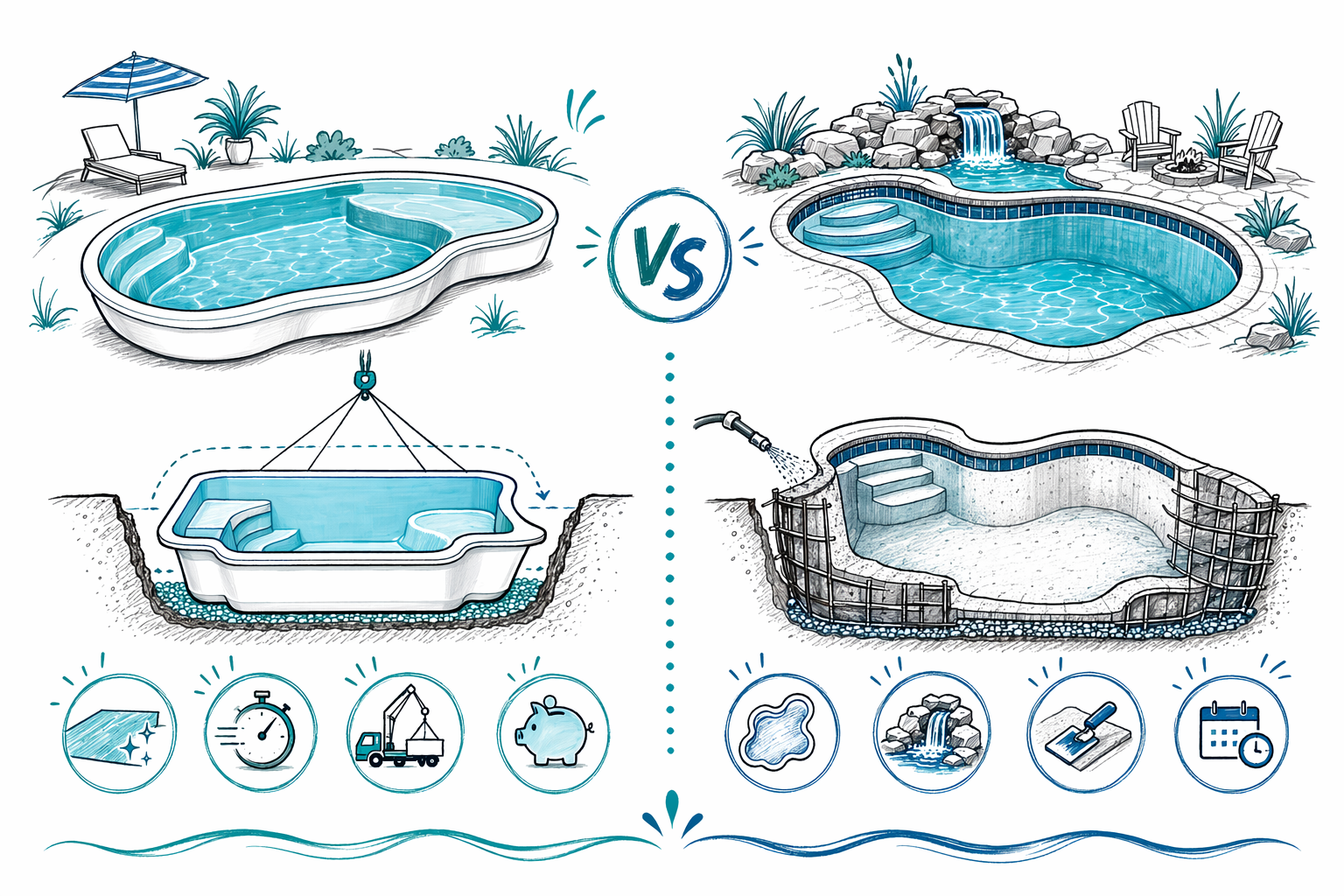
Fiberglass is usually faster to install, easier to maintain, and often costs less up front for a standard in-ground pool. Gunite usually gives you more freedom on shape, size, depth, features, and high-end finishes, but it often costs more and takes longer.
Typical US price ranges for the pool itself are:
- Fiberglass: about $45,000-$95,000
- Gunite/concrete: about $60,000-$135,000
Those are typical estimates, not quotes. Your real price depends on pool type, size, access to the yard, soil, slope, water table, features, finish level, and your local area. Decking, fencing, electrical upgrades, drainage work, landscaping, and permit costs can also change the final number a lot.
If you want a broader cost breakdown, start with pool costs before you talk to builders.
Side-by-side comparison
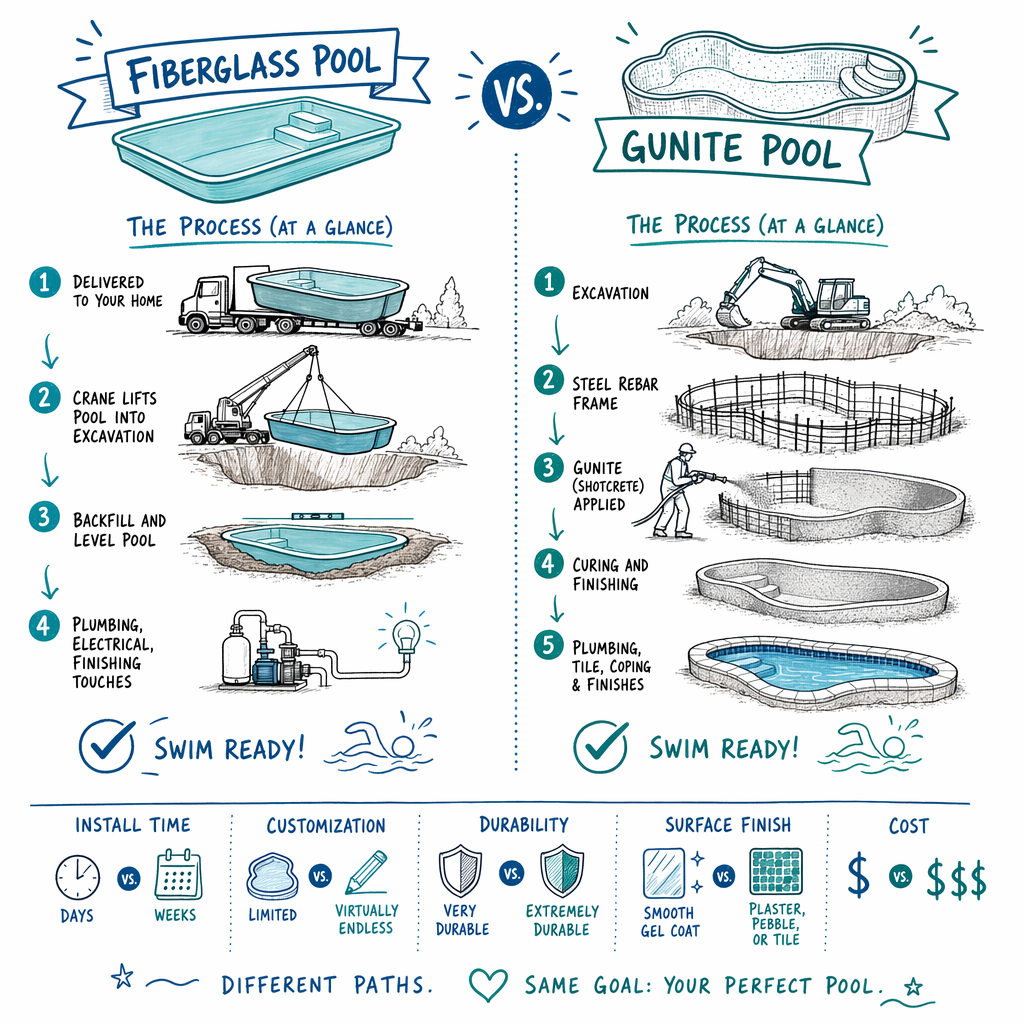
Here is the plain version homeowners usually care about most:
- Up-front cost
- Fiberglass is often lower for a basic to mid-range project.
- Gunite is often higher, especially once you add custom shape, spa, tanning ledge, water features, or premium finishes.
- Design flexibility
- Fiberglass comes in pre-made shell shapes and sizes. You get options, but not unlimited options.
- Gunite is highly customizable. Better if you want a very specific shape, deep end, vanishing edge, beach entry, or a pool made to fit a difficult yard.
- Installation time
- Fiberglass is usually faster because the shell arrives built.
- Gunite usually takes longer because it is formed and built on site in stages.
- Surface feel and maintenance
- Fiberglass has a smooth surface that many owners find easier to brush and maintain.
- Gunite surfaces can be rougher depending on finish. They may need more brushing and surface care over time.
- Long-term resurfacing
- Fiberglass may need cosmetic repairs over time, but it does not usually need the same resurfacing cycle as a plaster-finish concrete pool.
- Gunite pools often need resurfacing eventually, depending on the interior finish and water chemistry.
- Durability
- Both can last a long time when installed correctly and maintained well.
- The biggest risk with either type is often bad installation, poor drainage planning, or weak site prep, not just the material itself.
To compare the pool types in more detail, see pool type comparison.
When fiberglass makes more sense
Fiberglass is often the better fit if these points sound like you:
- You want a simpler project. A factory-made shell can mean fewer moving parts on site.
- You want to swim sooner. In many cases, fiberglass projects move faster than gunite projects.
- You want lower routine upkeep. The smooth surface can help reduce algae hold and make cleaning easier.
- You are fine choosing from existing shapes. If one of the available shell designs works for your yard, fiberglass can be a practical choice.
- You want to control costs. A standard fiberglass build may come in below a comparable custom gunite build.
That said, fiberglass is not automatically the cheaper choice in every case. Crane access, tight lot lines, difficult soil, retaining walls, utility work, and local labor rates can push costs up. Learn more about fiberglass pools if you think speed and simpler maintenance matter most.
When gunite makes more sense
Gunite is often worth the extra money if you want custom design freedom.
Choose gunite when you care about things like:
- A custom shape that matches the house, patio, or view
- A larger pool or unusual dimensions
- A deep end for diving, if local code and safe design allow it
- An attached spa, sun shelf, benches, water features, or higher-end finish package
- A pool built around a tricky yard layout
Gunite can be a strong choice for homeowners who plan to stay in the house for years and want the pool to look fully integrated with the property. But go in with open eyes. More customization usually means more decisions, more line items, and more ways for the budget to grow.
If you are considering concrete, read more about gunite/concrete pools.
What actually changes the price
Homeowners often focus too much on the shell type and not enough on the site.
The biggest price drivers are usually:
- Size and depth
- Site access for excavation equipment or fiberglass shell delivery
- Slope, soil, rock, drainage, and water table
- Decking and coping choices
- Interior finish and tile
- Attached spa or water features
- Heater, automation, lighting, and electrical upgrades
- Fencing and safety barriers required by local law
- Permit requirements and inspections
Two pools with the same length can have very different final costs because one yard is flat and open while the other needs retaining work, extra drainage, hand-digging, or crane coordination.
This is why you should get price and scope in writing before any deposit. Ask each builder to separate the base pool from site work, decking, equipment, permits, and allowances. That makes it easier to compare one proposal to another.
Also make sure you follow local permit rules and pool barrier laws. These guides can help: pool permits explained and pool safety barriers.
How to choose without getting burned
Use this simple checklist before you decide:
- Decide your priority. Is it lower upkeep, faster install, lower cost, or full design freedom?
- Measure the yard honestly. Access matters. A beautiful fiberglass shell does not help if delivery is a problem.
- Ask what is excluded. Electrical panel upgrades, drainage, permits, fences, and decking often surprise people.
- Compare apples to apples. Look at equipment brand, finish level, warranty terms, and what site work is included.
- Hire carefully. Only talk to licensed, insured, and bonded builders, and verify the license, insurance, and bond yourself.
- Do not rush the deposit. Get the full scope, payment schedule, and change-order terms in writing.
- Keep control of the last payment. Final payment should wait until the agreed work is done and required inspections are complete.
DeepEnd Match is a free matching service. We do not build pools or give construction advice. We help you connect with builders so you compare quotes, you choose who to hire, and you hold the final payment. If you are ready, start here: get matched or use this guide to vet a pool builder.
If you want faster installation and simpler upkeep, fiberglass is often the better fit. If you want a custom shape or premium design, gunite may be worth the higher cost. Get written estimates from licensed, insured, bonded builders, compare what is included, and do not pay the final amount until the job is done.
Common questions
Is fiberglass always cheaper than gunite?
No. Fiberglass is often less expensive for a standard in-ground pool, but not always. Delivery access, crane needs, soil conditions, decking, drainage, equipment, and local labor can narrow the gap or even flip it. Typical estimates are about $45,000-$95,000 for fiberglass and $60,000-$135,000 for gunite, but the real price depends on type, size, site, finishes, and area.
Which pool is easier to maintain?
Many homeowners find fiberglass easier to maintain because the surface is smooth and can be easier to clean. Gunite can need more brushing and may need resurfacing over time depending on the finish and water chemistry. Good maintenance matters with both types.
Does gunite last longer than fiberglass?
Both can last a long time if they are installed correctly and cared for properly. A well-built fiberglass pool can perform very well, and a well-built gunite pool can also last for decades. In real life, builder quality, site preparation, drainage, and proper maintenance often matter more than marketing claims.
What should I check before I hire a pool builder?
Check that the builder is licensed, insured, and bonded, and verify those items yourself. Ask for detailed written scope, payment schedule, equipment list, warranty terms, permit responsibility, and change-order terms before any deposit. Follow local permits and pool-safety or fencing laws, and keep the final payment until the agreed work is complete.