The short answer
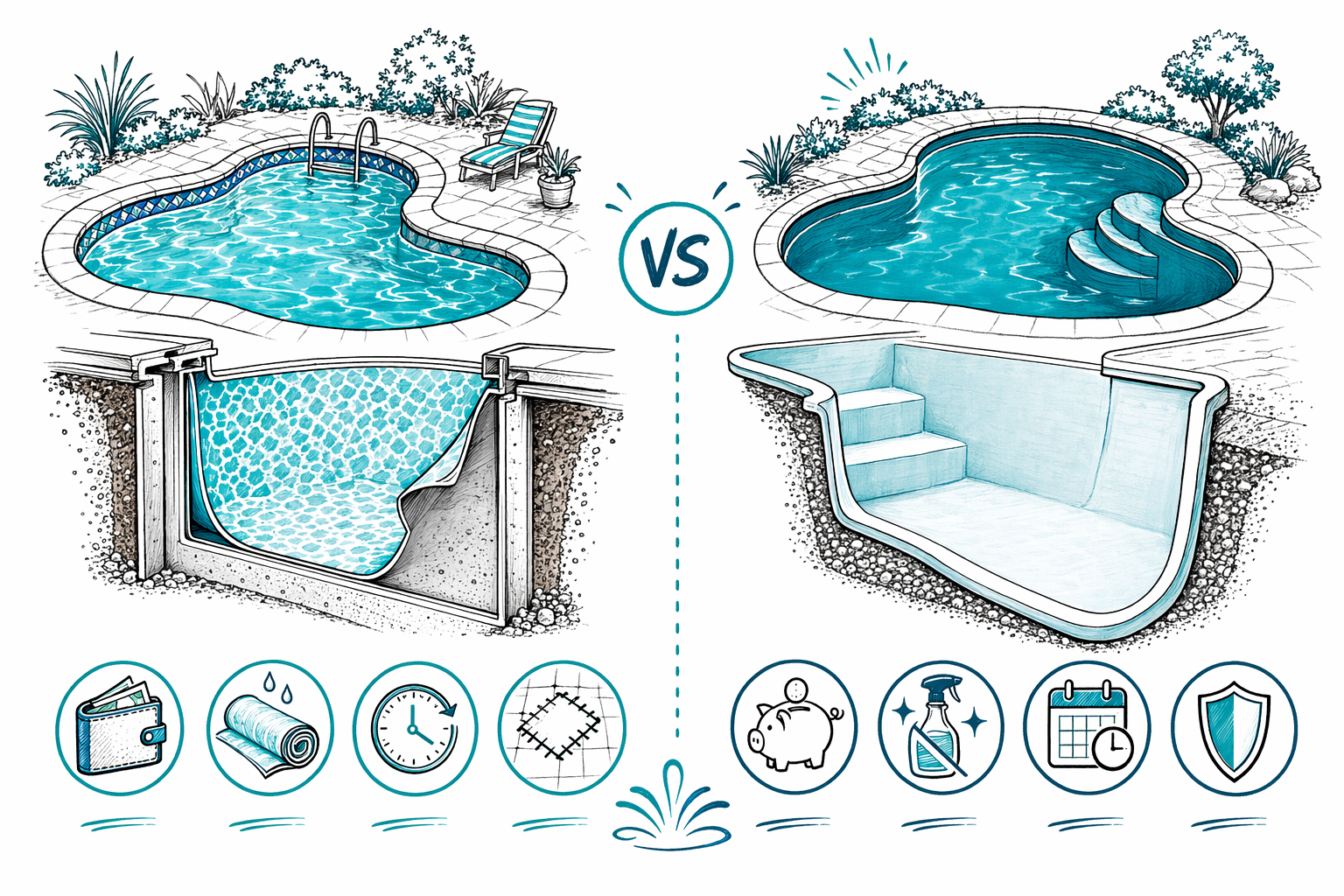
If you want the lower upfront cost, a softer feel underfoot, and flexible shapes and sizes, a vinyl-liner pool is often the cheaper way to get an in-ground pool.
If you want lower routine maintenance, a non-porous surface, and no liner replacement every several years, fiberglass is often the simpler long-term option.
Typical installed price ranges in the US are:
- Vinyl-liner: about $35,000-$70,000
- Fiberglass: about $45,000-$95,000
Those are typical ranges, not quotes. Real price depends on pool size, shape, access to your yard, soil, groundwater, decking, equipment, features, and your area. If you want a broader breakdown by pool type, see pool cost ranges or our pool type comparison guide.
Side-by-side comparison
Here is the practical homeowner version.
Upfront cost
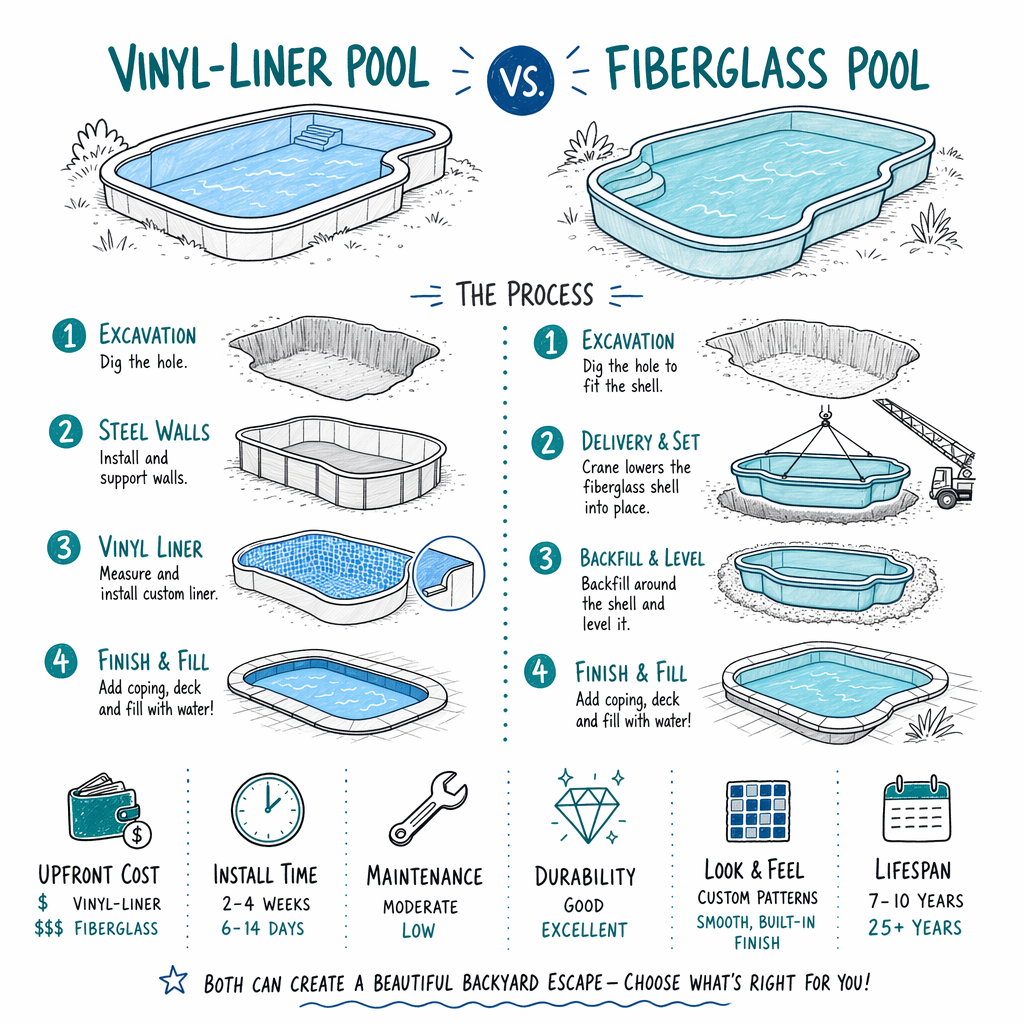
- Vinyl-liner usually costs less to install.
- Fiberglass usually costs more at the start because you are buying a factory-made shell and installation still requires excavation, base prep, equipment, plumbing, electrical, decking, and permits.
Speed of installation
- Fiberglass is often faster once the shell is available and site conditions are normal.
- Vinyl-liner can still be fairly quick, but build time can vary more because the structure and liner system are assembled on site.
Shape and size options
- Vinyl-liner gives more flexibility. If you want a custom rectangle, freeform layout, or a size that does not fit common fiberglass molds, vinyl may fit better.
- Fiberglass comes in factory-made shapes and sizes. There are many good options, but you choose from available shell models.
Surface feel and comfort
- Vinyl feels smooth and soft on feet and knees.
- Fiberglass is smooth too, but some people still prefer the softer feel of a liner.
Maintenance and algae resistance
- Fiberglass usually wins here. Its non-porous surface tends to make algae control easier and may reduce chemical demand.
- Vinyl can be easy to maintain too, but the liner can be punctured or damaged if treated roughly.
Durability and repairs
- Vinyl liners do not last forever. Many need replacement in roughly 7-15 years, sometimes sooner or later depending on care, chemistry, sun, and use.
- Fiberglass does not have a liner to replace, which is a major long-term advantage. But repairs can still happen, and surface repair work should be handled by qualified professionals.
What can go wrong
- With vinyl, common concerns are punctures, wrinkles, bead issues, fading, and future liner replacement cost.
- With fiberglass, common concerns are transport limits, crane or access issues, a smaller set of shape choices, and the need for proper installation and backfill.
Resale and buyer perception
- This depends on your market. Some buyers like fiberglass because they hear "lower maintenance." Others care more about the yard, the finish work, and whether the pool looks well built and well maintained.
When vinyl-liner makes more sense
A vinyl-liner pool may be the smarter pick if these sound like you:
- Your budget is tight right now. You want an in-ground pool, but you need to keep the initial project cost lower.
- You want more shape freedom. You have a narrow yard, a custom layout, or want dimensions that do not fit standard fiberglass shells.
- You are okay planning for liner replacement later. This is the big tradeoff. Lower upfront cost can mean a future replacement expense.
- You want a comfortable surface. Families with kids often like the soft feel.
Be honest with yourself about the liner. If replacing it later will feel like a bad surprise, vinyl may not be your best fit even if the first price looks better.
If vinyl is on your shortlist, read more about vinyl-liner pools.
When fiberglass makes more sense
A fiberglass pool may be the better choice if these fit your situation:
- You want simpler day-to-day ownership. Many homeowners choose fiberglass because the surface is non-porous and routine upkeep can feel easier.
- You plan to stay in the home for years. Paying more upfront can make sense if you want to avoid future liner replacement.
- You want a faster project path when conditions allow. Fiberglass can move quickly, but only if access, shell availability, and site conditions cooperate.
- You are fine choosing from existing shell designs. This is important. If one of the available sizes and shapes works for your yard, fiberglass gets more attractive.
Fiberglass is not automatically "better." It is just better for the homeowner who values easier upkeep and is willing to pay more at the start. Learn more about fiberglass pools.
The hidden cost questions to ask both builders
This is where people get burned. A low number on page one does not mean a lower final bill.
Ask every builder for price and scope in writing before any deposit. Then compare these items line by line:
- excavation and hauling
- access issues or crane costs
- permits and inspections
- electrical work
- plumbing runs
- equipment pad and startup
- coping, decking, and drainage
- waterline tile or finish details, if any
- fences, gates, alarms, or other required safety items
- grading, repair of disturbed yard areas, and cleanup
- liner thickness and replacement terms for vinyl
- shell brand, model, warranty terms, and installation details for fiberglass
Also ask:
- Who handles permits? Rules vary by town and county. Follow local permit and pool-safety laws. Our pool permits guide can help you understand the process.
- What is excluded? This one question can save you thousands.
- What happens if rock, groundwater, or bad soil is found? Site conditions change jobs fast.
- What is the payment schedule? Do not give final payment until agreed work is done.
Always hire licensed, insured, and bonded builders where required, and verify the license, insurance, and bond yourself. Do not rely only on a sales rep's word.
How to choose without overthinking it
Use this simple rule.
Choose vinyl-liner if:
- you need the lower upfront cost
- you want more design flexibility
- you understand and accept future liner replacement
Choose fiberglass if:
- you can spend more upfront
- you want easier routine maintenance
- you are happy with available shell shapes and sizes
If two builders tell you opposite things, that is normal. They may prefer the product they sell most. Your job is to compare the written scope, the exclusions, the schedule, and the long-term ownership costs.
DeepEnd Match is a free matching service. We help you compare licensed, insured, and bonded pool builders. You compare quotes, you choose who to hire, and you hold the final payment. If you are ready, start here: get matched.
If you want lower upfront cost and more shape choices, look at vinyl-liner. If you want easier upkeep and no liner replacement, look at fiberglass. Get written scope and pricing from licensed, insured, and bonded builders, compare exclusions carefully, and choose the one that fits your yard, budget, and long-term plans.
Common questions
Is fiberglass always better than vinyl-liner?
No. Fiberglass often has easier routine maintenance and no liner replacement, but it usually costs more upfront and gives you fewer shape and size options. Vinyl-liner can be a very good choice if you want a lower initial price and more design flexibility.
How long does a vinyl liner last?
Many vinyl liners last about 7-15 years, sometimes less or more depending on water chemistry, sun exposure, usage, and care. That future replacement cost is one of the biggest things to budget for when comparing vinyl to fiberglass.
Which pool is cheaper to maintain?
Fiberglass is often cheaper and easier to maintain over time because its surface is non-porous and does not need liner replacement. But real costs depend on your equipment, water chemistry, climate, and how well the pool is cared for.
What should I verify before hiring a pool builder?
Verify that the builder is licensed, insured, and bonded where required, and verify it yourself. Get the full price and scope in writing before any deposit. Ask what is excluded, who handles permits, and what happens if site problems like rock or groundwater show up. Follow local permit and pool-safety and fencing laws.