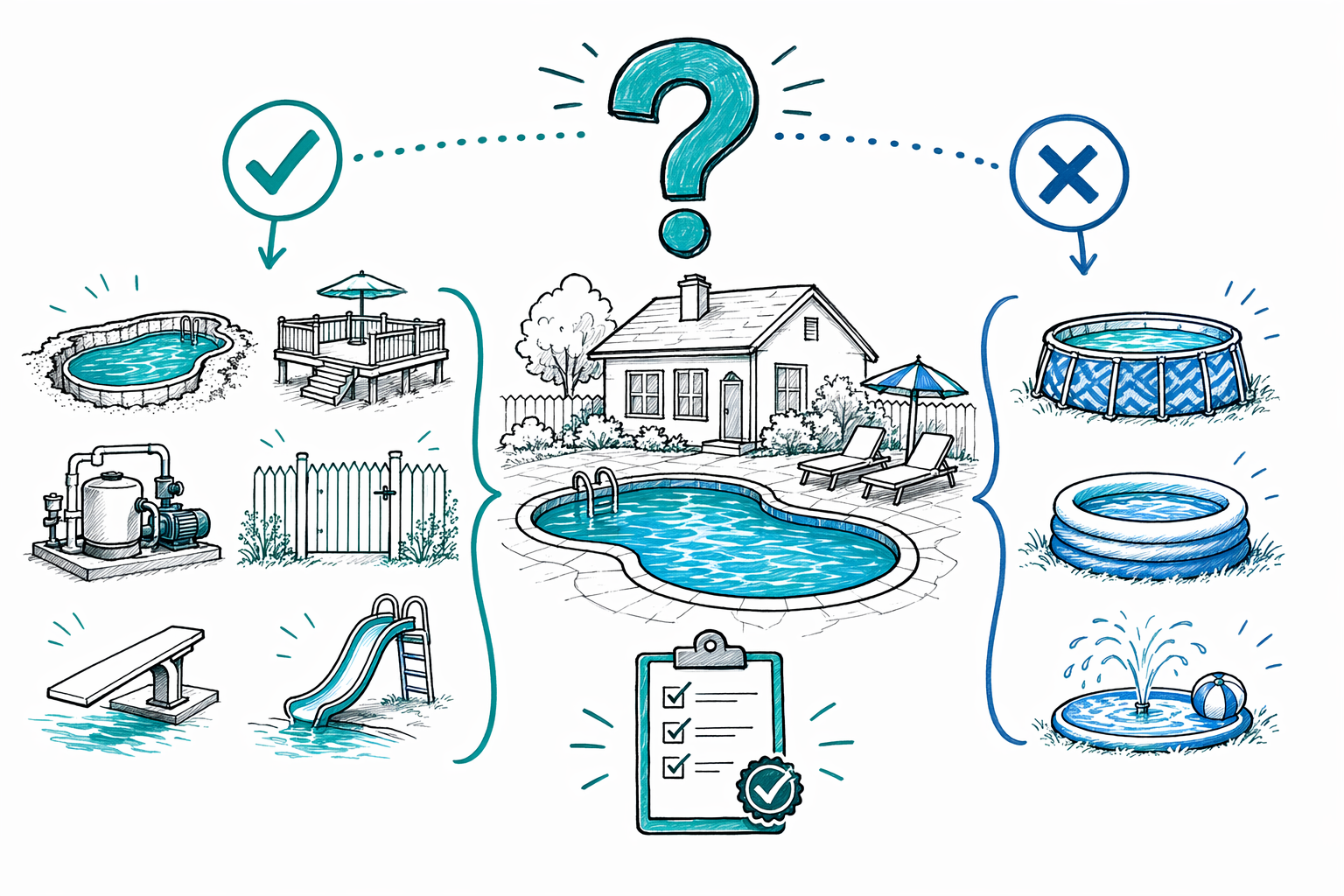
The short answer: expect permits, inspections, and paperwork
For most homeowners, an in-ground pool is not a simple backyard project. It usually triggers permits because the work affects safety, grading, drainage, electrical systems, plumbing, and property setbacks.
What that means in real life:
- A permit is often required for the pool shell or structure itself.
- Separate permits may also be needed for electrical, gas, heater installation, plumbing, fencing, or decking.
- Many areas require inspections at different stages, not just one final signoff.
- If you live in an HOA, you may need HOA approval in addition to city or county permits.
Do not rely on verbal promises like, "We do this all the time" or "You probably don't need one." Rules change by location. Some towns are strict. Some are slower than others. Corner lots, easements, septic systems, slopes, and flood zones can all create extra review.
If you are still deciding what kind of pool fits your yard and budget, compare options here: pool type comparison.
Why permits matter more than people think
A permit is not just a form. It is how your local government checks that the project follows basic safety and zoning rules.
Skipping permits can create expensive problems:
1. Stop-work orders. The city can make the job stop until paperwork is fixed.
2. Fines or penalties. In some places, unpermitted work costs more to correct than doing it right the first time.
3. Trouble selling the home. Missing permits can come up during inspection or closing.
4. Insurance issues. If something goes wrong, an insurer may ask whether the pool and related work were permitted.
5. Safety risks. Pool barriers, electrical bonding, and drain rules exist for a reason.
This is also where homeowners get burned by bad builders. A low price can hide missing permit work, missing inspections, or vague scope. Always hire licensed, insured, and bonded builders, and verify the license, insurance, and bond yourself. Get the full price and scope in writing before any deposit. Follow local permits and pool-safety laws.
Before you hire anyone, use this checklist: how to vet a pool builder.
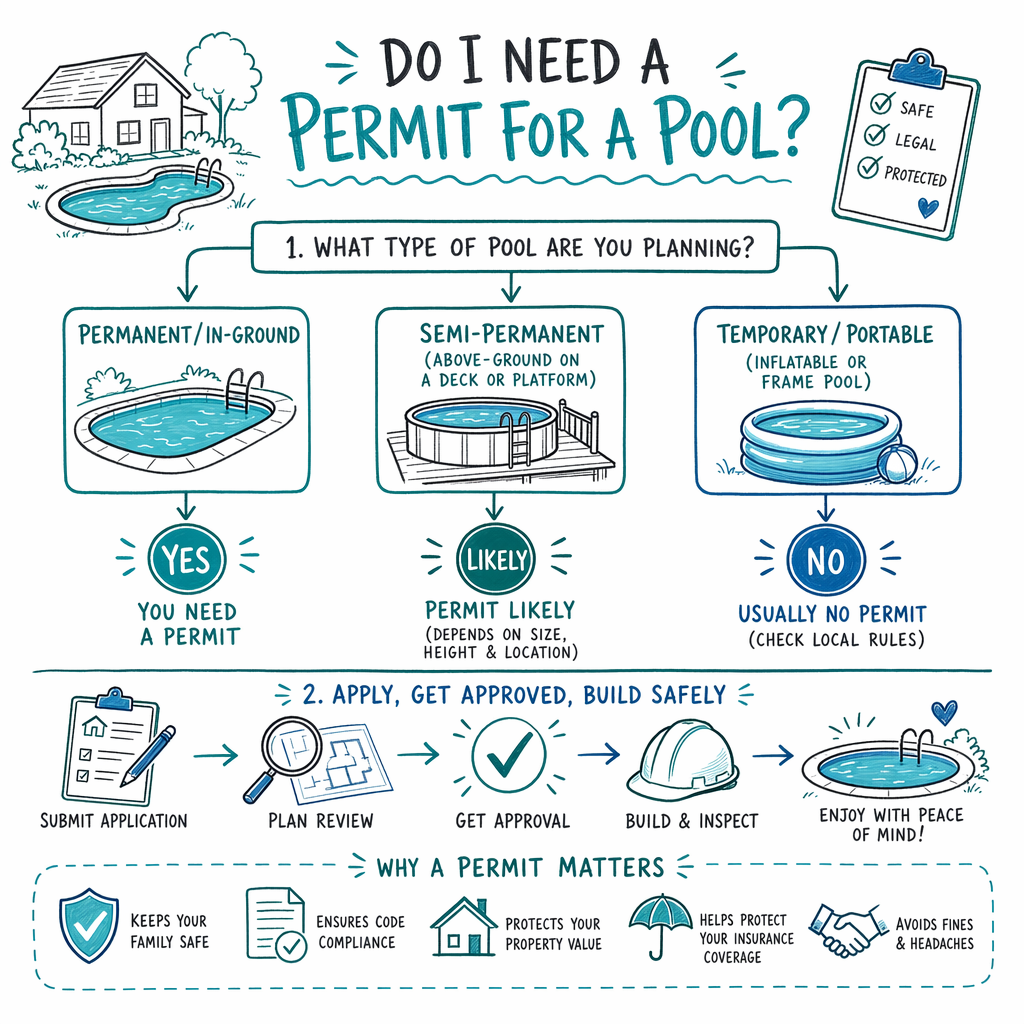
What permits or approvals might apply
The exact list depends on your area, but these are common for in-ground pools:
- Building permit for the pool structure or installation
- Electrical permit for pumps, lights, bonding, subpanels, automation, and nearby outlets
- Plumbing permit for circulation lines, equipment hookups, and sometimes gas lines
- Gas/mechanical permit for a heater, fire feature, or outdoor kitchen tied to the pool area
- Fence or barrier approval for gates, alarms, and self-closing latches
- Grading or drainage approval if the pool changes runoff or yard elevation
- Engineering review for retaining walls, steep slopes, or difficult soil conditions
- Zoning review for setbacks from property lines, easements, septic systems, wells, or utilities
- Tree removal permits in some cities
- HOA approval if your neighborhood has architectural review rules
Pool type can affect the process too:
- Gunite/concrete pools often involve more site-specific review because they are built in place.
- Fiberglass and vinyl-liner pools may still need full local approvals even if installation is faster.
A permit may also affect timing and cost. Permit fees are usually a small part of the total project compared with excavation, materials, equipment, decking, and access issues. But delays from missing paperwork can add real time. Total pool costs are still just typical ranges and estimates, not quotes. In many US markets, a gunite pool may run about $60,000-$135,000, fiberglass about $45,000-$95,000, and vinyl-liner about $35,000-$70,000. Smaller plunge pools can be less. The real price depends on type, size, site, finishes, and area. For broader cost ranges, see pool costs.
How to check permit requirements before you sign anything
You do not need to become a permit expert, but you do need clear answers. Use this simple process:
- Call or check the website of your city or county building department. Ask what permits are usually required for an in-ground pool at your address.
- Ask about your specific lot. Mention if you have an HOA, septic system, slope, retaining wall, flood zone, corner lot, or utility easement.
- Ask for the barrier rules. Pool fencing and gate rules are often strict and non-negotiable.
- Ask who pulls each permit. Different trades may pull different permits depending on local law.
- Ask what inspections happen and when. You want to know what must pass before the next phase starts.
- Ask about current review times. In busy seasons, permit approval can take longer than homeowners expect.
When you talk to builders, ask these exact questions:
- "Which permits do you believe this project will need?"
- "Who is responsible for pulling them?"
- "Are permit fees included in the written scope or separate?"
- "What inspections are expected?"
- "Will you give me permit numbers and copies of approved plans if applicable?"
If the answers are vague, slow down. A trustworthy builder should be able to explain the usual process in plain language, even though final requirements come from your local authority, not from DeepEnd Match or the builder.
For a fuller overview, read pool permits explained.
What to do next so you stay in control
The safest path is simple:
- Get matched for free with builders who say they are licensed, insured, and bonded: get matched
- Verify each builder's license, insurance, and bond yourself
- Compare written scopes, not just top-line prices
- Confirm permits and inspections in writing before you pay a deposit
- Follow local pool-safety and fencing laws from day one
- Hold final payment until the agreed work is complete and required approvals are handled
DeepEnd Match is a free matching service, not a builder or contractor. We do not build pools, design pools, pull permits, or give legal, structural, electrical, plumbing, or financial advice. We help you compare options so you choose who to hire.
One more point: safety barriers are not an afterthought. They are part of planning. Review the basics here: pool safety barriers.
Yes, most in-ground pools need permits. Check with your city or county, ask builders to explain permit responsibility in writing, verify license, insurance, and bond yourself, and do not let work start until you understand the rules and safety requirements.
Common questions
Can a pool builder tell me for sure whether I need a permit?
A builder can share what is common in your area, but the final answer comes from your local building or zoning authority. Rules vary by city, county, lot conditions, and HOA rules. Always verify requirements yourself and get permit responsibility in writing before any deposit.
Do small plunge pools or spool-style pools still need permits?
Often, yes. A smaller in-ground pool may still need permits for the pool itself, electrical work, plumbing, fencing, or drainage. Do not assume that a small size means no permit. Local rules decide.
Who usually pulls the permit for an in-ground pool?
It depends on local law and how the project is divided. Sometimes the main builder pulls the main permit and licensed trade contractors pull electrical, plumbing, or gas permits. What matters is that responsibility is clear in writing, with permit fees and inspections spelled out.
What if a builder says permits are not necessary if I pay cash?
That is a major red flag. Paying cash does not remove legal permit requirements. If a builder suggests skipping permits, slow down and verify everything with your local authority. Hire only licensed, insured, and bonded builders, verify those credentials yourself, and get the full scope and price in writing before any deposit.