The short answer: compare scope first, price second
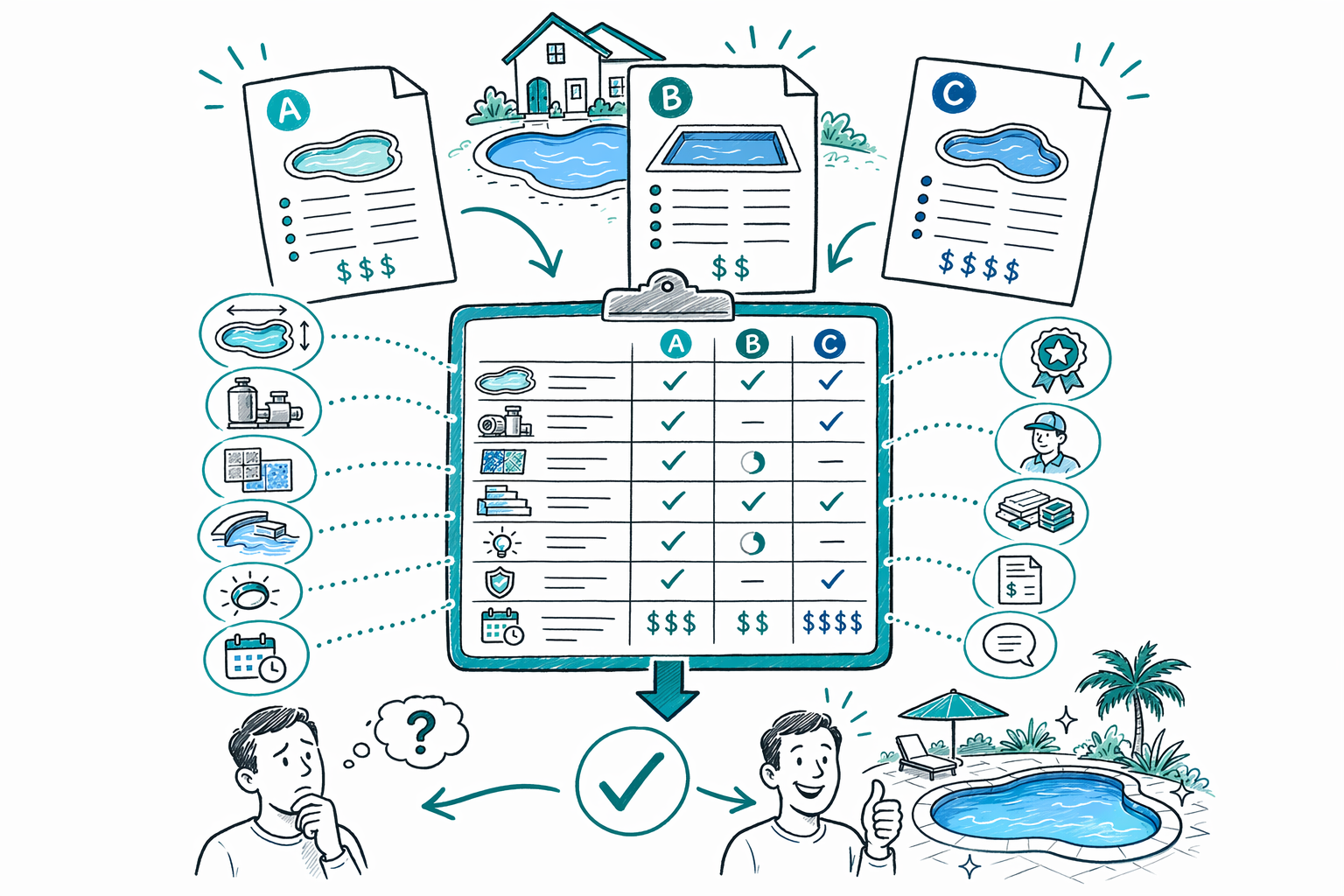
A low pool estimate is not always a better deal. Many homeowners get burned because one builder includes more work, better equipment, or realistic site costs, while another leaves those items out until later.
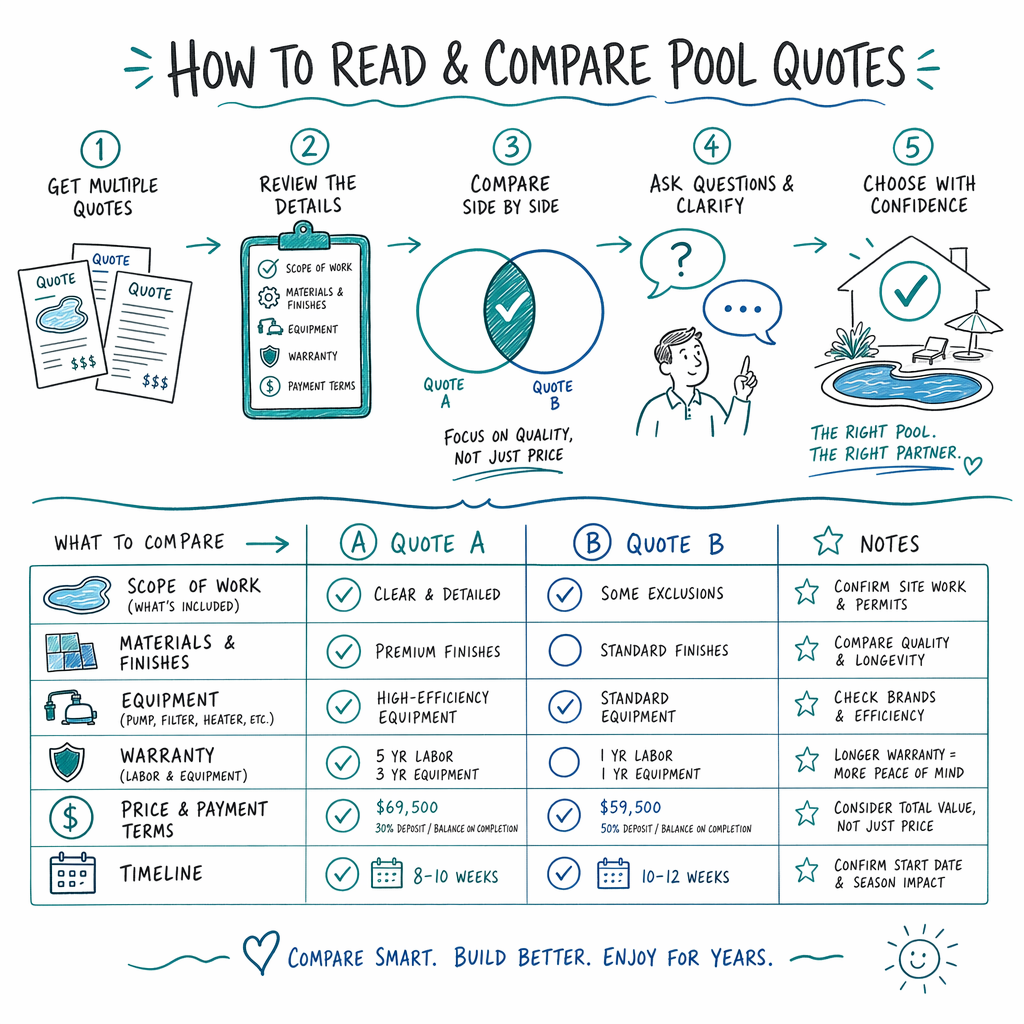
When you compare quotes, do this in order:
- Make sure the pool type is the same. A gunite pool, a fiberglass shell, and a vinyl-liner pool are different products with different cost ranges and timelines. If you need help on differences, see pool type comparison.
- Compare the exact scope line by line. Size, depth, decking, equipment, electrical, excavation, cleanup, start-up, and permit handling can change the total a lot.
- Look for allowances and exclusions. These are common places where the final price goes up.
- Check the builder, not just the number. Hire a licensed, insured, and bonded builder, and verify the license, insurance, and bond yourself before you sign anything.
Typical pool-only ranges in many US markets are:
- Gunite/concrete: about $60,000-$135,000
- Fiberglass: about $45,000-$95,000
- Vinyl-liner: about $35,000-$70,000
- Smaller plunge pools: often less, depending on type and site
These are typical estimates, not quotes or guarantees. Real price depends on pool type, size, site access, soil, finishes, features, and your area. For a broader breakdown, see pool costs.
What a solid pool quote should show
A useful quote should be clear enough that you can compare it to another one without guessing. If it is vague, ask for a revised written estimate before you pay a deposit.
Look for these items:
- Pool type and model
- Gunite/concrete, fiberglass, or vinyl-liner
- For fiberglass, shell brand or model and dimensions
- For vinyl, wall structure and liner details
- Dimensions and depth
- Length, width, shallow end, deep end
- Interior waterline shape if it affects usable space
- Excavation and site work
- Digging, haul-off, grading, basic backfill
- Notes about limited access, slopes, rock, high water table, or retaining needs
- Structure and finish
- Gunite shell specs and interior finish level
- Fiberglass install method and backfill method
- Vinyl wall material, floor base, and liner thickness
- Decking and coping
- Material, square footage, thickness, edge details
- Equipment package
- Pump, filter, heater if included, sanitizer system, automation, cleaner, lights
- Brand and model numbers if possible
- Electrical and plumbing
- Pool bonding, subpanel if needed, trenching, runs, basic hookups
- Any limits on distance from the house panel or gas source
- Permits and inspections
- Whether the builder handles permit submission or only builds after permits are approved
- Whether permit fees are included or listed separately
- Safety items
- Alarms, self-closing gates, code-required barriers if included
- You still need to follow local permits and pool-safety and fencing laws. Read pool safety barriers if you are not sure what may apply.
- Startup and owner handoff
- Fill/start-up, first chemical balancing, equipment orientation, cleanup
- Warranty terms
- Shell/structure, surface, equipment, workmanship
A good quote also lists what is not included. That matters as much as what is included.
The line items that often cause surprise costs
This is where many totals change after the contract starts. Read every exclusion and allowance carefully.
Common exclusions
- Permit fees
- Engineering if required by your city or county
- Fence relocation or new code-required fencing
- Electrical upgrades at the house
- Gas line runs for a heater
- Drainage work
- Sod, landscaping, irrigation repair
- Rock excavation
- Extra concrete because of unstable soil or over-dig
- Crane costs for fiberglass installs with tough access
- Water to fill the pool
Common allowances
An allowance means a number is only a placeholder. If your actual choice costs more, you pay the difference.
Watch for allowances on:
- Tile and coping
- Decking material
- Interior finish upgrades
- Lighting package
- Water features
- Automation
- Heater or chiller size
Ask each builder these questions in writing:
- What can change this price after work begins?
- Which items are allowances, and what quality level do they assume?
- What site conditions are not covered?
- Who pays if permits require changes?
- What cleanup and repair are included at the end?
If one estimate is much lower, ask why. Sometimes the answer is fair. Sometimes it means the quote is missing real work.
For example, Builder A may show $68,000 for a fiberglass pool and Builder B shows $57,000. Builder A includes 500 square feet of concrete decking, basic electrical runs, permit fees, and startup. Builder B excludes permit fees, includes less decking, and has an allowance for electrical. Builder B is not really cheaper once you add the missing pieces.
This is why you compare quotes, not just totals.
How to compare builders fairly
Price matters. So does the builder's ability to finish the job correctly and stand behind it.
Use this simple check list:
- Verify license, insurance, and bond yourself
- Ask for the full legal business name
- Check state or local license records
- Ask for proof of general liability and workers' comp if required in your state
- Confirm bond status if applicable in your area
- Get scope and payment terms in writing before any deposit
- The written agreement should match the estimate
- Milestone payments should be clear
- Never rely on verbal promises
- Ask who does the work
- In-house crews or subs
- Who supervises the job day to day
- Ask about timeline honestly
- Start window
- Major phases
- What weather or permit delays are normal
- Ask how changes are handled
- Change orders should be written and priced before extra work starts
If you want help screening companies, read how to vet a pool builder.
One more point that protects homeowners: hold the final payment until the agreed work is complete and you have the items promised in writing. That does not mean refusing fair progress payments. It means making sure the last payment is tied to completion, cleanup, and any required final sign-offs in your contract.
What to do next
If you already have estimates, put them side by side and compare these columns:
- Pool type and dimensions
- Included site work
- Decking square footage and material
- Equipment brand/model
- Permit handling and fees
- Safety items
- Exclusions and allowances
- Payment schedule
- Estimated timeline
- Warranty terms
If you do not have estimates yet, start with builders who are a fit for your project type. You can get matched at no cost through DeepEnd Match. Matching is free to the homeowner. Participating builders pay a flat fee to be listed and matched.
Remember the basics:
- Use typical cost ranges only as a planning tool, not a promise
- Hire licensed, insured, and bonded builders
- Verify credentials yourself
- Get price and scope in writing before any deposit
- Follow local permit rules and pool-safety and fencing laws. If you need a starting point, see pool permits explained.
You do not need to be an expert to compare pool quotes well. You just need clear written scope, honest questions, and the patience to check what is missing.
Do not compare pool quotes by total price alone. Compare the exact work, equipment, exclusions, and allowances, then verify the builder's license, insurance, and bond yourself, and get everything in writing before any deposit.
Common questions
Why are two pool quotes for the same size pool so different?
Usually because the scope is different. One builder may include more decking, better equipment, permit fees, startup, or realistic site work. Another may leave those out or use allowances. Compare line items, exclusions, and allowances before you compare totals.
Should I choose the cheapest pool quote?
Not automatically. A lower estimate can be a good value, but it can also mean missing work, weaker equipment, or more change orders later. First confirm the same pool type, size, equipment, decking, permit handling, and site work are included. Then check that the builder is licensed, insured, and bonded, and verify that yourself.
What is an allowance in a pool estimate?
An allowance is a placeholder amount for something not fully chosen yet, such as tile, coping, decking, or lighting. If your actual selection costs more than the allowance, you pay the difference. Ask what quality level the allowance assumes and get it in writing.
What should I get in writing before I pay a deposit?
Get the full scope of work, total estimated price, payment schedule, exclusions, allowances, change-order rules, estimated timeline, warranty terms, and who handles permits. Make sure the legal business name matches the builder's license and insurance records. Follow local permits and pool-safety and fencing laws, and hold the final payment until the agreed work is complete under your contract.