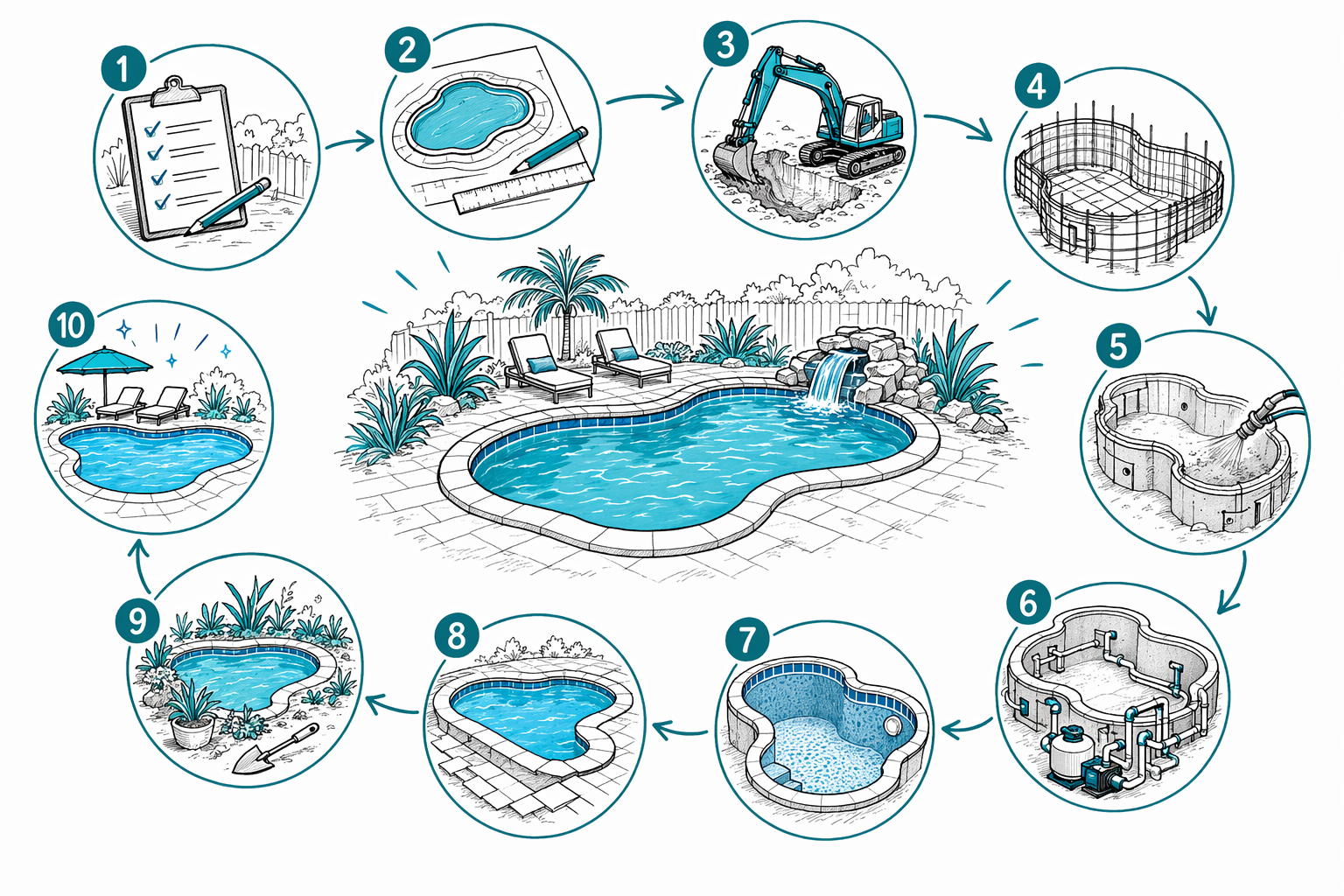
The short answer: most pool projects take 6 to 16+ weeks
A backyard pool is not one job. It is a chain of jobs. Design choices, permits, excavation, steel or shell work, plumbing, electrical, inspections, decking, interior finish, and startup all have to happen in the right order.
Typical build ranges after permits are approved:
- Fiberglass pools: often 3 to 8 weeks for basic installs, sometimes longer if access is tight or extra work is added
- Vinyl-liner pools: often 4 to 8 weeks
- Gunite/concrete pools: often 8 to 16+ weeks because there are more steps and curing time
- Smaller plunge pools: can be faster, but not always if the yard, permits, or utilities are complicated
Before construction starts, there is usually planning time too. That can add 2 to 8+ weeks for builder selection, design revisions, HOA review, engineering if needed, and permits.
So when homeowners ask, "How long does it take to build a pool?" the honest answer is this: from first planning to swim-ready, many projects take about 2 to 5 months, and some take longer.
If you are still deciding which type fits your yard and timeline, see pool type comparison.
What affects the timeline most
Some delays are normal. Some are preventable. These are the biggest timeline drivers homeowners should know about.
1. Pool type
Gunite usually takes the longest. It has more field-built steps. Fiberglass can be faster because the shell arrives pre-made. Vinyl-liner timelines are often in the middle.
2. Permits and inspections
Some cities are quick. Others are not. If your area requires engineering, utility review, drainage review, or several inspections, that adds time. Learn more in pool permits explained.
3. Weather
Rain slows excavation, concrete work, decking, electrical work, grading, and finish work. Freeze-thaw conditions can also push jobs back.
4. Soil and site conditions
Rock, groundwater, poor drainage, slope, narrow yard access, retaining walls, septic systems, and buried utility conflicts can all slow the job.
5. Change orders
A lot of delays come from homeowner changes after the job starts. Moving the pool, changing shape, adding a spa, switching decking, or upgrading features late in the process can push the schedule.
6. Material and subcontractor scheduling
Tile, coping, heaters, pumps, automation parts, and specialty finishes can have lead times. Good builders plan ahead, but supply issues still happen.
7. Safety and code requirements
Barrier, gate, alarm, and inspection requirements matter. Your local pool-safety rules can affect the final sign-off and move-in date. Review pool safety barriers.
8. Builder capacity
A builder may say your pool takes 8 weeks, but if they start late or juggle too many projects, your real timeline can stretch. Ask how many active jobs they run at the same time.
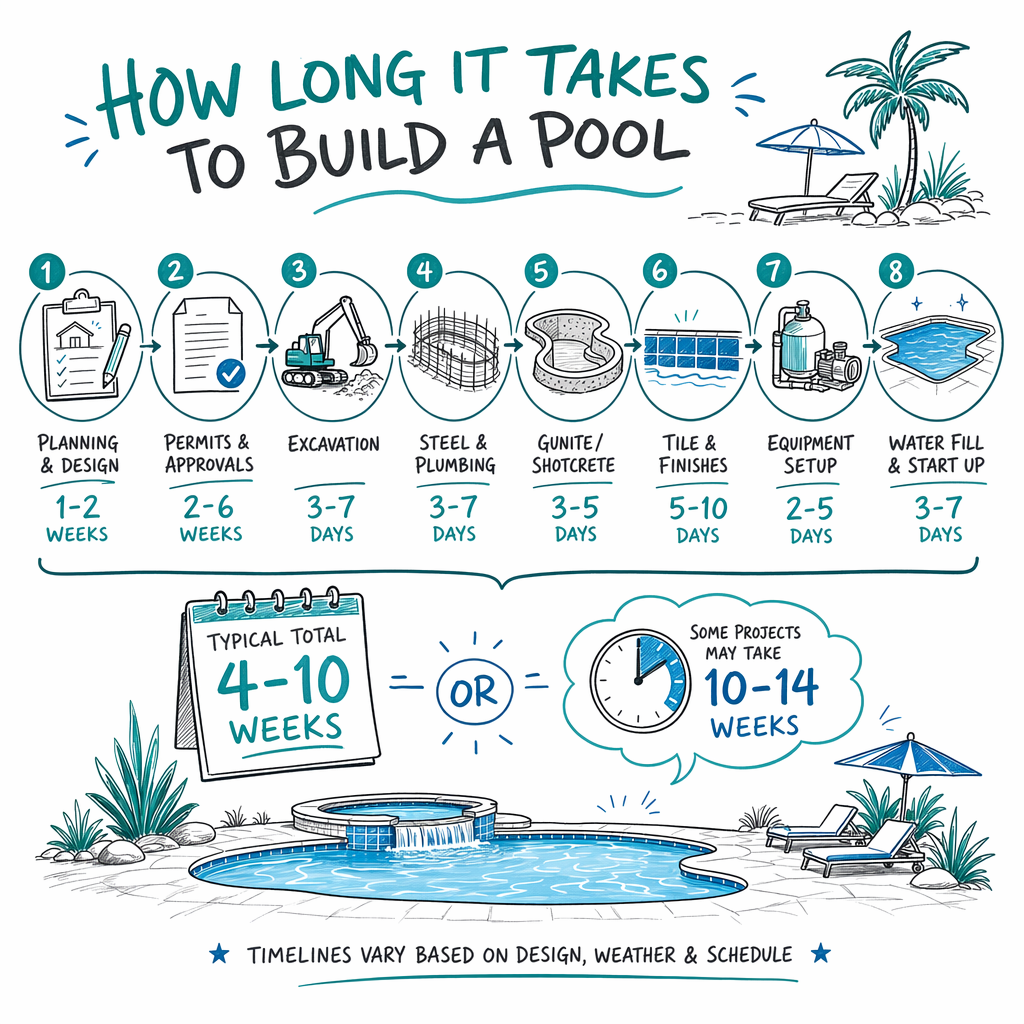
A realistic step-by-step timeline
Here is a common order of work for an in-ground pool. Not every project is the same, but this gives you a practical picture.
1. Planning and builder selection: 1 to 4+ weeks
You compare designs, typical price ranges, included items, exclusions, and schedule expectations. Get the scope and payment schedule in writing before any deposit.
2. Design, survey, HOA, and permits: 2 to 8+ weeks
Some jobs move fast. Others wait on city review, engineering, or association approval.
3. Layout and excavation: 1 to 5 days
If access is easy and soil is normal, this part can move quickly. Rock, rain, and utility issues can slow it down.
4. Structure stage: 1 to 3+ weeks
- Gunite/concrete: steel, plumbing/electrical rough-in, gunite/shotcrete application, then curing time
- Fiberglass: shell delivery, crane or placement, leveling, plumbing/electrical rough-in, backfill
- Vinyl-liner: wall panels, floor prep, plumbing/electrical rough-in, liner install later in the sequence
5. Inspections: variable
Inspections can happen at several points. Missing one inspection window can delay the next trade.
6. Decking, coping, tile, and equipment: 1 to 3+ weeks
This depends on materials, weather, and trade availability.
7. Interior finish or liner, fill, startup: several days to 2+ weeks
Concrete pools often need final interior finish and careful startup. Fill time depends on local water flow and pool size.
8. Fence or barrier completion and final approval: variable
In many places, you cannot legally use the pool until required safety items are done and final approval is complete.
If you want a general sense of typical price ranges by pool type while planning, visit costs. Remember, these are estimates and ranges, not quotes. Real price depends on type, size, site, finishes, and area.
What you can do to keep the project moving
You cannot control the weather or the permit office. But you can avoid many slowdowns.
- Choose your pool type early. Late design changes cost time.
- Ask for a written timeline with milestones. Not a promise. A working schedule.
- Ask what is included and excluded. Decking, fencing, electrical upgrades, drainage, sod repair, and permits are common confusion points.
- Verify the builder is licensed, insured, and bonded. Then verify it yourself with your state or local licensing board and by checking current insurance and bond details.
- Ask who handles permits and inspections. Even if the builder coordinates them, you should know what is required in your area.
- Make finish selections early. Tile, coping, interior finish, and equipment delays often come from late choices.
- Keep the access path clear. Locked gates, parked cars, pets, and stored materials can waste work days.
- Respond fast to questions. If your builder asks you to approve a material or placement issue, do not let it sit for three days.
A simple question list helps when you compare companies. Use vet a pool builder before you sign anything.
And remember: you compare quotes, you choose who to hire, and you hold the final payment until the agreed work is done.
Common mistakes that make pool projects take longer
Homeowners often get burned by the same problems.
Believing the fastest promise
A very short timeline can sound good, but ask what could delay it and what is not included. A realistic builder usually sounds more careful.
Not reading the scope
If the contract is vague, delays and disputes are more likely. Get price, scope, allowances, and payment schedule in writing before any deposit.
Skipping permit and safety questions
If permits, inspections, or barriers are ignored, the project can stall near the end when you expect to swim.
Making changes after digging starts
Even small changes can trigger redesign, rescheduling, or rework.
Planning around a fixed party date
If you need the pool by Memorial Day, July 4th, or a family event, start earlier than you think. There is no guaranteed finish date in construction.
Hiring without checking credentials
Always hire licensed, insured, and bonded builders where required, and verify the license, insurance, and bond yourself. Do not rely only on a sales pitch or a business card.
Paying too much too early
Use a written payment schedule tied to milestones. Keep final payment until the agreed work, cleanup, startup items, and any required final approvals are complete.
DeepEnd Match does not build pools or give construction, legal, or financial advice. We are a free matching service that helps homeowners compare local builders. Participating builders pay a flat fee to be included. Homeowners pay nothing to get matched.
Next step: compare builders before you compare schedules
A pool timeline is only useful if the builder can actually deliver it. The best next move is to compare a few builders side by side.
Ask each one:
- What is the typical timeline for my yard and pool type?
- What delays happen most often in my area?
- What is included in the schedule, and what is not?
- Who pulls permits, schedules inspections, and coordinates subcontractors?
- How many projects are you running right now?
If you want help finding companies to compare, use get matched. DeepEnd Match is free for homeowners. You share basic project and contact details, then you can compare licensed, insured, bonded builders and decide who, if anyone, you want to hire.
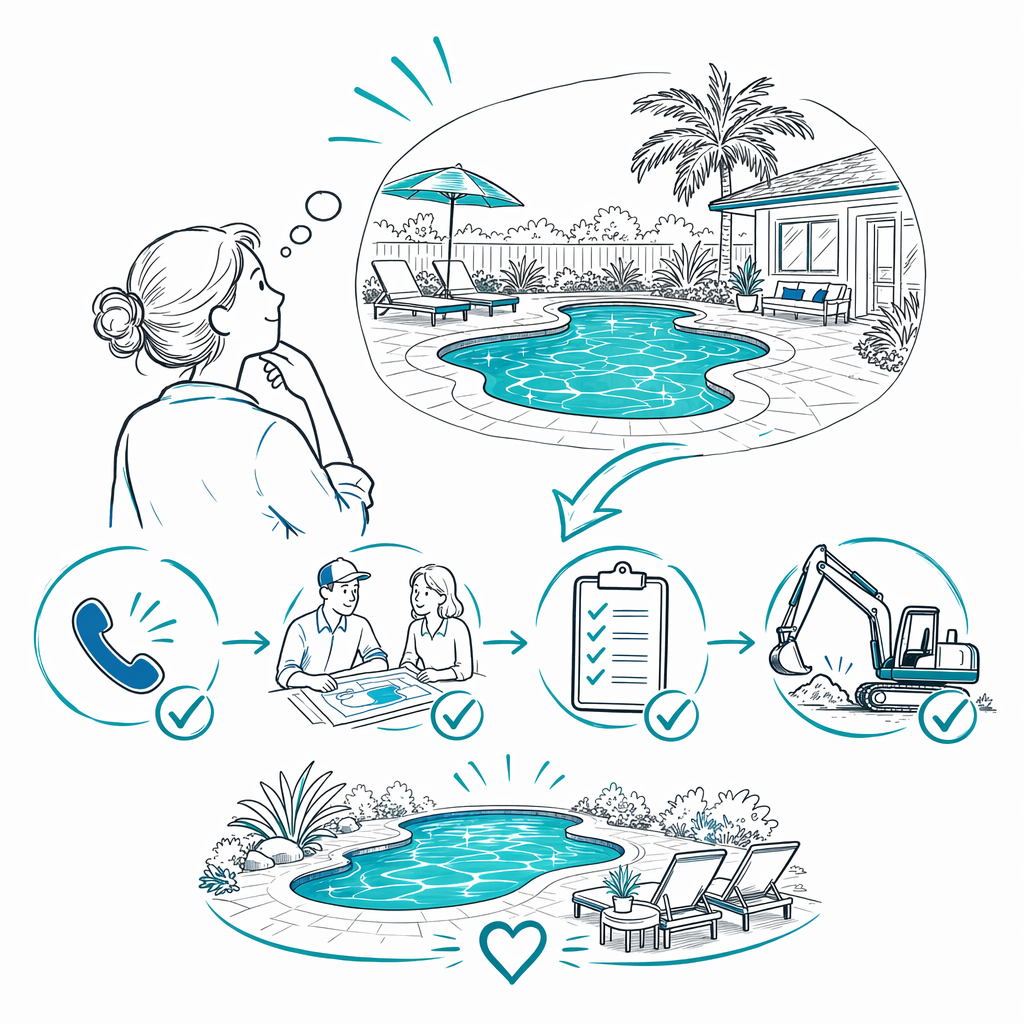
Most in-ground pools take about 6 to 16+ weeks to build after permits, and the full process often takes 2 to 5 months when planning time is included. Compare a few licensed, insured, bonded builders, get scope and timing in writing, verify permits and safety requirements, and do not pay the final amount until the agreed work is done.
Common questions
What is the fastest type of in-ground pool to install?
Often, a fiberglass pool is the fastest because the shell is factory-made and installed on site. But fast is not automatic. Permits, crane access, yard conditions, weather, inspections, and added features can still stretch the timeline.
How long after excavation until the pool is ready to swim?
It depends on pool type and local approvals. A basic fiberglass or vinyl-liner project may be ready in several weeks after digging starts. A gunite/concrete pool often takes longer because of more build steps and curing. Final timing also depends on decking, equipment setup, safety barriers, inspections, and startup.
Can a pool really be built in 30 days?
Sometimes, yes, but that is not a safe assumption for every project. A straightforward fiberglass or vinyl-liner install with quick permits, good weather, easy access, and no major extras may move very fast. Many jobs do not. Ask for a written scope and a realistic milestone schedule, not just a best-case promise.
What should I ask a builder about timing before I sign?
Ask for the typical timeline for your pool type, what can delay it, what is included, who handles permits and inspections, and how payments line up with milestones. Verify that the builder is licensed, insured, and bonded, and verify those details yourself. Get price and scope in writing before any deposit, and follow local permit and pool-safety/fencing laws.