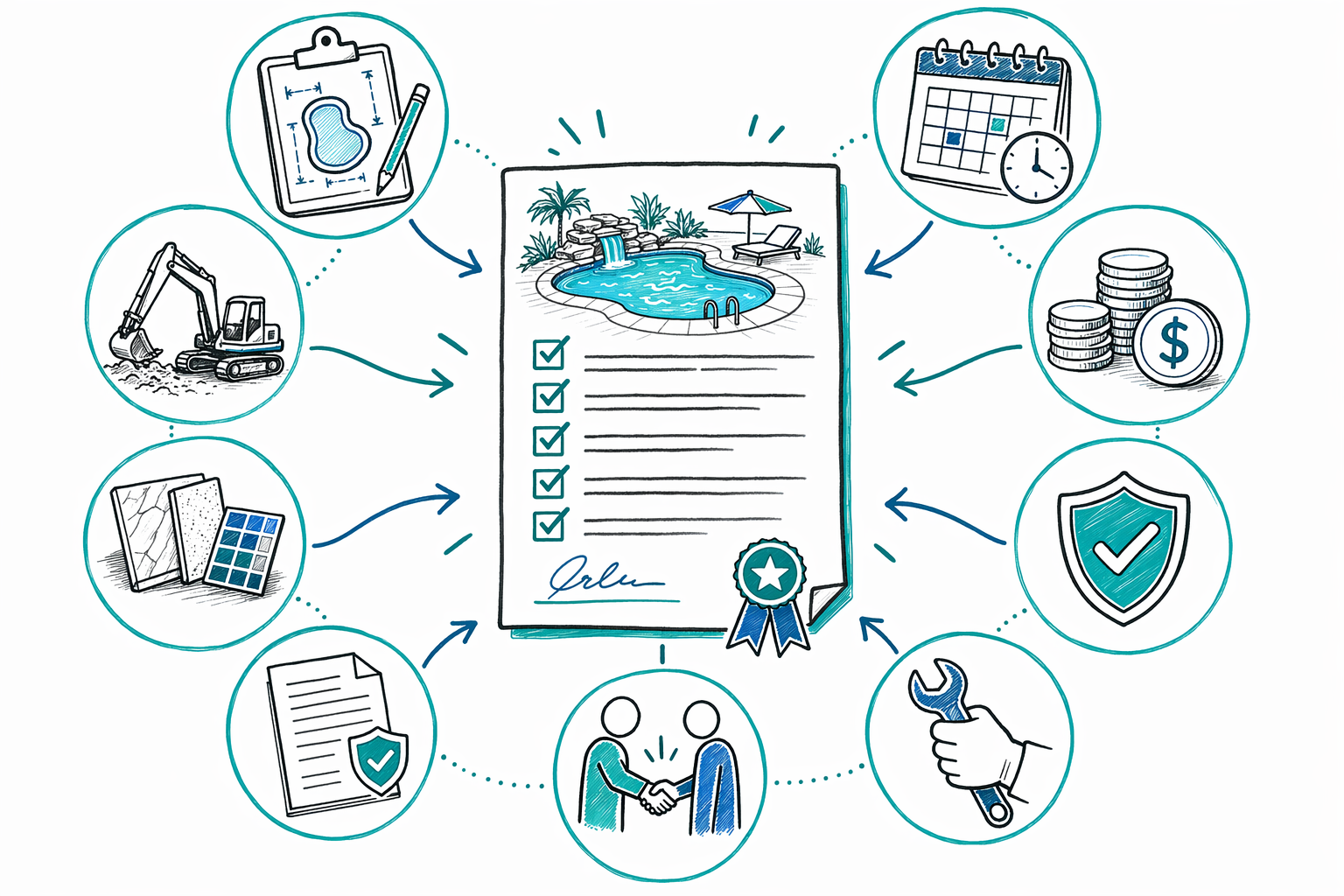
Why the contract matters so much
A pool is a big project. Typical in-ground pool costs often fall in these ranges: gunite/concrete $60,000-$135,000, fiberglass $45,000-$95,000, and vinyl-liner $35,000-$70,000. Smaller plunge pools can cost less. The real price depends on the pool type, size, yard access, soil, finishes, equipment, and your area.
That is exactly why the contract matters. It should show what is included, what is not included, who does what, when money is due, and what happens if something changes.
A clear contract protects both sides. It gives you something concrete to compare before you hire. It also helps stop a common problem: a low starting price that grows once the job begins.
Before any deposit, make sure the builder is licensed, insured, and bonded if your state or local rules require it. Verify the license, insurance, and bond yourself. Get the full price and scope in writing. Follow local permit rules and pool-safety and fencing laws. If you still need to compare builders, DeepEnd Match can help you get matched with licensed, insured, bonded pool builders at no cost to you.
The key items every pool contract should spell out
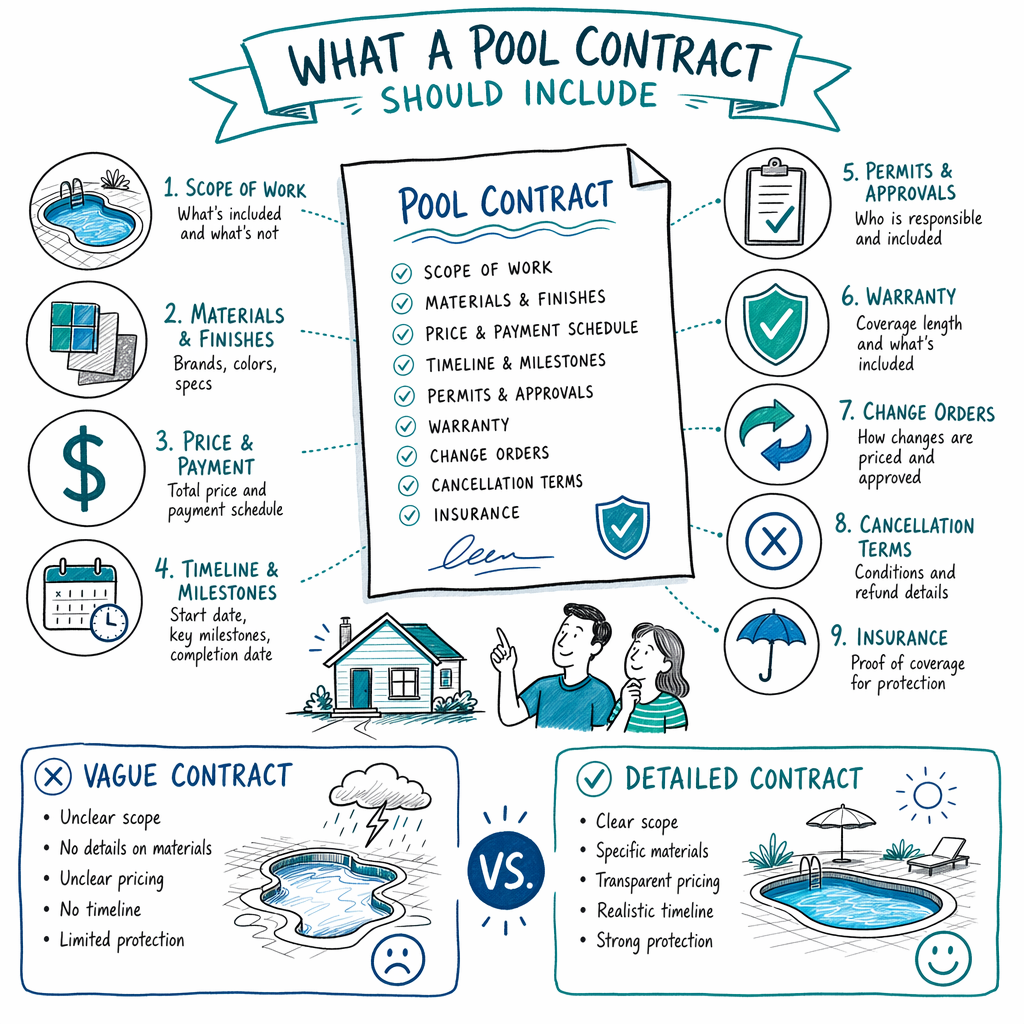
If a contract is only one or two pages and reads like a rough estimate, slow down. For most homeowners, the contract should clearly cover these points:
- Full legal business name and license information for the builder, plus your name, project address, and contact details.
- Pool type and size. For example, gunite, fiberglass, or vinyl-liner, with exact dimensions, depth range, and shape. If you are still comparing options, this pool type comparison can help.
- Detailed scope of work. Excavation, shell or structure, plumbing, electrical, equipment pad, coping, interior finish, waterline tile, decking, cleanup, startup, and basic instruction.
- Materials and equipment list with brands or approved equivalents where possible. Pump, filter, heater, sanitizer, automation, lights, drains, skimmers, and cleaner lines should be listed.
- Site work assumptions. Soil conditions, access for equipment, haul-away, grading limits, and what happens if rock, groundwater, or unstable soil is found.
- What is excluded. This is where surprise costs often hide. Fencing, landscaping, irrigation repair, utility upgrades, retaining walls, drainage work, gas line extension, and extra concrete should be clearly marked if not included.
- Permits and inspections. The contract should say who applies, who pays, and who meets inspectors. Local rules vary, so review permit questions early with pool permits explained.
- Project schedule. Start window, major milestones, and factors that can delay work such as rain, inspections, material lead times, or utility issues.
- Total contract price and how allowances are handled. If a finish or tile is an allowance, the dollar amount should be shown.
- Payment schedule tied to milestones, not vague dates. For example: excavation complete, shell installed, tile and coping complete, deck complete, plaster or liner complete, final inspection passed.
- Change-order process. Any change should be in writing, priced, and signed before the work happens.
- Warranty terms. What is covered, for how long, and who handles manufacturer equipment warranties.
- Punch-list and final completion terms. The contract should explain what counts as substantial completion, what remains for closeout, and when final payment is due.
If one builder gives you a much shorter contract than others, that is not always a bargain. Sometimes it just means more room for disagreement later.
What to review before you sign
Use this simple checklist. It can save you from expensive misunderstandings.
- Read every line, not just the price. A lower number can mean less work is included.
- Match the drawings to the written scope. If the drawing shows a tanning ledge, bench, spa stub-out, or extra decking, the written contract should mention it.
- Look for missing items. Ask directly: "What will I probably pay for that is not in this contract?"
- Check payment timing. Avoid large front-loaded deposits and large payments due before major work is complete. Keep enough unpaid until final inspection, startup, and punch-list items are done.
- Ask how delays are documented. Weather delays are normal. Silence is not. The contract should describe notice and updated timing.
- Review cleanup and damage terms. Who repairs yard damage outside the pool area? Who removes excess dirt? Who protects existing structures and utilities?
- Confirm permit and code responsibility. You want a builder who follows local permit steps and pool-safety barrier laws. This guide on pool safety barriers is worth reading before work starts.
- Verify license, insurance, and bond yourself. Do not rely only on a logo on a proposal.
- Get verbal promises added in writing. If it is not in the contract, assume it may not happen.
A fair contract is not about being difficult. It is about making sure both sides understand the same job.
Common contract mistakes that cost homeowners money
These are the traps people fall into most often:
- Vague scope: Words like "standard equipment" or "allowance as needed" without detail. Ask for exact models, quantities, and finish levels.
- No exclusion list: If exclusions are not named, you may assume something is included when it is not.
- Too much money due too early: Once too much has been paid, your leverage is weaker. You choose who to hire, and you hold the final payment until the contract terms are met.
- No written change orders: Small changes add up fast. If the builder says, "We will sort it out later," stop and get it in writing first.
- Unclear allowance amounts: Tile, coping, decking, and finishes should show actual allowance dollars. Otherwise upgrades can explode your budget.
- No responsibility for permits or inspections: This can turn into finger-pointing when work pauses.
- Missing startup and handoff terms: You need to know who fills the pool, starts equipment, explains operation, and provides manuals and warranty paperwork.
- Final payment tied only to time, not completion: Better to tie it to inspection approval, startup, and a finished punch list.
Another common mistake is comparing only the headline price instead of the real scope. When you compare builders, compare apples to apples. DeepEnd Match is a free matching service. We do not build pools or give construction, legal, or financial advice. We help homeowners compare licensed, insured, bonded builders and ask better questions. You can also use our guide to vet a pool builder before you sign anything.
A smart next step before you commit
If you are close to hiring, ask each builder for the same thing:
- A full written contract
- A line-by-line scope of work
- A payment schedule tied to milestones
- A list of exclusions and allowances
- Proof of license, insurance, and bond for you to verify
Then compare them side by side. If one contract leaves out decking thickness, equipment models, permit handling, or cleanup, ask for revisions before you sign.
It also helps to sanity-check the price against typical ranges for your pool type. DeepEnd Match has a simple guide to costs so you can see what homeowners often spend before upgrades and site issues.
Take your time. A builder who wants your business should be willing to explain the contract in plain language. If they rush you, avoid your questions, or resist written detail, that is useful information.
When you are ready, DeepEnd Match can connect you with licensed, insured, bonded pool builders in your area. Matching is free to homeowners. Participating builders pay a flat fee to be included. You compare quotes, choose who to hire, and keep control of the final decision.
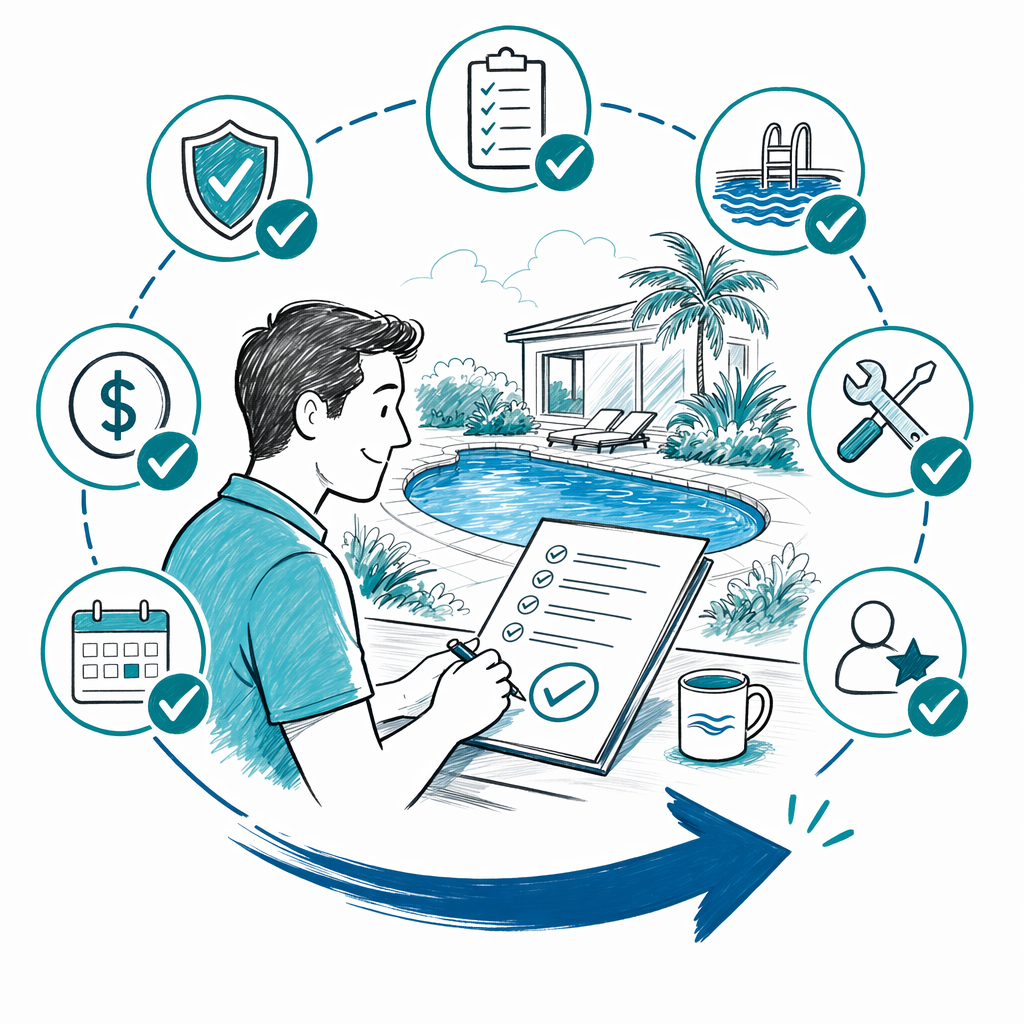
Before you sign, make sure the pool contract clearly shows the exact work, materials, exclusions, payment schedule, permit responsibility, change-order rules, and warranty terms. Verify the builder is licensed, insured, and bonded yourself, get everything in writing, and do not make final payment until the contract terms are met.
Common questions
Should a pool contract include exact equipment models?
Yes, as much as possible. The contract should list the main equipment and preferably the brand and model, or clearly state an approved equivalent. That includes the pump, filter, heater, automation, lights, sanitizer, and cleaner setup. If the contract only says "standard equipment," ask for more detail in writing.
Is it normal for pool costs to change after signing?
Sometimes, yes, but changes should be limited and documented. Legitimate changes can happen if you choose upgrades or if hidden site conditions are discovered, like rock, poor soil, or drainage problems. The contract should explain how change orders work. Any added cost or credit should be written, priced, and approved before the extra work starts.
Who should pull the permit for a pool project?
Local rules vary, but the contract should clearly say who is responsible for permits, inspections, and related fees. Many homeowners prefer a licensed builder to handle this, but you should verify what your city or county requires. Never assume permits are included unless the contract says so.
When should I make the final payment?
Final payment is usually safest after the agreed work is complete, required inspections are passed, equipment startup is done, and punch-list items are handled according to the contract. Do not rely on verbal promises. Keep the timing and conditions for final payment in writing before any deposit.