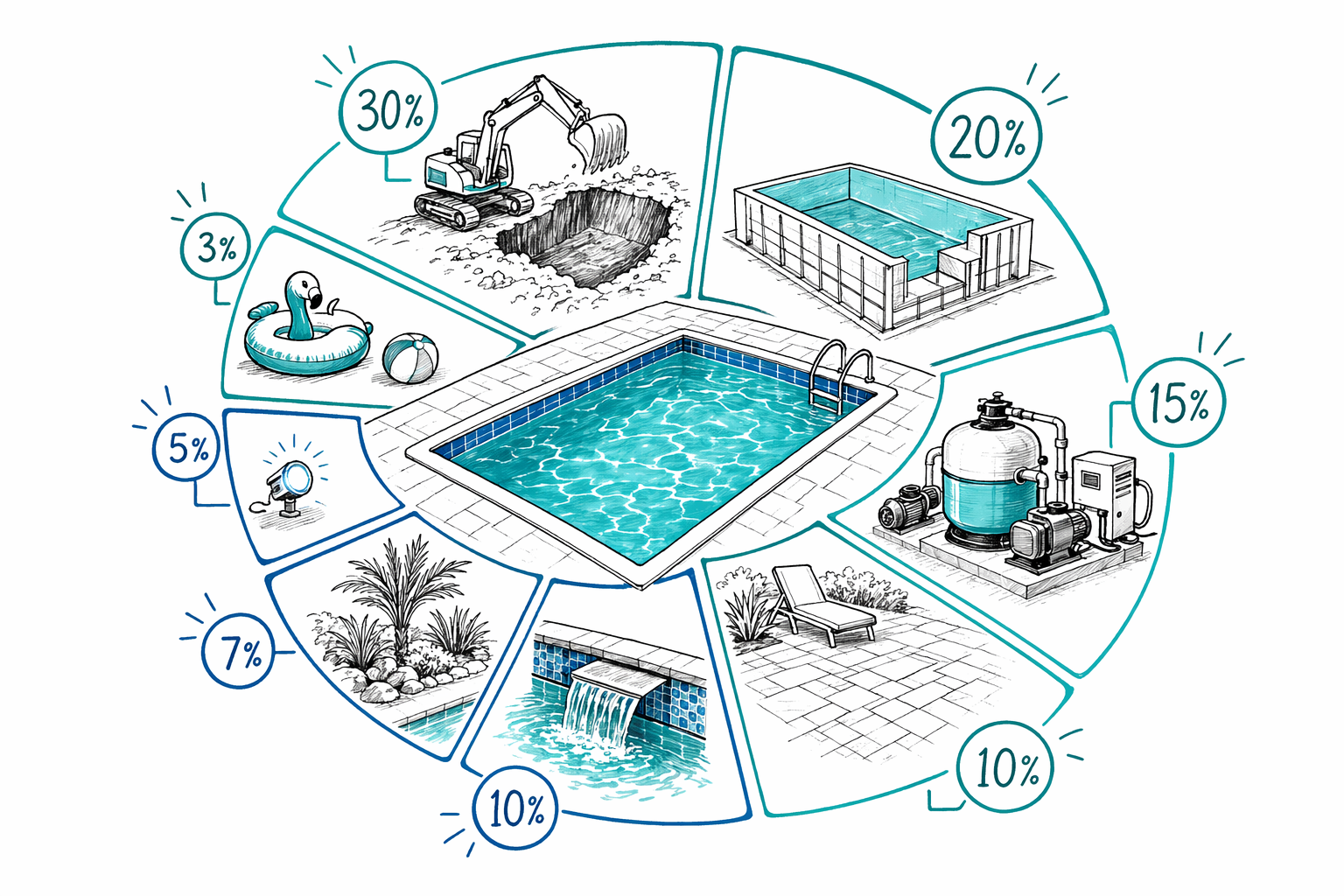
Start with the big buckets
A typical in-ground pool budget usually has five main parts: the pool shell, the site work, the equipment, the finishes and extras, and the permits and compliance items. The total price depends on pool type, size, soil, slope, access, finish level, and your area.
Typical starting ranges for many US homeowners:
- Gunite/concrete pools: about $60,000 to $135,000+
- Fiberglass pools: about $45,000 to $95,000+
- Vinyl-liner pools: about $35,000 to $70,000+
- Smaller plunge pools: often less, but still affected by site work and equipment
Those are typical ranges, not quotes or guarantees. Two pools with the same length can have very different prices if one yard is flat with easy access and the other needs retaining walls, crane access, utility reroutes, or upgraded drainage.
If you are still deciding on pool type, compare the tradeoffs before you shop on price alone. Pool type comparison can save you from getting attached to the wrong option.
The shell is not the whole job
Many homeowners think the shell is most of the cost. Sometimes it is. But not always.
The pool structure itself usually includes excavation, forming or setting the shell, basic plumbing and electrical rough-in, and the interior surface needed to make the pool usable. That sounds like the whole project. It is not.
Here is where money often goes after the basic shell:
- Excavation and haul-off: rocky soil, groundwater, tight access, and extra trucking can add real cost
- Steel, concrete, or shell setting: affected by pool shape, depth, engineering, and local labor costs
- Equipment pad: pump, filter, sanitizer system, heater or heat pump, valves, automation
- Electrical work: bonding, subpanels, trenching, code-required safety items
- Plumbing runs: longer runs and added water features mean more material and labor
- Interior finish: plaster, pebble, tile choices, coping, and waterline tile can move the number fast
Different pool types shift the budget in different ways. A gunite/concrete pool may give more design freedom but often costs more in labor and finishes. A fiberglass pool may install faster, but crane access, shipping, and limited yard access can still add cost. A vinyl-liner pool may start lower, but liner replacement is part of long-term ownership.
The lesson is simple: do not compare one builder's "base pool" to another builder's fuller scope. Ask what is included, line by line.
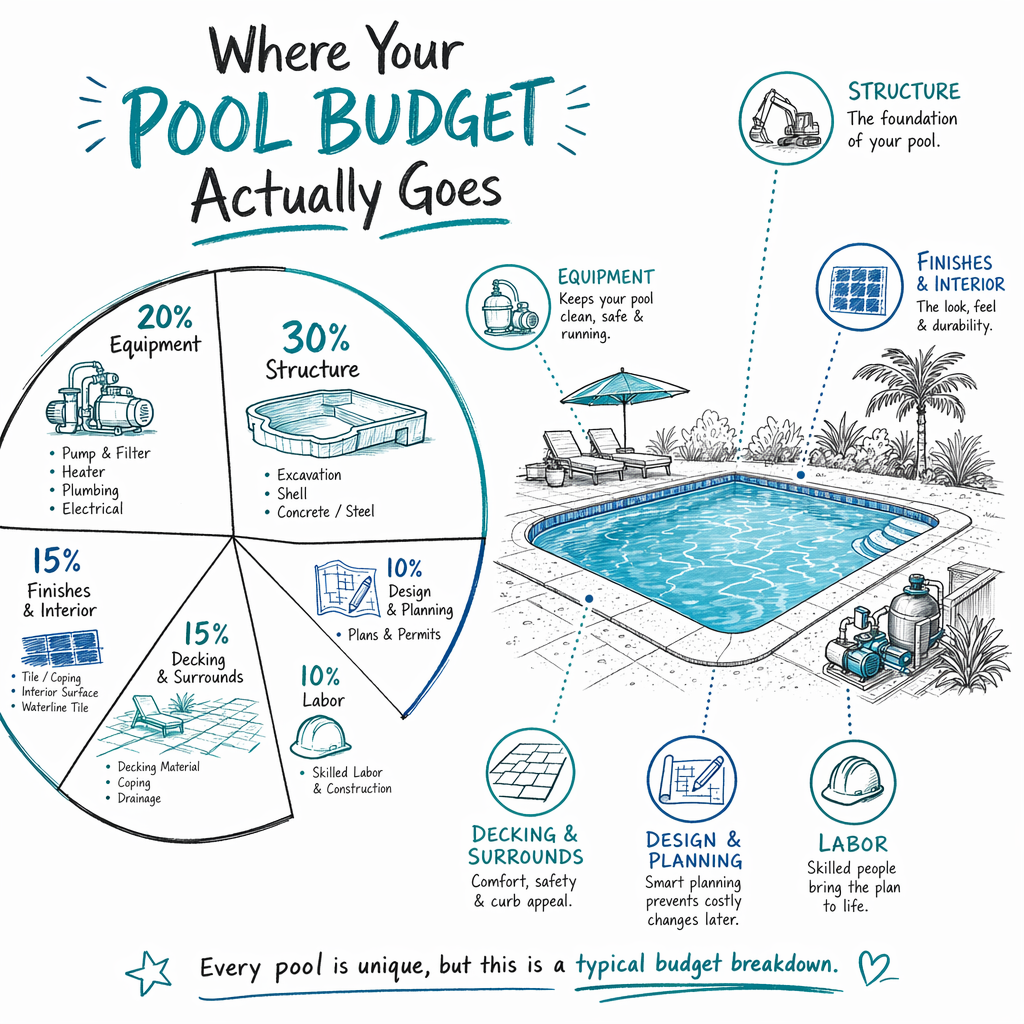
Site work is where budgets get surprised
This is the part many people miss. The yard can cost as much as your pool choices.
Common site-related price drivers:
1. Access to the backyard
If machines cannot get in easily, labor goes up. In some cases materials or shells need special delivery methods.
2. Slope and retaining needs
A sloped yard may need grading, retaining walls, drainage work, or engineering.
3. Soil and rock conditions
Soft soil, unstable soil, hardpan, boulders, or high water tables can change the dig and structure requirements.
4. Utilities and easements
Gas, sewer, septic, sprinkler lines, and utility easements can force layout changes or relocation work.
5. Decking and drainage
People often budget for the pool and forget the area around it. Concrete, pavers, drains, and safe walking surfaces matter.
6. Fencing and safety barriers
Many places require barriers, self-closing gates, alarms, or other safety measures. Learn the basics in pool safety barriers.
This is why low online price ads can be misleading. They usually do not reflect your actual lot. A real estimate needs a real site review.
Also remember: permits, inspections, and local pool-safety rules are not optional. Follow local requirements and ask questions early. For a simple overview, see pool permits explained.
Upgrades add up fast, even small ones
Some upgrades are worth it. Some only look cheap at first.
The most common budget movers are:
- Heaters and heat pumps
- Salt systems or other sanitizing equipment
- Automation and app controls
- LED lighting
- Tanning ledges, spas, baja shelves, benches, deeper ends
- Tile upgrades and premium interior finishes
- Water features and fire features
- Automatic covers and winter covers
- Extra decking, outdoor kitchens, landscaping, and fencing
None of these are wrong. The problem is when they are added without understanding the full chain of cost. For example, a spa is not just a small hole attached to the pool. It can mean more excavation, more plumbing, more equipment capacity, more electrical work, more finish detail, and more operating cost later.
A good rule: separate must-haves from nice-to-haves. If your budget is tight, spend first on the parts that are hard to change later, like layout, depth, drainage, access, and equipment quality. Decorative upgrades can sometimes wait.
If you want a fuller look at realistic ranges before you talk to builders, start with pool costs.
How to compare estimates without getting burned
This is where homeowners protect themselves.
When you review estimates, ask each builder for the same scope format. You want clear writing, not vague promises.
Use this checklist:
1. Get the scope in writing
Make sure it lists pool type, dimensions, depth, equipment brands or specs, finish level, decking amount, cleanup, startup, and what is excluded.
2. Ask about allowances
An allowance is a placeholder amount. Too many low allowances can make a bid look cheap now and expensive later.
3. Ask what site conditions can change the price
Rock, groundwater, long utility runs, access problems, and drainage needs should be discussed before work starts.
4. Check permit responsibility
Who handles permit applications and inspections? What fees are included, if any? Requirements vary by area.
5. Verify license, insurance, and bond yourself
Always hire licensed, insured, and bonded builders where required, and verify those details yourself before signing.
6. Review payment timing
Get the payment schedule and scope in writing before any deposit. You compare quotes, you choose who to hire, and you hold the final payment until the agreed work is complete under your contract terms.
7. Watch for missing items
Common misses include fencing, electrical upgrades, drainage, demolition, soil hauling, deck square footage, and startup training.
If you need help with the screening side, vet a pool builder walks through smart questions to ask.
Common mistakes and the smart next step
The most expensive mistakes are usually not about tile color. They are about bad planning and unclear scope.
Common mistakes:
- Shopping only by the lowest total number
- Comparing different pool types as if they were the same product
- Forgetting permits, fencing, inspections, drainage, and deck costs
- Accepting vague language like "standard equipment" with no details
- Paying a deposit before reading the written scope and payment schedule carefully
- Not verifying license, insurance, and bond directly
- Letting a salesperson rush the decision
A smarter next step is simple:
- Set a realistic range you can live with
- Decide your must-haves and nice-to-haves
- Learn which pool type fits your yard and maintenance tolerance
- Talk only with builders who are properly qualified for your area
- Compare written estimates side by side
DeepEnd Match is a free matching service for homeowners. We do not build pools or give construction, legal, or financial advice. We help you get connected with licensed, insured, bonded pool builders so you can compare options and decide who to hire. If you are ready, start here: Get matched.
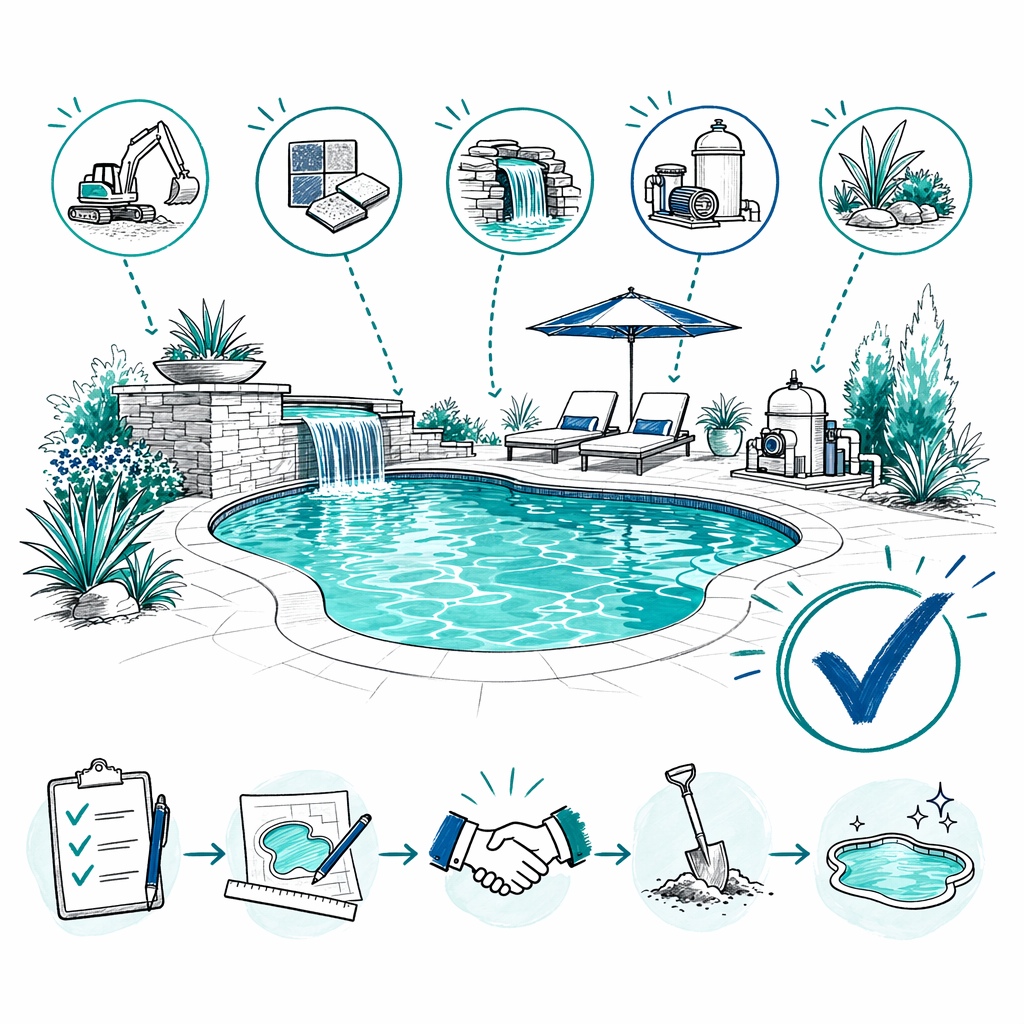
Do not judge a pool by one big number. Ask what is included, what can change the price, and what is missing. Compare written estimates from licensed, insured, bonded builders, verify those credentials yourself, and do not pay a deposit until price, scope, and payment terms are clear.
Common questions
Why do two pools that look similar have very different prices?
Because the visible pool is only part of the job. The real price depends on pool type, size, site access, soil, slope, drainage, equipment, finishes, and local labor and permit conditions. A flat yard with easy access can cost much less than a tight or sloped site, even for a similar design.
What part of the budget do homeowners forget most often?
Site work and surrounding work. That includes excavation surprises, haul-off, drainage, decking, electrical upgrades, fencing, and permit-related items. These costs are common reasons a project ends up above the first number a homeowner had in mind.
Should I choose the cheapest estimate if the pool size is the same?
Usually no. Pool estimates are often priced with different scopes, allowances, equipment levels, and exclusions. The cheaper estimate may leave out items you will still need to pay for later. Get price and scope in writing, compare line by line, and verify the builder's license, insurance, and bond yourself.
Does DeepEnd Match charge homeowners for matching?
No. Matching is free to the homeowner. Participating builders pay a flat fee to be included. You still compare estimates yourself, choose who to hire, and handle your contract directly with the builder.