The short answer
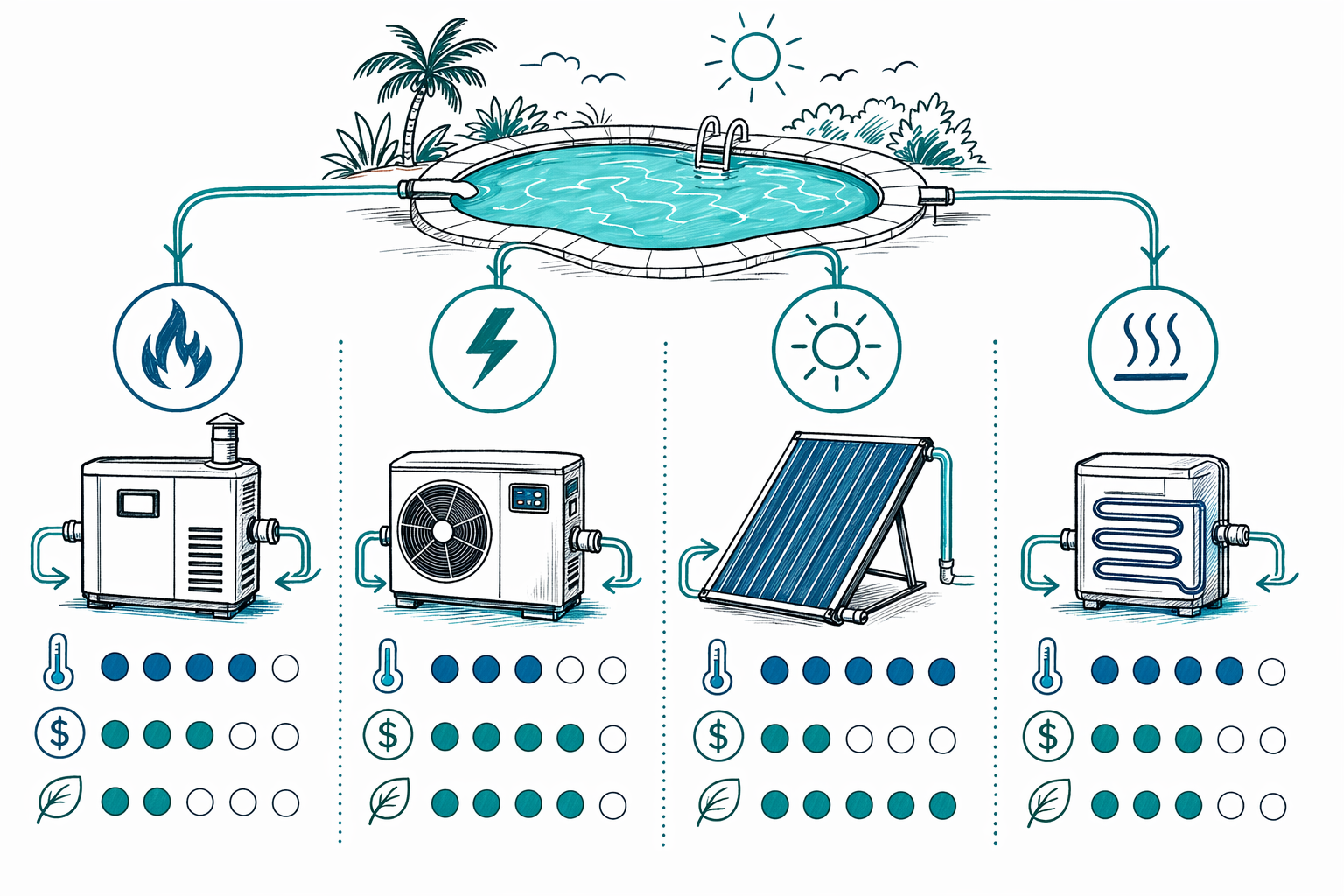
Most homeowners end up choosing one of three main heater types:
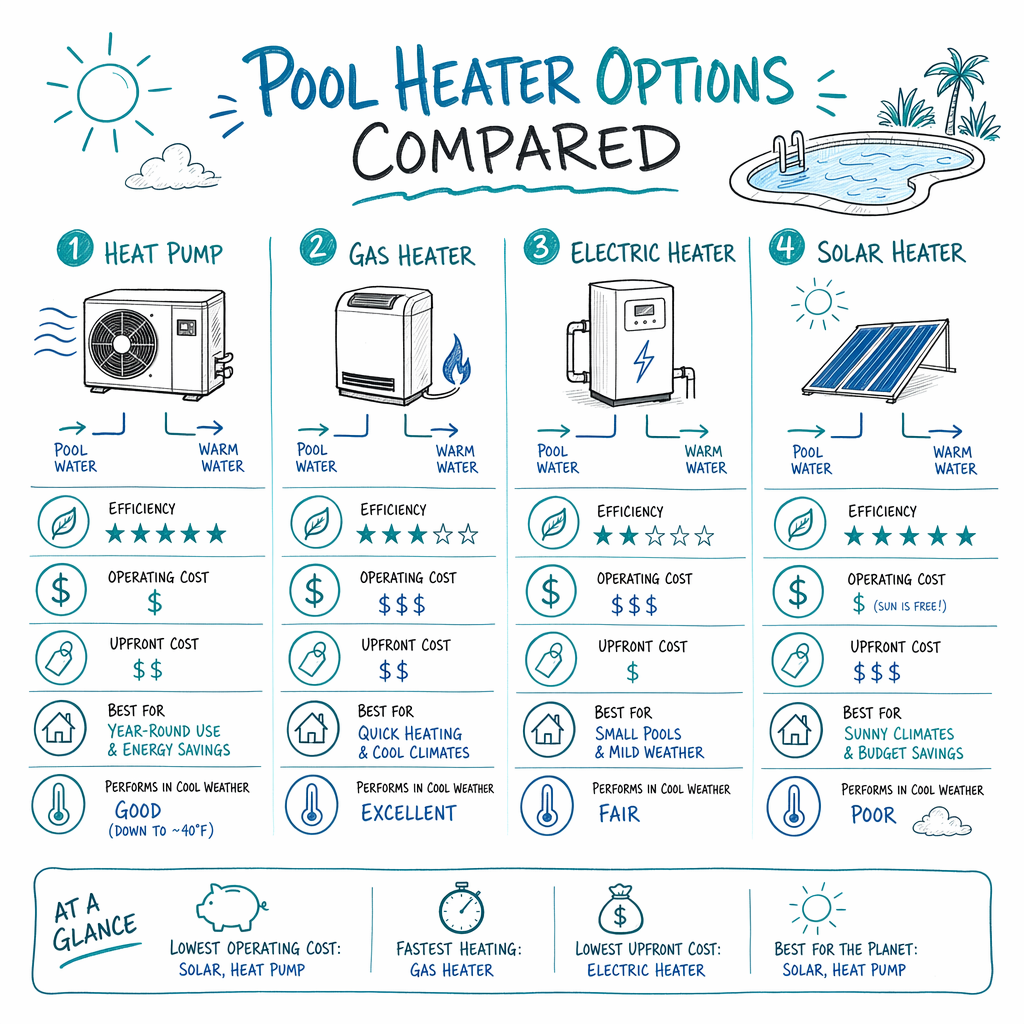
- Gas heater: heats fast, works in almost any weather, usually costs more to run.
- Electric heat pump: cheaper to run in many areas, but heats slower and works best in warmer climates.
- Solar pool heater: very low operating cost after install, but performance depends on sun, roof space, and weather.
If you want fast weekend heating or use the pool off and on, gas is often the practical choice. If you want to keep the pool warm for a longer season and live in a mild or warm climate, a heat pump is often the better value. If you get strong sun and plan to stay in the home for years, solar can make sense.
Your real cost depends on pool type, pool size, heater size, utility rates, climate, equipment pad setup, and area. Heater prices are typical ranges, not quotes. A licensed builder or equipment installer should size the system correctly and put the full price and scope in writing before any deposit.
If you are still deciding on the full project, start with pool costs and compare your build options before adding equipment.
Gas pool heaters: fast heat, higher fuel bills
Gas heaters burn natural gas or propane to heat pool water. Their main advantage is simple: speed. They can raise water temperature much faster than most other options.
Typical installed cost is often around $3,000-$7,500+ for many residential setups, but some projects run higher depending on heater size, gas line work, venting needs, pad changes, and area. The real price depends on type, size, site, finishes, and area.
Good fit for:
- Homeowners who swim mostly on weekends
- Colder climates
- Spas that need quick heating
- Homes where natural gas is already available
Watch-outs:
- Fuel bills can be high if you keep the pool warm all season
- Propane is often more expensive than natural gas
- Wind, air temperature, and no pool cover can waste heat fast
- Undersized gas lines can cause performance problems
A gas heater often makes sense when you say, "I want the pool warm tonight," not "I want the cheapest monthly bill." If your project includes a spa, many homeowners like gas because it can heat a spa much faster than a heat pump.
When you compare proposals, ask for:
- Heater BTU size and why it was chosen
- Any gas line upgrade needed
- Estimated monthly operating cost based on your local fuel rates
- Whether a pool cover is strongly recommended to control heat loss
If you are still choosing the pool itself, see gunite and concrete pools if you want a custom build, since heater and spa choices often get discussed together.
Electric heat pumps: slower heating, often lower operating cost
A pool heat pump does not create heat the same way a gas heater does. It pulls heat from the air and transfers it into the pool water. That is why it usually costs less to run than gas in the right climate, but it also heats more slowly.
Typical installed cost is often around $4,500-$9,500+ for many homes. Higher-end cold-weather models, electrical upgrades, longer runs, or pad changes can push the price up. Again, these are typical estimates, not bids or guarantees.
Heat pumps are often a smart choice when:
- You live in the South or another mild-to-warm climate
- You want to hold a steady temperature over time
- You swim several times a week during the season
- Electricity rates are reasonable in your area
They are less ideal when:
- You want very fast heating
- Night temperatures stay low for long stretches
- You expect spa-like quick temperature jumps
A heat pump often works best with a pool cover. Covers reduce overnight heat loss, which helps any heater, but especially one that warms more gradually.
There are also hybrid systems in some projects, such as a heat pump for the pool and gas for an attached spa. That can be a practical setup if you want lower day-to-day pool heating cost but still want quick spa heat.
Before you sign, ask the builder or installer to explain:
- The unit's heating capacity for your pool size
- Expected performance in your spring and fall temperatures
- Noise level and equipment location
- Whether you need an electrical panel upgrade
If you are comparing shell types too, fiberglass pools are often paired with efficient equipment packages because many buyers want simpler maintenance and predictable operating costs.
Solar pool heaters: low operating cost, but site matters
Solar pool heating uses roof or rack-mounted solar collectors to warm water with the sun. It is different from solar electric panels. For many sunny homes, this can be the cheapest heater to operate after installation.
Typical installed cost is often around $3,000-$10,000+ depending on collector size, roof layout, plumbing runs, controls, and area. Some homes cost more if the roof is complicated or ground-mounted racks are needed.
Why homeowners like solar:
- Very low ongoing energy cost
- Works well for extending the season in sunny climates
- Can be a good long-term value if you stay in the home
Limits to know upfront:
- Heating depends on sun exposure and weather
- Roof orientation and available space matter a lot
- It usually does not give the same fast, on-demand heating as gas
- Some systems still need a backup heater if you want reliable shoulder-season use
Solar is strongest in places with long sunny seasons. In cloudier or colder areas, it may be better as a season extender rather than your only heat source.
Ask specific questions, not general ones:
- How many collectors are needed for my pool size?
- Is my roof a good fit for solar exposure and layout?
- What temperature range is realistic in my area?
- Do I need a backup gas heater or heat pump?
If your project is still in planning, the pool shape and surrounding yard can affect equipment layout. Get matched with licensed, insured, bonded builders so you can compare heating ideas side by side.
How to choose the right heater for your pool
The best heater is usually the one that matches how you will really use the pool, not the one that sounds best in a sales pitch.
Here is a simple way to decide:
1. Think about your swim habits
- Want quick heat for weekends or a spa? Lean gas.
- Want to keep the pool warm most of the season? Look hard at a heat pump.
- Have strong sun and plan long-term savings? Consider solar.
2. Look at your climate honestly
A heat pump that works well in Florida may disappoint in a cooler area. Solar that performs well in Arizona may not give the same result in a cloudier market.
3. Ask about operating cost, not just install cost
A cheaper install does not always mean lower cost over 5 years. Ask for realistic local energy-cost assumptions.
4. Use a cover if you plan to heat the pool
This is one of the biggest money savers. Without a cover, you can lose a lot of heat overnight.
5. Get sizing in writing
An oversized or undersized heater can cause frustration and waste money. The proposal should state the model, capacity, included plumbing/electrical/gas work, startup, and warranty details.
6. Protect yourself before hiring
Always hire licensed, insured, and bonded builders or installers. Verify the license, insurance, and bond yourself. Get the price and scope in writing before any deposit. Follow local permits and pool permits explained guidance, plus local pool-safety and fencing laws. You compare quotes, you choose who to hire, and you hold the final payment.
What to do next
If you are planning a new in-ground pool, do not pick a heater in isolation. The right choice depends on the full project: pool size, attached spa, utility access, yard layout, and how long you want the season to last.
A smart next step is to get 2-3 written proposals that show:
- Heater type and model
- Equipment size
- What installation work is included
- Permit responsibilities
- Startup and warranty details
- Any recommended pool cover
DeepEnd Match is a free matching service for homeowners. We do not build pools or give construction, structural, electrical, plumbing, legal, or financial advice. We help you connect with licensed, insured, bonded pool builders so you can compare options yourself.
Before hiring anyone, verify the license, insurance, and bond yourself, and read our guide on how to vet a pool builder.
If you want fast heat, gas is usually strongest. If you want lower running costs in a warm climate, look at a heat pump. If your home gets strong sun, solar may save money over time. Get 2-3 written proposals, verify license, insurance, and bond yourself, and make sure the heater size and full scope are in writing before you pay a deposit.
Common questions
Which pool heater is cheapest to run?
Often, a solar heater has the lowest operating cost after installation, and a heat pump can also be cheaper to run than gas in many warm or mild climates. But the real answer depends on your local gas and electric rates, climate, pool size, use habits, and whether you use a cover.
What heater works best for an attached spa?
A gas heater is often the most practical choice for a spa because it heats water quickly. Heat pumps usually warm more slowly, which can be frustrating if you want fast spa use. Some homeowners use a hybrid setup, such as a heat pump for the pool and gas for the spa.
Do I really need a pool cover if I have a heater?
In many cases, yes. A cover can make a big difference by reducing heat loss, especially at night. That helps any heater work better and can lower your monthly operating cost. If you plan to heat the pool regularly, ask each builder how much a cover may help in your climate.
Can one builder tell me exactly what my heater will cost to run?
They can give an estimate, but not a guarantee. Monthly cost depends on weather, desired water temperature, utility rates, how often you swim, whether you use a cover, and system sizing. Ask for typical local operating-cost estimates and the assumptions behind them.