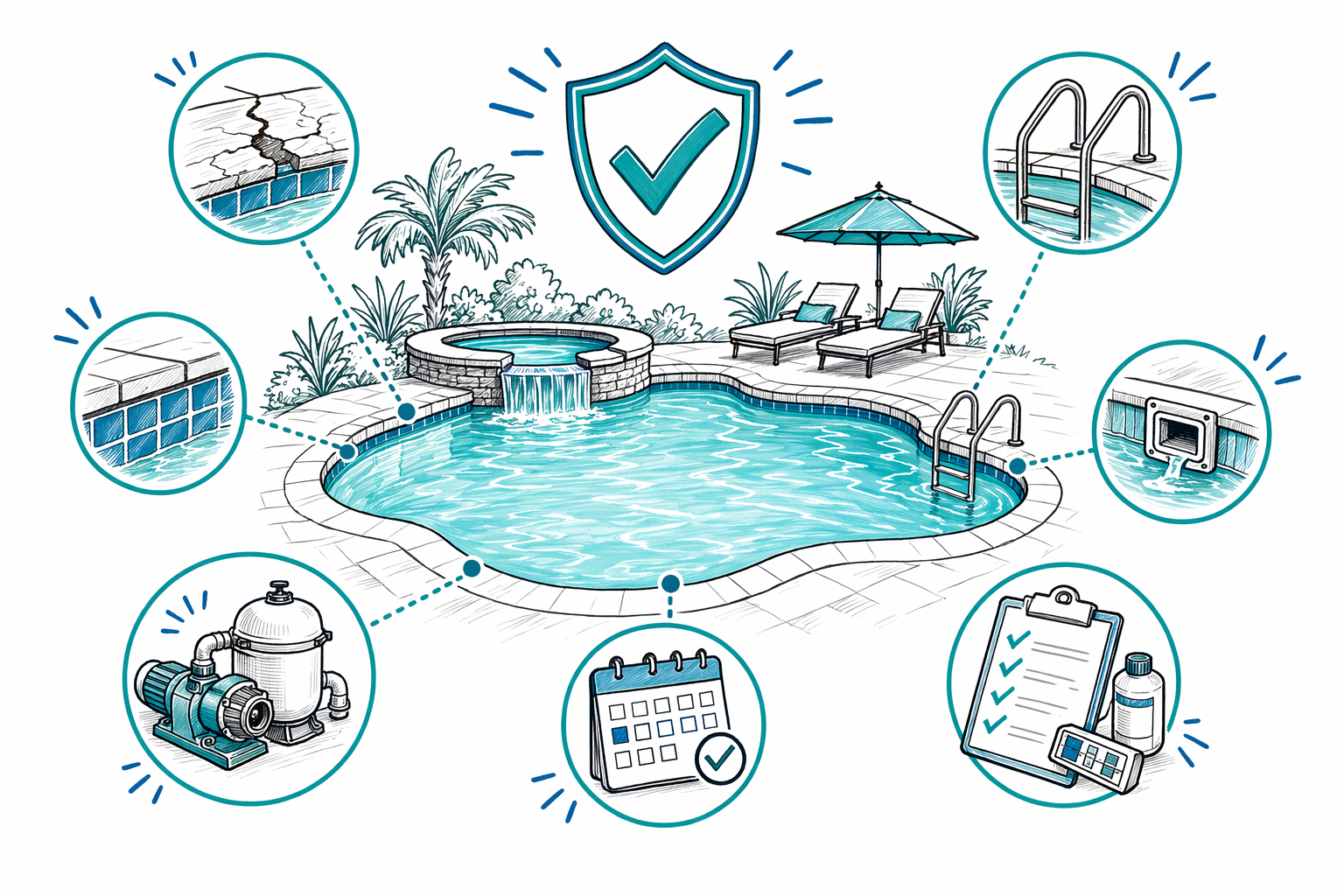
The short answer: read the warranty before you sign
Many homeowners ask, "What warranty comes with a new pool?" The honest answer is: it depends on the pool type, the equipment brands, the builder's workmanship policy, and your local conditions.
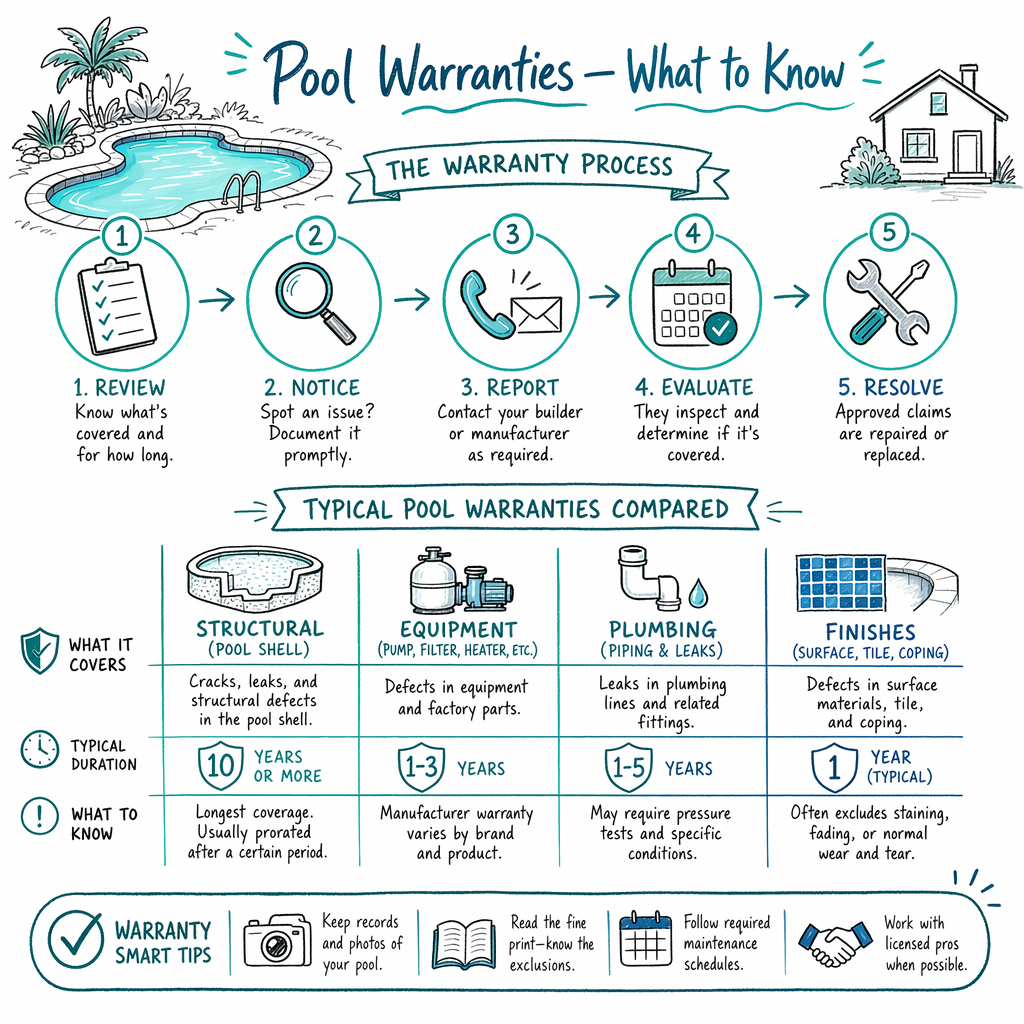
A warranty is usually split into parts:
- Builder workmanship for installation errors
- Manufacturer warranty for equipment or shell materials
- Sometimes surface or finish coverage with limits
That sounds simple, but this is where people get burned. They hear "lifetime shell warranty" or "full warranty" and assume everything is covered. Usually it is not.
A real warranty should clearly say:
1. What item is covered
2. How long the coverage lasts
3. Who pays for labor
4. Who pays for materials
5. What is excluded
6. What actions can void coverage
Before any deposit, get the price, scope, and warranty terms in writing. Hire only licensed, insured, and bonded builders, and verify the license, insurance, and bond yourself. If you are still comparing pool types, this guide on pool type comparison can help you see how warranties often differ by material.
What pool warranties usually cover
Most in-ground pool projects involve more than one warranty. You may see separate paperwork for the structure, interior finish, plumbing, decking, tile, coping, lights, pumps, heaters, automation, and sanitizer systems.
Here is the practical breakdown.
1. Workmanship warranty from the builder
This covers mistakes in installation or construction work. Typical examples:
- Plumbing leaks caused by poor installation
- Coping or tile problems tied to bad workmanship
- Deck settlement tied to installation issues
- Equipment pad layout or connection errors
Coverage length varies a lot. Some builders offer 1 year, some longer for certain items. The key question is not just the years. Ask: What exactly counts as a workmanship defect?
2. Structural warranty
This usually applies to the main pool shell. For gunite and concrete pools, this may cover major structural failure. For fiberglass pools, shell coverage may come from the manufacturer. Vinyl-liner pools often separate wall structure from the liner itself.
Read the language carefully. Structural coverage does not always mean cosmetic cracks, normal shrinkage cracks in surrounding concrete, minor plaster discoloration, or movement caused by unstable soil are covered.
3. Manufacturer warranties on equipment
Pool equipment often has its own warranty from the brand, not the builder. This can include:
- Pump
- Filter
- Heater or heat pump
- Salt system
- Automation panel
- Pool lights
- Cleaner
These warranties may have different terms depending on whether the equipment was professionally installed and whether start-up was done correctly.
4. Surface, liner, or finish coverage
This is where homeowners should slow down. Interior surfaces change over time. Plaster, aggregate finishes, fiberglass gelcoat, and vinyl liners all age differently. Some changes are normal wear, chemistry related, or weather related, not defects.
Ask the builder to explain in plain language what is normal aging and what is considered a defect.
What warranties often do not cover
This is the part many people skip.
Common exclusions include:
- Damage from poor water chemistry
- Freeze damage or winterization mistakes
- Ground movement, expansive soil, or drainage problems
- Improper owner maintenance
- Damage from third-party repairs or alterations
- Normal fading, wear, staining, etching, or discoloration
- Acts of nature such as floods, storms, or lightning
- Cracks in decks or flatwork described as cosmetic or normal settling
If your yard has slope, retaining walls, drainage trouble, or expansive clay soil, ask how that affects warranty limits. Site conditions matter a lot.
Also watch for labor exclusions. Some manufacturer warranties cover the replacement part but not the labor to remove and reinstall it. That can still cost real money.
Another issue is transferability. If you sell the house, can the next owner use the warranty? Sometimes yes, sometimes no, and sometimes only if paperwork is filed within a short time.
Do not rely on verbal promises like:
- "We always take care of our customers"
- "You will be covered"
- "That almost never happens"
If it is important, it belongs in writing.
When you vet builders, use a checklist. Our guide on how to vet a pool builder can help you compare warranty language, not just sales talk.
How warranties differ by pool type
Pool type affects both cost and warranty expectations. Real prices are typical ranges and estimates only, not quotes. The final price depends on pool type, size, site, finishes, and your area.
- Gunite/concrete pools often run about $60,000-$135,000 or more. They are highly customizable, but the warranty may split structural issues from plaster or finish issues. Surface appearance changes over time may not be fully covered.
- Fiberglass pools often run about $45,000-$95,000. Shell coverage may come from the manufacturer, while installation workmanship comes from the builder. Read both documents. Learn more about fiberglass pools.
- Vinyl-liner pools often run about $35,000-$70,000. The liner usually has its own warranty, but prorating and labor exclusions are common. Wall structure and plumbing may have separate terms.
- Smaller plunge pools can cost less than full-size pools, but they still have separate warranties for shell, finish, equipment, and workmanship.
The main lesson: do not compare two warranties by the headline only. A longer term is not always better if the exclusions are broad or the labor is not included.
What to do before you hire: 7 smart warranty checks
Use these steps before you choose a builder.
1. Ask for sample warranty documents before signing
Not a brochure. The real paperwork.
2. Check who backs each part
Is it the builder, the shell maker, or the equipment brand?
3. Ask what maintenance is required to keep coverage valid
You may need water chemistry records, service records, or proper winterization.
4. Ask who handles claims
Do you call the builder first? The manufacturer? Both?
5. Ask what labor costs are excluded
A free part is not the same as a free repair.
6. Ask what site conditions are excluded
Soil movement, drainage, and nearby trees can matter.
7. Match the warranty to the payment schedule
Never release final payment until the project is substantially complete, startup is done, and you have the warranty documents, equipment model numbers, manuals, and lien paperwork if required in your area.
Also make sure the project follows local permit and safety rules. Rules vary by city and county. Read pool permits explained and follow local pool-safety and fencing laws.
What to do next
A good warranty is part of a good project, but it should not be the only reason you hire someone. Look at the full picture:
- Scope of work
- Payment schedule
- Change-order process
- Timeline assumptions
- Permit responsibility
- Equipment list
- Startup and training
- Warranty terms
DeepEnd Match is a free matching service. We do not build pools or give construction, legal, or financial advice. We help homeowners compare licensed, insured, and bonded pool builders. You compare bids, you choose who to hire, and you hold the final payment.
If you want help finding builders to compare, start here: get matched.
Get the real warranty paperwork before you sign, read the exclusions, verify the builder is licensed, insured, and bonded, and make sure price, scope, and warranty terms are all in writing before you pay a deposit.
Common questions
Is a lifetime pool warranty really for life?
Sometimes the phrase refers only to a limited structural component, not the whole pool. It may also apply only to the original owner, or exclude labor, cosmetic issues, soil movement, and water-chemistry damage. Read the exact written terms.
Do pool warranties cover cracks?
Some do, some do not. Structural shell failure may be covered, but hairline plaster cracks, deck cracks, cosmetic shrinkage cracks, or cracks caused by drainage or soil movement are often excluded. Ask the builder to show you the crack language in writing.
Can I void my pool warranty by maintaining the pool wrong?
Yes. Improper water chemistry, poor winterization, neglected maintenance, or unauthorized repairs can void some coverage. Ask what records you should keep, such as chemistry logs, service receipts, and startup documents.
Should I choose the builder with the longest warranty?
Not automatically. A shorter, clearer warranty from a reputable licensed, insured, and bonded builder can be better than a long warranty full of exclusions. Compare who backs it, what is covered, and whether labor is included.