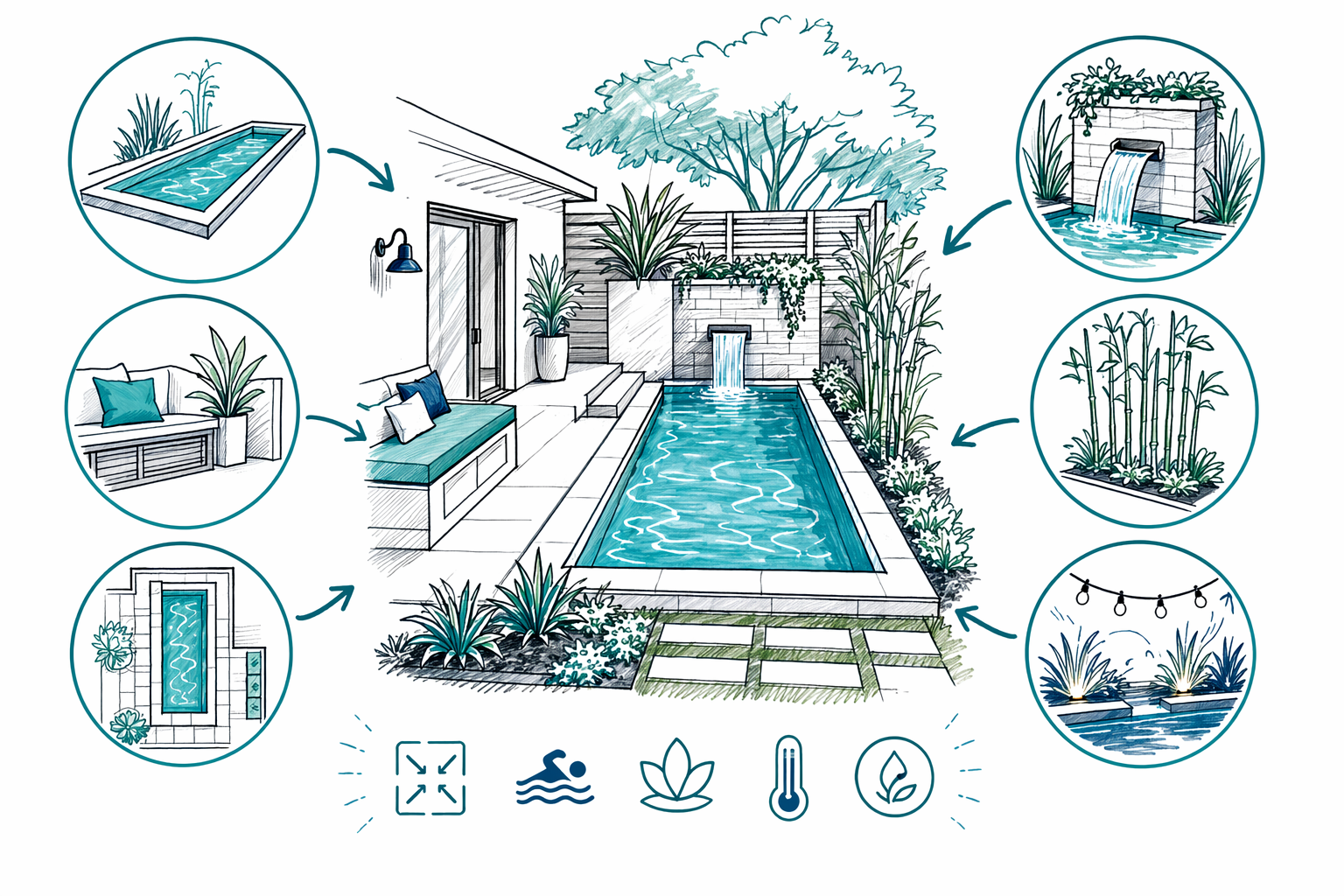
The short answer: yes, a small yard can work
If your yard feels too narrow, too short, or boxed in by fences, a small in-ground pool may still be possible. Many homeowners fit a plunge pool, cocktail pool, narrow lap pool, or compact rectangle into spaces that first looked impossible.
What usually matters most is not just the yard size. It is the usable build area after setbacks, utility lines, easements, access for equipment, drainage, and local barrier rules are considered. A builder may also need room for decking, equipment, and safe walking paths.
Typical starting points homeowners look at:
- Plunge or cocktail pool: often the best fit for tight yards
- Narrow rectangle: clean shape, easy to place along a fence or house line
- Small fiberglass shell: fast installation in some yards, but shell sizes are fixed
- Compact gunite pool: more flexible for custom sizes and odd shapes
- Small vinyl-liner pool: lower upfront cost in some markets, but shape and long-term liner replacement matter
Typical national price ranges for full in-ground pools are often around $60,000-$135,000 for gunite/concrete, $45,000-$95,000 for fiberglass, and $35,000-$70,000 for vinyl-liner. Smaller plunge-style pools can cost less, but not always by as much as people expect, because excavation, permits, equipment, and site work still cost money. Real price depends on type, size, site, finishes, and area.
If you are still deciding which material makes sense, compare options here: pool type comparison.
Small pool ideas that actually work in tight spaces
Not every small pool idea is practical. The best ones solve a real yard problem.
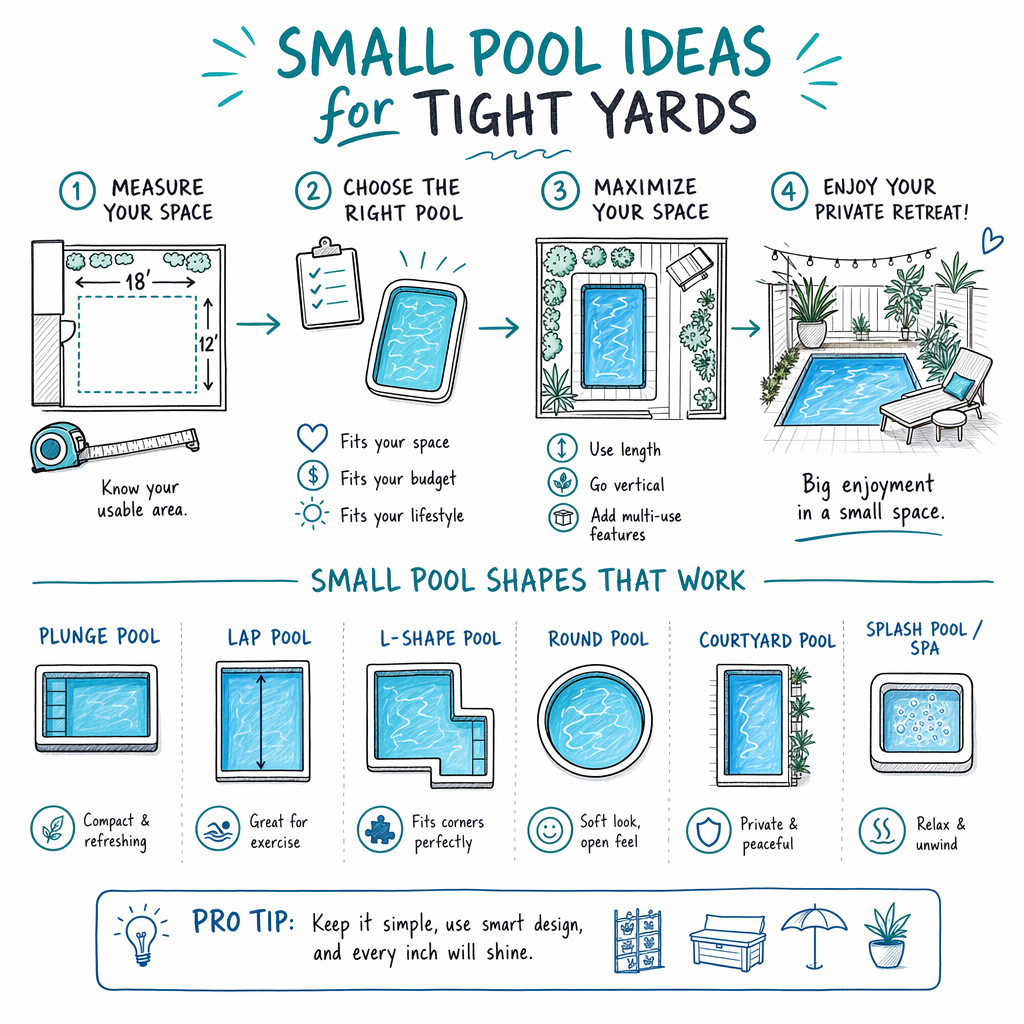
1. Plunge pool
A plunge pool is usually built for cooling off, relaxing, and light exercise, not full swimming laps. This is often the smartest choice when your yard is short or when your patio already takes up space.
Good fit for:
- small backyards behind townhomes or city homes
- families who want a pool more than a big entertainment deck
- homeowners who care more about soaking and cooling down than swimming long distances
2. Cocktail pool or spool
These are compact pools often paired with benches, jets, and heating. Some people use them almost like a mix of pool and spa. They can work well when you want the backyard to feel social, not crowded.
Good fit for:
- adults who entertain in a small yard
- homeowners who want year-round use in warmer markets or with heating
- narrow lots where a small pool plus seating makes more sense than a larger pool
3. Narrow lap-style pool
If your yard is long but not wide, a narrow rectangle may fit better than a square plunge pool. This layout can run along one side of the yard and leave the other side open for a path, grill area, or play space.
Good fit for:
- side yards or long urban lots
- homeowners who want a cleaner modern look
- people who want some exercise value without building a full-size lap pool
4. Corner pool
Some custom gunite layouts use a corner of the yard that would otherwise go unused. This can preserve more open lawn in the center.
Good fit for:
- odd lot shapes
- yards with one awkward dead zone
- homeowners open to custom design rather than standard shells
5. Small pool with tanning ledge or bench instead of extra length
In a tight yard, every foot matters. Sometimes the smarter move is a shorter pool with a bench, Baja shelf, or tanning area instead of stretching for more swim length. It may be more useful day to day.
For material-specific pros and limits, see gunite/concrete pools or fiberglass pools.
What makes a tight yard hard to build in
This is where people get surprised. A yard can look big enough on paper and still become expensive or impossible once real site conditions show up.
Here are common space problems that affect cost and feasibility:
- Access for excavation equipment: If machines cannot get into the backyard easily, builders may need smaller equipment, extra labor, or in rare cases crane work.
- Setbacks and easements: Local rules may require the pool to sit a certain distance from property lines, structures, septic systems, or utility easements.
- Underground utilities: Gas, water, sewer, electric, and drainage lines can limit placement.
- Slope and retaining needs: A small sloped yard can cost more than a larger flat one.
- Drainage: Water must go somewhere. Poor drainage planning can create flooding, erosion, or neighbor disputes.
- Equipment pad location: Pumps, filters, and heaters need a legal and practical place to go.
- Required fencing and gates: Safety laws may affect where the pool can sit and how much deck space you need.
Small pools are not automatically cheap. A difficult site can erase the savings from building less water volume.
That is why you should ask each builder to explain, in writing:
1. What size pool actually fits after local setbacks
2. What access method they plan to use
3. What site-work costs are included
4. Which features are optional versus necessary
5. What permits and inspections are typically required in your area
DeepEnd Match can help you compare builders, but you need to verify that each one is licensed, insured, and bonded. Also verify the license, insurance, and bond yourself, get the full price and scope in writing before any deposit, and follow local permit and pool-safety rules. Our matching service is free to homeowners. Builders pay a flat fee to participate. You can start here: get matched.
How to keep a small pool from feeling cramped
A tight yard can still feel calm and usable if the layout is planned well. The trick is to stop thinking only about pool size and start thinking about how the whole yard works.
A few practical ideas:
- Use a simple shape. Rectangles usually waste less space than curves.
- Keep decking purposeful. You may not need a huge deck on all four sides.
- Build seating into the pool. Benches can save patio room.
- Use one strong focal point. A waterline tile, wall, or lighting plan can make a small space feel finished without crowding it.
- Place the pool where it opens sightlines. Sometimes shifting it a few feet improves the whole yard.
- Think about shade. A small pool that sits in full hot sun with no relief may be less comfortable than expected.
- Do not oversize water features. Big raised walls and oversized spillovers can eat visual space fast.
The best small pools are usually clean, simple, and easy to walk around. They are not trying to copy a large resort pool in miniature.
Also think ahead about maintenance. A compact pool with too many tight corners, ledges, or decorative add-ons may be harder to clean than a simple rectangle.
And do not forget safety. Local laws often require barriers, self-closing gates, alarms, or other protections. Read more here: pool safety barriers.
What to do next before you talk to builders
You do not need perfect plans before reaching out. But a little prep will help you get better apples-to-apples comparisons.
Bring these 5 things to the first conversation:
1. Basic yard measurements and a few phone photos from multiple angles
2. A rough wish list like plunge pool, small rectangle, bench seating, heater, or tanning ledge
3. Your must-keep spaces like grill area, grass for kids, or pet run
4. A realistic budget range for the whole project, not just the shell
5. Questions about timing including permits, excavation access, and expected construction phases
Then compare builders carefully:
- Ask what pool type they recommend for your specific yard and why
- Ask what they would remove to keep the project in budget
- Ask for the proposed size, depth, equipment, decking, and allowances in writing
- Ask who handles permit submissions and inspections in your area
- Ask about startup, warranty terms, and what is excluded
For cost planning, review pool costs before you start meetings. Then use your written proposals to compare scope line by line.
Most important, do not rush the deposit. Verify that the builder is licensed, insured, and bonded. Verify those details yourself. Make sure the written agreement covers price, scope, materials, change-order process, payment schedule, and who is responsible for permits and safety requirements. You compare quotes. You choose who to hire. You hold the final payment.
If your yard is small, start by looking at a plunge pool or simple small rectangle. Get a few licensed, insured, and bonded builders to check setbacks, access, drainage, and equipment space, then compare the written price and scope before you put down any deposit.
Common questions
What is the best type of pool for a very small backyard?
Often it is a plunge pool, cocktail pool, or small rectangle. The best choice depends on how you want to use it and what fits after setbacks, utilities, access, and safety rules are checked. Fiberglass can work well if a shell size fits your yard. Gunite/concrete is often better for custom sizes or awkward layouts. Vinyl-liner may have a lower upfront cost in some areas.
How much does a small in-ground pool usually cost?
It depends on type, size, site, finishes, and area. Typical full in-ground pool ranges are about $60,000-$135,000 for gunite/concrete, $45,000-$95,000 for fiberglass, and $35,000-$70,000 for vinyl-liner. Some smaller plunge pools cost less, but a tight site, difficult access, drainage work, permits, or upgraded finishes can push the price up.
Can a pool fit in a narrow side yard or townhouse yard?
Sometimes, yes. Narrow rectangle pools and compact plunge pools are common solutions for long, tight spaces. The real limit is usually not just width. It is whether the pool can meet local setbacks, access needs, equipment placement, drainage needs, and barrier laws. A licensed, insured, and bonded builder should evaluate the site, and you should verify that license, insurance, and bond yourself.
Does DeepEnd Match build or design the pool?
No. DeepEnd Match is a free matching service for homeowners. We help you connect with licensed, insured, and bonded pool builders so you can compare options. We do not build pools, design pools, pull permits, or give construction, structural, electrical, plumbing, legal, or financial advice. You choose who to hire, and you should get the full price and scope in writing before any deposit.