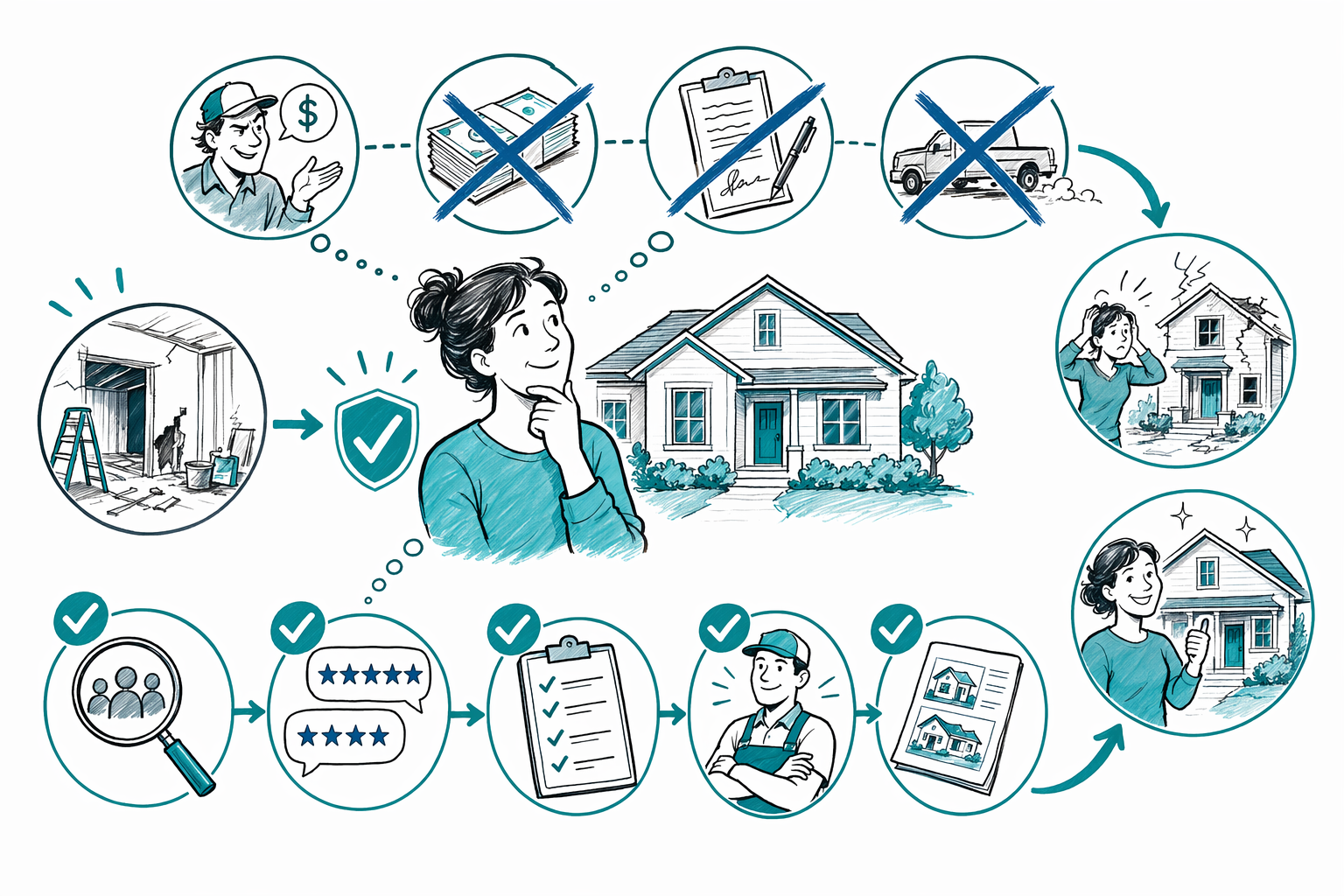
The situation: three bids, one very low price, and a lot of pressure
A homeowner in the South wanted a simple in-ground pool for family use. Nothing extreme. They were comparing a small-to-mid-size pool with basic decking, standard equipment, and a fence plan that would meet local rules.
They got matched with builders and also found one company on their own. On paper, the prices looked confusing. Two bids were in a similar range. One was much lower.
Typical starting ranges for new in-ground pools often look like this:
- Gunite/concrete: about $60,000 to $135,000
- Fiberglass: about $45,000 to $95,000
- Vinyl-liner: about $35,000 to $70,000
- Smaller plunge pools: sometimes less, depending on size, access, site, and finishes
Real price depends on the pool type, size, soil, yard access, equipment, finish level, and local labor costs. If you want a side-by-side overview, see pool type comparison or typical pool costs.
The low bid was tempting. It was roughly $18,000 under the others. But the homeowner noticed the seller kept pushing for a fast deposit and gave short answers when asked what was actually included.
The red flags they caught before signing
The homeowner did something smart. Instead of asking only, "What is the total price?" they asked, "What exactly am I getting, and what is missing?"
That is where the problems showed up.
- The low bid did not clearly include permit handling costs, inspections, or utility-related adjustments.
- The equipment line was vague. It listed a pump and filter, but not clear model details.
- The decking allowance was tiny and would likely have led to change orders later.
- The payment schedule asked for a large deposit before clear scope was in writing.
- The company said it was "fully covered," but did not quickly provide proof of license, insurance, and bond.
- The salesperson brushed off questions about fencing and safety barriers, saying they could "figure that out later."
That last point mattered. Local rules on barriers, gates, alarms, and permits can hold up a project or create safety issues if ignored. Homeowners should follow local permits and pool-safety laws, and not rely on verbal promises. DeepEnd Match does not give legal or construction advice, but we do urge homeowners to ask direct questions and verify everything. Our guide on vetting a pool builder can help you build a better checklist.
The homeowner also noticed the contract language was thin. It had a total number, but not enough detail on excavation, drainage issues, finish allowances, cleanup, or who pays if the site conditions turn out worse than expected.
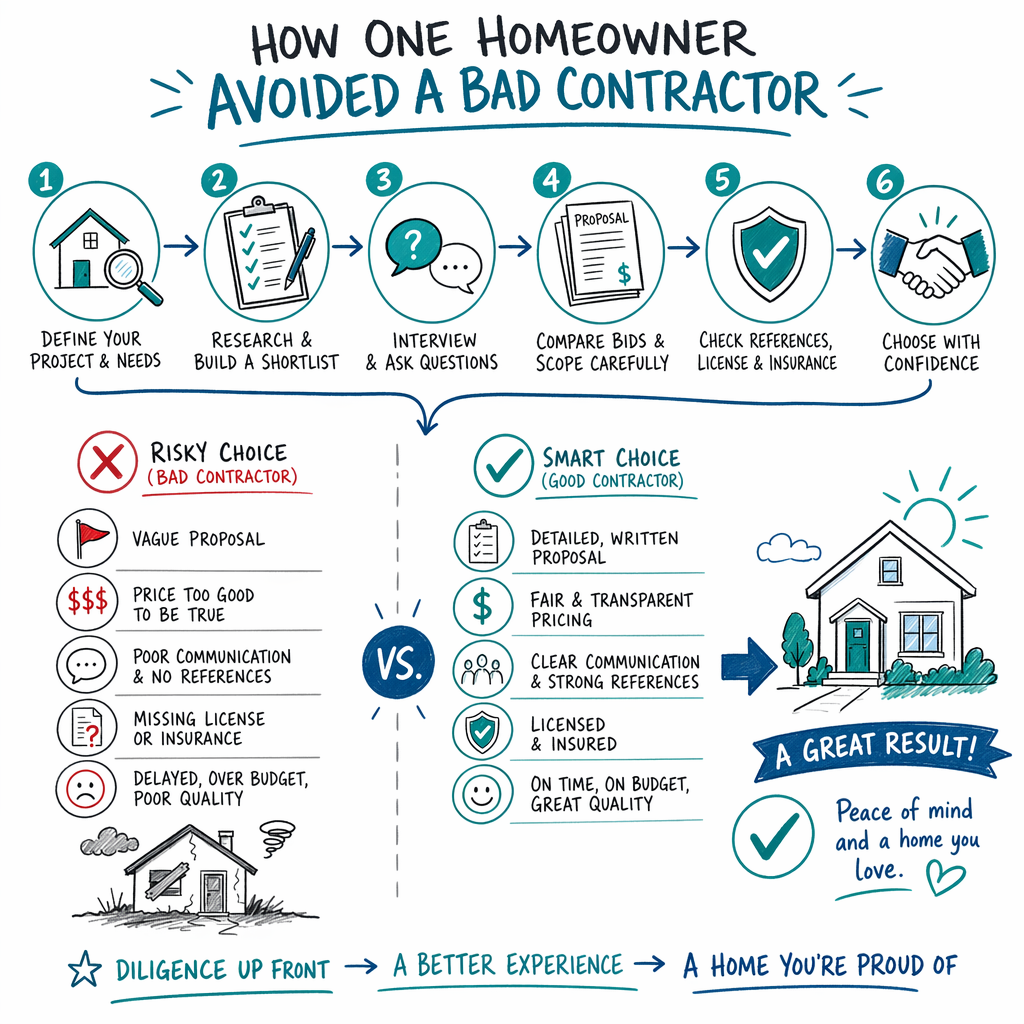
What they did differently
Instead of chasing the lowest number, the homeowner compared the bids line by line.
They used a simple process:
- Asked each builder for a written scope. They wanted pool dimensions, material type, equipment list, decking amount, finish details, timeline assumptions, and exclusions.
- Verified license, insurance, and bond themselves. They did not accept "we have it" as enough. They asked for current documents and checked state or local records where available.
- Asked about permits and inspections. Not for legal advice, but to understand who would be responsible for what and what was included in the estimate. For background, homeowners can read pool permits explained.
- Compared allowances and exclusions. This included electrical runs, gas line work if needed, drainage fixes, fencing, access problems, and soil surprises.
- Refused to pay a big deposit without clear paperwork. They wanted price and scope in writing before any money changed hands.
After that review, the low bid was no longer really low. Once likely add-ons were considered, it could have landed close to or even above the mid-priced proposal.
The homeowner chose a builder whose price was not the cheapest, but whose paperwork was clearer and whose proof of license, insurance, and bond was easy to verify. The builder also explained what could still change if hidden site problems came up. That honesty helped.
DeepEnd Match's role in stories like this is simple: we help homeowners get matched with licensed, insured, bonded builders at no cost to the homeowner. Participating builders pay a flat fee to take part. Homeowners compare options, choose who to hire, and control final payment decisions.
The outcome and the real lesson
The project moved forward with fewer surprises than the homeowner expected. That does not mean everything was perfect. There were still normal delays around scheduling and inspection timing. But the big problem they avoided was signing a weak contract with a price that looked cheap only because key items were missing.
A few things helped the most:
- Clear written scope before deposit
- Independent verification of license, insurance, and bond
- Questions about permits, safety barriers, and exclusions early
- Not confusing a low estimate with a better deal
This story is not here to promise outcomes. It is here to show a pattern. A lot of pool complaints start the same way: fast sales pressure, vague scope, and a homeowner who feels rushed.
The takeaway is simple. Slow the process down. Get multiple estimates. Read the exclusions. Verify credentials yourself. Hire a licensed, insured, bonded builder. Get price and scope in writing before any deposit. Follow local permit and pool-safety/fencing laws. And remember: you compare the quotes, you choose who to hire, and you hold the final payment.
If you want help starting that comparison process, you can get matched for free.
If one pool bid is much lower than the others, slow down. Ask for the full scope in writing, verify license, insurance, and bond yourself, and do not pay a deposit until the details are clear.
Common questions
How can I tell if a pool bid is unrealistically low?
Look for missing details. A low estimate may leave out permits, inspections, electrical work, decking, drainage fixes, fencing, startup, or equipment specifics. Ask for a written scope and exclusions list. Compare each bid line by line, not just by total price. Remember, all early numbers are estimates. Final price depends on type, size, site, finishes, and area.
What should I verify before paying a deposit?
Verify that the builder is licensed, insured, and bonded, and check that status yourself. Get the scope, payment schedule, major materials, equipment, allowances, and exclusions in writing before paying anything. Make sure local permits and pool-safety barrier requirements are being addressed. Do not rely on verbal promises alone.
What does DeepEnd Match do, exactly?
DeepEnd Match is a free matching service for homeowners. We do not build pools, design pools, pull permits, or give construction, structural, electrical, plumbing, legal, or financial advice. We help homeowners get matched with licensed, insured, bonded pool builders so they can compare estimates and choose who to hire. Participating builders pay a flat fee. The homeowner pays us nothing.