
The situation: old pool, big worries, and a bigger number than expected
A homeowner family in the US bought a house with an older in-ground pool. The pool was usable, but it had real problems.
- Rough, stained interior surface
- Old waterline tile falling off in spots
- Coping cracks
- Aging equipment that ran loud and inefficiently
- Deck areas with cosmetic cracking
At first, they assumed the pool was "too far gone" and started thinking about a full tear-out and rebuild. They liked the idea of changing the shape a little and making everything look new.
Then the first numbers came in.
A full rebuild was discussed in a typical broad range that could easily push into $60,000 to $135,000+ for a gunite/concrete pool, depending on size, access, soil, finishes, equipment, and local labor costs. In some yards, demolition, haul-away, engineering, drainage work, and permit requirements can push the total even higher. If you are comparing pool types, see pool type comparison.
The family stepped back and asked a better question: Is the shell actually failing, or is the pool mostly just old and ugly? That question changed the project.
What they did instead
Instead of jumping into demolition, they asked licensed, insured, bonded builders to inspect the pool and separate structural issues from finish and equipment issues. That matters.
Two builders said a rebuild would only make sense if the homeowners truly wanted a different layout and were ready for the higher cost, longer schedule, and more yard disruption. Another builder pointed out that the shell showed age, but not clear evidence that rebuilding was the only path.
So the homeowners priced a renovation scope first.
- Resurface the interior
- Replace the waterline tile and coping
- Update the pump and filter
- Improve a few plumbing and skimmer items
- Repair selected deck sections instead of replacing every inch
- Add a safer, cleaner equipment setup
That renovation path came in far below a full rebuild. Not cheap, but lower. For many older pools, a renovation can land somewhere from the mid-thousands into tens of thousands, depending on what is being repaired or upgraded. The real price depends on the pool type, size, site conditions, finish choices, equipment, and your area. If you want a broader breakdown of typical pool costs, start with costs.
Just as important, the family asked each builder to put scope, exclusions, materials, and payment schedule in writing before any deposit. They also verified the builder's license, insurance, and bond themselves. That step alone helps prevent a lot of trouble.
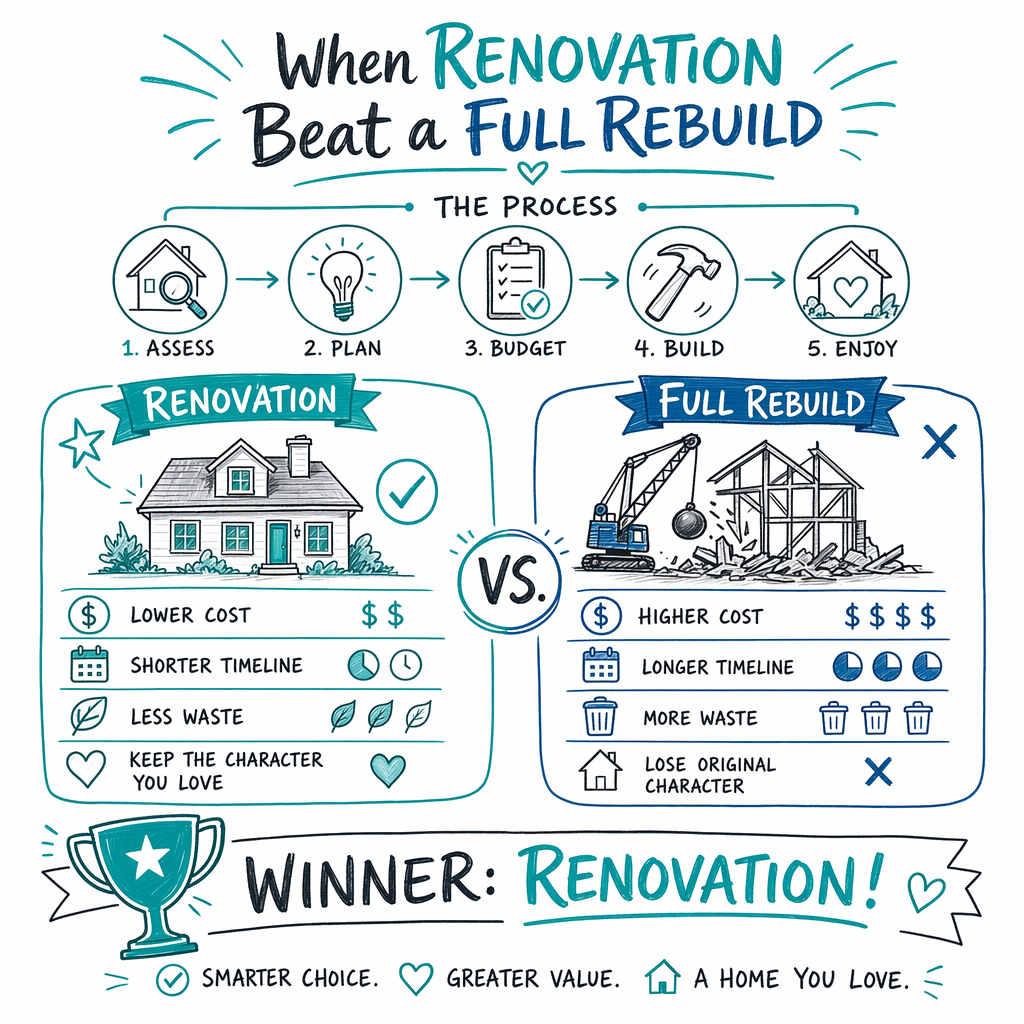
Why renovation won this time
Renovation was not the "cheap" option. It was the better-fit option.
Here is why it made sense in this case:
- The basic pool layout already worked. The family did not truly need a new shape.
- The shell did not clearly require replacement. They were looking at visible wear, not automatic total failure.
- The yard access was tight. Heavy demolition and rebuild work would likely add cost and mess.
- They wanted better function more than a dramatic redesign. Quiet equipment, a fresh surface, and safer edges mattered more than a brand-new build.
- The project risk was lower. A renovation still has surprises, but a full rebuild can uncover even bigger issues once demolition starts.
They also learned something many homeowners learn late: a rebuild is not just a pool price. It can mean permit delays, longer downtime, more noise, more debris, and more decisions.
This does not mean renovation always wins. A full rebuild may be the right move if the shell is failing, the layout is unsafe, the pool is the wrong size or depth for your family, or repeated repairs are turning into a money pit. If you are talking to builders, use a clear vetting checklist like how to vet a pool builder.
The outcome
The homeowners chose renovation.
The finished pool did not become a luxury showpiece. It became something better for their real life: clean, updated, easier to maintain, and more comfortable to use.
Their likely gains were practical:
- A fresh surface underfoot
- New tile and coping that changed the look of the whole pool
- More efficient equipment with less noise
- Fewer immediate repair headaches
- Lower overall project cost than a tear-out and rebuild
- Shorter disruption to the yard and routine
There were still tradeoffs. The pool shape stayed the same. Some older surrounding areas still showed age. And like many renovation jobs, there was a minor surprise after work began that required a change order.
That is the honest part homeowners need to hear: renovation can save money, but it is not magic. It works best when you understand what must be fixed, what can wait, and what you are willing to live with.
The family also made sure the builder followed local permit requirements and pool-safety rules. Homeowners should always confirm local permit and inspection requirements and follow fencing and barrier laws. These vary by area. Helpful starting points: pool permits explained and pool safety barriers.
Takeaway for homeowners
If you are stuck between renovation and rebuild, slow down before you sign anything.
Ask these questions:
- What is actually failing? Shell, plumbing, finish, deck, equipment, or just appearance?
- What do I want to change? Function, safety, look, shape, depth, or all of it?
- Can I get 2-3 written scopes from licensed, insured, bonded builders?
- What is included, and what is excluded? Permits, haul-away, startup, repairs discovered later, deck work, fencing changes.
- Am I comparing renovation to rebuild fairly? Same goals, same assumptions, same finish level.
DeepEnd Match is a free matching service. We help homeowners connect with licensed, insured, bonded pool builders so you can compare options, ask better questions, and choose who to hire. We do not build pools or give construction advice. If you want to start comparing local builders, use get matched.
If your old pool looks bad, do not assume you need a full rebuild. Get 2-3 written scopes from licensed, insured, bonded builders, verify their credentials yourself, compare renovation vs rebuild carefully, and choose the option that solves the real problem for a price you understand.
Common questions
How do I know if my pool needs renovation or a full rebuild?
Start with inspections from licensed, insured, bonded pool builders and ask each one to explain whether the problem is structural, cosmetic, equipment-related, or a mix. A worn surface, old tile, coping damage, or outdated equipment does not always mean the shell must be rebuilt. Get the scope in writing and compare the reasons, not just the price.
Is renovation always cheaper than rebuilding?
Usually, but not always. A renovation can cost much less than a full rebuild if the shell and layout are still workable. But if major structural problems, drainage issues, access problems, or repeated hidden repairs are involved, costs can climb fast. All pricing should be treated as a typical estimate range, not a quote or guarantee. The real price depends on pool type, size, site, finishes, and area.
What should I verify before I pay a deposit?
Verify the builder's license, insurance, and bond yourself. Get the price, payment schedule, materials, scope, exclusions, permit responsibility, and change-order process in writing before any deposit. Follow local permits and pool-safety or fencing laws. Keep final payment until the agreed work is complete according to your written contract.