The short answer
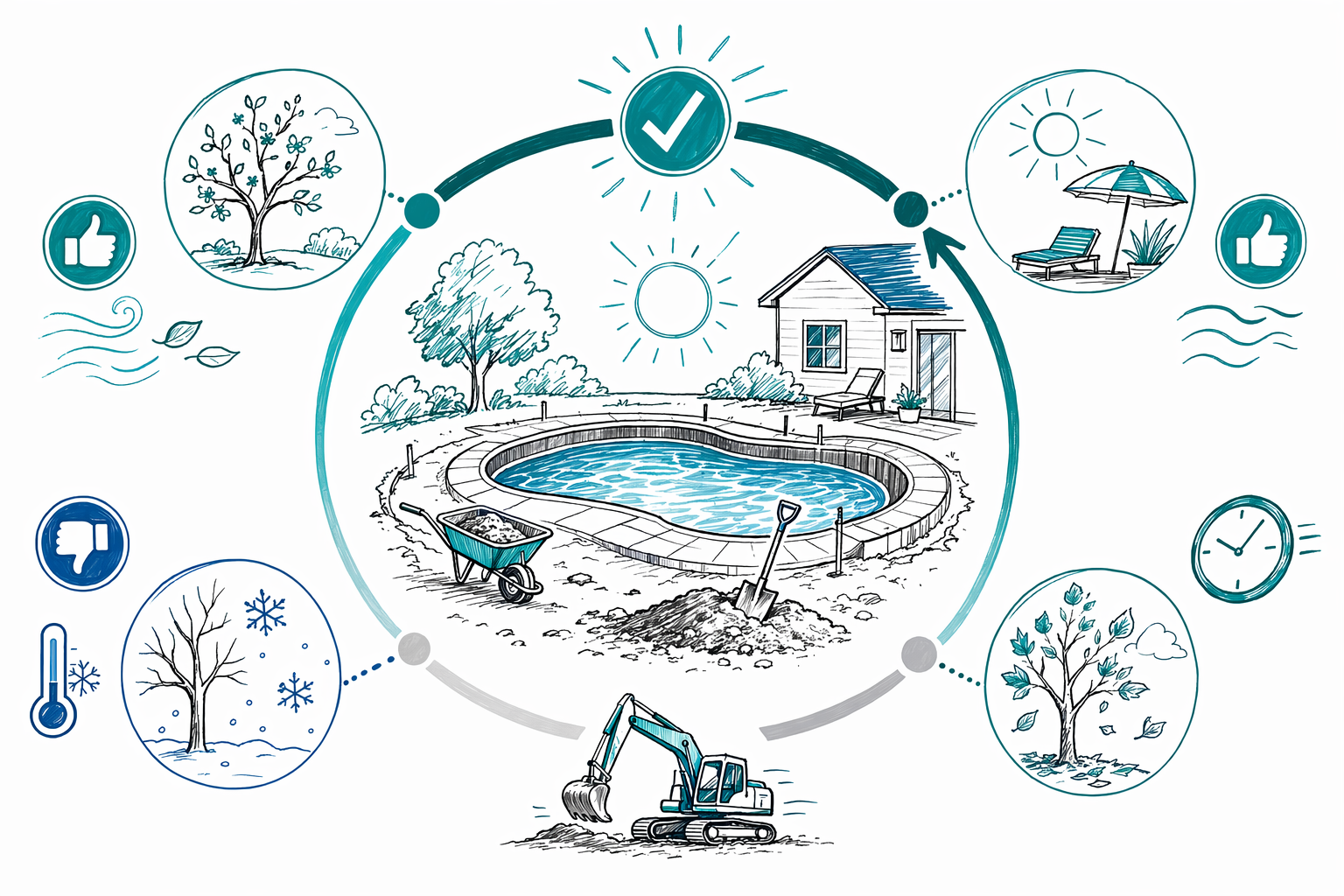
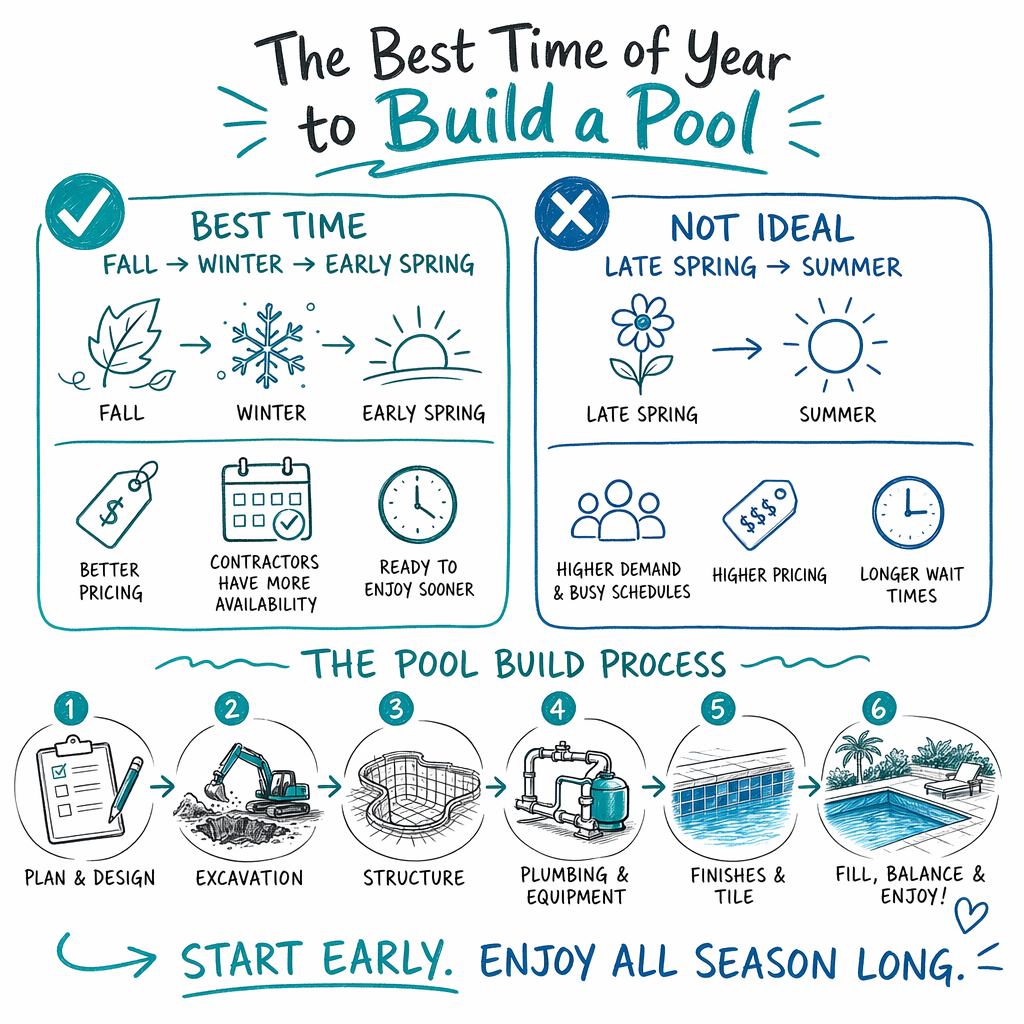
For many homeowners, fall and winter are good times to start the process. That does not mean every pool is built in cold weather. It means you start planning, comparing builders, and locking in your schedule before the spring rush.
If you wait until warm weather starts, you may face longer lead times for design, permits, excavation, inspections, materials, and builder availability. Good builders often book up early.
A simple rule:
- Want to swim next summer? Start talking to builders in fall or winter.
- Want the fastest path possible? Start as soon as you are serious, no matter the season.
- Have a complex yard or HOA rules? Start even earlier.
The real timeline depends on the pool type, size, your soil, access to the yard, local permit speed, weather, finishes, and your area. Typical in-ground pool cost ranges also vary by those same factors. As a rough guide, many homeowners see gunite/concrete pools in the $60,000-$135,000 range, fiberglass pools in the $45,000-$95,000 range, and vinyl-liner pools in the $35,000-$70,000 range. Smaller or plunge-style pools can cost less. These are typical estimates, not quotes. Learn more about pool costs if you are setting a budget.
Why timing matters more than most people expect
People often think the build starts when the excavator arrives. In real life, the process starts much earlier.
Before digging, you may need to:
- Choose a pool type and rough layout.
- Check access to your yard.
- Review setbacks, utility lines, and drainage.
- Work through HOA requirements, if you have one.
- Apply for permits and wait for approval.
- Schedule crews and materials.
Any one of those steps can slow the job down.
Spring is the busiest season in many markets because homeowners suddenly realize summer is coming. That creates pressure on schedules. If permit offices are backed up and builders are full, a job that looked simple on paper can slide.
Weather also matters, but not in the same way everywhere.
- In warm or mild climates, pool construction can often continue through much of fall and winter.
- In cold climates, freezing ground, snow, and curing conditions can affect timing, especially for certain stages.
- In rainy areas, wet soil can slow excavation and create access problems for heavy equipment.
Pool type can affect timing too. If you are still comparing options, this helps:
- Gunite/concrete pools offer the most customization, but they usually involve more steps and more on-site work.
- Fiberglass pools can move faster in the right conditions, but shell manufacturing and delivery schedules matter.
- Vinyl-liner pools are another option with their own timeline, site needs, and finish choices.
No matter the season, the safest move is to hire licensed, insured, and bonded builders, and verify the license, insurance, and bond yourself. Get the full price, materials, allowances, and scope in writing before any deposit. Follow local permit rules and pool-safety and fencing laws.
Season by season: the real pros and cons
### Fall
Fall is often a smart time to start.
- Builder calendars may be less crowded than spring.
- You may have more time to compare proposals carefully.
- In many areas, weather is still workable for excavation and early construction.
- If the project carries into winter, you may still be ahead of the spring rush.
Fall is especially useful if you want a custom pool and extra features like a spa, tanning ledge, retaining wall work, or a more complex patio plan.
### Winter
Winter can be a strong planning season and, in some areas, an active build season.
- Good for permits, approvals, and choosing finishes.
- In warm states, some projects can move efficiently during winter.
- You may secure a better place on the builder's calendar for spring completion.
But winter is not ideal everywhere. Frozen ground, snow, or repeated storms can delay site work in colder regions.
### Spring
Spring feels natural, but it is often the most crowded time.
- You can still build in spring.
- The problem is competition for permits, crews, and inspection slots.
- If you start too late, you may not swim until late summer or even later.
Spring is the season when rushed decisions happen. That is when people accept vague contracts, unclear allowances, or optimistic schedules that are not realistic.
### Summer
Summer can still work, especially if you are flexible.
- Dry weather can help in some regions.
- You get to see how sun and shade actually hit your yard.
- It may be a good time for planning if your goal is next year, not this year.
The downside is simple: if your goal is to swim this same summer, summer is usually too late to start from zero unless your project is very straightforward and schedules line up.
The best season for you depends on your local climate, your yard, permit speed, and the pool type you choose. If you are unsure, compare the main options in this pool type comparison guide.
What can slow a pool project down
The season matters, but these issues often matter more:
- Permits and inspections: Some cities move fast. Others do not. Read up on pool permits explained so you know what questions to ask.
- Yard access: Tight side yards, septic systems, slopes, retaining walls, or overhead power lines can complicate equipment access.
- Soil and groundwater: Rock, unstable soil, or water issues can change the build plan and cost.
- Custom features: Spas, water features, heating, automation, outdoor kitchens, and upgraded decking can add time.
- Utility work: Electrical and gas scheduling may not line up perfectly with the rest of the job.
- Material lead times: Tile, coping, pumps, heaters, and certain finishes can take longer than expected.
- Safety barriers: Fences, alarms, gates, and other required protections may affect your final sign-off.
This is also where homeowners can get burned. A low number on page one is not enough. You want a clear written scope that shows what is included, what is an allowance, what can trigger change orders, and who is handling each step.
Always:
- Verify the builder is licensed, insured, and bonded.
- Get price and scope in writing before any deposit.
- Ask who handles permits and inspections, and what is excluded.
- Confirm payment stages and hold the final payment until the contract terms are met.
- Follow local pool-safety and fencing laws.
If you want help comparing builders, use a free service like DeepEnd Match. We match homeowners with participating licensed, insured, bonded pool builders. Matching is free to the homeowner. Builders pay a flat fee to participate. You compare options and decide who to hire.
What to do next if you want a pool by a certain date
If you have a target swim season, work backward.
### If you want to swim next spring or summer
Start now with these steps:
- Set your budget range and decide what matters most: size, shape, finish, spa, deck space, or speed.
- Choose a pool direction: concrete, fiberglass, vinyl-liner, or plunge.
- Check your yard basics: access, slope, drainage, HOA rules, utilities.
- Talk to more than one builder and compare written proposals.
- Ask about realistic timelines, not best-case timelines.
- Review safety needs like fencing and gates before the build starts.
A good builder will explain the likely sequence, possible delays, and what depends on permits or inspections. A weak builder will promise a date too quickly.
If you are at the shopping stage, the smartest next move is to get matched with builders, compare the written scope, and ask direct questions about schedule, permits, and site conditions. Then choose the one you trust, not just the one with the lowest number.
DeepEnd Match helps you start that process without paying for the match. You share basic project and contact details, then compare participating builders yourself. You stay in control of the decision, the contract, and the final payment.
If you want a pool by warm weather, do not wait for warm weather to start. Begin in fall or winter if you can, compare licensed, insured, bonded builders, get the price and scope in writing, and make sure permits and safety-barrier rules are covered before work begins.
Common questions
What is usually the best month to start building a pool?
There is no single best month for every US homeowner, but many people get the best results by starting planning in fall or winter. That gives more time for builder selection, permits, scheduling, and materials before spring demand picks up.
Is it cheaper to build a pool in the off-season?
Sometimes, but do not assume it. Pool prices are affected by type, size, site conditions, finishes, and your area more than the calendar alone. Any numbers you see should be treated as typical estimates, not quotes. Always get the full price and scope in writing and compare multiple licensed, insured, bonded builders.
How long does an in-ground pool usually take to build?
It depends. A straightforward project may move faster than a custom build with difficult access, permit delays, weather problems, or added features. Fiberglass can sometimes be quicker in the right conditions, while gunite/concrete often takes longer because of the extra construction steps. Ask each builder for a realistic timeline and what could delay it.
Should I wait until spring to contact builders?
Usually no, especially if you want to swim by summer. Spring is a busy season in many areas. Contacting builders earlier often gives you more choice, less rush, and a better chance of finishing on time. No matter when you start, verify license, insurance, and bond yourself, and follow local permit and pool-safety laws.