The short answer: trust actions, not promises
A smooth sales pitch does not mean a builder will do solid work. The biggest red flags usually show up before you sign anything.
Be careful if a contractor:
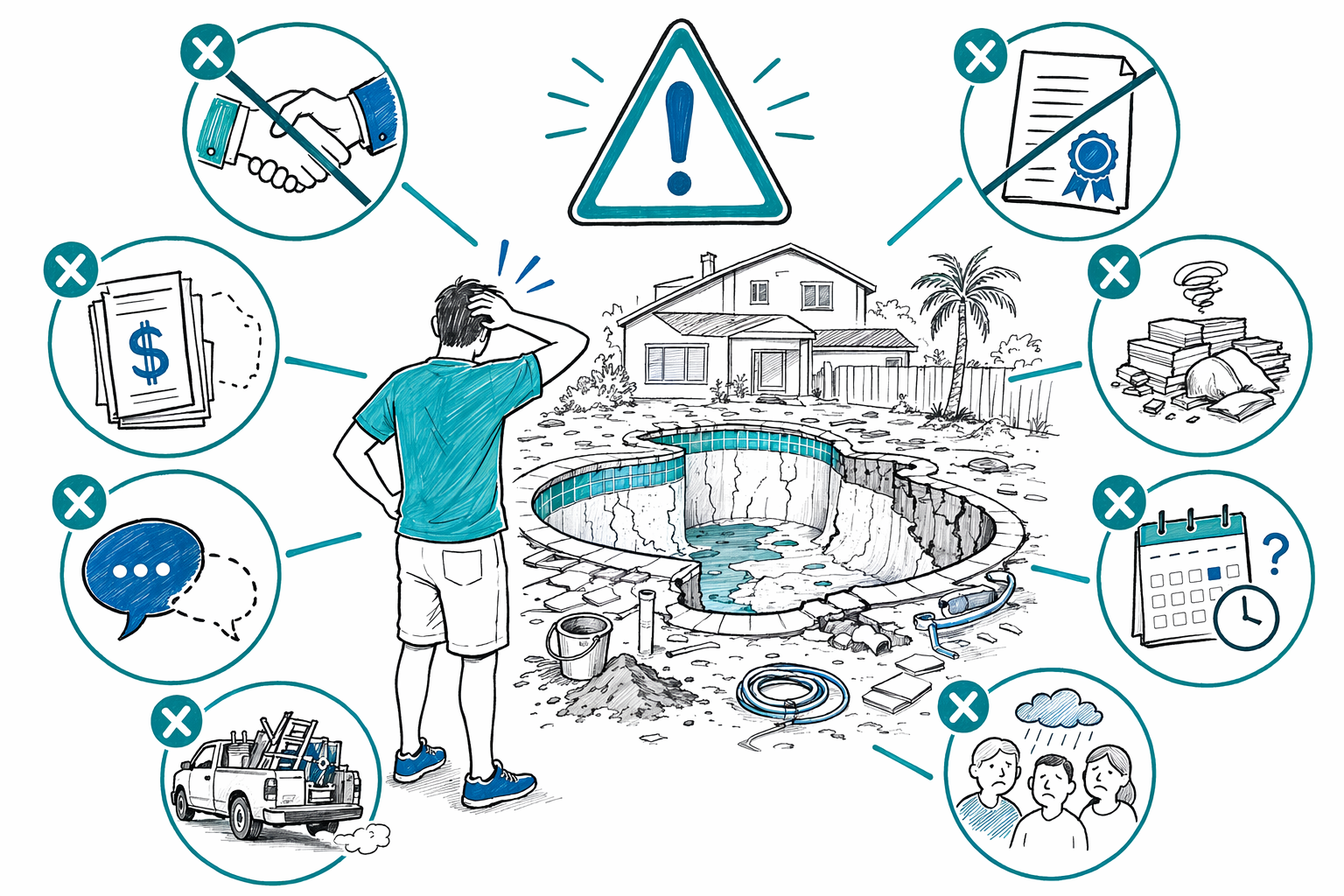
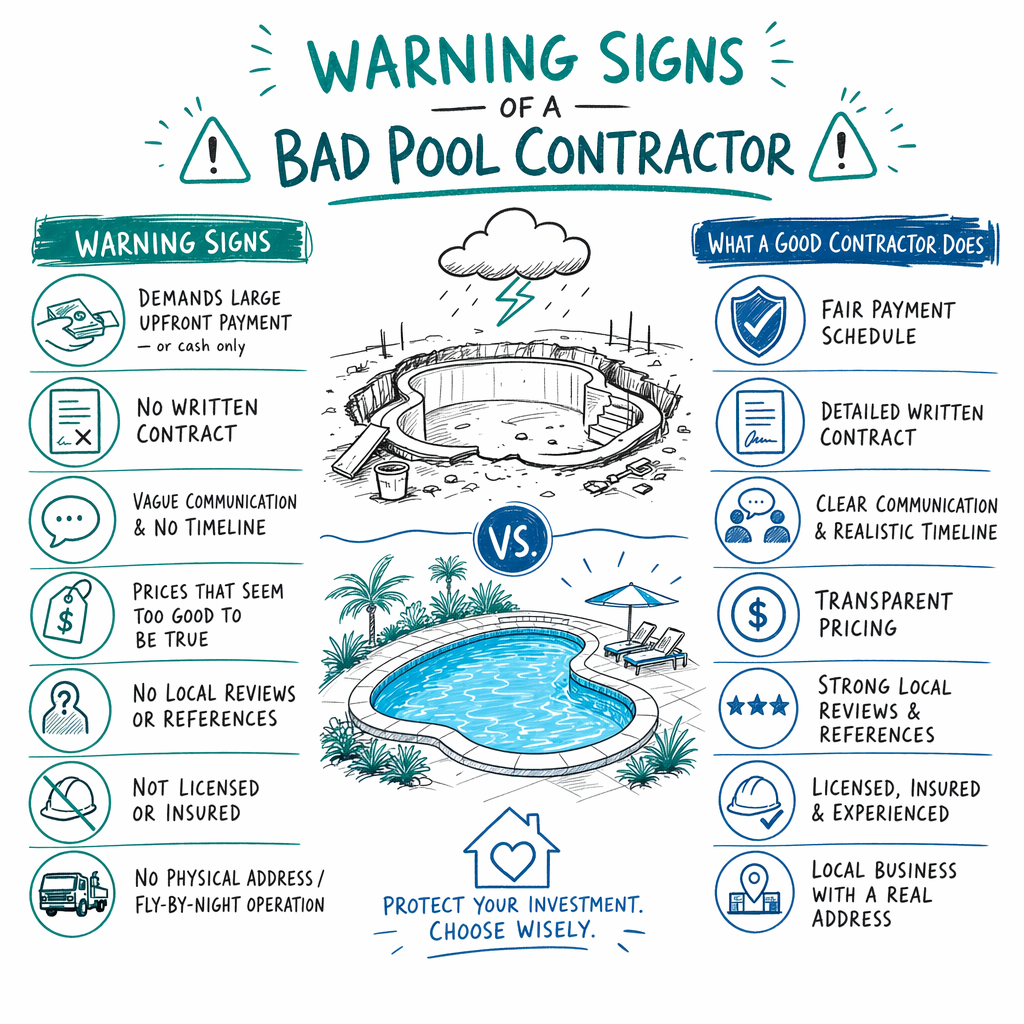
- will not show an active license, insurance, and bond
- asks for a large cash deposit before giving clear written scope and price
- gives a very low number that feels far below other bids
- refuses permits or says permits are "not needed" without explaining local rules
- pressures you to sign today
- gives vague answers about timeline, excavation, drainage, access, inspections, or cleanup
- has a contract with missing details, missing change-order terms, or unclear payment stages
A pool is a big project. Real price ranges are usually broad. In-ground pool costs are often around $60,000-$135,000 for gunite/concrete, $45,000-$95,000 for fiberglass, and $35,000-$70,000 for vinyl-liner. Smaller plunge pools may cost less. But the real price depends on the pool type, size, yard conditions, finishes, equipment, and your area. If one builder is far lower than the rest, find out exactly what is missing. For a fuller look at typical price ranges, see pool costs.
Red flags in the sales process
Many homeowners get burned before digging even starts. The early meetings tell you a lot.
1. They dodge basic proof
If a company gets defensive when you ask for license number, insurance certificate, or bond information, stop there. A good builder expects this question. You should verify the license, insurance, and bond yourself with the right state or local office and carrier.
2. They talk fast and stay vague
Watch for phrases like:
- "We handle everything" with no written scope
- "Don't worry about permits"
- "We'll figure that out later"
- "That upgrade is basically free"
A trustworthy contractor can explain the job in plain language. That includes excavation, steel or shell, plumbing, electrical, decking, equipment, drainage, interior finish, startup, and who is responsible for each part.
3. They skip the site details
A builder who barely looks at access, slope, drainage, utility lines, easements, setbacks, or soil conditions may be guessing. Those details can change cost and schedule in a big way.
4. They push hard for a signature
Pressure is a warning sign. So are "today only" discounts and repeated calls asking for a deposit before you have time to compare. You should have time to review bids, ask questions, and read the contract.
5. They will not put changes in writing
Pool projects often change. That is normal. What matters is whether the builder uses clear written change orders with price and schedule impact before work is done.
If you want a practical checklist, read how to vet a pool builder.
Red flags in the bid and contract
A bad contract causes many expensive fights. Read slowly. Ask questions. If something is not written down, do not assume it is included.
Look for these problems:
- Missing scope: no clear pool dimensions, depth, materials, finish, equipment brand or model level, deck size, or included features
- Unclear exclusions: no note about fencing, gas line work, electrical upgrades, drainage fixes, hauling, landscaping repair, or permit fees
- Bad payment schedule: big upfront payment, vague milestones, or payments not tied to completed work and passed inspections where required
- No timeline language: no estimated start window, no stages, no explanation of delay rules
- No warranty details: verbal promises only, or no written explanation of who covers shell, equipment, surface, and labor
- No change-order process: extra costs can pile up fast when the process is loose
- Cash-only requests: especially if there is resistance to receipts
Here is a simple way to review a proposal:
- Compare at least 3 bids with the same pool type and similar features.
- Ask each builder what is not included.
- Ask who pulls permits and who schedules inspections.
- Ask for payment stages in writing.
- Ask what happens if the yard conditions are worse than expected.
- Ask how cleanup, damage repair, and final punch-list items are handled.
Always get price and scope in writing before any deposit. Keep every version of the contract, change order, invoice, and email. You compare quotes. You choose who to hire. You hold the final payment until the agreed work is done.
Permit shortcuts are another common danger. Local rules vary, but do not let anyone tell you to ignore them. Read pool permits explained.
Red flags once work starts
Some builders look fine on paper and still fall apart during construction. Stay involved.
Warning signs during the job include:
- crews showing up with no idea what was sold
- long gaps with little communication and no schedule updates
- repeated requests for more money before the agreed stage is finished
- inspections missed or failed with no clear correction plan
- materials swapped without your approval
- unsafe worksite conditions
- damage to your yard, driveway, or neighbor access with no discussion
- messy equipment setup, poor plumbing runs, or obvious uneven work
You do not need to be a pool expert to notice disorganization. You just need to ask direct questions.
Try these:
- What stage is complete right now?
- What is the next inspection or milestone?
- Are there any changes to price or timeline?
- Is that material the same one listed in my contract?
- When will cleanup happen?
An illustrative example: one homeowner got a low bid that looked great at first. After excavation, the builder said drainage work, extra concrete removal, permit fees, and electrical upgrades were "surprises." The final cost moved far above the other bids. Another homeowner chose a mid-range bid with a tighter contract and clear exclusions. The starting number was higher, but the final cost stayed much closer to plan. The lesson is simple: cheap and vague often becomes expensive later.
If you are still deciding between pool types, that can also affect risk, timeline, and maintenance. Compare gunite/concrete pools and fiberglass pools before you sign with anyone.
What to do next so you do not get burned
You do not need the "perfect" builder. You need a qualified, documented, accountable one.
Use this plan:
1. Decide your pool type and must-haves
Know your rough size, shape, and features before collecting bids. It makes comparison easier.
2. Talk only to licensed, insured, bonded builders
Ask for proof. Then verify it yourself.
3. Get multiple written estimates
Remember, these are estimates and typical ranges, not guarantees. Real price depends on type, size, site, finishes, and area.
4. Read every exclusion
Fencing, alarms, access issues, drainage, utility work, and landscaping are common surprise costs. Follow local pool-safety and fencing laws. A helpful overview is pool safety barriers.
5. Do not pay for promises
Get written scope, payment stages, and change-order rules before any deposit.
6. Keep control of the final payment
Final payment should wait until the agreed work is completed and punch-list items are addressed.
DeepEnd Match is a free matching service for homeowners. We do not build pools, design pools, pull permits, or give construction, legal, or financial advice. We help you connect with builders so you can compare quotes and choose who to hire. If you want to start with matched local builders, use Get Matched.
Do not hire a pool builder who is vague, pushy, unlicensed, uninsured, unbonded, or unwilling to put scope and payment terms in writing. Get at least three written estimates, verify credentials yourself, follow local permit and safety laws, and keep final payment until the agreed work is done.
Common questions
What is the biggest red flag when hiring a pool contractor?
The biggest red flag is a builder who will not provide clear proof of an active license, insurance, and bond, or who tells you not to worry about it. Verify all three yourself. Also be cautious if they want a large deposit before giving clear written scope and price.
Is the lowest pool bid usually a bad sign?
Not always, but it often deserves extra scrutiny. A very low estimate may leave out permits, fencing, drainage, electrical upgrades, decking, cleanup, or better equipment. Pool prices are only estimates at this stage, and the real cost depends on type, size, site, finishes, and area. Ask the builder to list what is excluded in writing.
Should a pool contractor pull permits for me?
Local rules vary. In many areas, the builder may handle permit applications as part of the project, but you should still confirm who is responsible in writing and follow local permit and pool-safety laws. Be very careful if a contractor says permits are unnecessary without a clear explanation tied to your local requirements.
How many pool quotes should I get before choosing?
Try to get at least three written estimates from licensed, insured, bonded builders. Make sure they are bidding on a similar pool type and similar features so the comparison is fair. Then compare scope, exclusions, payment schedule, timeline, and warranty details, not just the starting price.