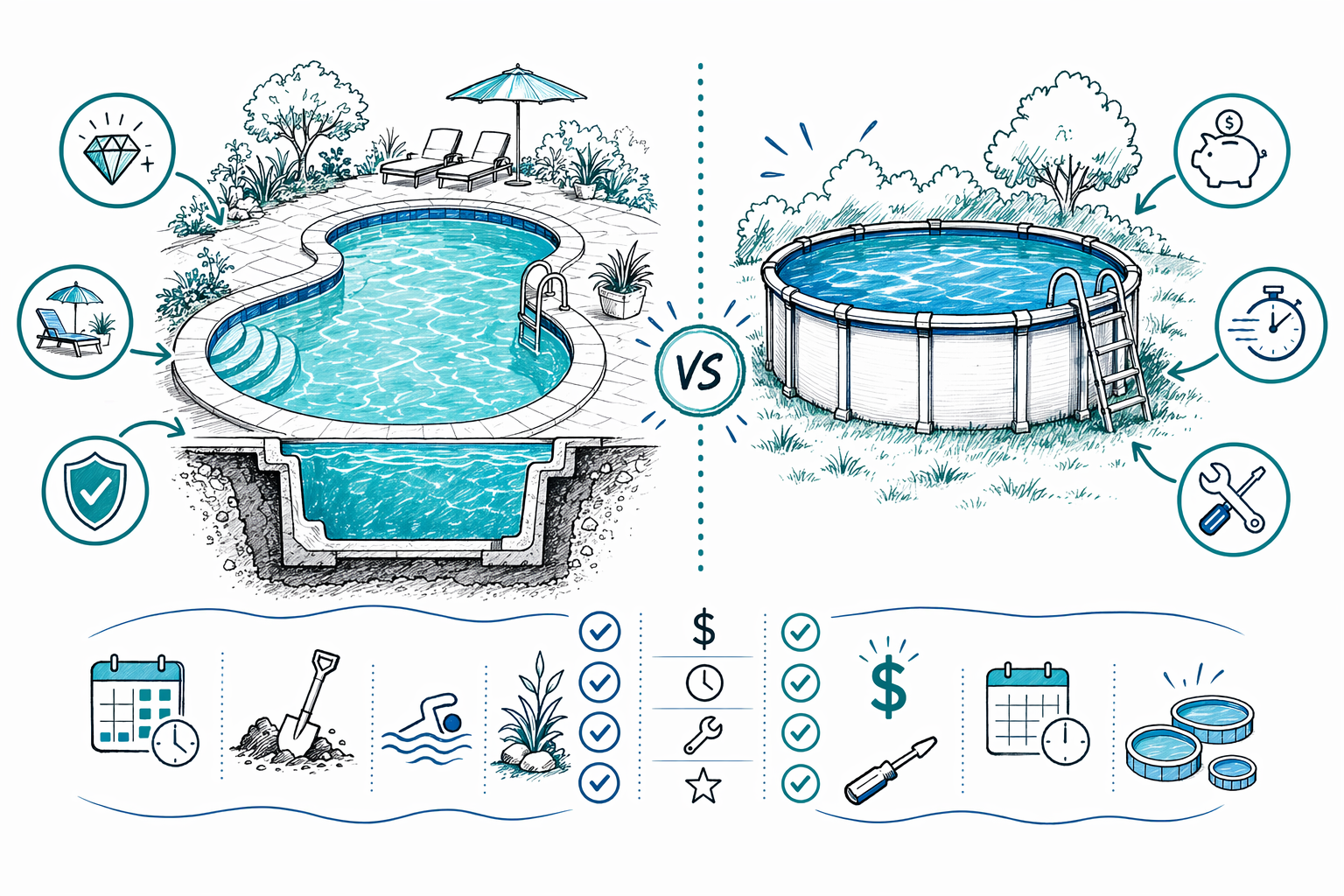
Quick comparison: the big differences
If you want the short version, this is it.
| Topic | In-ground pool | Above-ground pool |
|---|---|---|
| Typical installed cost | Usually much higher. Many homeowners spend $35,000 to $135,000+ depending on type, size, site, finishes, and area. Small plunge pools can cost less. | Usually much lower. Many basic to mid-range installs land around $3,000 to $15,000+ depending on size, deck work, electrical, and site prep. |
| Pool types | Gunite/concrete, fiberglass, vinyl-liner | Mostly prefabricated metal/resin frame pools with liner systems |
| Look | More custom. Sits flush with the yard. | More visible wall height. Less custom look. |
| Lifespan | Often longer, especially with good installation and maintenance | Usually shorter overall structure and liner life |
| Repairs | Can be expensive, but parts and finishes vary by type | Liners, walls, and frames may need replacement sooner |
| Maintenance | Ongoing cleaning, water care, and equipment upkeep | Still needs regular care. Not "maintenance-free" just because it costs less |
| Permits and code | Often stricter. Fencing and safety rules usually apply | Safety-barrier laws can still apply. Do not assume permits are not needed |
| Resale impact | May help appeal in some markets, hurt in others | Usually less impact on resale than a well-done in-ground pool |
For many homeowners, the real question is not just "Which is cheaper?" It is "How long do I want this, how do I want my yard to look, and what headaches can I afford later?"
If you know you want to compare permanent options, start with pool type comparison. If you are ready to talk to local builders, you can get matched for free.
Cost, value, and where people get surprised
The biggest difference is price.
An in-ground pool is a major home project. Typical installed ranges for in-ground pools are often around:
- Gunite/concrete: $60,000 to $135,000
- Fiberglass: $45,000 to $95,000
- Vinyl-liner: $35,000 to $70,000
- Smaller plunge pools: sometimes less, but still highly dependent on site and features
Those are typical ranges and estimates, not quotes or guarantees. The real price depends on the pool type, size, access to your yard, soil, slope, drainage, decking, equipment, finishes, and your local area. You can see broader costs here.
An above-ground pool usually costs much less up front. But homeowners often forget the extras:
- Ground leveling and site prep
- Electrical work for the pump
- Delivery and assembly
- Steps or ladder
- Deck or surround for easier access
- Fencing or gates required by local law
- Replacement liner or parts over time
That lower up-front cost is real. But cheap does not always mean low-cost over the full life of the pool. A bargain pool with weak site prep, poor drainage, or no code planning can become a money leak.
On resale, do not assume any pool automatically adds home value. In some neighborhoods, an in-ground pool can help your home's appeal. In others, buyers see it as maintenance and risk. An above-ground pool usually brings less resale upside than a well-built in-ground pool, and in some cases buyers may expect it to be removed.
The safest move is simple: get detailed written scope and pricing from licensed, insured, and bonded builders, compare line by line, and verify the license, insurance, and bond yourself before any deposit.
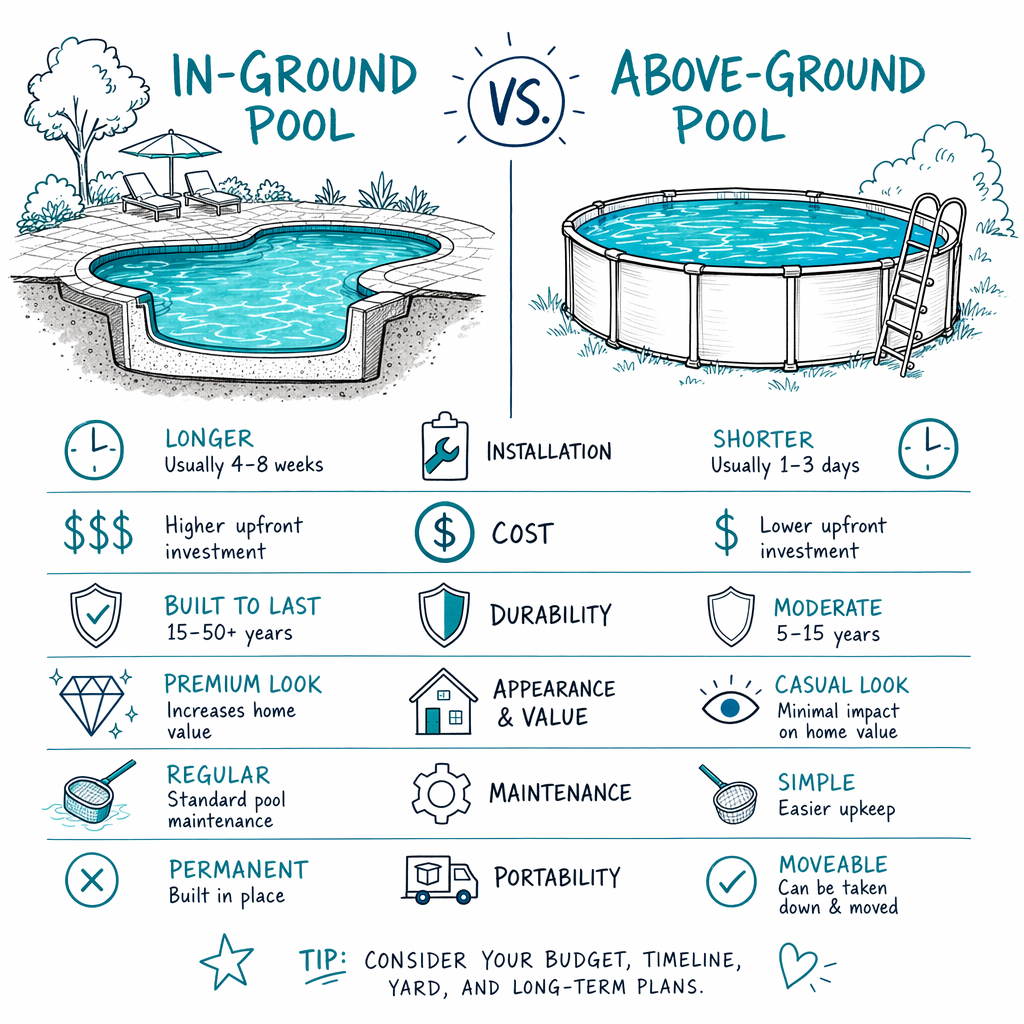
Looks, lifespan, and daily use
This is where many homeowners make the real decision.
Choose in-ground if you care most about:
- A permanent, built-in look
- Easier entry and exit with benches, tanning ledges, or custom steps
- Better fit with patios, landscaping, and outdoor kitchens
- More shape and finish choices
- A pool that feels like part of the property
Choose above-ground if you care most about:
- Lower up-front spending
- Faster installation in many cases
- A simpler way to get a family pool without a huge construction project
- The option, in some cases, to remove or replace it later
Now the honest part.
Above-ground pools can be great for families on a tighter budget. But many people eventually wish they looked better in the yard. They also may not feel as easy to use for older adults, small kids, or anyone who wants broad steps, a shallow lounging area, or a more open patio feel.
In-ground pools usually win on appearance and long-term enjoyment. But they also bring a bigger commitment. You are not just buying a hole with water. You are buying excavation, equipment, drainage planning, hardscape coordination, and future maintenance.
Pool material matters too if you go in-ground:
- Gunite/concrete pools offer the most custom design freedom, but they are often the highest cost.
- Fiberglass pools can install faster in many cases, but shape options are limited by the shell.
- Vinyl-liner pools can lower initial cost, but liners need replacement over time.
No pool is maintenance-free. Water chemistry, cleaning, pumps, filters, heaters, and covers all need attention. A smaller above-ground pool may be simpler, but it still needs regular care.
Permits, safety, and contractor risk
This is where people get burned when they focus only on price.
Whether the pool is in-ground or above-ground, you need to think about code, safety, and paperwork.
- Check permits early. Many areas require permits for both in-ground and above-ground pools, especially if electrical work, decks, gas heaters, or fencing are involved. Read pool permits explained.
- Follow safety-barrier laws. Fence, gate, latch, door alarm, and cover rules vary by location. Do not guess. Review pool safety barriers.
- Hire only licensed, insured, and bonded builders when your project requires a professional installer. Then verify the license, insurance, and bond yourself.
- Get the full scope in writing before any deposit. That includes pool size, equipment brand/model, decking, electrical, cleanup, timeline, change-order rules, and payment schedule.
- Hold final payment until the work is completed as agreed. You compare quotes. You choose who to hire. You control the final sign-off.
A low bid can hide missing work. Common examples:
- Spoil dirt removal not included
- Electrical upgrade not included
- Fencing not included
- Permit fees excluded
- Start-up chemicals and training skipped
- Drainage fixes left out
DeepEnd Match is a free matching service. We do not build pools, design them, or give construction, legal, or financial advice. We help you connect with local builders so you can compare options and choose carefully.
Which one should you choose?
Here is the practical way to decide.
Choose an in-ground pool if:
- You plan to stay in the home for years
- You want a permanent backyard upgrade
- You care a lot about appearance and layout
- You can afford not just the build, but the upkeep
- Your yard and local rules support the project
Choose an above-ground pool if:
- Your budget is limited
- You want a basic swim and play setup, not a full backyard transformation
- You want less construction disruption
- You are not ready for a $35,000 to $135,000+ in-ground project
A simple filter can help:
- If your budget is under what most in-ground projects cost, above-ground may be the realistic choice.
- If you want the pool to look built into the property, in-ground usually wins.
- If you want the lowest entry cost, above-ground wins.
- If you want custom shape, integrated features, and long-term design value, in-ground is usually the better fit.
If you are leaning in-ground, the next smart step is to compare 2 to 4 local builders and look at the differences in scope, not just the bottom number. You can get matched for free and speak in the language you are most comfortable using.
If you want the lowest cost, above-ground is usually the cheaper path. If you want a permanent, better-looking backyard pool and can afford the bigger project, in-ground is usually the stronger long-term choice. Either way, check permits and safety laws, and hire licensed, insured, bonded builders you verify yourself.
Common questions
Is an above-ground pool always cheaper than an in-ground pool?
Usually yes on up-front cost, often by a lot. But the full cost still depends on size, site prep, electrical, decking, fencing, and replacement parts over time. In-ground pools cost much more in most cases, but the real price depends on type, size, site, finishes, and area.
Does an above-ground pool need a permit or fence?
It might. Many homeowners assume above-ground pools skip permits or safety rules, but that is not always true. Local laws may require permits, barriers, self-latching gates, alarms, or other protections. Always check local permit and pool-safety requirements before you buy or install.
Which lasts longer: in-ground or above-ground?
In-ground pools usually last longer overall, especially when built well and maintained properly. Above-ground pools can provide years of use, but liners, walls, frames, and related parts often have a shorter service life. Lifespan depends heavily on installation quality, climate, maintenance, and materials.
How do I compare builders without getting tricked by a low price?
Ask each builder for the full scope in writing and compare line by line. Verify the builder is licensed, insured, and bonded yourself. Confirm permits, electrical, fencing, decking, cleanup, equipment, and warranty terms are included or clearly excluded before any deposit. Hold final payment until the work is completed as agreed.