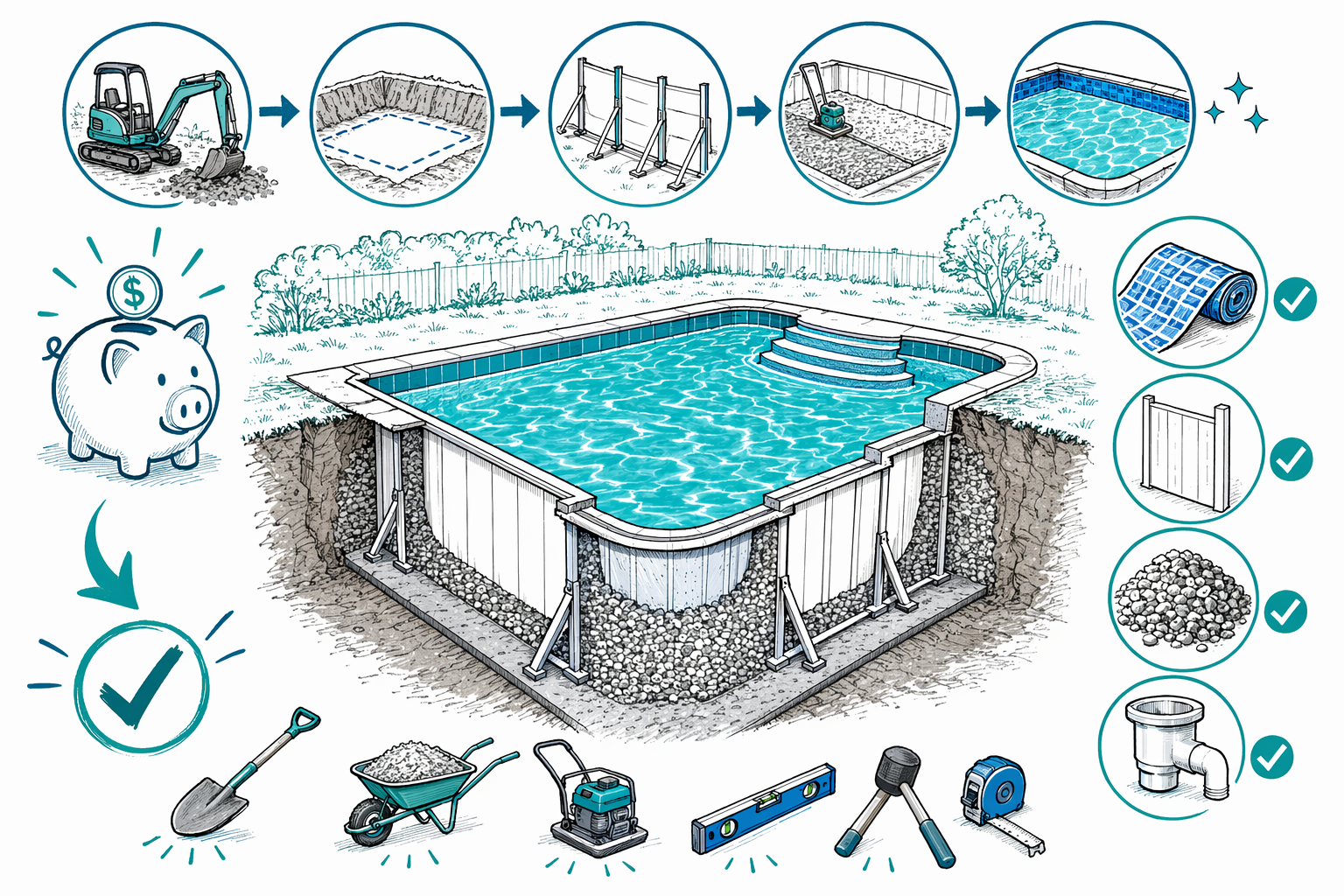
The short answer: the cheapest in-ground pool is usually a vinyl-liner pool
For most US homeowners, the lowest-cost full-size in-ground pool is usually a vinyl-liner pool. A typical range is about $35,000 to $70,000.
After that, fiberglass often falls around $45,000 to $95,000, and gunite/concrete is often the highest at $60,000 to $135,000 or more. Real price depends on pool type, size, site conditions, finishes, and your area.
If you want to spend even less, a small plunge pool can cost less than a full-size pool, no matter the material. But smaller does not always mean cheap if your yard has hard access, retaining walls, drainage issues, or expensive decking.
A simple way to think about it:
- Cheapest material upfront: vinyl liner
- Good middle ground: fiberglass
- Usually most expensive upfront: gunite/concrete
- Cheapest overall project shape: small, simple rectangle
- Most expensive choices: big pool, custom shape, deep end, spa, water features, lots of decking, difficult yard
Before you decide, it helps to compare the big differences side by side in this pool type comparison.
What actually makes a pool cheap or expensive
Homeowners often focus only on the shell price. That is where people get surprised. The total project cost is what matters.
Here are the biggest things that move your price up or down:
1. Pool type
Vinyl-liner is usually the least expensive to install. Fiberglass can be faster to install, but the shell and crane/access needs can raise cost. Gunite gives the most design freedom, but it is usually the highest-cost build.
2. Size and depth
A smaller, shallower pool costs less to excavate, less to finish, and less to fill and run. A deep end adds cost.
3. Shape
A simple rectangle is usually cheaper than freeform curves or fully custom designs.
4. Yard access
If equipment cannot easily reach your backyard, labor goes up. Tight side yards, fences, slopes, trees, and utility conflicts all add cost.
5. Soil, drainage, and slope
Rock excavation, poor drainage, high water table, or retaining walls can change the budget fast.
6. Decking and finishes
Basic concrete decking costs less than large paver layouts, premium coping, upgraded tile, or decorative finishes.
7. Add-ons
Spas, sunshelves, waterfalls, tanning ledges, automation, heaters, salt systems, lighting, and fencing all add real money.
8. Permits and code requirements
Your city or county may require permits, inspections, alarms, or specific barriers. Follow local rules and read pool permits explained before you sign anything.
A low-price ad can be real for a basic starting package, but not for the project most families actually end up choosing. That is why you want the full scope in writing before any deposit.
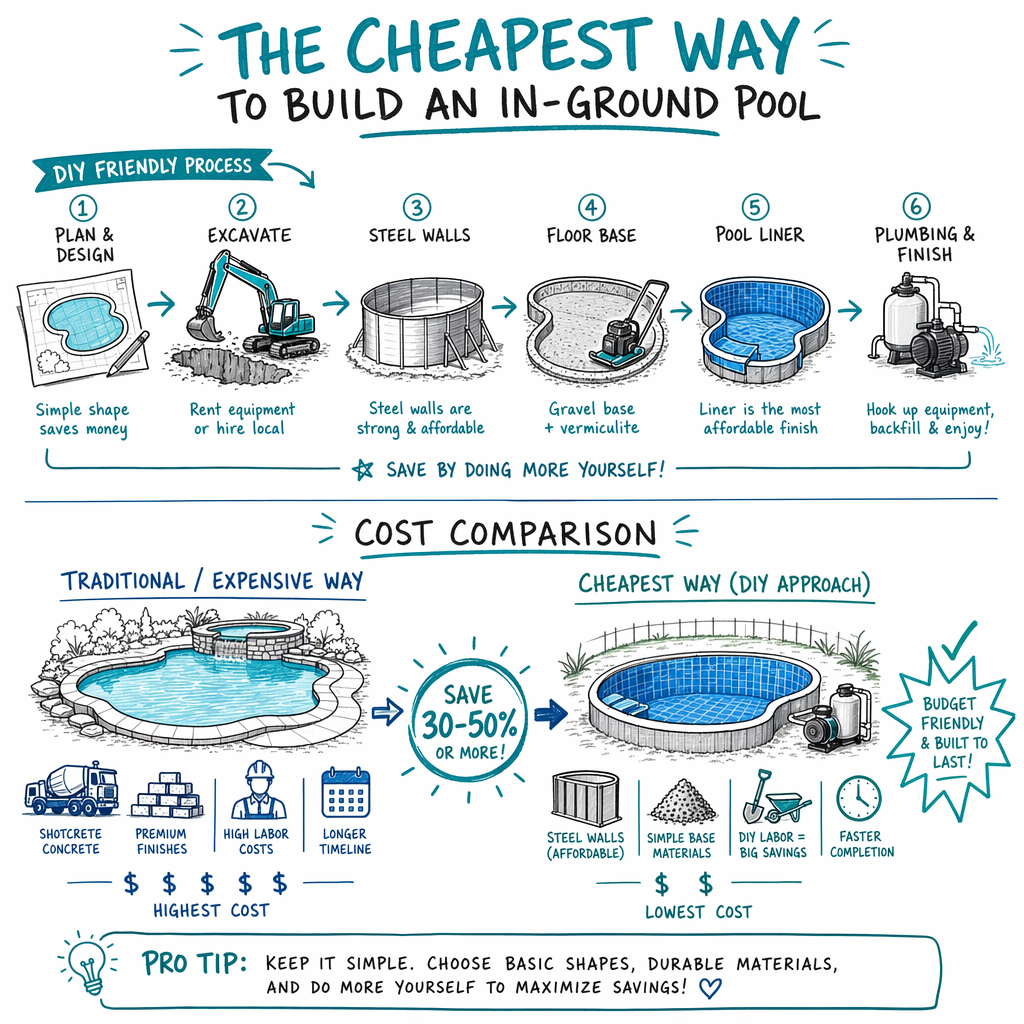
Cheapest does not always mean best value
A cheap build can become expensive later if you choose the wrong pool for your needs.
Vinyl-liner pools are often the lowest upfront cost. That matters if budget is tight. But liners need replacement over time, and sharp objects or pet damage can become a maintenance issue.
Fiberglass pools usually cost more upfront than vinyl-liner, but many homeowners like the smooth surface and lower day-to-day upkeep. The design choices are more limited because you choose from manufactured shell shapes and sizes.
Gunite/concrete pools usually cost the most to build, but they allow the most customization. If you want a very specific shape, beach entry, integrated spa, or unusual layout, gunite may be the only practical fit. It just may not be the cheapest path.
If your top goal is keeping cost down, these choices usually help most:
- Pick the smallest pool your family will truly use
- Choose a simple rectangle
- Skip the spa for now
- Keep the deck area modest
- Choose standard finishes
- Avoid unnecessary water features
- Ask for pricing with and without heater, automation, and salt system
- Build in an easier season if local builders offer better availability
These choices usually push cost up fastest:
- Deep diving depth
- Freeform custom shape
- Large tanning ledge
- Attached spa
- Extensive pavers or premium stone
- Major grading or retaining walls
- Luxury lighting and water features
If you are leaning toward one material, compare the basics first: gunite/concrete pools versus other options. Then ask each builder where your yard may create extra cost.
How to keep the price low without getting burned
The safest low-cost plan is not chasing the cheapest ad. It is controlling the scope and vetting the builder.
Use this process:
1. Decide your must-haves before you talk to builders
Write down your maximum size, preferred depth, shape, and the features you can live without.
2. Ask for the same scope from every builder
If one includes fencing, permits, electrical runs, startup, or basic decking and another does not, the lower number may not be a better deal.
3. Get labor and materials clearly described in writing
The written scope should show what is included, what is excluded, and what could become a change order.
4. Hire only licensed, insured, and bonded builders
Then verify the license, insurance, and bond yourself. Do not rely only on a logo, website, or verbal promise.
5. Check references and recent work
Ask how the builder handled delays, punch-list items, and unexpected site issues.
6. Be careful with deposits and payment schedule
Never pay based only on promises. Tie payments to written milestones. Keep final payment until the agreed work is complete.
7. Follow local permit and safety rules
Pool barrier, gate, and alarm requirements vary by area. Read up on pool safety barriers and make sure your builder explains what local code requires.
DeepEnd Match can help you save time here. We are a free matching service for homeowners. We help you compare licensed, insured, bonded pool builders. Participating builders pay us a flat fee. You compare quotes, you choose who to hire, and you hold the final payment. You can start here: get matched.
What to do next if you want the lowest realistic price
If you are serious about building on a budget, do these three things next:
- Set a real project cap. For many homeowners, that means deciding whether the project needs to stay closer to the vinyl-liner range, or whether fiberglass is still workable.
- Choose your simplest acceptable design. Every add-on should earn its place.
- Compare multiple written estimates. Look at total scope, not just the headline number.
A good target approach is to ask builders to price:
- a base pool only
- the same pool with the few upgrades you really want
- a smaller version of the same design
That gives you a clean view of what actually drives cost.
Remember: all prices are typical ranges and estimates, not quotes or guarantees. Your real cost depends on type, size, site, finishes, and area. And no matter how affordable the offer looks, verify license, insurance, and bond yourself, get price and scope in writing before any deposit, and follow local permit and pool-safety laws.
If you want a broader view of pricing before you talk to anyone, start with pool costs.
If you want the cheapest in-ground pool, start by pricing a small, simple vinyl-liner pool and compare it to fiberglass. Get the same scope from each licensed, insured, bonded builder, verify their credentials yourself, get everything in writing before any deposit, and choose the option that fits your yard and budget.
Common questions
What is the absolute cheapest in-ground pool to install?
Usually a vinyl-liner pool is the cheapest full-size in-ground pool to install, often around $35,000 to $70,000 as a typical US range. A small plunge pool may cost less overall than a full-size pool. Real cost depends on type, size, site, finishes, and area.
Is fiberglass cheaper than gunite?
Often yes. Fiberglass pools typically cost less upfront than gunite/concrete pools, but not always. Delivery access, crane needs, shell size, decking, and site work can narrow the gap. Typical fiberglass ranges are often around $45,000 to $95,000, while gunite is often around $60,000 to $135,000 or more.
How can I lower pool cost without making a bad choice?
Keep the design simple. Choose a smaller size, a standard shape, basic finishes, and fewer add-ons. Then compare multiple written estimates from licensed, insured, bonded builders. Verify license, insurance, and bond yourself, and make sure the full scope is in writing before any deposit.
Does DeepEnd Match build pools or give bids?
No. DeepEnd Match is a free homeowner matching service. We do not build pools, design pools, pull permits, or provide construction, legal, or financial advice. We help homeowners compare licensed, insured, bonded pool builders. Matching is free to homeowners, and you decide who to hire.