The short answer: typical in-ground pool cost ranges
If you want a fast starting point, these are typical US price ranges for a basic in-ground pool project. They are estimates, not quotes. Real prices vary by pool type, size, site conditions, finishes, and area.
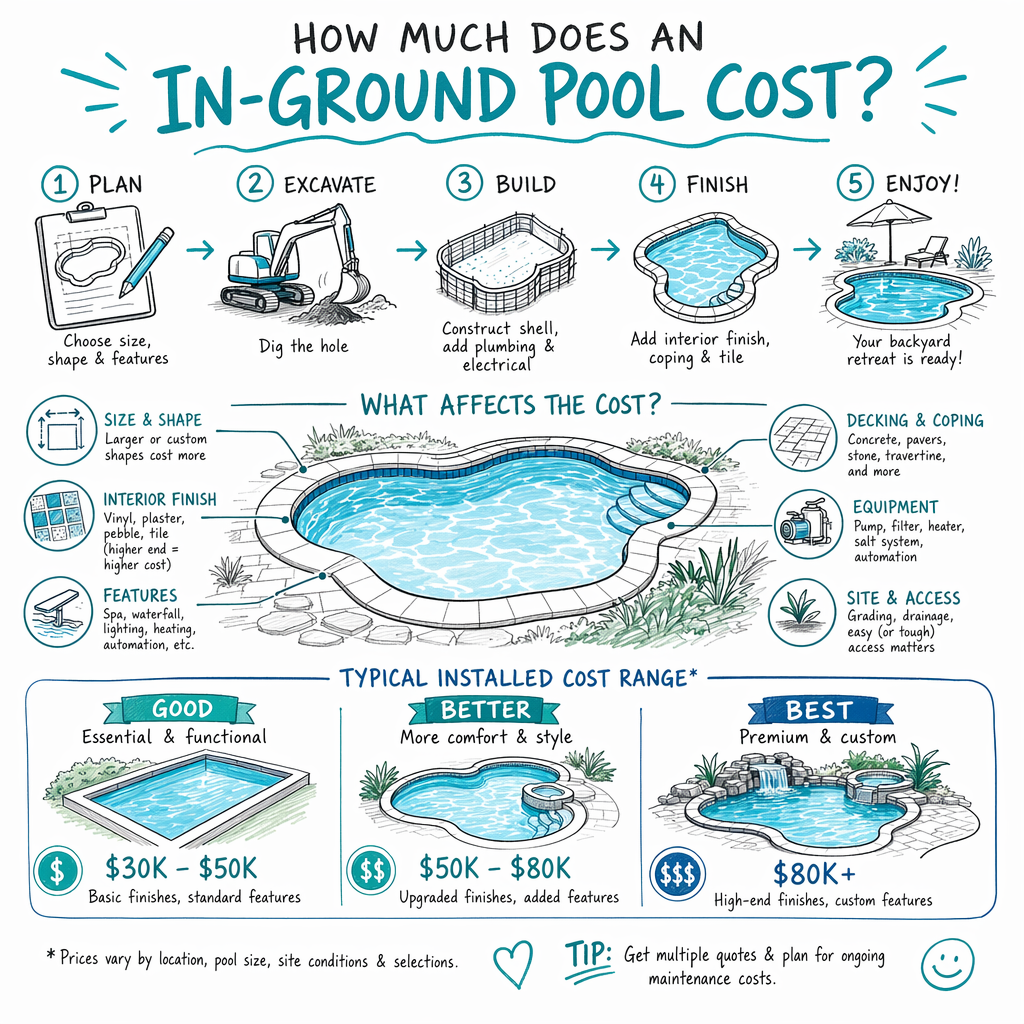
- Vinyl-liner pool: about $35,000 to $70,000
- Fiberglass pool: about $45,000 to $95,000
- Gunite/concrete pool: about $60,000 to $135,000
- Small plunge pool: often less than a full-size pool, but still commonly $25,000 to $60,000+ depending on materials, access, and features
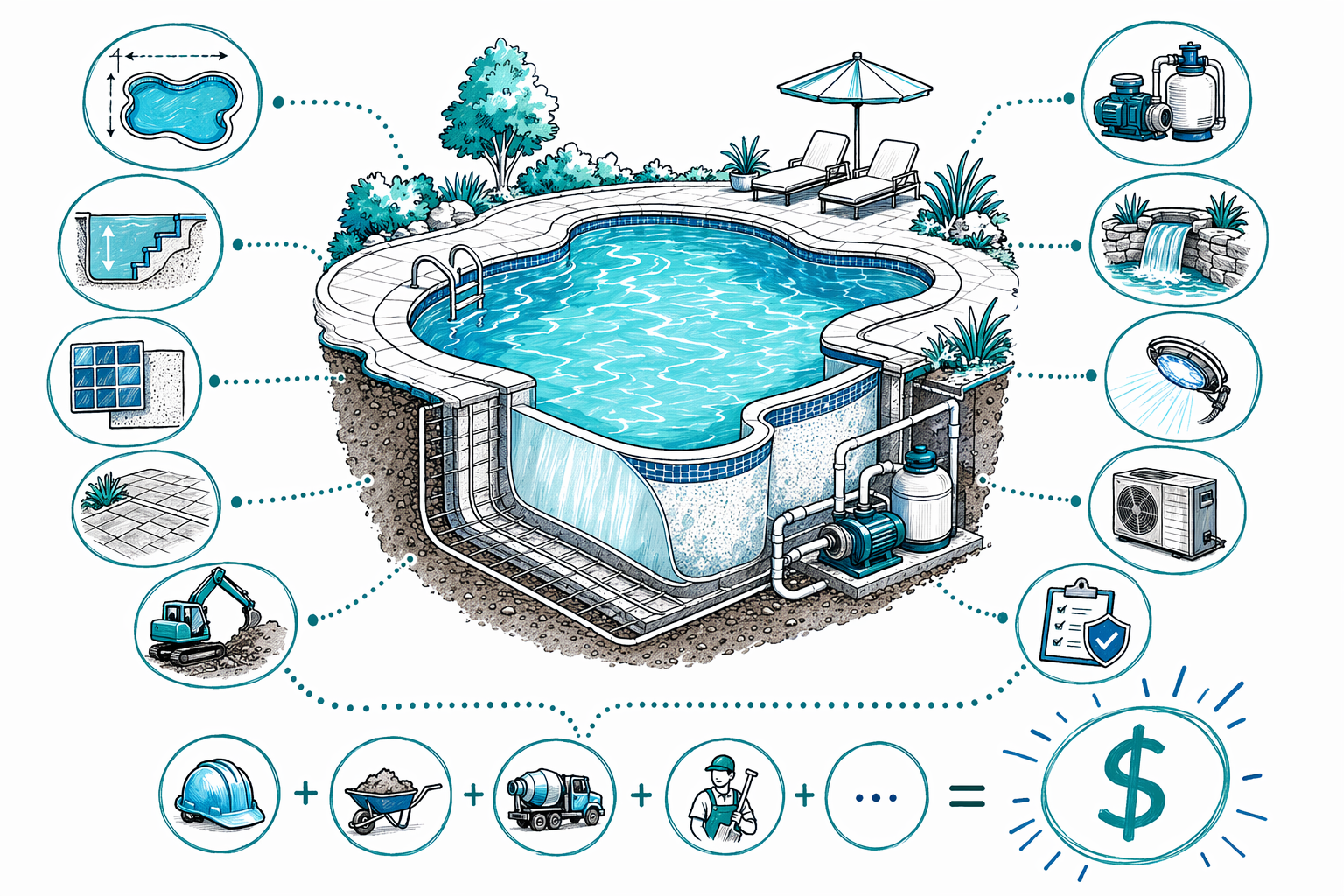
Why such a wide range? Because the shell is only part of the job. Excavation, hauling dirt, plumbing, electrical, decking, fencing, drainage, permits, and finish choices can move the total a lot.
If you are still deciding what kind of pool fits your budget, see this pool type comparison.
What changes the price the most
Some homeowners focus only on pool length and depth. That matters, but it is not the whole story. These are the biggest cost drivers.
1. Pool type
Each pool type has different material, labor, and maintenance tradeoffs.
- Gunite/concrete usually costs the most up front, but gives the most shape freedom and custom finish options. Learn more about gunite/concrete pools.
- Fiberglass is factory-made, so installation can be faster when the site works well. Shapes and sizes are more limited than concrete. Learn more about fiberglass pools.
- Vinyl-liner is often the lowest up-front option, but the liner will need replacement over time.
2. Size and depth
A larger, deeper pool usually means more digging, more material, more water, and more decking. A simple rectangle often costs less than a custom freeform shape.
3. Your yard and site access
This is where many budgets get surprised.
- Tight gate access may require smaller equipment or more hand work
- Sloped yards may need retaining work or extra grading
- Rocky soil can raise excavation costs
- High groundwater can require special handling
- Longer runs for gas, electric, or plumbing add labor and materials
4. Finish level and extras
A basic pool is one number. A pool with upgrades is another.
Common add-ons that raise cost:
- Spa or hot tub spillover
- Heater or chiller
- Salt system or upgraded automation
- Premium tile or interior finish
- Water features, fire features, and lighting upgrades
- Larger deck area, pavers, or upgraded concrete
- Screen enclosure in some markets
5. Local labor, permit, and inspection costs
The same pool can cost very different amounts in different parts of the US. Local code requirements, permit fees, builder demand, and material pricing all matter.
You also need to follow local permit and inspection rules. Read pool permits explained before you sign anything.
What is usually included, and what people forget to budget for
When a homeowner hears a low number, the first question should be: what is actually included? One builder may show a lower starting price but leave out items another builder includes.
Items often included in a base project:
- Pool shell and basic interior finish
- Standard filtration equipment
- Basic plumbing and electrical for the pool system
- A limited amount of decking
- Standard start-up
Items that are often not fully included in a low starting number:
- Permit fees and engineering requirements
- Fence or gate upgrades required by local law
- Pool alarms or other safety features
- Landscaping repair after construction
- Sod, irrigation repair, or drainage fixes
- Upgraded coping, tile, or decking
- Heater, automation, salt system, lighting upgrades
- Haul-off for difficult excavation conditions
- Utility changes or panel upgrades
A smart way to compare builders is to ask for a written scope that breaks out:
- Pool dimensions and depth
- Shell type and interior finish
- Equipment brand and model
- Deck square footage and material
- What permits and inspections are included
- What cleanup, grading, and restoration are included
- Payment schedule and change-order terms
Get all of that in writing before any deposit. And only hire builders who are licensed, insured, and bonded where required. You should verify the license, insurance, and bond yourself. This is one of the best ways to avoid expensive surprises.
For a simple checklist, read how to vet a pool builder.
Typical budget examples homeowners can use
These are illustrative examples, not bids. They show how scope changes price.
Example 1: basic vinyl-liner family pool
A homeowner wants a simple in-ground pool with standard equipment and a modest deck area. Typical total might land around $35,000 to $55,000 in some markets, but site issues or code requirements can push it higher.
Example 2: mid-range fiberglass pool
A homeowner chooses a fiberglass shell, basic waterline tile look, standard filtration, a heater, and moderate decking. A common range might be $55,000 to $85,000 depending on shell size, crane access, and local labor costs.
Example 3: custom gunite/concrete pool
A homeowner wants a freeform shape, tanning ledge, upgraded finish, more deck space, and better lighting. A realistic range might be $80,000 to $135,000+. Custom features can raise the total quickly.
Example 4: small plunge pool
A small pool can save money, but not always as much as people expect. You still have excavation, equipment, permits, and code requirements. Many plunge pool projects still land around $25,000 to $60,000+.
The lesson is simple: smaller does not mean cheap, and a low advertised number may leave out real project costs.
What to do next so you do not overpay
Here is the practical path most homeowners should take.
1. Set a real budget range
Decide what feels comfortable before you shop. Include room for fencing, permits, and a few likely upgrades.
2. Choose the pool type first
That one decision shapes the budget more than almost anything else. If you need help with costs, start at pool cost guides.
3. Talk to more than one builder
Compare at least 2 to 4 licensed builders if possible. Ask each one for the same basic scope so you can compare fairly.
4. Verify credentials yourself
Confirm the builder is licensed, insured, and bonded where required. Do not rely only on a sales promise.
5. Get scope and price in writing
Make sure the written proposal shows what is included, what is excluded, and how change orders work.
6. Check safety and code requirements
Pool barriers, gates, and alarms may be required. Review pool safety barriers and follow your local rules.
7. Keep control of the decision
You compare quotes. You choose who to hire. You hold the final payment until the agreed work is done.
If you want a faster way to start, DeepEnd Match can help you get matched with licensed, insured, bonded pool builders in your area. Our matching service is free to homeowners. Builders pay a flat fee to participate. You are not required to hire anyone.
Most in-ground pools cost about $35,000 to $135,000+ depending on pool type, size, yard conditions, and upgrades. Get 2 to 4 written estimates, verify each builder is licensed, insured, and bonded, and make sure permits, safety items, and exclusions are clearly listed before you pay a deposit.
Common questions
What is the cheapest type of in-ground pool?
In many markets, a vinyl-liner pool has the lowest up-front cost, often around $35,000 to $70,000 as a typical range. But the cheapest starting price is not always the cheapest long-term choice. Liner replacement, maintenance needs, local labor, and site conditions all matter.
Is a small plunge pool much cheaper than a full-size pool?
Sometimes, but not always by as much as people expect. A plunge pool uses less material, but you still pay for excavation, equipment, plumbing, electrical, permits, and safety requirements. Many projects still fall around $25,000 to $60,000+ depending on the shell type, access, and features.
Why do pool estimates from different builders vary so much?
Because they may not be pricing the same scope. One builder may include permits, more decking, better equipment, cleanup, or site work, while another leaves those out. Ask for a written breakdown of dimensions, finish, equipment, decking, permits, and exclusions so you can compare apples to apples.
Should I get financing before I talk to builders?
You do not need to share sensitive financial records with a matching service just to explore your project. Start by learning realistic cost ranges and getting written proposals. If you later look at financing, read the terms carefully and make sure the builder scope and payment schedule are clear before any deposit.