The short answer
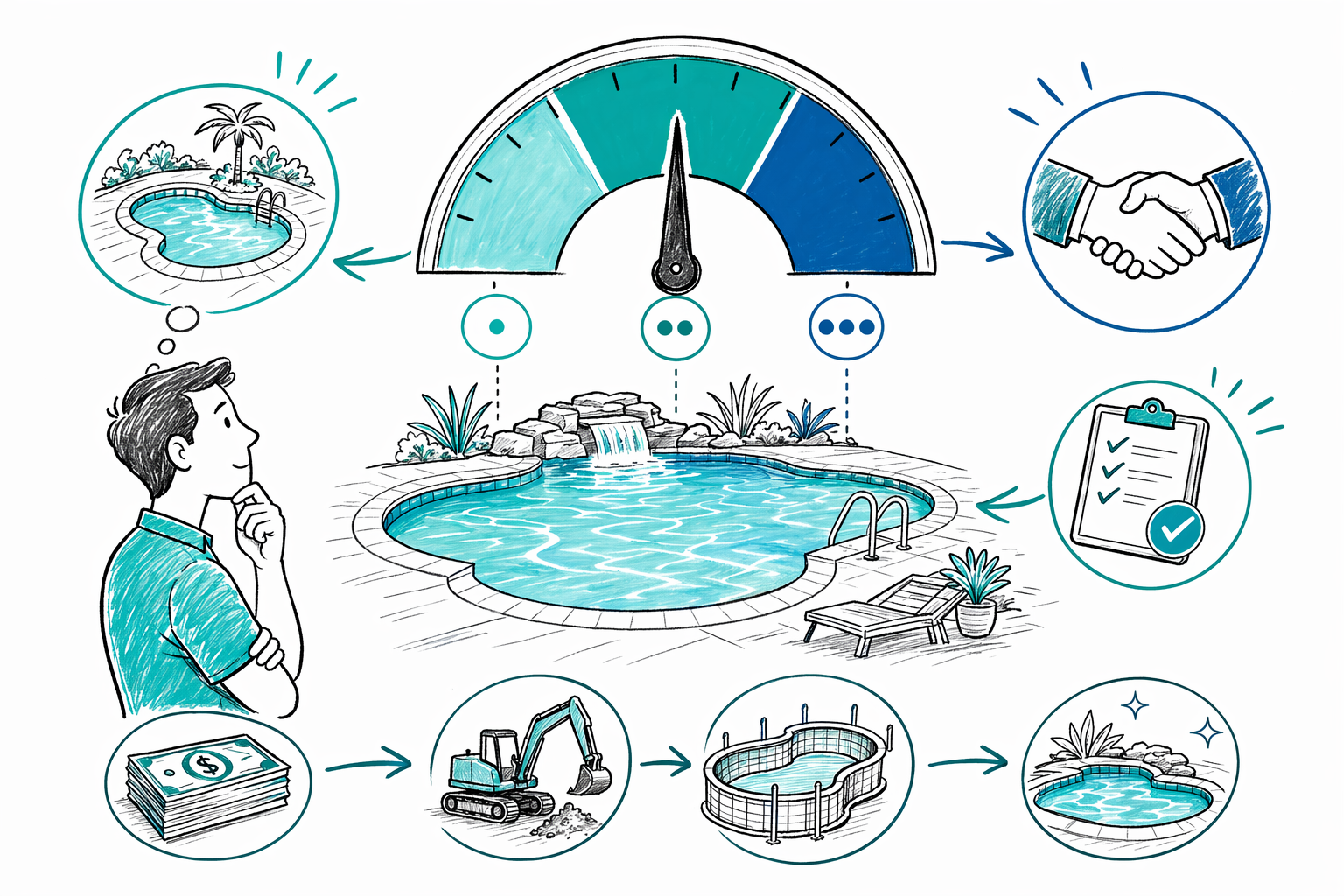
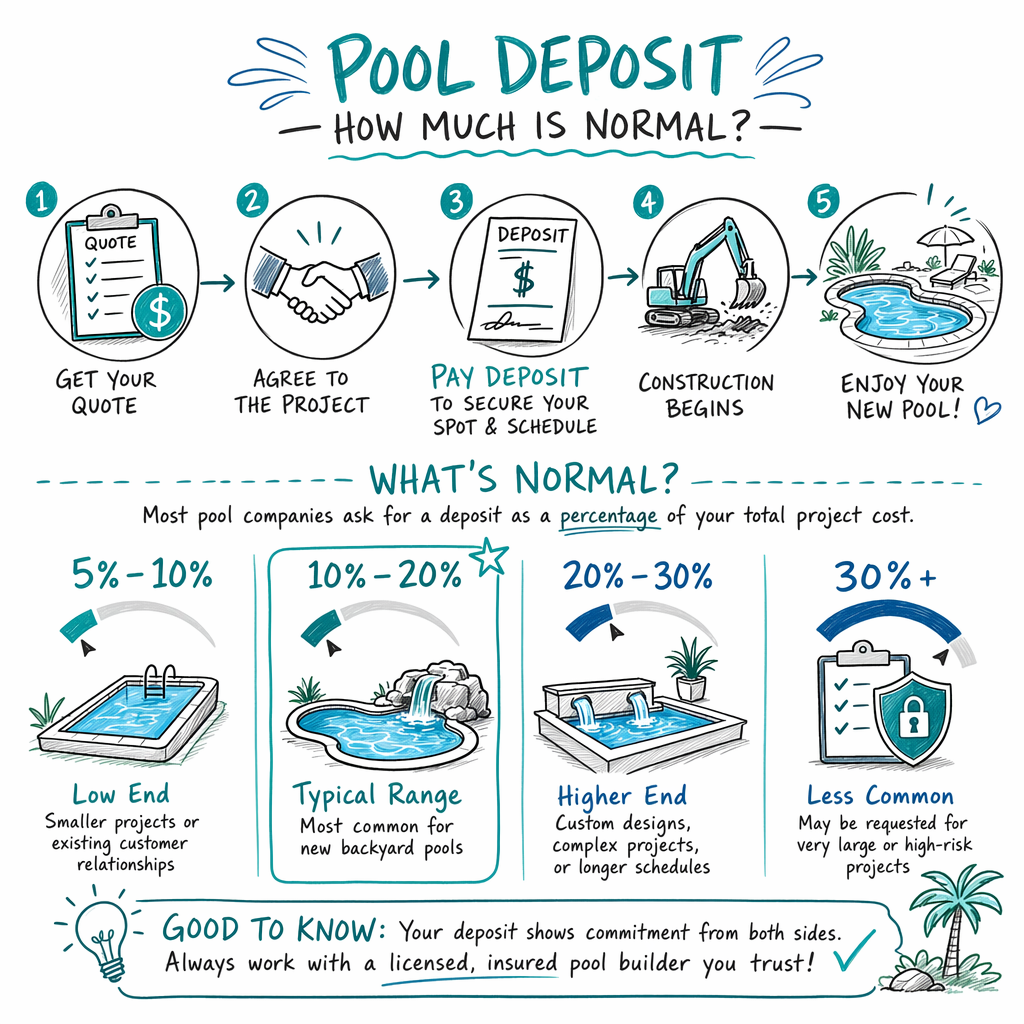
For a new in-ground pool, a normal deposit is often around 5% to 15% of the project price, or a modest fixed amount to hold your place and start pre-construction work. In some areas, builders may ask for more. In others, state law limits how much they can collect up front. That is why you should always check your state rules and get every payment term in writing.
What matters most is not just the number. It is what the deposit pays for and what happens next.
A reasonable deposit may cover things like:
- initial scheduling
- basic design or layout work
- permit preparation or administrative setup
- ordering standard materials after the contract is signed
A risky deposit is one that is:
- very large upfront, such as 20% to 40% or more, before real work starts
- requested before you have a full written scope
- requested in cash only
- tied to vague promises like "to lock in pricing" with no details
- not connected to a clear payment schedule
Pool prices vary a lot by type, size, site, finishes, and area. As a typical starting point, many homeowners see ranges like $60,000-$135,000 for gunite/concrete pools, $45,000-$95,000 for fiberglass pools, and $35,000-$70,000 for vinyl-liner pools. Smaller or plunge pools can cost less. Those are estimates, not quotes. The real price depends on your project.
What a fair pool payment schedule usually looks like
The safest setup is usually small upfront, then progress payments as work is completed. You should be able to look at the schedule and understand exactly what you are paying for at each stage.
A common structure looks something like this:
1. Deposit at signing for scheduling and pre-construction.
2. Payment after permits are in process or approved, depending on local practice and the contract.
3. Payment after excavation and structural work starts.
4. Payment after shell installation or gunite/steel phase is complete.
5. Payment after equipment, plumbing, electrical, decking, or finish stages are done.
6. Final payment only after punch-list items are handled and you are satisfied.
This does not mean every builder uses the same milestones. It does mean the payment plan should match real progress, not just calendar dates.
Ask these direct questions before you pay anything:
- What exactly does the deposit cover?
- Is any part of it refundable? If yes, under what conditions?
- When do materials get ordered?
- What permits are required in my area?
- What milestones trigger the next payments?
- What items are excluded from the price?
- What happens if weather, inspections, or access issues delay the job?
You can learn more about local approval steps in Pool Permits Explained. And before signing with anyone, use this checklist to vet a pool builder.
Most important: hire a licensed, insured, and bonded builder where required, and verify the license, insurance, and bond yourself. Get the price, scope, materials, payment schedule, and change-order terms in writing before any deposit.
Red flags that make a deposit unsafe
Some deposit requests are not just expensive. They are dangerous.
Be careful if you hear any of these:
- "We need 30% today or the price goes away."
- "Do not worry about the contract. We will fill that in later."
- "Permits are not a big deal. We can start first."
- "Pay cash and we will save you money."
- "The deposit is nonrefundable no matter what."
- "We are fully covered" but they cannot show current proof of license, insurance, and bond.
A few honest truths:
Materials do cost money. Some custom items may require money before they are ordered. That can be reasonable if the contract clearly names the item, cost, and lead time.
Permits and inspections can slow the timeline. That is normal. Paying a huge deposit does not make the city move faster.
Low-price bids often use deposit money to fund other jobs. That is one way projects stall. If a builder needs a very large upfront payment to stay afloat, that is a risk to you.
Final payment is your leverage. Do not give it up too early. Hold the final payment until the agreed work is substantially complete, start-up is done if included, and unresolved items are listed in writing.
If you are still comparing pool types, see our pool type comparison guide. Different pool types can change the schedule, material timing, and payment structure.
How to protect yourself before you hand over a deposit
Use this simple process.
1. Compare at least 2 or 3 written proposals.
Do not compare only the total price. Compare scope, equipment brands, finish allowances, deck square footage, fencing responsibility, cleanup, and timeline.
2. Verify the builder yourself.
Check the active license with your state or local licensing board. Ask for current insurance and bond information. Read the documents. Do not rely on a business card or truck wrap.
3. Read the contract slowly.
Look for start conditions, permit responsibility, payment milestones, cancellation terms, change orders, allowances, exclusions, warranty language, and who handles damage to utilities, irrigation, or access areas if that comes up.
4. Pay in a traceable way.
Use a method that creates a clear record. Avoid large cash deposits. Keep copies of the signed contract, receipts, and any change orders.
5. Match payments to completed work.
If a builder asks for the next draw early, ask what milestone has been completed and document it.
6. Know your safety obligations.
Pool projects often trigger fence, gate, alarm, and barrier rules. Follow local law and ask what is required in your area. Our pool safety barriers guide gives a plain-language overview.
7. Do not rush because of sales pressure.
A real professional can explain the deposit clearly, in writing, and without drama.
If you want help finding companies to compare, get matched with licensed, insured, bonded pool builders. DeepEnd Match is free for homeowners. We are a matching service, not a builder. You compare quotes, choose who to hire, and hold the final payment.
What to do next
If a builder has asked for a deposit and you are not sure if it is normal, do these three things today:
- Ask for a line-by-line written scope and payment schedule tied to milestones.
- Verify license, insurance, and bond yourself before paying anything.
- Get at least one or two more estimates so you can see whether the deposit and total price are in the normal range for your area.
A fair deposit should feel explainable. It should fit the paperwork. It should match the work. And it should leave you with enough control that the builder stays motivated to finish the job the right way.
If the deposit is high, vague, rushed, or cash-only, step back. There are other builders.
And remember: pool costs are always estimates until you have written proposals. The real price depends on pool type, size, site conditions, finishes, and where you live. You can start with our pool cost guide to understand realistic ranges before you sign anything.
A normal pool deposit is usually modest, clearly explained, and backed by a written contract. Do not pay a big upfront amount until you verify the builder's license, insurance, and bond, understand the scope, and compare a few written estimates.
Common questions
Is a 10% deposit normal for a pool?
Often, yes. Around 5% to 15% is a common range for many in-ground pool projects, though local law and builder practices vary. The key is that the deposit should be tied to clear pre-construction work and a written contract. Always verify the builder's license, insurance, and bond yourself, and check your state rules.
Should I ever pay 50% upfront for a pool?
That is usually a major red flag for a new project before substantial work starts. A very large upfront payment can put too much risk on the homeowner. There are exceptions for unusual custom materials or special order items, but those should be specifically listed in writing. In most cases, a safer setup is a smaller deposit followed by progress payments for completed work.
Is a pool deposit refundable?
Sometimes, but only if the contract says so. Some deposits are partly refundable before permits, design work, or material orders begin. Others may become nonrefundable after certain steps. Do not assume. Read the cancellation and refund terms closely before paying, and get any promises in writing.
What is the safest way to pay a pool deposit?
Use a traceable payment method and keep a receipt, signed contract, and any related documents. Avoid large cash payments. Before paying, make sure the contract shows the builder's full business details, scope of work, payment schedule, permit responsibility, and change-order terms. Also verify the builder is licensed, insured, and bonded where required.