Key points most homeowners miss
A lot of people focus on the build price and forget the cost of ownership. That is where budgets get tight later.
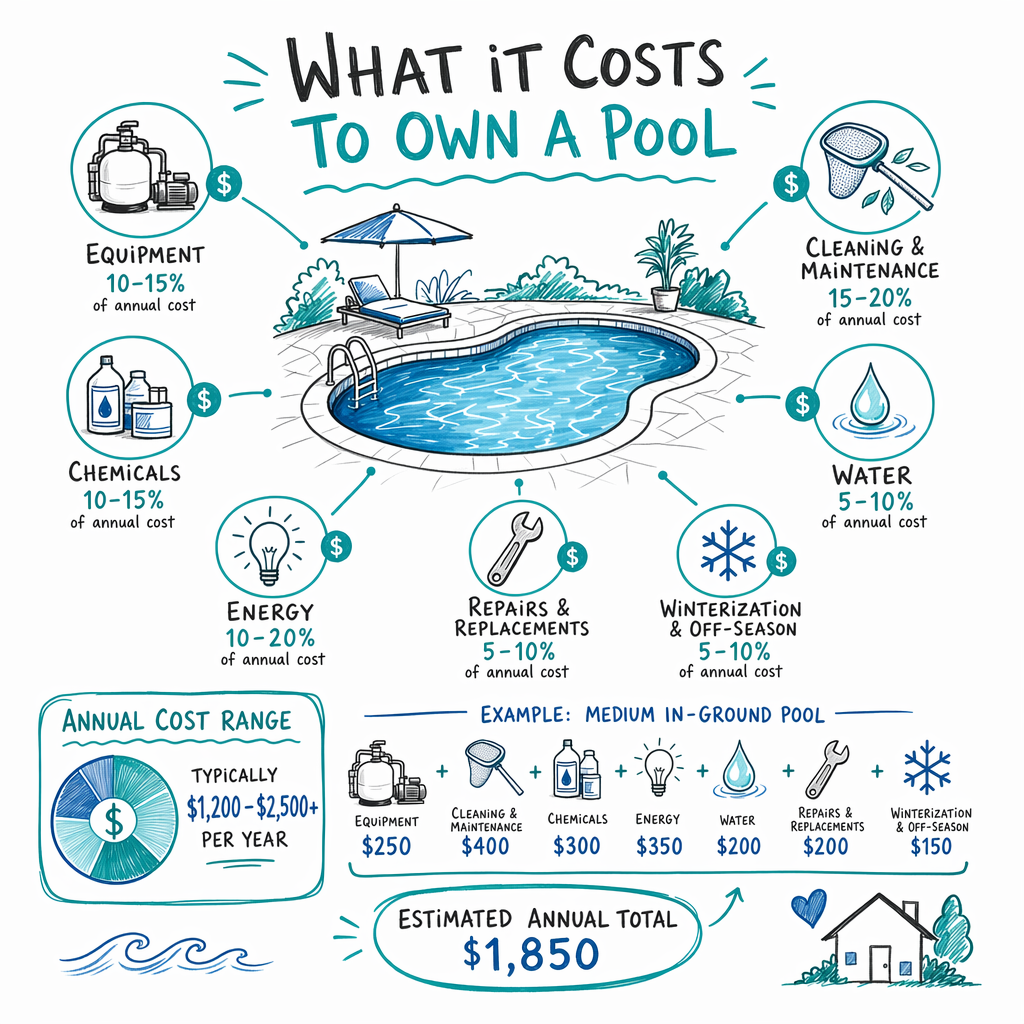
For a typical in-ground pool in the US, annual ownership costs often land around $3,000 to $10,000+ per year. Some pools cost less. Some cost much more. The real number depends on your pool type, pool size, equipment, climate, utility rates, how often you heat it, whether you hire weekly service, and how much repair work comes up.
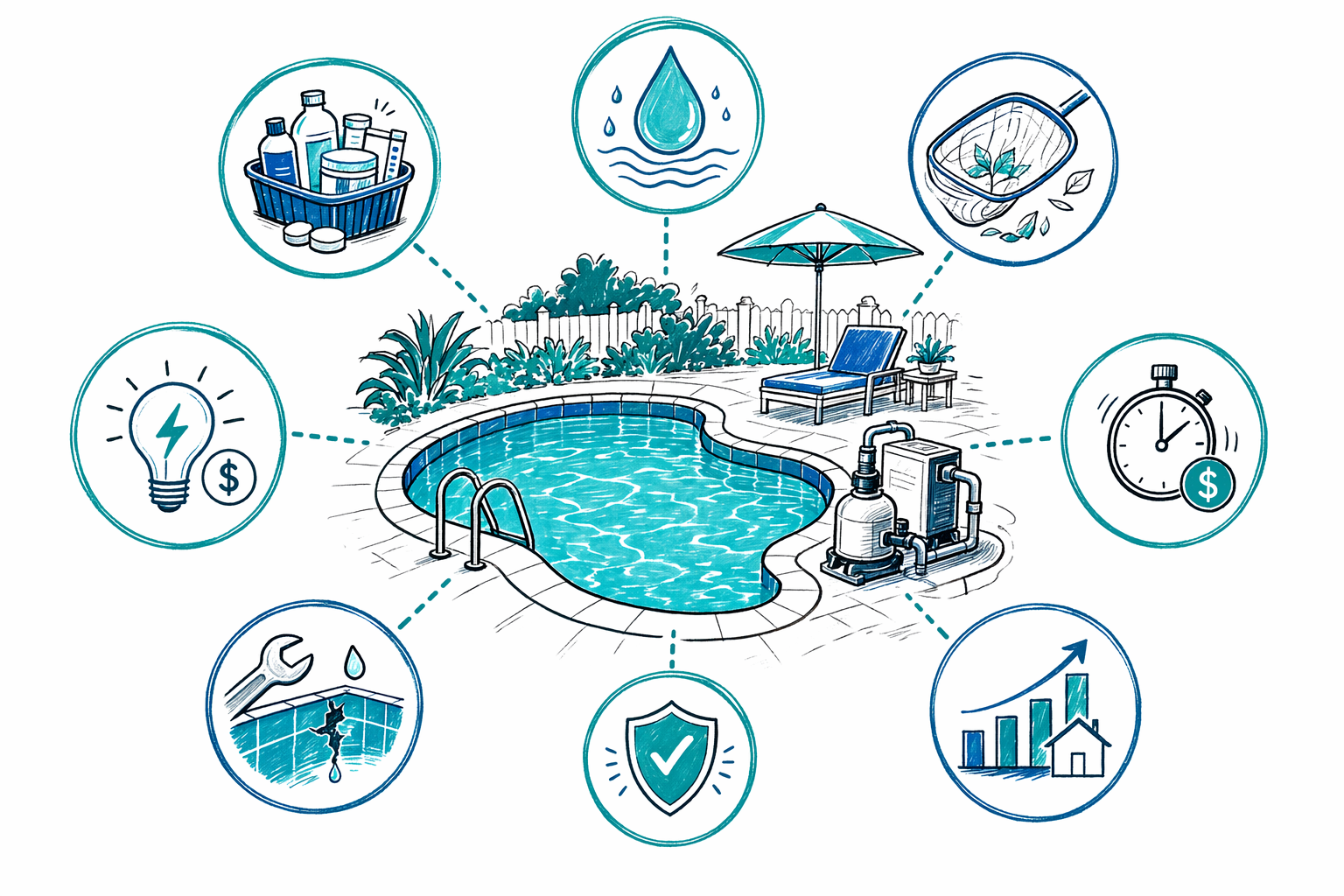
Common ownership costs include:
- Electricity for the pump, lights, automation, and sometimes a heater
- Water for filling, topping off, splash-out, evaporation, and backwashing
- Chemicals for sanitation and water balance
- Cleaning and service if you do not handle it yourself
- Repairs and replacement parts like pumps, filters, salt cells, liners, lights, and covers
- Insurance impact if your carrier changes your premium or coverage requirements
- Safety items like fencing, gates, alarms, drain covers, or code updates
- Seasonal opening and closing in colder states
If you are still deciding what kind of pool to build, compare long-term upkeep along with build price. See pool type comparison for a practical side-by-side look.
What you may pay each month and each year
Here are typical ranges, not quotes or guarantees.
1. Electricity: $80 to $300+ per month in season
A variable-speed pump usually costs less to run than older single-speed equipment. Add more if you run a heater, water features, or long pump schedules.
2. Water: $10 to $100+ per month on average
This depends on your local water rate, weather, leaks, and how much water your pool loses to evaporation or backwashing.
3. Chemicals: $300 to $1,200+ per year
DIY owners may keep this lower. Salt systems still need chemicals and periodic cell replacement.
4. Professional service: $100 to $300+ per visit or $1,200 to $3,600+ per season/year
Weekly pool service can be worth it if you do not have time, but it adds up fast.
5. Repairs and part replacement: $500 to $3,000+ in a typical year, sometimes more
Some years are light. Some years you replace a pump, heater board, salt cell, cleaner, or cracked plumbing fitting.
6. Opening and closing: $300 to $1,000+ per year in seasonal markets
In warmer states, this may not apply the same way.
7. Insurance and safety compliance: varies a lot
Some homeowners pay little extra. Others need a compliant fence, self-latching gate, or alarm before coverage is approved.
Over time, some pool types also bring bigger maintenance events:
- Gunite/concrete pools may need resurfacing over time. Learn more about gunite/concrete pools.
- Fiberglass pools can be efficient to maintain, but repairs and finish issues still happen. See fiberglass pools.
- Vinyl-liner pools may need liner replacement after years of use. Read about vinyl-liner pools.
A simple way to budget is this: if your build budget is already stretched, your ownership budget may feel tight too. Leave room for the first year after construction, when you may still buy tools, covers, extra safety items, and small add-ons you did not think about.
The costs that surprise people after the pool is built
The expensive part is not always the pump bill. It is often the stuff people did not plan for.
Heating is a big one. If you want warm water for a long swim season, fuel and power use can rise quickly. A pool that is comfortable in April, October, or at night may cost a lot more to run than a pool used only in hot weather.
Repairs do not happen on a nice schedule. Pool ownership has "quiet years" and then one year with a heater problem, a leak search, and a cleaner replacement.
Surface and material differences matter. A pool with more tile, coping detail, water features, automation, and lighting usually costs more to maintain and repair than a simpler pool.
Trees and yard conditions matter. More leaves mean more cleaning, more filter work, and sometimes more chemistry problems.
Local code changes or insurance requirements can cost money. If your yard needs a fence, self-closing gate, alarm, or other barrier update, that is part of real ownership cost. Follow local permit rules and pool-safety laws. Our pool safety barriers guide is a good starting point.
Small leaks become big bills. If your water bill rises or you keep adding water, do not ignore it. Water loss can mean higher utility bills and damage around the pool area.
A good rule: build a repair reserve from day one. Even $1,000 to $2,500 set aside gives you breathing room when equipment fails.
What to do before you build so ownership costs stay manageable
You do not need to guess. You need to ask better questions before you hire anyone.
- Ask each builder for a written scope that lists equipment brands, model numbers, pump type, filter type, sanitation system, heater size, automation, lighting, and what startup is included.
- Ask, "What does this pool typically cost to run each month in this area?" and listen for a realistic range, not a vague promise.
- Ask which items are owner maintenance and which usually need a service company.
- Ask about warranty limits, wear items, and expected replacement timelines.
- Ask what safety items are required by your city or county and by your homeowner's insurer.
- Ask what permit steps apply in your area. Permit rules vary, so review pool permits explained.
Then protect yourself the smart way:
- Hire only licensed, insured, and bonded builders.
- Verify the license, insurance, and bond yourself. Do not just trust a logo on a website.
- Get price and scope in writing before any deposit.
- Compare at least two or three builders.
- Hold final payment until the agreed work is complete.
DeepEnd Match is a free matching service for homeowners. We help you compare licensed, insured, bonded pool builders, but you compare quotes, you choose who to hire, and you control the final payment. If you want help lining up options, you can get matched.
Common mistakes that make pool ownership cost more
These are the mistakes that keep showing up:
- Buying on lowest build price only. Cheap equipment or a weak scope can cost more later.
- Not asking about utility use. A heater, oversized pump schedule, or old equipment can push monthly bills up.
- Skipping safety budget. Fence work, gate hardware, alarms, and code items are not optional in many places.
- Assuming DIY care is easy. Some owners do great. Others spend more fixing water problems after bad chemical balance.
- Ignoring warranties and exclusions. Not every repair is covered, and labor may not be included.
- Not planning for replacement cycles. Liners, salt cells, cleaners, lights, and pumps do not last forever.
- Failing to verify the builder. Always check license, insurance, and bond yourself.
- Paying too much upfront. Keep payments tied to written milestones and completed work.
The cheapest pool to own is often the one with a clear design, efficient equipment, a realistic service plan, and a builder who documents everything clearly. If you are still comparing build budgets, our costs page can help you line up typical install ranges first.
Next step: budget for the pool and the years after it
A smart pool budget has two parts:
Part 1: Build cost
Typical in-ground pool build ranges often start around:
- Gunite/concrete: $60,000 to $135,000
- Fiberglass: $45,000 to $95,000
- Vinyl-liner: $35,000 to $70,000
- Smaller or plunge pools: often less, depending on site and features
These are typical estimates only. Real price depends on pool type, size, site conditions, finishes, equipment, and your area.
Part 2: Ownership cost
Plan for yearly operations, service, repairs, insurance-related changes, and safety updates. Many homeowners are more comfortable when they budget both:
- a monthly operating amount for utilities and care
- a yearly repair reserve for the surprise stuff
If you want a shortcut, ask every builder for the same ownership questions and compare answers side by side. That makes it easier to spot who is being straight with you.
When you are ready, DeepEnd Match can help you connect with licensed, insured, bonded builders in your area at no cost to you. Builders pay a flat fee to participate. Homeowners can get matched and compare options without giving up control.
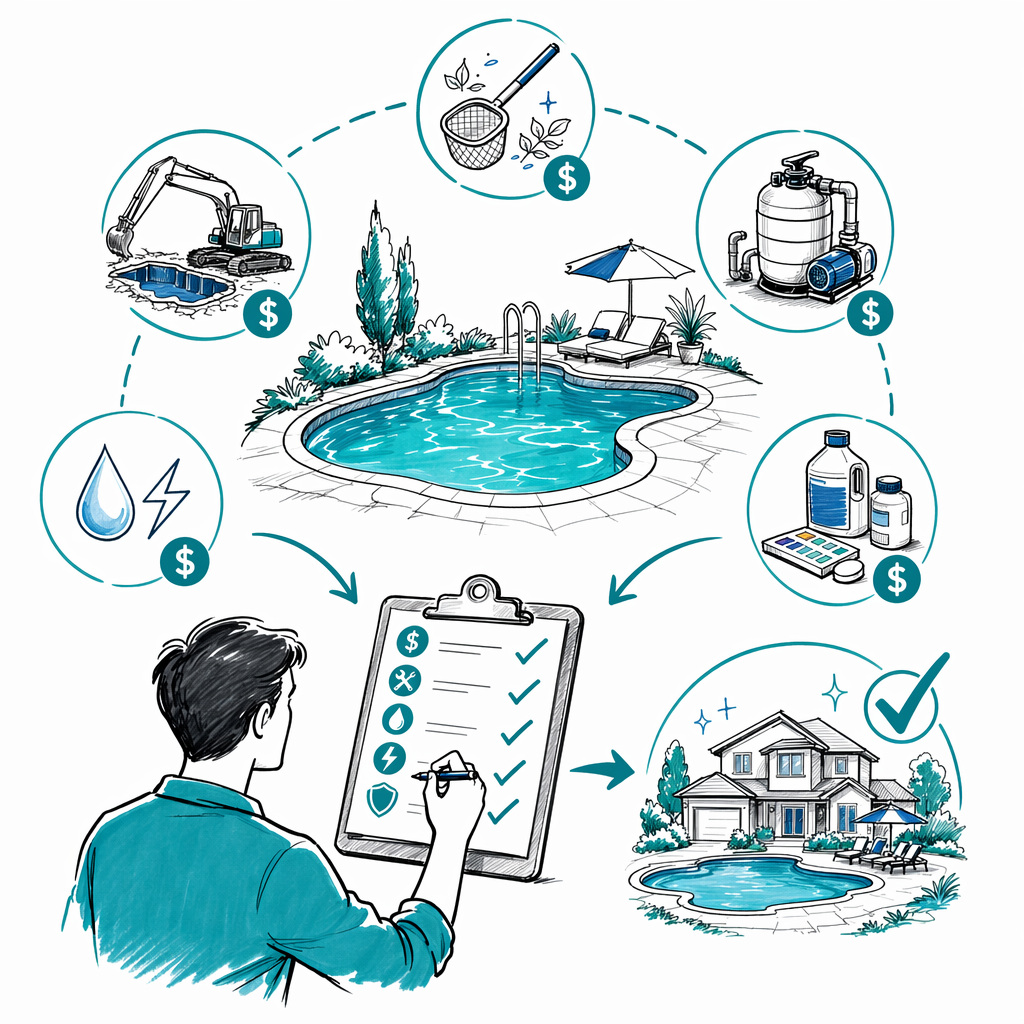
Do not budget only for the pool build. Also budget for monthly power, water, chemicals, service, safety items, and yearly repairs. Get everything in writing, hire licensed, insured, bonded builders, verify their credentials yourself, and compare a few options before you choose.
Common questions
How much does it cost per month to own a pool?
A typical in-ground pool may cost about $100 to $500+ per month, depending on electricity, water, chemicals, service, and heating. Some months are lower. Hot months, heavy use, or heater use can push costs higher. These are estimates only, and your real cost depends on pool type, size, equipment, site, and local utility rates.
Which pool type is usually cheapest to maintain?
It depends on the pool, equipment, and how you care for it. In many cases, fiberglass can be simpler to maintain day to day, while vinyl-liner pools may face liner replacement over time and gunite/concrete pools may need resurfacing later. The cheapest long-term option for you depends on size, finish, climate, features, and local service costs.
Will a pool raise my homeowners insurance?
It can. Some insurers increase premiums, require specific safety barriers, or ask for details about fencing, gates, covers, or alarms before they approve coverage. Ask your carrier before you build, and follow local pool-safety and fencing laws. Do not assume your current policy covers everything automatically.
Can I save money by maintaining the pool myself?
Yes, many owners save money with DIY cleaning and chemistry. But if water balance is wrong, costs can go up fast from algae, staining, scale, or equipment wear. If you do DIY, learn the basics well, test regularly, and keep records. If you hire help, still ask for written service details so you know what is included.