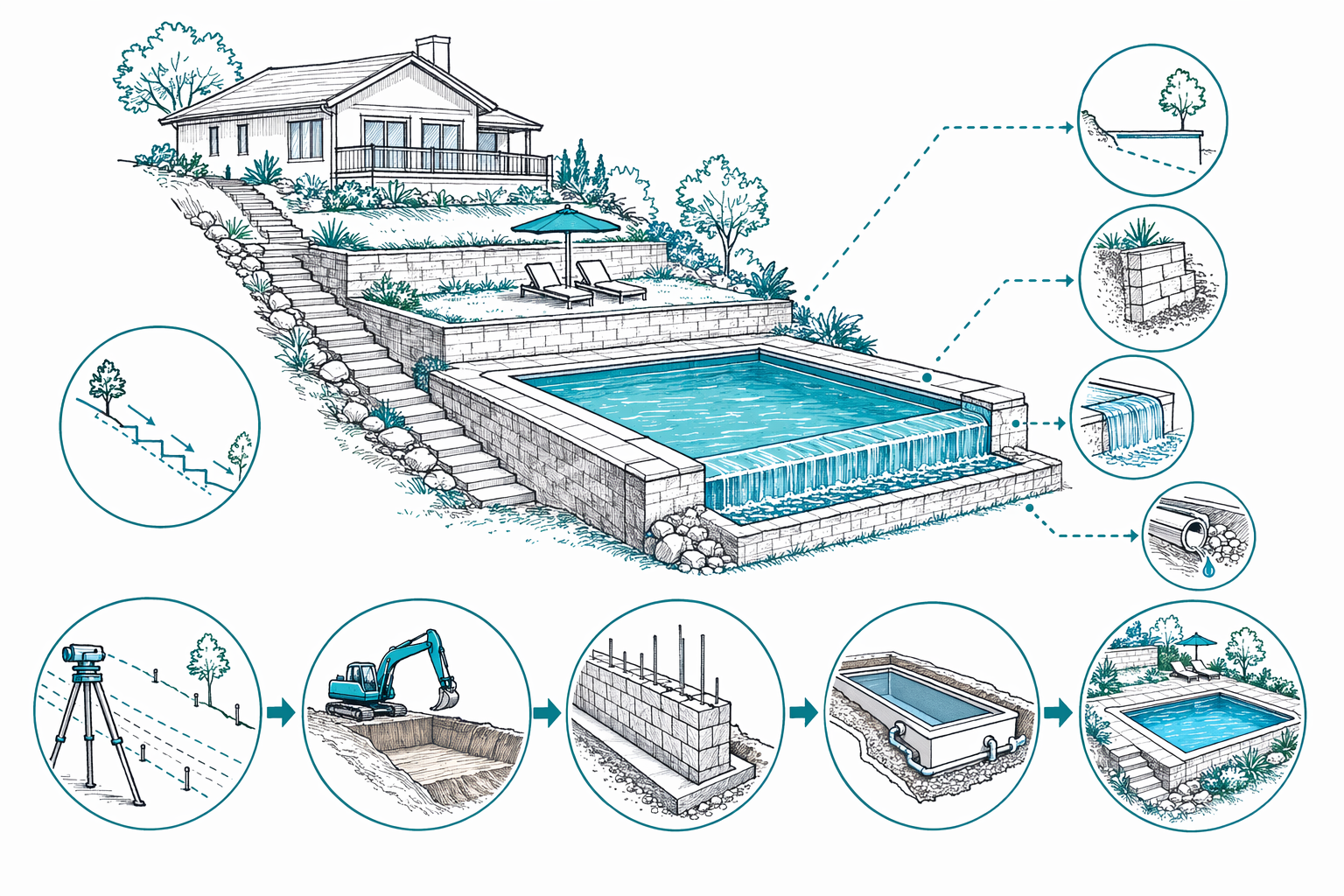
The short answer: a slope does not kill the project, but it changes the job
A sloped yard is common. Many good pools are built on hillsides, stepped lots, and backyards that are not level. The pool itself may still be very possible. The bigger question is how much site work is needed before the shell can go in.
On a flat lot, the builder may excavate, set the pool, and backfill with fewer complications. On a sloped lot, the crew may also need to cut into the hill, build up part of the yard, move soil off site, add drainage, improve access for machines, or install one or more retaining walls. That is where budgets can change fast.
Typical pool-only ranges still give you a starting point:
- Gunite/concrete pools: about $60,000-$135,000
- Fiberglass pools: about $45,000-$95,000
- Vinyl-liner pools: about $35,000-$70,000
- Smaller plunge pools: often less, depending on site and features
But on a sloped lot, the real price depends even more on pool type, size, site conditions, finishes, access, and your area. Retaining walls, drainage work, engineering, crane access, and export of excavated dirt can add a meaningful amount.
If you are still deciding what kind of pool fits your yard and budget, start with a simple comparison at pool type comparison.
What makes a sloped yard more expensive
Slope itself is not the only issue. Builders look at the whole site.
Here are the most common cost drivers:
- Cut and fill work. Part of the yard may need to be cut down, while another part is built up and compacted.
- Retaining walls. If soil needs support, a retaining wall may be required. In some yards, more than one wall is needed.
- Drainage. Water must move away from the pool, deck, and house. Poor drainage can damage the yard and shorten the life of the project.
- Engineering. Steeper or more complex sites often need engineering review and stamped plans based on local rules.
- Difficult access. If trucks or excavators cannot reach the backyard easily, labor and equipment costs go up. A crane may be needed, especially for some fiberglass pools.
- Soil conditions. Loose fill, expansive clay, rock, or unstable soil can change excavation and support needs.
- Spoil removal. Dirt dug out of the yard has to go somewhere. If it cannot stay on site, hauling and dump fees add up.
- Decking and stairs. A sloped yard often needs more concrete, more framing, extra steps, or multiple elevations around the pool.
- Utilities and setbacks. Easements, septic systems, gas lines, and property setbacks can limit where the pool can go.
This is why two backyards that look similar in photos can have very different budgets in real life.
One honest rule: the steeper and tighter the site, the less useful online price guesses become. You need detailed written scope from licensed, insured, bonded builders who have seen the property and understand local permit rules. Review permit basics here: pool permits explained.
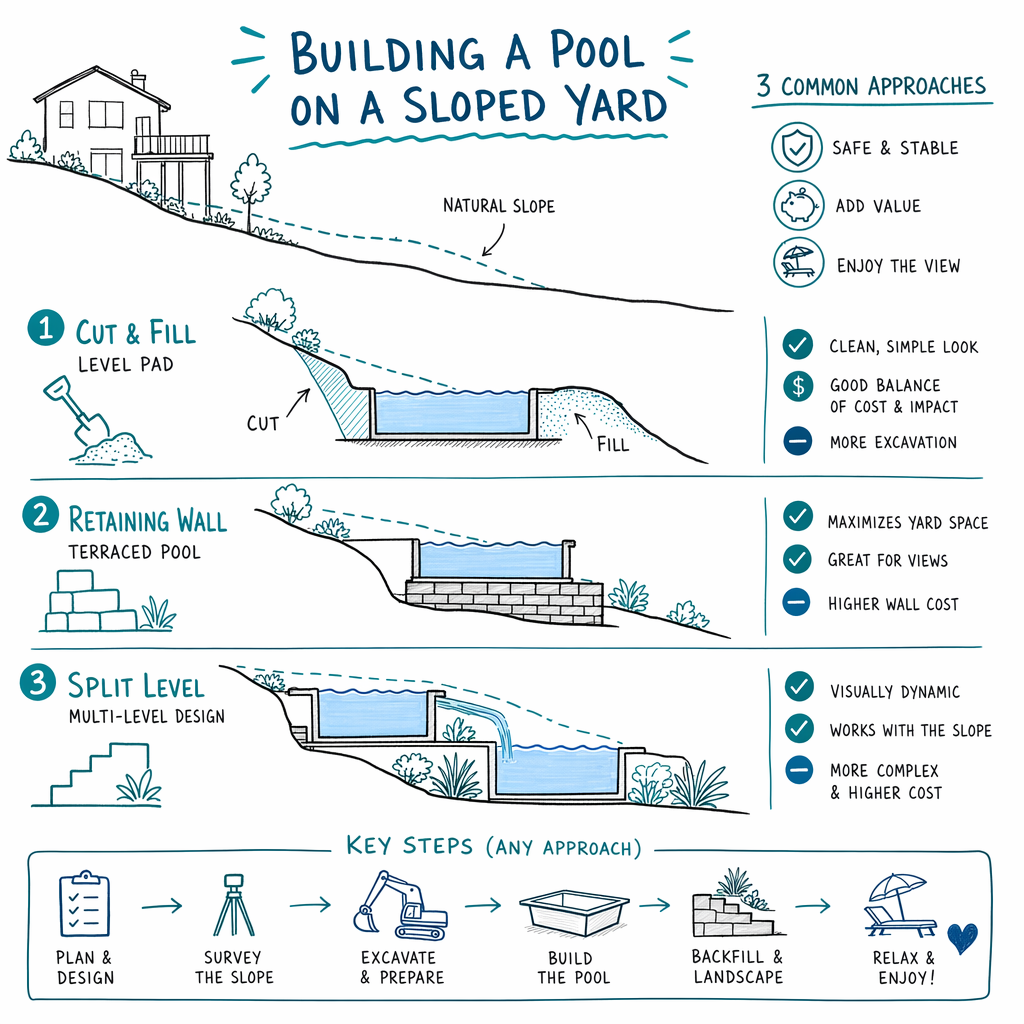
Design choices that can help on a hill
A smart layout can reduce headaches. It may not make the project cheap, but it can make it more buildable and easier to maintain.
1. Work with the slope, not against it. Sometimes placing the pool at a lower terrace or partially above grade is better than forcing the whole yard level.
2. Keep the shape simple. Simple rectangles and clean curves are often easier to build than complicated outlines on challenging terrain.
3. Consider a smaller footprint. A plunge pool or compact design may cut excavation, wall length, and deck area.
4. Think about pool type.
- Gunite/concrete pools offer the most shape flexibility, which can help on odd lots.
- Fiberglass can be faster to install, but shell delivery and crane access matter a lot.
- Vinyl-liner pools can cost less up front, but the site still has to be properly prepared.
5. Plan drainage early. Deck drains, swales, and yard grading should be part of the first conversation, not an afterthought.
6. Be realistic about views and privacy. An elevated pool area can look great, but guard requirements, fencing, and neighbor sight lines may affect the plan.
7. Leave room for safe access. Stairs, gates, service paths, and equipment pad placement matter more on uneven ground.
Homeowners sometimes spend too much trying to create a giant flat backyard before they even price the pool. In some cases, a better move is a smaller pool with a smart retaining plan and less deck.
Also remember: local pool-safety and barrier rules still apply, even on a slope. Check pool safety barriers before you compare layouts.
How to compare builders for a sloped-yard pool
This is where people get burned. One builder may show a low number that does not include key site work. Another may include more protection but look expensive at first glance.
Use this checklist when you compare written estimates:
- Ask whether the price includes grading, drainage, retaining walls, engineering, crane costs, hauling, and cleanup.
- Ask what happens if the crew finds rock, groundwater, buried debris, or unstable soil.
- Ask who is responsible for permits, inspections, and code-required safety barriers in your area.
- Ask for a clear line item for the pool shell, decking, equipment, and site work.
- Ask how access limits will affect the job. Can standard equipment reach the site?
- Ask how they protect the house, driveway, and neighboring property during excavation.
- Ask what is excluded. Low bids often hide exclusions.
Then protect yourself:
- Hire only licensed, insured, and bonded builders.
- Verify the license, insurance, and bond yourself.
- Get price and scope in writing before any deposit.
- Follow all local permits and fencing or barrier laws.
- Keep control of final payment until the agreed work is complete.
DeepEnd Match is a free matching service. We do not build pools or give engineering or legal advice. We help you get connected with builders so you compare quotes, you choose who to hire, and you hold the final payment. If you want help finding companies that handle difficult sites, start here: get matched.
What to do next if your yard slopes
You do not need a perfect plan before talking to builders. But you should do a little homework first.
- Take simple site photos. Include the house, fence lines, side-yard access, and the part of the yard where the pool may go.
- Measure what you can. Rough yard width, access gate width, and any obvious elevation change are useful.
- Think about your must-haves. Size, depth, spa, tanning ledge, deck space, and whether you care more about views or a large play area.
- Set a working budget range. Not a fixed number. A range. On sloped lots, surprises happen.
- Talk to more than one builder. Compare scope, not just price.
- Read the contract slowly. Make sure allowances, exclusions, and change-order terms are easy to understand.
If you are early in planning, it also helps to review typical pool costs so your expectations start in the right place.
A sloped yard can produce a beautiful pool area. But it rewards careful planning and honest bids. The right builder will talk plainly about drainage, retaining needs, access, permits, and what could change after excavation. That honesty is worth a lot.
A sloped yard can still work for a pool, but site work can change the price a lot. Get 2-3 written estimates from licensed, insured, bonded builders, verify their credentials yourself, and compare what is included for grading, drainage, walls, permits, and access before you pay any deposit.
Common questions
Can a pool be built on a steep hill?
Often yes, but it depends on the site. A steep hill may require more grading, retaining walls, drainage, engineering, and special equipment access. That can raise the cost and complexity. A licensed, insured, bonded builder should inspect the property, and you should verify those credentials yourself before signing anything.
Is a sloped yard better for gunite, fiberglass, or vinyl-liner?
There is no one best answer for every hill. Gunite can offer more shape flexibility for unusual layouts. Fiberglass can be efficient, but delivery path and crane access are major factors. Vinyl-liner can have a lower starting price, but the site still needs proper preparation. The real price depends on type, size, site, finishes, and area, so compare written scope from multiple builders.
How much extra does a slope add to pool cost?
There is no honest flat number. Some mild slopes add only modest site-work cost. Steeper or tighter lots can add much more because of walls, drainage, hauling, engineering, or access limits. Base pool ranges are often about $60,000-$135,000 for gunite, $45,000-$95,000 for fiberglass, and $35,000-$70,000 for vinyl-liner, but a sloped site can push the total higher depending on conditions.
Do I need permits and special drainage plans for a pool on a slope?
In many areas, yes. Local rules may require permits, inspections, fencing or other safety barriers, drainage measures, setbacks, and sometimes engineering review. Requirements vary by city and county. Follow local permit and pool-safety laws, and get the scope in writing before any deposit. Do not assume drainage is included unless it is clearly listed.