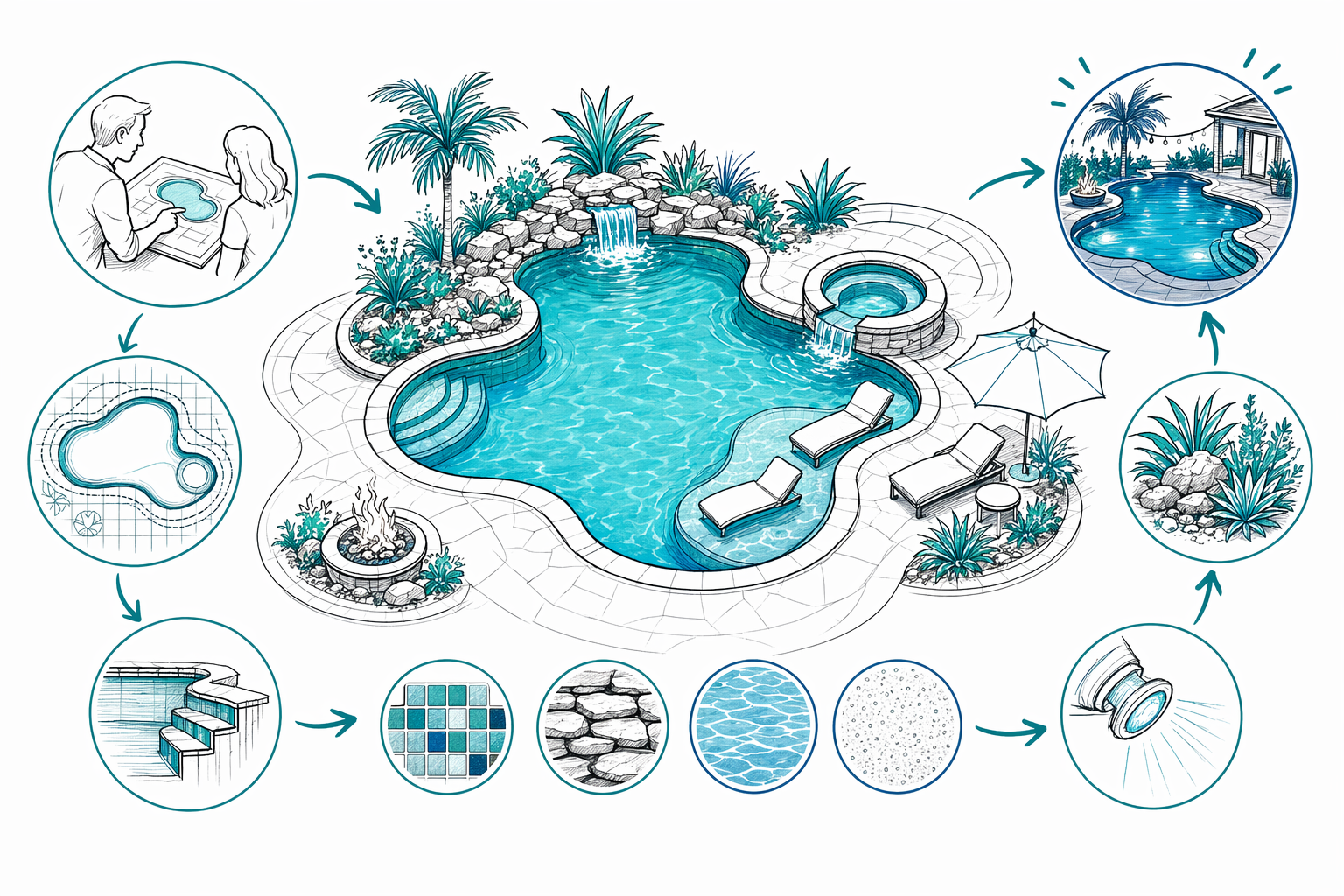
What “custom pool design” really means
Custom pool design means the pool is planned around your yard, your goals, and your local rules. It can be as simple as changing the shape and steps, or as detailed as adding a tanning ledge, spa, baja shelf, waterline tile, lighting, and outdoor living features.
Most homeowners are choosing between three main in-ground pool types:
- Gunite/concrete: most flexible for shape and features. Typical range: $60,000-$135,000+. Learn more at gunite and concrete pools.
- Fiberglass: factory-made shells with faster installation in many cases. Typical range: $45,000-$95,000+. See fiberglass pools.
- Vinyl-liner: usually lower starting cost, but liner replacement is part of long-term ownership. Typical range: $35,000-$70,000+. Read about vinyl-liner pools.
Small pools and plunge pools can cost less. Large pools, steep lots, retaining walls, premium finishes, difficult access, and extras can push the total much higher.
DeepEnd Match does not design or build pools. We are a free matching service that helps you connect with licensed, insured, and bonded pool builders so you can compare options and choose who to hire.
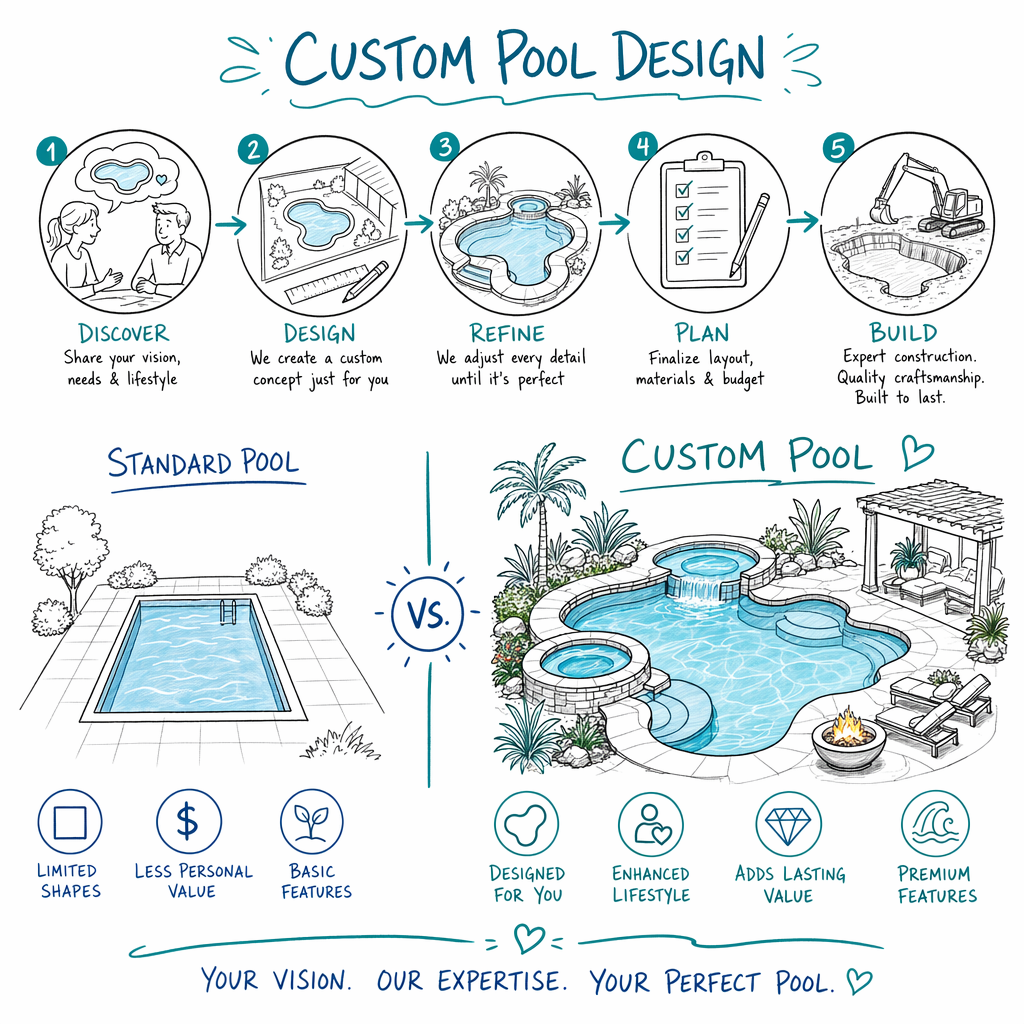
How the process usually works
A custom pool project usually follows a clear path. Knowing the steps helps you avoid surprises.
1. Set your priorities
Decide what matters most: swim space, low maintenance, shallow lounge area, attached spa, safety for kids, or a clean modern look.
2. Get matched with builders
With DeepEnd Match, you share basic project and contact details. Matching is free to homeowners. Participating builders pay a flat fee to be considered.
3. Site visit and discussion
Builders look at access, grading, drainage, utilities, soil conditions, setback rules, and where equipment may go.
4. Concept and scope
You review shape, size, depth, interior finish, coping, decking, lighting, and any add-ons.
5. Written proposal
Ask for a written scope with materials, allowances, exclusions, payment schedule, and estimated timeline.
6. Permits and approvals
Permit steps vary by city and county. Fencing, alarms, gates, drains, and other safety rules may apply. Read pool permits explained if you want a simple overview.
7. Construction and inspections
The exact sequence depends on the pool type and local inspection process.
8. Startup and handoff
Before final payment, make sure you understand equipment, cleaning, warranty terms, and what is still left to finish.
Your job is to compare bids, ask questions, and choose carefully. You choose who to hire. You approve the scope. You hold the final payment until the agreed work is done.
Typical cost ranges and what moves the price
For a custom in-ground pool in the US, realistic starting ranges often look like this:
- Gunite/concrete: $60,000-$135,000+
- Fiberglass: $45,000-$95,000+
- Vinyl-liner: $35,000-$70,000+
- Smaller plunge pools: sometimes less, depending on access, features, and finish level
These are typical estimates, not quotes or guarantees. The real price depends on pool type, size, site conditions, finishes, features, and your area.
Common cost drivers:
- Size and shape: bigger and deeper usually costs more
- Site access: tight yards can require special equipment or more labor
- Slope and soil: retaining walls, rock, drainage work, or poor soil can add a lot
- Finish level: plaster vs upgraded interior finishes, tile choices, coping materials, and deck square footage
- Features: spas, heaters, automation, salt systems, waterfalls, fire features, lights, covers, and ledges
- Code requirements: fencing, self-closing gates, alarms, and other local safety items
- Utility work: electrical runs, gas lines, and equipment pad setup
One smart move is to separate your wish list into must-have, nice-to-have, and add later. That helps you protect the core project if bids come in above your comfort zone.
If you want a broader pricing breakdown by pool type and feature, see pool cost guides.
How long custom pool design and build usually takes
A custom pool is not a one-week project. Even when the pool itself goes in smoothly, design decisions, permits, weather, inspections, and material lead times can slow things down.
A rough timeline many homeowners see:
- Builder research and quote comparison: 1-3 weeks
- Design revisions and selections: 1-4 weeks
- Permits and approvals: a few weeks to a few months, depending on local rules
- Construction: often 6-12+ weeks after permits, sometimes faster for some fiberglass installs, sometimes much longer for complex gunite projects or bad weather
Reasons a timeline can stretch:
- Permit backlog
- Rain or freezing weather
- Change orders after work starts
- Material delays for tile, coping, equipment, or decking
- Inspection scheduling
- Access problems discovered during excavation
Ask each builder for two dates in writing:
- Estimated start window
- Estimated completion window, with assumptions listed
That will not guarantee the schedule, but it gives you something clear to compare. It also helps you spot vague proposals that promise too much too fast.
Pros and cons of going custom
Custom design gives you more control, but it also means more decisions and more ways for the budget to grow.
Pros
- Better fit for your yard and your family’s routine
- More choice in shape, depth, entry steps, finish, and features
- Easier to design around views, patios, or awkward lot lines
- Can improve long-term enjoyment if the layout is planned well
Cons
- Higher cost than a simpler standard install in many cases
- More decisions can mean more delays
- Upgrades add up fast
- Complex plans can create more chances for scope confusion
A good custom plan is not the one with the most features. It is the one you can afford, maintain, and use often. For many families, a simpler pool with good decking, safe access, and reliable equipment is the smarter choice than a feature-heavy design that strains the budget.
If you are still deciding between pool types, compare pool types before you choose a builder. The best design starts with the right structure and maintenance fit.
Questions to ask before you sign anything
Bring these questions to every builder meeting. Short, clear questions get better answers.
- Are you licensed, insured, and bonded for this work in my state or local area?
- Will you give me your license number so I can verify it myself?
- What exactly is included in this price, and what is excluded?
- Are there allowances for tile, coping, decking, or equipment? If yes, what happens if I choose something above the allowance?
- Who handles permits, and which permit fees are included?
- What pool-safety barriers or fencing rules apply here?
- What site conditions could increase the price after excavation begins?
- What is the payment schedule?
- What would count as a change order, and how is that priced?
- Who is my day-to-day contact during the project?
- What warranties apply to the shell, surface, equipment, and workmanship?
- When is final payment due?
Important protections:
- Get price and scope in writing before any deposit
- Do not rely on verbal promises
- Verify license, insurance, and bond yourself
- Follow local permits and pool-safety/fencing laws
If safety barriers are part of your project, review pool safety barriers so you know the basics before signing.
How to vet a builder and compare quotes the right way
The cheapest proposal is not always the lowest real cost. A weak scope can look cheaper at first and become expensive later.
Use this simple comparison method:
- Compare same pool type against same pool type
- Check inside dimensions, depth profile, finish, decking amount, equipment brand/model, and included features
- Look for missing items like electrical, drainage, demolition, fencing, startup chemicals, or permit fees
- Ask whether landscaping repair after construction is included or excluded
- Review payment timing carefully. Large upfront deposits can be a red flag in some situations
Green flags:
- Clear written scope
- Specific equipment list
- Realistic timeline, not a magic promise
- Willingness to answer questions in plain language
- References you can check
Red flags:
- Pressure to sign fast
- Refusal to provide license or insurance details
- Scope that is vague or one page long with almost no detail
- Large costs hidden as “allowances” without explanation
- Requests for cash or payment terms that feel unsafe
For a deeper checklist, use how to vet a pool builder. It will help you compare apples to apples and avoid getting burned by missing scope.
DeepEnd Match helps you start that process. We connect you with builders. You compare quotes, you choose who to hire, and you keep control of the final decision.
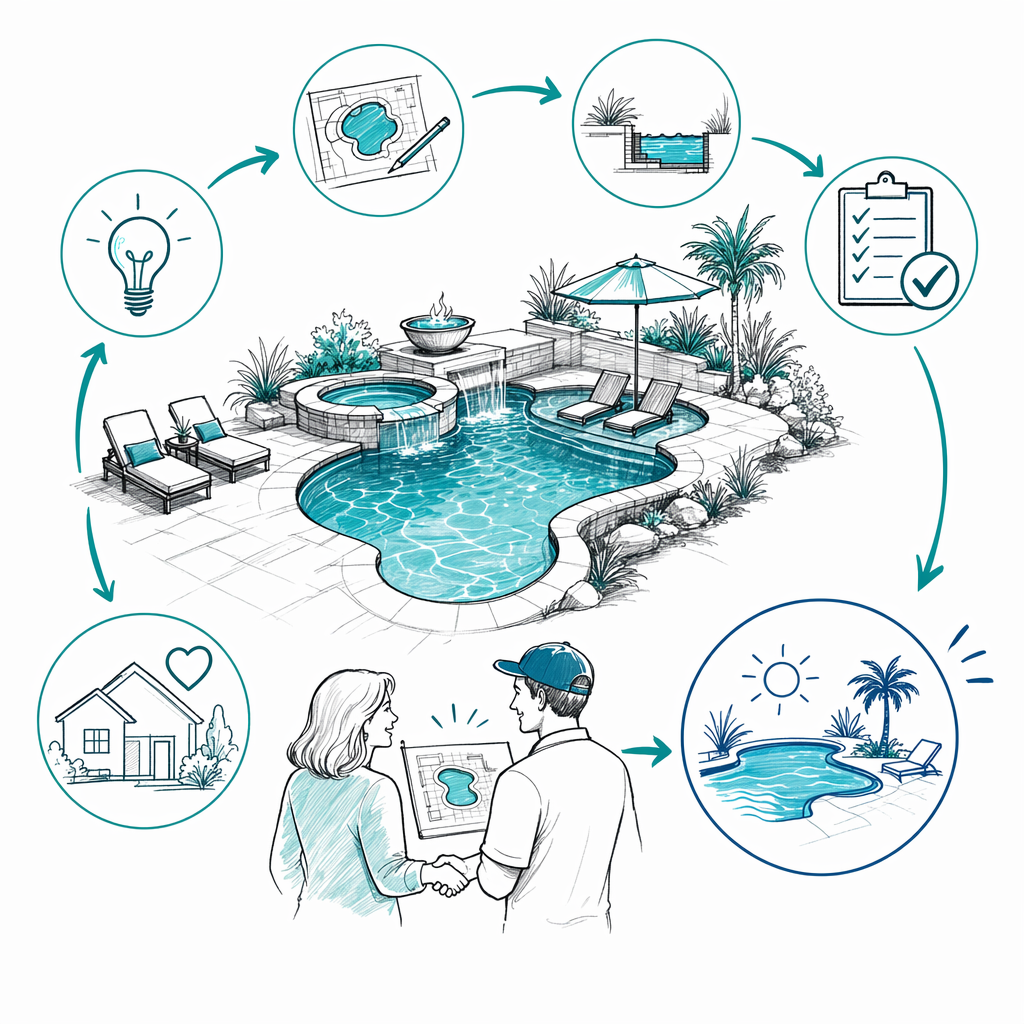
Pick the pool type that fits your yard and budget, get 2 to 4 written estimates, verify each builder’s license, insurance, and bond yourself, and do not pay a deposit until price, scope, permits, and safety requirements are clearly written down.
Common questions
Is custom pool design more expensive than a standard pool?
Usually, yes, but not always by a huge amount. Custom work often costs more because of design changes, site-specific planning, upgraded finishes, or added features. Typical estimates still depend on pool type, size, site, finishes, and your area. A simpler custom layout can be more affordable than many homeowners expect.
Can DeepEnd Match design my pool or give me a quote?
No. DeepEnd Match is a free matching service, not a builder or design firm. We do not build pools, prepare plans, pull permits, or give construction, structural, electrical, plumbing, legal, or financial advice. We help you connect with licensed, insured, and bonded pool builders so you can request estimates and compare them yourself.
What should be in a pool proposal before I pay a deposit?
Ask for a written scope that lists the pool type, dimensions, depth, finish, coping, decking, equipment, included features, permit responsibility, allowances, exclusions, payment schedule, and estimated timeline. Verify the builder’s license, insurance, and bond yourself, and get price plus scope in writing before any deposit.
How many builder quotes should I compare?
For most homeowners, 2 to 4 detailed quotes is enough. Fewer than that can make it hard to judge price and scope. Too many can become confusing if the proposals are not comparable. Focus on written detail, license and insurance verification, and whether each builder explains the process clearly.