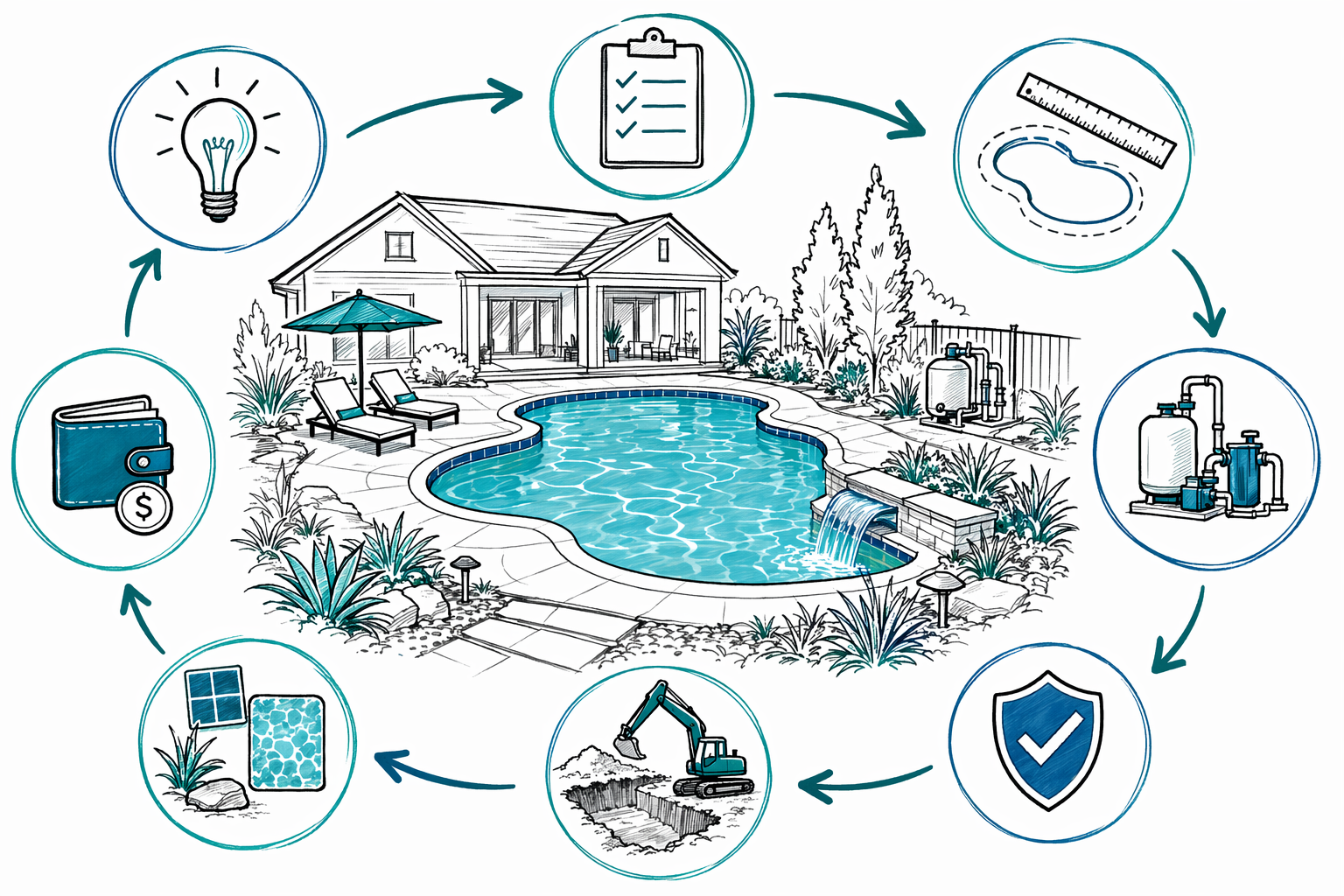
Start with the right questions
A new pool is a big project. It changes your yard, your budget, and your day-to-day life. Before you talk to builders, get clear on what you want.
Ask yourself:
- Who will use the pool most: small kids, teens, adults, guests, or older family members?
- Do you want space for exercise, play, relaxing, or all three?
- Is your goal a simple pool, or a full backyard project with decking, lighting, spa, fencing, and landscaping?
- How long do you expect to stay in this home?
- What monthly costs can you handle after the pool is built: water, chemicals, cleaning, repairs, and higher utility bills?
If English is not your first language, slow the process down. Ask every builder to explain terms in simple words. Take notes. Ask for all price and scope details in writing before any deposit. A good builder will not pressure you.
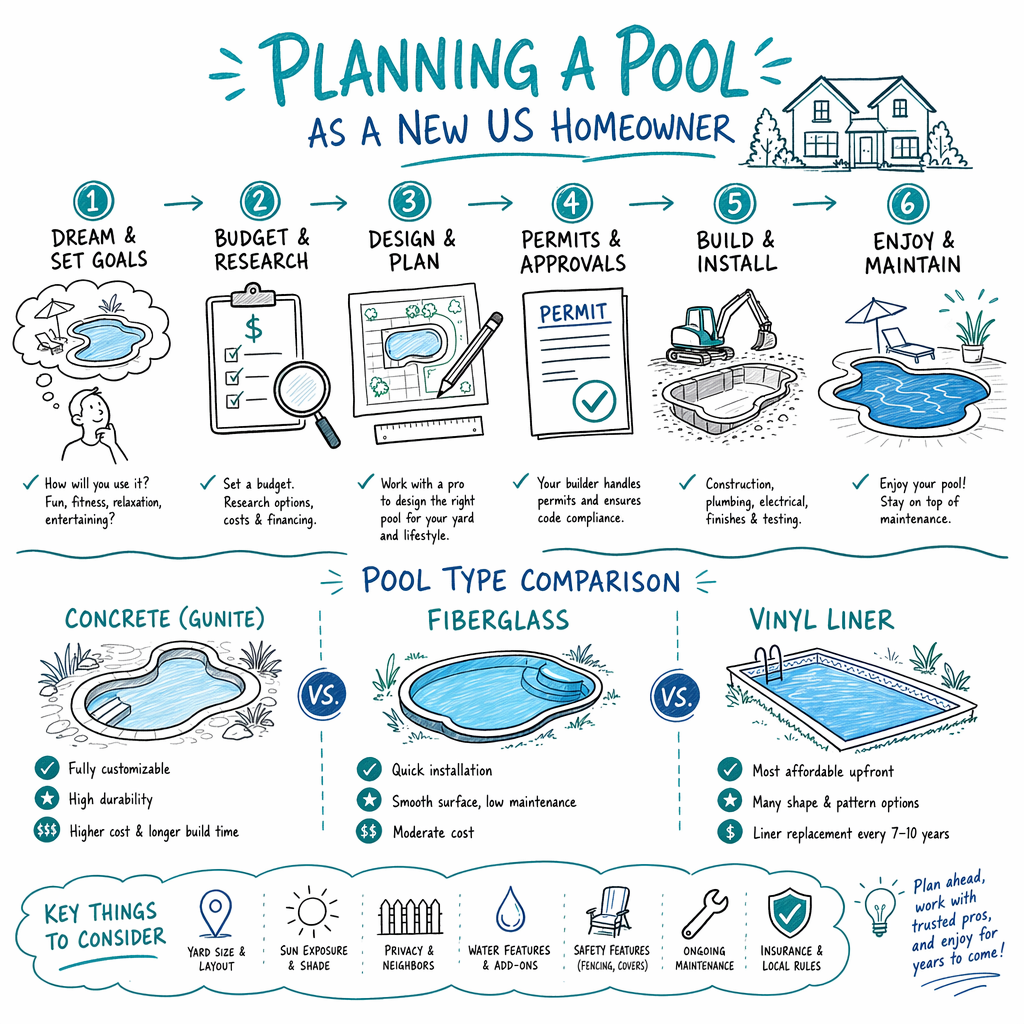
It also helps to learn the basic pool types early. Each one has tradeoffs in price, look, and maintenance. See pool type comparison if you want a simple side-by-side guide.
Know what can change the price
Pool prices in the US vary a lot. The real cost depends on pool type, size, site conditions, finishes, and your local area. That is why online numbers can feel all over the place.
Typical in-ground pool ranges:
- Gunite/concrete: about $60,000-$135,000
- Fiberglass: about $45,000-$95,000
- Vinyl-liner: about $35,000-$70,000
- Small or plunge pools: often less, depending on type and yard conditions
Those are typical ranges, not quotes or guarantees.
What pushes the price up:
- Difficult access to the yard. If equipment cannot easily reach the backyard, labor can rise.
- Sloped yards or poor soil. Extra excavation, retaining work, or engineering can add cost.
- Higher-end finishes. Tile, premium coping, upgraded decking, automation, and water features add up quickly.
- Local permit and code requirements. Fencing, alarms, drains, and inspections can affect both timeline and budget.
- Utility work. Gas, electric, and water line runs may cost more if the pool is far from the house.
Many first-time homeowners focus only on the pool shell. That is where people get surprised. The full project may also include:
- Demolition or tree removal
- Drainage work
- Patio or deck area
- Safety fence or self-closing gates
- Pool cover
- Heater, pump, filter, salt system, or automation
- Cleanup and final grading
If you want a broader breakdown of typical costs, read pool costs.
Learn the permit and safety side early
This part matters. A pool is not just a backyard upgrade. It is a permitted project in most areas, and it must meet local safety rules.
DeepEnd Match is a free matching service, not a builder or permit office. We do not pull permits or give legal, structural, electrical, or plumbing advice. But we can help you get matched with builders who handle this work in your area.
As you compare companies, ask:
- Will you handle local permits and inspections?
- What pool-safety barrier rules apply here?
- Will the plan include required fencing, gates, alarms, or covers if needed?
- Who is responsible for utility markings and scheduling inspections?
- What happens if the permit office asks for plan changes?
Always follow local permits and pool-safety and fencing laws. Rules vary by city, county, and state. Do not assume your neighbor's setup is allowed at your house.
Two guides can help you ask better questions before you sign anything: pool permits explained and pool safety barriers.
Most important: hire licensed, insured, and bonded builders, and verify the license, insurance, and bond yourself. Do not rely only on a business card or a website badge.
How to compare builders without getting burned
The safest way to shop is to compare more than one builder on the same project idea.
Use this checklist:
- Ask for a written scope. It should list pool type, dimensions, equipment, finish level, decking, cleanup, and what is not included.
- Compare apples to apples. One builder may look cheaper because fencing, permits, electrical work, or startup service is left out.
- Verify credentials yourself. Check the builder's license status. Ask for proof of insurance and bond.
- Ask about timeline in plain language. Weather, permits, and inspections can delay work. Get an estimated schedule, but understand it is not a promise.
- Understand payment stages. Never hand over a deposit without written price and scope. Keep final payment until the agreed work is complete under your contract terms.
- Ask who your day-to-day contact will be. Good communication matters even more if you are new to US home projects.
Red flags:
- Pressure to sign today
- Large verbal promises not shown in writing
- Refusal to show license or insurance information
- Vague answers about permits or safety rules
- A price that is far below everyone else without a clear reason
If you want help starting the comparison process, use get matched. Matching is free for homeowners. Participating builders pay a flat fee to be included. You compare quotes, you choose who to hire, and you hold the final payment.
A practical next step for first-time US homeowners
You do not need to become a pool expert in one weekend. You just need a simple plan.
Try this:
- Pick your target budget range before you shop.
- Choose the pool type you want to learn about first: gunite/concrete pools, fiberglass pools, or vinyl-liner pools.
- Make a short list of must-haves and nice-to-haves.
- Gather basic project details: your address, yard photos, rough desired size, and any HOA rules you know about.
- Get written estimates from licensed, insured, bonded builders.
An illustrative example: one homeowner wanted a low-maintenance family pool and first looked only at the cheapest base price. After comparing written scopes, they learned one offer did not include enough decking, permit handling, or a safety fence. The lowest number was not the lowest real project cost.
That happens a lot. Clear paperwork protects you.
If the process feels overwhelming, that is normal. The right builder will explain things clearly, answer questions respectfully, and put the details in writing.
Start with your budget, pool type, and must-haves. Then compare written estimates from licensed, insured, bonded builders, verify their credentials yourself, and make sure permits, safety items, and full scope are clear before you pay a deposit.
Common questions
What is the cheapest in-ground pool type?
Vinyl-liner pools are often the lowest-cost in-ground option, with typical ranges around $35,000-$70,000. But the real price depends on size, yard access, soil, finishes, equipment, and your area. Smaller plunge pools may cost less depending on the design and site.
Do I need a permit to build a pool in the US?
In many areas, yes. Permit and inspection requirements vary by city, county, and state. Safety rules for fencing, gates, alarms, and drains can also vary. Ask each builder how permits and inspections are handled, and always follow local laws.
How do I know if a pool builder is really licensed, insured, and bonded?
Ask for the exact business name and license number, then verify it with the proper state or local licensing authority. Ask for current proof of insurance and bond as well. Do not rely only on a website claim or a verbal answer. Get the price and full scope in writing before any deposit.
Is DeepEnd Match free, and do you build pools?
DeepEnd Match is free for homeowners, and no, we do not build pools or act as the contractor. We are a matching service that helps you connect with licensed, insured, bonded pool builders. You compare options and decide who to hire.