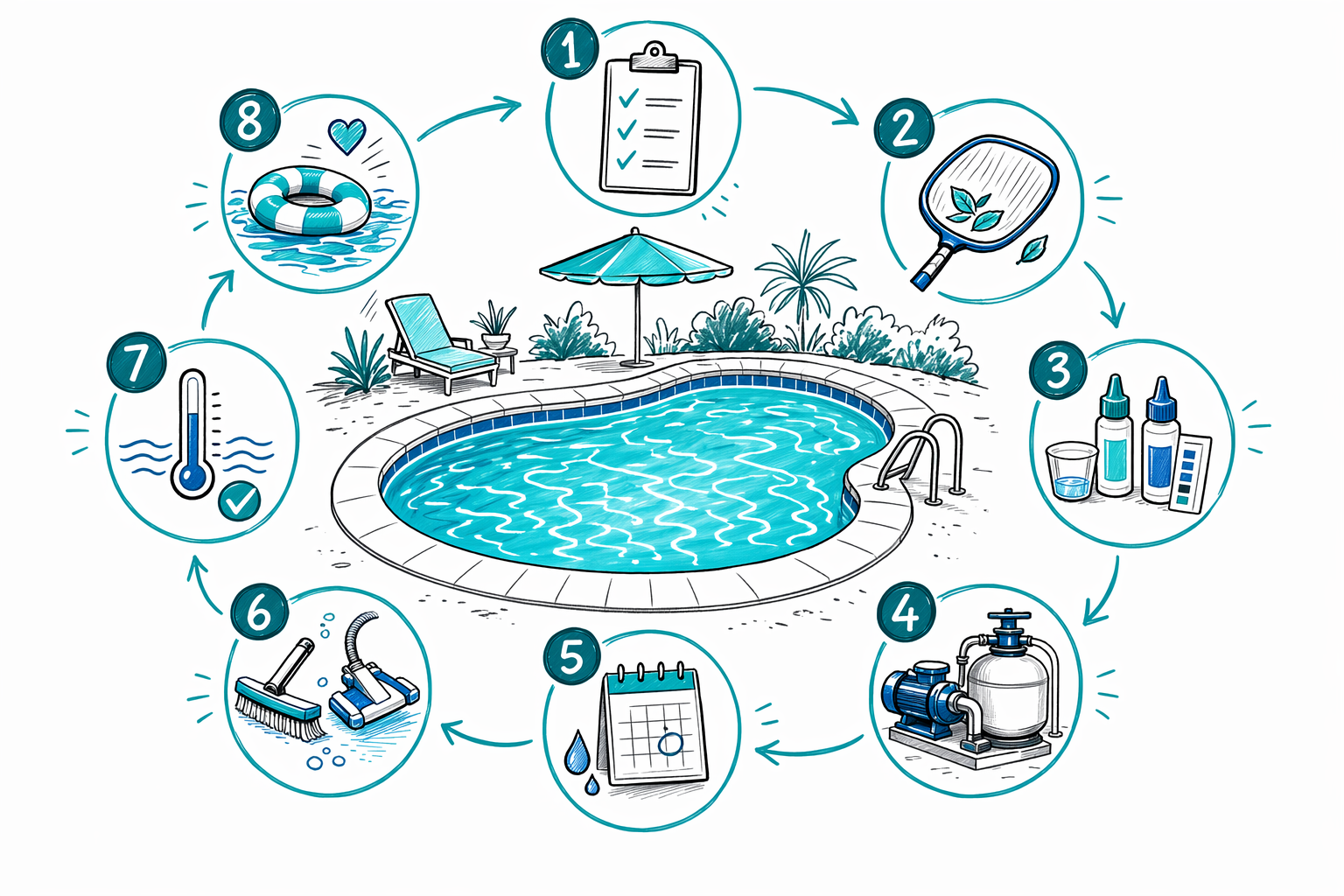
The short answer: start with budget, yard, and builder screening
Most first-time pool owners get overwhelmed because they look at pictures before they look at the real limits: money, space, access, and local rules. Start there.
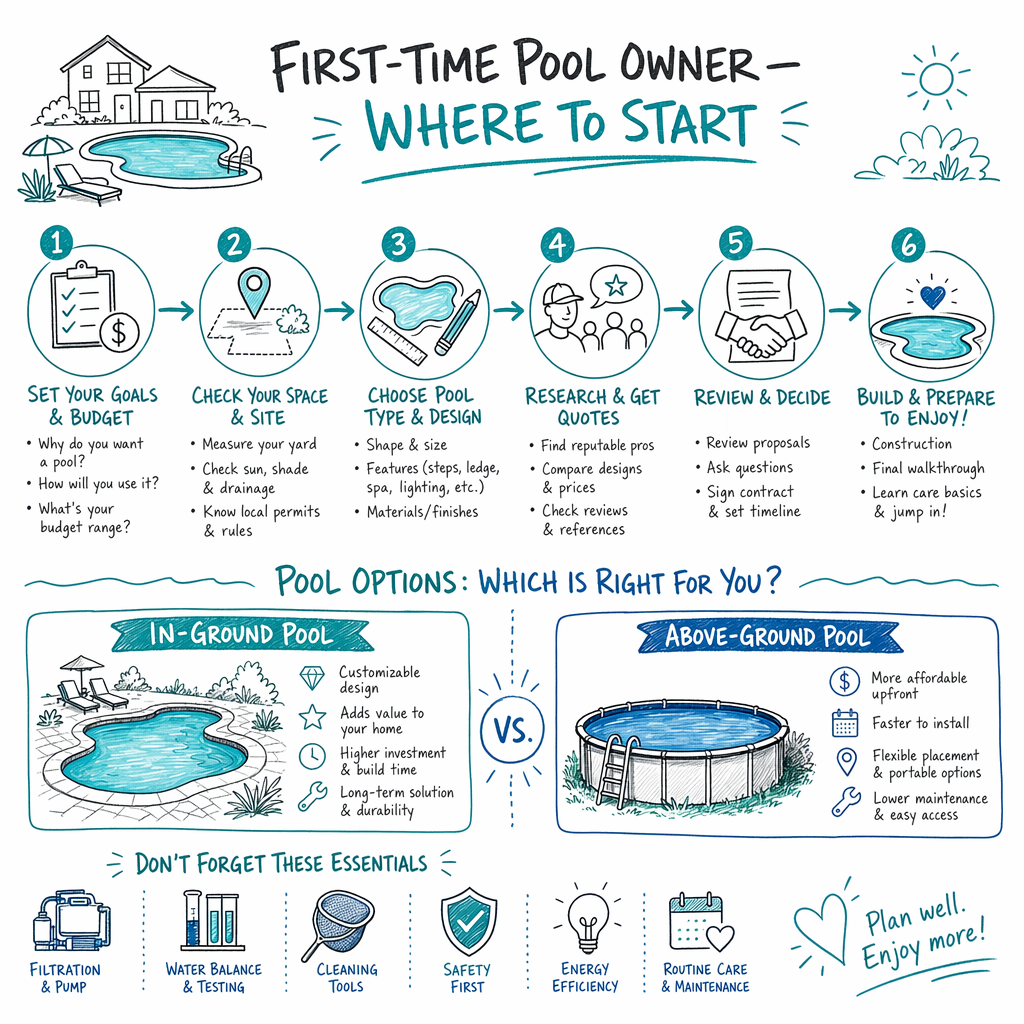
A practical first plan looks like this:
- Set a real total budget range, not just a dream number.
- Choose the pool type that fits your yard and maintenance comfort.
- Learn what your city or county may require for permits, fencing, alarms, and setbacks.
- Talk to licensed, insured, and bonded builders only.
- Get scope and price in writing before any deposit.
Typical installed price ranges in many US markets are:
- Gunite/concrete: about $60,000-$135,000
- Fiberglass: about $45,000-$95,000
- Vinyl-liner: about $35,000-$70,000
- Smaller plunge pools: often less, depending on size, access, features, and area
Those are typical estimates, not quotes or guarantees. The real price depends on pool type, size, soil, slope, access for equipment, finish level, decking, water features, and your local market. If you want a quick starting point, review pool costs before you call anyone.
Know what you are really buying
A pool is not just a hole with water. First-time owners often price the shell and forget the rest.
Your project may include:
- Excavation and hauling soil away
- Pool shell or pool package
- Coping, tile, interior finish, or liner
- Pump, filter, heater, lights, automation, and drains
- Electrical and plumbing work
- Decking or patio around the pool
- Fencing, gates, alarms, or other safety barriers required by local code
- Permit fees and inspections
- Cleanup, startup, and basic owner training
Ask each builder to separate the price into clear parts. That helps you compare apples to apples.
Also decide early what kind of pool you want:
- Gunite/concrete gives the most shape freedom and high-end finish options. It usually costs more and may take longer. Learn more about gunite/concrete pools.
- Fiberglass installs faster in many cases and has a smooth factory shell, but shape and size choices are limited to what can be delivered to your site. See fiberglass pools.
- Vinyl-liner can be the lowest entry price for many homeowners, but liners wear out and need replacement over time. Read about vinyl-liner pools.
There is no perfect pool type for everyone. The best choice depends on your yard, your budget, how long you plan to stay in the home, and how much maintenance you want to handle.
How to check if your yard is pool-friendly
A pretty backyard does not always mean an easy pool build. Before you fall in love with a design, look at the site.
Here are the common issues that change price and timeline:
- Access: Can equipment reach the backyard, or will materials need to be carried in by hand or crane?
- Slope: A steep yard may need retaining walls, drainage work, or extra engineering.
- Soil and groundwater: Rock, unstable soil, or high water tables can add cost.
- Setbacks and easements: Local rules may limit where the pool can go.
- Utilities: Gas, electric, septic, irrigation, and drainage lines may affect layout.
- Trees and roots: Removal and cleanup can increase cost.
- Safety requirements: Most areas require barriers, gates, and other safety measures. Review pool safety barriers.
If you are not sure about permits, do not guess. Ask how your city or county handles pool permits, inspections, and fencing rules, and read pool permits explained.
A simple way to prepare for builder conversations:
- Measure your yard roughly.
- Take photos from several angles.
- Mark known utility locations if you have them.
- Write down must-haves and nice-to-haves.
- Note any HOA rules that may apply.
This saves time and helps builders give more useful preliminary estimates.
How first-time buyers get burned, and how to avoid it
The biggest mistakes are not usually about tile color. They are about scope, paperwork, and payment control.
Watch for these red flags:
- A builder wants a large deposit before giving a clear written scope.
- The proposal is vague, like "pool package" with no detail on equipment, finish, decking, or cleanup.
- You cannot easily verify the company's license, insurance, and bond.
- The timeline sounds too good to be true.
- Change orders are not explained in writing.
- You feel rushed to sign the same day.
Protect yourself with a simple process:
- Get at least 2-3 written estimates.
- Compare the same items on each one: size, depth, finish, equipment brands, decking allowance, cleanup, startup, and warranty terms.
- Verify the builder's license, insurance, and bond yourself with the proper state or local sources.
- Ask who handles permits and inspections, and make sure that responsibility is written down.
- Do not pay the final amount until the agreed work is finished and you have what was promised.
You compare quotes. You choose who to hire. You hold the final payment.
If you want help organizing your search, DeepEnd Match can help you get matched with pool builders at no cost to you. Matching is free for homeowners. Participating builders pay a flat fee to be included.
What to do next if you are serious about building
Do not try to solve everything in one weekend. Just do the next four things.
- Step 1: Set your range. Decide what total project cost feels safe for your household. Keep room for fencing, decking, permits, and site surprises.
- Step 2: Pick a likely pool type. If you are unsure, compare shape flexibility, maintenance, install speed, and long-term upkeep in a pool type comparison.
- Step 3: Build a short must-have list. Example: 12x24 pool, shallow lounging area, heater, basic deck, no spa, no waterfall.
- Step 4: Meet screened builders and ask the same questions. That makes comparisons fair.
Good questions to ask every builder:
- What is included in this estimate, and what is not?
- What site conditions could raise the price later?
- What permits and inspections are expected here?
- What safety barrier items are required locally?
- What is the payment schedule?
- How are change orders approved?
- Who is my point of contact during the job?
If you are still at the very beginning, that is normal. Start with a realistic budget, learn the pool types, and only talk with builders you can verify. That alone puts you ahead of many first-time buyers.
Start with a real budget, choose the pool type that fits your yard, and speak only with licensed, insured, bonded builders you verify yourself. Get everything in writing, compare 2-3 estimates carefully, follow local permit and safety rules, and do not release final payment until the job matches the agreement.
Common questions
How much should a first-time pool owner budget?
A common starting point is to budget by pool type, then add room for the site and finish choices. Typical installed ranges are about $60,000-$135,000 for gunite/concrete, $45,000-$95,000 for fiberglass, and $35,000-$70,000 for vinyl-liner. Smaller plunge pools may cost less. These are estimates, not quotes. The real price depends on type, size, site conditions, finishes, and your area.
What pool type is best for a beginner?
There is no single best choice. Fiberglass is attractive to many first-time owners because installation can be faster and the surface is smooth. Gunite/concrete gives the most design freedom but usually costs more. Vinyl-liner can have a lower upfront price, but liner replacement is part of long-term ownership. Match the type to your yard, budget, and maintenance comfort.
Do I need permits and a fence for a backyard pool?
In many places, yes. Local rules often cover permits, inspections, electrical work, plumbing, setbacks, and safety barriers such as fencing, self-closing gates, or alarms. Requirements vary by city, county, and state. Follow local permit and pool-safety laws, and make sure responsibilities are clear in writing before work begins.
How do I safely compare pool builders?
Get 2-3 written estimates with clear scope details. Compare the same items on every bid, including size, depth, finish, equipment, deck work, cleanup, and timeline assumptions. Hire only licensed, insured, and bonded builders, and verify the license, insurance, and bond yourself. Get price and scope in writing before any deposit, and keep final payment control until the agreed work is done.