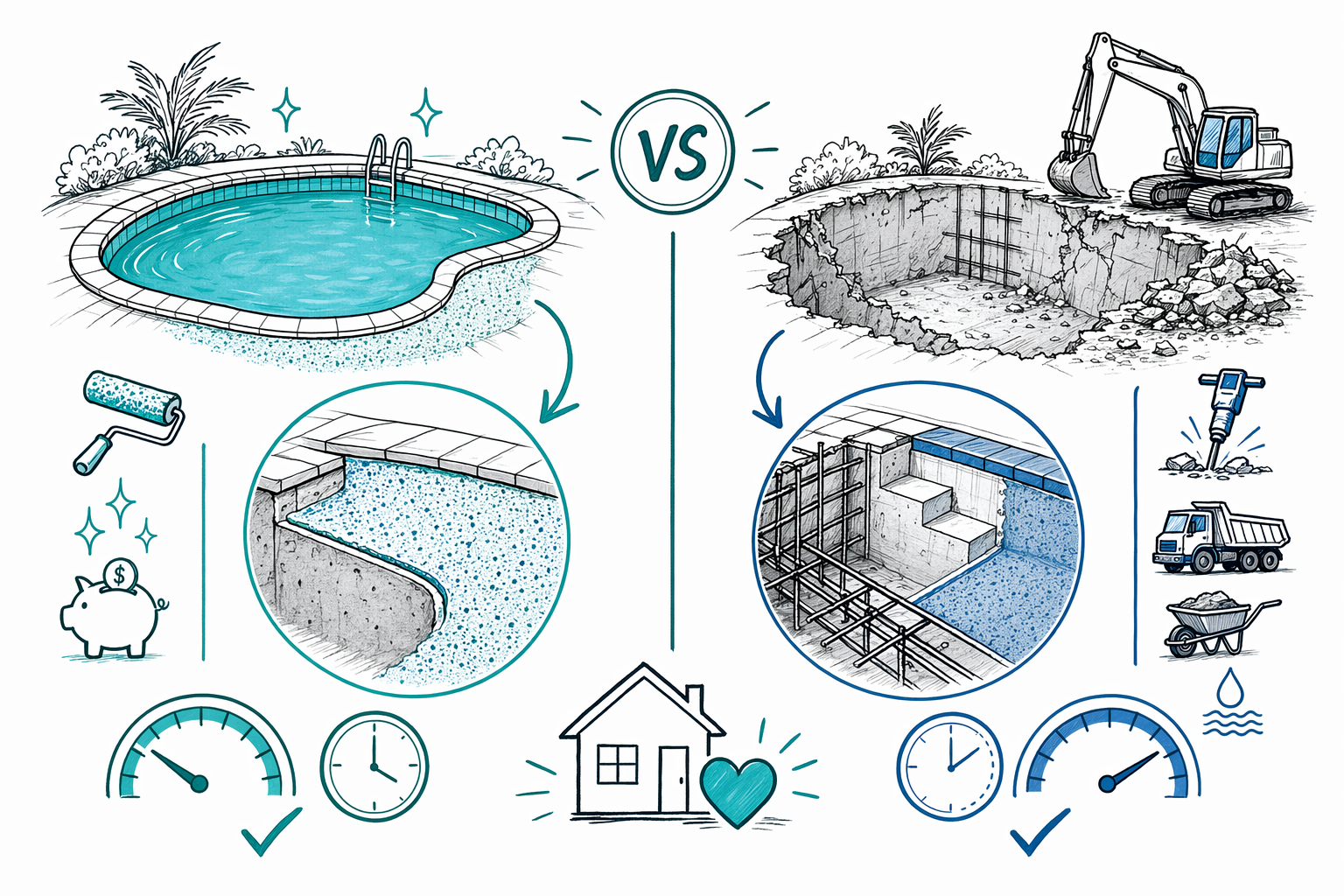
The short answer
If the shell is sound and the main problem is a rough, stained, faded, or peeling interior finish, resurfacing may make sense. If the pool has major structural cracks, movement, persistent leaks, failing plumbing, or serious layout problems, full replacement or a major rebuild may be the better path.
In simple terms:
- Resurfacing is usually about the inside finish. It improves appearance, comfort, and waterproofing at the surface level.
- Full replacement usually means removing and rebuilding all or most of the pool, often because the shell, plumbing, design, or site conditions make patching a bad long-term bet.
A resurfacing job can cost much less up front than replacement. But if the pool has hidden problems, a cheaper fix now can turn into two jobs instead of one. That is where people get burned.
If you are still deciding what type of pool you have and how it affects repair options, this guide to pool type comparison helps.
When resurfacing is usually enough
Resurfacing is most common on gunite/concrete pools. Fiberglass and vinyl-liner pools can also need repair or renewal, but the work is different. A builder should inspect the pool in person before telling you which route makes sense.
Resurfacing may be enough when you see:
- Surface stains that do not clean off
- Rough plaster that scratches feet or hands
- Small cosmetic checking or finish wear
- Spots where plaster is flaking, etching, or discoloring
- An older finish that has reached the end of its normal life but the shell is still stable
Typical resurfacing scope may include:
- Draining the pool
- Chipping out loose or failed surface material
- Preparing the substrate
- Applying a new finish such as plaster, aggregate, or tile in certain areas
- Refilling, start-up, and water balancing
Typical resurfacing cost ranges vary a lot by pool size, finish choice, repairs found after demo, and local labor costs. In many markets, a basic concrete-pool resurfacing may land somewhere in the high four figures to low five figures, while premium finishes and added repairs can push the number much higher. It is an estimate, not a quote.
If you have a concrete pool and want more background, see gunite and concrete pools.
Important: resurfacing does not fix every problem. A fresh finish can hide deeper issues for a while, but it will not stop structural movement, correct bad plumbing, or solve a pool that was built in the wrong shape, depth, or location.
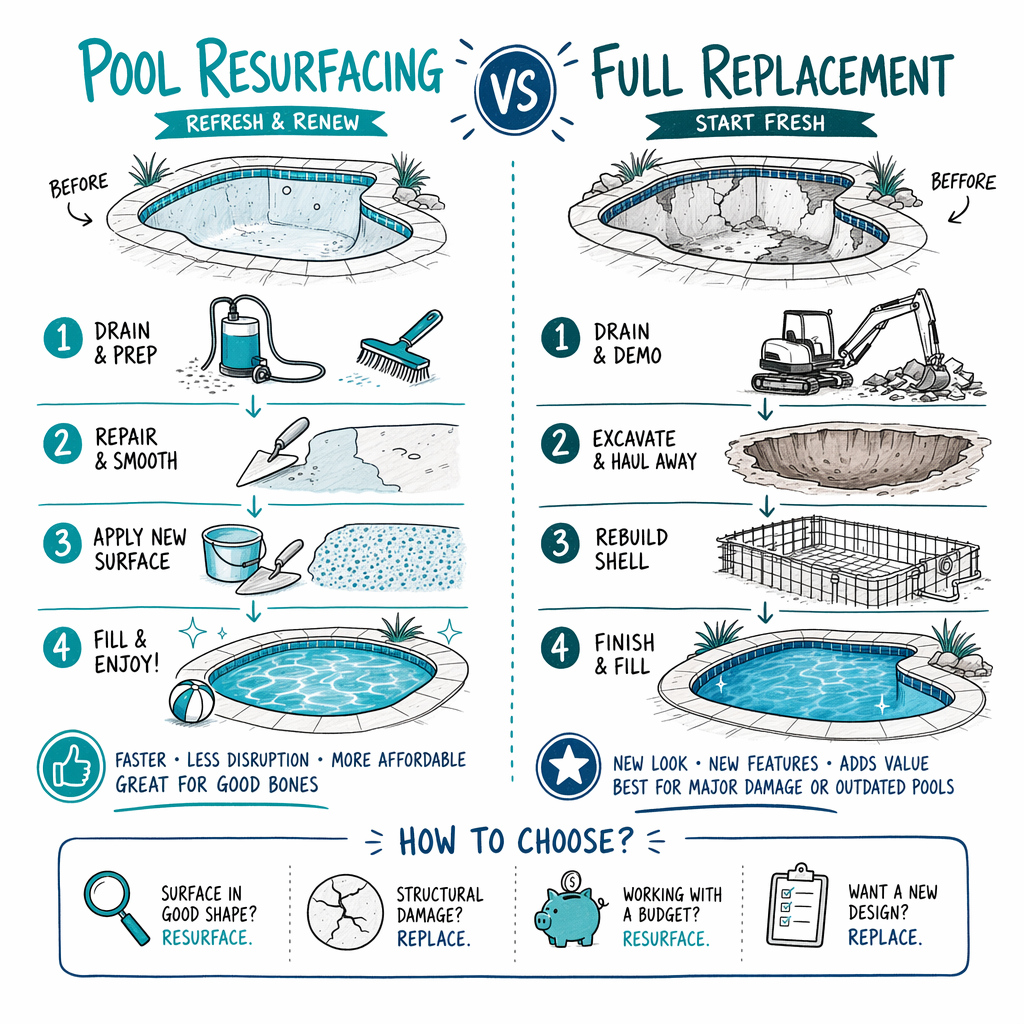
Signs full replacement may be the smarter choice
Full replacement sounds extreme, but sometimes it is the more honest answer. Not because resurfacing is bad, but because the pool has moved beyond a surface problem.
Watch for these red flags:
- Structural cracks that keep coming back
- Pool shell movement from soil, drainage, or settling
- Major leaks that are hard to isolate or involve underground lines
- Outdated plumbing or equipment layout that would require tearing up large areas anyway
- Bad original design, such as unsafe depth transitions, poor placement, or a shape you truly hate
- Repeated repairs over the years with no lasting fix
- A renovation wish list so large that you are effectively rebuilding the pool in pieces
A full replacement is also worth discussing if you want to switch pool types. For example:
- Some homeowners move from an old concrete pool to a modern fiberglass pool if the site and access allow it.
- Others replace an aging liner pool with a different vinyl-liner pool design or move to another structure entirely.
Typical full replacement cost depends on the pool type, size, demolition needs, access, soil, features, and area. Honest national-style ranges for a new in-ground pool often start around:
- Gunite/concrete: $60,000-$135,000
- Fiberglass: $45,000-$95,000
- Vinyl-liner: $35,000-$70,000
- Smaller or plunge pools: sometimes less
Those are typical ranges and estimates only. Your real price depends on type, size, site, finishes, and area. Full replacement can also involve demolition, hauling, decking, fencing updates, drainage work, permits, and utility changes, so the total can rise fast.
Before any major decision, ask each builder to separate the price into line items so you can compare surface work, structural work, plumbing, equipment, decking, and cleanup clearly.
How to compare resurfacing vs replacement without getting trapped
This is where homeowners save money or lose it. Do not ask only, "What is the cheapest way to make it look good?" Ask, "What work will still make sense in 5 to 10 years?"
Use this checklist when you meet builders:
- Ask what they believe the root problem is. Surface wear? Structural movement? Leak? Old plumbing? Poor drainage?
- Ask what evidence supports that opinion. Photos, pressure tests, crack patterns, hollow spots, dye tests, elevation issues, or visible deterioration.
- Ask for two written options if possible. One for resurfacing/repair, one for replacement or major rebuild.
- Ask what is included and excluded. Startup, water, tile, coping, plumbing repair, deck patching, permit fees, cleanup, and hauling.
- Ask what could change the price later. Hidden voids, bad steel, unstable soil, leaking lines, code upgrades, or damaged bond beam.
- Ask how long the fix is expected to last under normal use, with proper maintenance.
A good proposal should explain not just the price, but the scope. Scope is what protects you.
Always hire licensed, insured, and bonded builders, and verify the license, insurance, and bond yourself. Get the full price and scope in writing before any deposit. Follow local permit rules and pool-safety laws. If your project changes the structure, barrier, equipment, or electrical setup, make sure the builder explains what permits and inspections are required. These guides can help: how to vet a pool builder and pool permits explained.
Also remember that resurfacing or replacement may trigger barrier or gate updates in some areas. Review local rules and pool safety barriers early, not after the work starts.
What to do next
If you are deciding between resurfacing and replacement, do this:
- Take clear photos of cracks, stains, rough spots, water loss, and deck movement.
- Write down the pool age, type, past repairs, and what bothers you most.
- Decide whether your goal is one more usable cycle or a long-term fresh start.
- Get at least a few written opinions from licensed, insured, and bonded builders.
- Compare scope, not just top-line price.
DeepEnd Match is a free matching service for homeowners. We do not build pools or give construction advice. We help you connect with builders so you can compare quotes, choose who to hire, and hold the final payment.
If you want to start comparing local options, use Get Matched. If you want a bigger picture on pool pricing first, review pool costs.
If your pool only has a worn surface, resurfacing may be enough. If it has big cracks, leaks, movement, or major design problems, replacement may be smarter. Get written options from licensed, insured, and bonded builders, verify their credentials yourself, and compare scope before you pay any deposit.
Common questions
Can resurfacing stop a pool leak?
Sometimes, but not always. If water loss is coming from the worn interior finish, resurfacing may help. If the leak is from plumbing, fittings, structural cracks, lights, or underground lines, resurfacing alone may not fix it. Ask a licensed, insured, and bonded builder to inspect and explain the likely source in writing.
How often does a pool need resurfacing?
It depends on the pool type, finish material, water chemistry, climate, and maintenance history. Concrete-pool finishes wear out over time, but there is no single schedule that fits every pool. Rough texture, staining, flaking, and visible wear are common signs it is time to inspect the finish.
Is full replacement ever cheaper than repeated repairs?
Yes. If the shell is failing, leaks keep returning, plumbing is outdated, or the design no longer works, repeated patch jobs can add up without solving the real problem. A higher up-front replacement cost can sometimes be the better long-term value. The real price depends on type, size, site, finishes, and area.
Should I empty my pool before getting estimates?
Usually no, unless a qualified builder specifically tells you to. An empty pool can be risky in some conditions, especially where groundwater or soil pressure is an issue. Let the builder inspect first and tell you the safest next step. Follow local permit and safety requirements for any major work.